How to Build Credit From Scratch: Your Essential Guide for 2026
The good news? Everyone starts somewhere, and building credit from scratch is entirely achievable. It’s not a secret club only for the financially elite; it’s a process that requires understanding, patience, and consistent effort. Think of me as your financially savvy friend, here to walk you through every step, demystifying the jargon and giving you a clear, practical roadmap for 2026 and beyond. We’ll cover everything from understanding what credit is and why it matters, to the specific tools and habits you need to cultivate a strong credit profile. Let’s get started – your future financial self will thank you!
Understanding the Credit Game: Why It Matters & How It Works
Before we dive into the “how,” let’s clarify the “why.” A good credit score isn’t just a number; it’s a reflection of your financial reliability and responsibility. Lenders, landlords, and even some employers use it to gauge how likely you are to honor your financial commitments.
Why a Good Credit Score is Your Financial Superpower
- Better Interest Rates on Loans: This is huge. Whether it’s a car loan, a personal loan, or eventually a mortgage, a higher credit score can save you thousands of dollars over the life of the loan by qualifying you for lower interest rates. For example, a car loan applicant with excellent credit might get an interest rate of 4%, while someone with no credit or poor credit could be looking at 10% or even higher for the same car.
- Easier Approval for Apartments/Rentals: Landlords often check your credit report to assess your reliability as a tenant. A strong credit history makes you a more attractive applicant.
- Lower Insurance Premiums: In many states, insurance companies use credit-based insurance scores to help determine your rates for auto and home insurance. Better credit can mean lower premiums.
- Utility Connections Without Large Deposits: Utility companies (electricity, gas, water, internet, phone) often require a security deposit if you have no credit history. Good credit can help you bypass these upfront costs.
- Access to Better Credit Card Rewards and Perks: Once you establish good credit, you’ll qualify for credit cards with attractive rewards programs, cash back, travel points, and other valuable benefits.
- Even Some Job Applications: While less common, certain jobs, particularly those in finance or positions of significant trust, may involve a credit check as part of the background screening process.
The Big Three Credit Bureaus
In the U.S., three major credit bureaus – Experian, Equifax, and TransUnion – collect and maintain your credit information. Lenders report your payment activity (both good and bad) to these bureaus, which then compile it into your credit report. Your credit score is calculated based on the data in these reports. While they all aim to have similar information, minor differences can exist between your reports from each bureau.
Key Factors That Make Up Your Credit Score
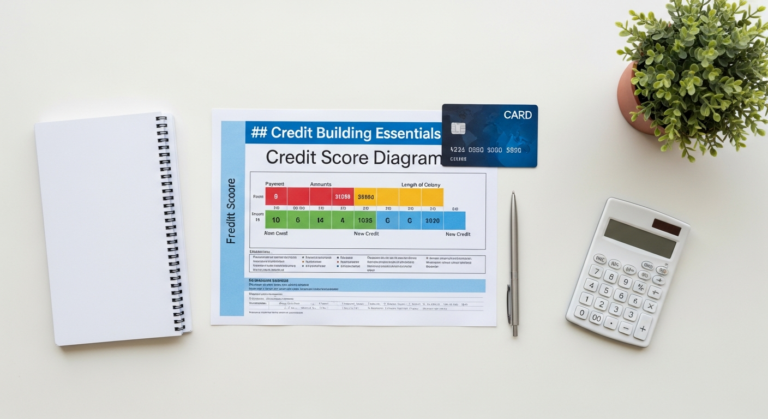
Credit scores, like FICO Score and VantageScore, are calculated using a complex algorithm, but they generally weigh these five main factors:
- Payment History (35%): This is the most crucial factor. Paying your bills on time, every time, is paramount. Late payments can severely damage your score.
- Amounts Owed (30%): Also known as “credit utilization,” this refers to the percentage of your available credit that you’re currently using. Keeping this low (ideally below 30%, even better below 10%) is key.
- Length of Credit History (15%): The longer you’ve had credit accounts open and in good standing, the better. This is why patience is so important.
- New Credit (10%): Applying for too much new credit in a short period can be seen as risky and may temporarily ding your score.
- Credit Mix (10%): Having a healthy mix of different types of credit (e.g., credit cards, installment loans) can be beneficial, but this factor becomes more relevant once you’ve established a foundation.
For those starting from scratch, the focus will primarily be on establishing a positive payment history and managing credit utilization carefully.
Your First Steps: Laying the Groundwork for Credit Success
Building credit isn’t about finding a secret shortcut; it’s about taking deliberate, well-informed steps. Here’s where you start.
Step 1: Check Your Credit (Even If You Think You Have None)
It might sound counterintuitive to check your credit when you believe you have no credit. However, it’s a crucial first step. You might actually have a “thin file” with some activity, or perhaps even an error you’re unaware of.
Actionable Step: Visit AnnualCreditReport.com. This is the only official, federally authorized website to get your free credit report from each of the three major bureaus once every 12 months. Request your reports from Experian, Equifax, and TransUnion. Review them carefully for any accounts listed, even if they seem minor, and check for any inaccuracies or signs of identity theft. If you find errors, dispute them immediately.
If your reports come back “no file found,” that’s perfectly normal for someone building credit from scratch, and it confirms you’re truly starting at square one.
Step 2: Become an Authorized User (Carefully!)
This is one of the quickest ways to potentially get a jumpstart on your credit history, but it requires careful consideration and a lot of trust.
What it is: An authorized user is someone who is added to another person’s existing credit card account. You get a card with your name on it, but the primary cardholder is ultimately responsible for the bill. When you’re an authorized user, the account’s payment history and credit limit often appear on your credit report, effectively borrowing the primary user’s good credit history.
Pros:
- Can immediately establish a credit history for you.
- Benefits from the primary user’s long, positive payment history and low credit utilization.
Cons:
- The primary user’s mistakes (like late payments or high utilization) can negatively impact your score.
- You have no legal responsibility for the debt, so you can’t build your own payment habits directly through this method.
Who to ask: Only consider this with a highly trusted family member (parent, spouse, sibling) who has an excellent credit history, a long-standing account, and consistently low credit utilization. Have an open conversation about expectations.
Actionable Step: If you have a trusted family member with stellar credit, discuss the possibility of becoming an authorized user on one of their oldest, best-managed credit card accounts. Ensure they understand the importance of keeping their utilization low and making all payments on time. You might even agree not to use the card at all, simply benefiting from the reporting of the account on your file.
Step 3: Secure Your First Credit Product: The Secured Credit Card
For most people, a secured credit card is the absolute best and safest way to build credit from scratch, especially if becoming an authorized user isn’t an option.
How it works: Unlike a regular (unsecured) credit card, a secured credit card requires a cash deposit, which typically becomes your credit limit. For example, if you deposit $300, your credit limit is $300. This deposit acts as collateral, minimizing the risk for the lender. You use the card just like a regular credit card, making purchases and paying your bill each month. The key is that the card issuer reports your payment activity to the credit bureaus.
Benefits:
- Reports to Credit Bureaus: This is the primary benefit. Every on-time payment you make helps build your payment history.
- Teaches Responsible Usage: It’s a great way to learn how credit cards work without the risk of getting into deep debt, as your spending is capped by your deposit.
- Path to Unsecured Credit: Many secured cards “graduate” to unsecured cards after a period of responsible use (typically 6-12 months), and your deposit is returned.
What to look for:
- Reports to all three major credit bureaus: This is critical for building a comprehensive credit file.
- Low or no annual fee: Avoid cards with high fees that eat into your deposit or make the card expensive to maintain.
- Reasonable deposit requirement: Find a card that matches what you can comfortably afford to put down (e.g., $200-$500).
- Clear path to graduation: Some secured cards automatically review your account for graduation to an unsecured card after a period of good behavior.
Actionable Step: Research secured credit cards from reputable banks or credit unions. Look for options specifically designed for building credit. Once you’ve chosen one, gather the necessary documents (ID, proof of address, income information) and apply. Start with a small, manageable deposit. Once approved, use the card for small, everyday purchases you can easily pay off, like your weekly groceries or gas. Treat it like a debit card, but remember to pay the statement balance in full and on time every month.
Building Blocks: Other Credit-Building Tools
While a secured credit card is often the foundation, there are other tools that can help diversify your credit file and accelerate your progress.
Credit-Builder Loans
These are designed specifically for people with no credit or poor credit to establish a payment history.
How they work: It’s a unique loan where you don’t receive the money upfront. Instead, the loan amount (e.g., $500 to $1,000) is held in a locked savings account or certificate of deposit (CD) by the lender. You then make fixed monthly payments over a set period (e.g., 6-24 months). Each payment is reported to the credit bureaus. Once you’ve paid off the entire loan, the funds are released to you, often with a small amount of interest earned. It’s essentially a forced savings plan that builds credit.
Benefits:
- Builds payment history: Demonstrates your ability to make consistent, on-time payments.
- Creates savings: You end up with the loan amount in your pocket at the end, which can be a nice bonus.
- Adds to credit mix: An installment loan can complement your credit card (revolving credit) over time.
Where to find them: Credit unions and community banks are excellent places to look for credit-builder loans. Some online lenders also specialize in these products.
Actionable Step: If a credit-builder loan makes sense for your budget, research local credit unions or online providers. Compare interest rates and fees. Choose a loan amount and term that results in a monthly payment you can comfortably afford, ensuring you never miss a payment.
Alternative Data Reporting Services
In recent years, new services have emerged that can help boost your credit score by reporting payments not traditionally included in credit reports.
How they work: These services connect to your bank accounts and report things like your on-time rent payments, utility bills (electricity, gas, water), and even streaming service subscriptions to credit bureaus.
- Experian Boost: This free service allows you to connect your bank account and add qualifying on-time utility and telecom payments (including streaming services like Netflix, Hulu, Disney+) to your Experian credit file. It can provide an immediate bump to your Experian FICO Score.
- Rent Reporting Services: Services like Rental Kharma or LevelCredit (often for a small monthly fee) will report your on-time rent payments to one or more credit bureaus. This can be incredibly impactful, as rent is often your largest monthly expense but typically doesn’t appear on your credit report.
Pros:
- Can provide a quick boost to your credit score, especially if you have a thin file.
- Leverages payments you’re already making consistently.
Cons:
- Not all lenders use these alternative scores, so the impact may vary.
- Some services come with a fee.
Actionable Step: Explore Experian Boost – it’s free and easy to set up. If you consistently pay rent on time, consider signing up for a reputable rent reporting service that reports to all three major bureaus. Factor the monthly fee into your budget.
Small Installment Loans (Carefully!)
While a credit-builder loan is specifically designed for credit building, sometimes you might need a small loan for a necessary purchase. If you do, this can also contribute to your credit mix.
How to approach it: If you need to finance a small, essential purchase (e.g., a new appliance, furniture), look for reputable retailers that offer financing options directly. Ensure the interest rate is reasonable and, most importantly, that you can comfortably afford the monthly payments. Always prioritize paying on time.
Warning: Avoid high-interest payday loans or title loans, as these can quickly lead to debt traps and severely damage your financial health, negating any potential credit-building benefits.
Mastering Credit: Habits for Long-Term Success
Getting your first credit product is just the beginning. The real magic happens when you consistently practice good credit habits. These are the behaviors that will build a strong, positive credit history over time.
Pay Your Bills ON TIME, EVERY TIME
This cannot be stressed enough. Your payment history accounts for 35% of your FICO Score. One late payment (typically 30 days past due) can significantly drop your score and stay on your report for up to seven years.
Actionable Step:
- Set up autopay: For all your credit accounts, set up automatic payments for at least the minimum amount due. This is your best defense against accidental late payments.
- Calendar reminders: Add payment due dates to your digital calendar with reminders a few days before they’re due.
- Pay in full: While autopay for the minimum is a safety net, always aim to pay your credit card statement balance in full each month to avoid interest charges.
Keep Your Credit Utilization Low
Credit utilization (the amount of credit you’re using compared to your total available credit) makes up 30% of your score.
Actionable Step:
- Target below 30%: As a general rule, try to keep the total balance across all your credit cards below 30% of your total credit limits. For example, if you have a secured card with a $500 limit, try not to carry a balance higher than $150.
- Ideally below 10%: For the best scores, aim even lower, ideally below 10%. If your secured card has a $300 limit, try to keep your reported balance under $30.
- Pay before statement closes: Many people think they just need to pay by the due date. However, your credit utilization is often reported to the bureaus when your statement “closes.” To show a lower utilization, make a payment before your statement closes, even if it’s not the due date. For instance, if you spend $100 on your $300 limit card, pay $70 of it a week before the statement closes, leaving a $30 balance to be reported (10% utilization). Then pay the remaining $30 by the due date.
- Make multiple payments: If you use your card frequently, consider making multiple small payments throughout the month rather than one large payment at the end.
Don’t Apply for Too Much New Credit at Once
Each time you apply for new credit (a credit card, a loan), a “hard inquiry” is typically placed on your credit report. A single hard inquiry usually causes a small, temporary dip in your score (a few points) and stays on your report for two years (though its impact fades after about 12 months).
Actionable Step: Space out your applications. Once you get your secured card or credit-builder loan, focus on using it responsibly for at least 6-12 months before considering another credit product. This gives your existing accounts time to build a positive history.
Monitor Your Credit Regularly
Checking your credit reports and scores helps you track your progress, spot errors, and identify potential fraud.
Actionable Step:
- AnnualCreditReport.com: Continue to get your free credit reports from all three bureaus once every 12 months. Stagger them throughout the year (e.g., Experian in January, Equifax in May, TransUnion in September) to monitor your reports more frequently.
- Free Credit Score Services: Many credit card companies offer free FICO Scores to their cardholders. Additionally, services like Credit Karma (VantageScore) or free tools from Experian, Equifax, and TransUnion (often offering VantageScore or a proprietary score) allow you to check your score regularly without a hard inquiry. Use these to track your progress.
- Review carefully: Look for any accounts you don’t recognize, incorrect payment statuses, or outdated information. Dispute errors immediately with the credit bureau and the creditor.
Be Patient and Consistent
Building good credit is a marathon, not a sprint. It takes time to establish a solid payment history and for your credit file to mature.
Actionable Step: Don’t get discouraged if your score doesn’t jump overnight. Focus on consistently following these good habits, and your score will steadily improve over months and years.
Transitioning to Unsecured Credit and Beyond
Once you’ve consistently managed your secured card or credit-builder loan for 6-12 months, you’ll be ready for the next phase: graduating to unsecured credit and expanding your credit profile.
Graduating from a Secured Card
Many secured credit cards are designed with a “graduation” path. This means that after a period of responsible use (typically 6 to 18 months), the issuer may review your account. If you’ve paid on time and kept utilization low, they might automatically convert your secured card into an unsecured one and return your deposit.
Actionable Step: Check with your secured card issuer about their graduation policy. If they don’t automatically graduate, or if you’re ready sooner, you can apply for an unsecured card once you have a few months of good history under your belt.
Your First Unsecured Card
Once you have 6-12 months of solid payment history from your secured card or credit-builder loan, you’re in a much better position to be approved for an unsecured credit card.
What to look for:
- No annual fee: Start with cards that don’t charge an annual fee, so you’re not paying just to keep the account open.
- Rewards (if possible): Some beginner-friendly unsecured cards offer basic cash back or rewards.
- Cards for “Fair” or “Limited” Credit: Look for cards specifically marketed to those with fair credit or those building credit.
Actionable Step: Research entry-level unsecured credit cards. Many issuers have options for those with limited credit. Apply for one card at a time. Once approved, continue to use it responsibly: pay in full, on time, and keep utilization low. Avoid the temptation to overspend now that you have a higher limit.
Diversifying Your Credit Mix (Eventually)
As your credit profile matures, having a mix of different types of credit (revolving credit like credit cards and installment loans like a car loan or student loan) can be beneficial. However, this is the least important factor for credit building and typically comes naturally as your financial needs evolve.
Actionable Step: Don’t take out loans you don’t need just to build credit mix. Focus on maintaining excellent payment history and low utilization on your existing accounts. If you eventually need a car loan or student loan, that will naturally diversify your mix.