

Master Your Focus: The Pomodoro Technique for Enhanced Productivity
By Diaal News Staff | Published: July 29, 2024 | Last updated: July 29, 2024
In an age of constant digital bombardment and an ever-growing list of demands, maintaining sharp focus and consistent productivity can feel like an insurmountable challenge. The modern professional frequently grapples with distractions, context-switching, and the gnawing feeling of being overwhelmed, leading to reduced output and increased stress. If you’ve ever found yourself staring blankly at a screen, scrolling endlessly through social media instead of tackling a crucial project, or struggling to initiate deep work, you’re far from alone. The good news is that there’s a refreshingly simple, yet incredibly powerful, strategy that has helped millions worldwide reclaim their attention and amplify their efficiency: the Pomodoro Technique. This acclaimed time management method is not just about getting more done; it’s about cultivating a healthier relationship with your work, fostering true concentration, and ultimately achieving a better work-life balance. Diaal News is here to guide you through mastering this revolutionary approach, transforming your daily grind into a series of focused, productive sprints.
What is the Pomodoro Technique? Unpacking the Core Principles
At its heart, the Pomodoro Technique is a time management method developed by Francesco Cirillo in the late 1980s. Faced with his own struggles with focus during university studies, Cirillo began using a kitchen timer shaped like a tomato (Italian: pomodoro) to manage his study sessions. This simple act of structuring his time led to a profound improvement in his concentration and productivity, giving birth to a technique that has since been adopted by professionals across industries, students, and anyone looking to enhance their ability to concentrate.
The elegance of the Pomodoro Technique lies in its straightforward, repeatable cycle. It breaks down work into manageable, timed intervals, typically 25 minutes in length, separated by short breaks. Here’s a detailed look at its fundamental components:
- The 25-Minute “Pomodoro” Work Session: This is the core unit of the technique. During this period, you commit to focused, uninterrupted work on a single task. The timer ticking serves as a gentle but firm reminder to stay on task and resist distractions. The key here is single-tasking – avoid the temptation to check emails, switch tabs, or engage in any activity unrelated to your primary objective. If an urgent thought or task arises, you employ an “inform, record, get back” strategy: briefly note it down, then immediately return to your Pomodoro.
- The 5-Minute Short Break: Once your 25-minute Pomodoro is complete, you take a mandatory 5-minute break. This isn’t optional; it’s an integral part of the process designed to prevent mental fatigue and allow your brain to refresh. Use this time to step away from your screen, stretch, grab a glass of water, or simply clear your mind. Avoid engaging in mentally demanding activities or anything that might lead to distraction, like scrolling social media, as this defeats the purpose of the break.
- The 15-30 Minute Long Break: After completing four Pomodoro cycles (i.e., four 25-minute work sessions with three 5-minute short breaks in between), you take a longer break, typically lasting 15 to 30 minutes. This extended break is crucial for deeper mental recovery and to prevent burnout. Use this time to recharge more thoroughly – perhaps take a short walk, enjoy a snack, listen to a podcast, or engage in a non-work-related activity that brings you joy. This break allows your brain to consolidate information and prepares you for the next set of focused work.
The philosophy underpinning the Pomodoro Technique is rooted in the concept of time boxing and cyclical work. By committing to short, intense bursts of focus, you trick your brain into overcoming procrastination and maintaining higher levels of concentration. The structured breaks are equally vital, ensuring that your mental energy is replenished, reducing the likelihood of decision fatigue and sustaining productivity throughout the day. This simple yet profound system offers a clear framework for managing your attention, transforming overwhelming tasks into a series of achievable sprints, and making tangible progress on your most important work.
The Science Behind the Pomodoro Technique: Why It Works for Deep Work
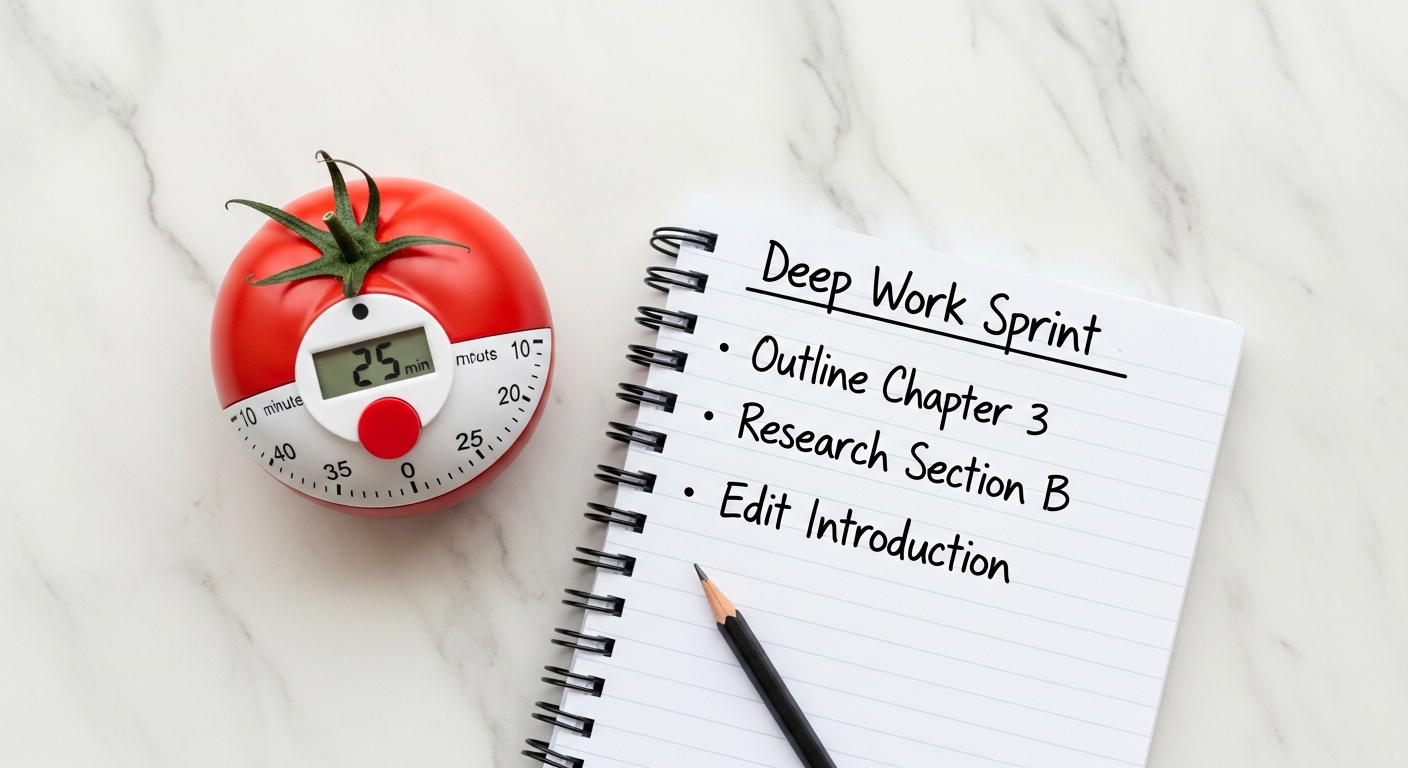
Understanding the “how” of the Pomodoro Technique is one thing, but truly appreciating its power requires delving into the “why.” This method isn’t just an arbitrary timer system; it’s deeply aligned with principles of psychology, neuroscience, and human attention spans, making it an incredibly effective tool for fostering deep work and sustained productivity.
The 25-minute work interval directly addresses this by providing a manageable sprint. This short, defined period feels less daunting than an open-ended “work till it’s done” approach, helping to combat procrastination and the initial resistance to starting a task. It’s a psychological trick: committing to just 25 minutes feels achievable, even for complex or tedious projects. Once you start, momentum often builds.
Following this focused sprint, the mandatory 5-minute break plays a critical role in mental replenishment. This aligns with what psychologists refer to as “ultradian rhythms.” Our bodies and minds naturally cycle through various states of alertness and fatigue, typically in 90 to 120-minute periods. While the Pomodoro intervals are shorter than these full cycles, the regular breaks allow micro-restoration, preventing the dip in cognitive function that comes from extended concentration. These breaks enable the brain to clear mental clutter, consolidate information, and prepare for the next period of intense focus. Think of it like interval training for your brain – short bursts of intense activity followed by active recovery.[2]
Furthermore, the Pomodoro Technique helps to mitigate “decision fatigue.” Every time we make a decision, no matter how small, it expends mental energy. By structuring your work and breaks, the technique reduces the number of small decisions you need to make throughout the day about when to work, when to rest, or what to do next. The system dictates it, freeing up valuable cognitive resources for your actual tasks.
The external timer itself serves as a powerful psychological commitment device. Its ticking sound or visual countdown creates a sense of urgency and accountability, making it harder to drift off task. This “gamification” element can be surprisingly motivating, turning work into a series of mini-challenges to complete before the buzzer. The satisfaction of “ticking off” completed Pomodoros on a tracking sheet or app provides positive reinforcement, reinforcing the habit of focused work.
Finally, the long break after four Pomodoros is essential for preventing burnout. It provides a more substantial opportunity for the brain to switch modes, engage in restorative activities, and maintain a healthier balance. This systematic approach to work and rest ultimately leads to higher quality output, reduced stress, and an improved capacity for deep, sustained concentration over the long term.
Setting Up Your Pomodoro Workflow: A Step-by-Step Guide for Implementation
Implementing the Pomodoro Technique effectively requires more than just setting a timer; it involves a conscious shift in your approach to tasks and your work environment. This step-by-step guide will walk you through the practicalities of setting up your personalized Pomodoro workflow, ensuring you maximize its potential for enhanced productivity and focus.
1. Choose Your Tools Wisely
- The Timer: While Francesco Cirillo used a physical tomato timer, you have many options today.
- Physical Timer: Offers a tactile experience and keeps you away from digital distractions.
- Dedicated Pomodoro Apps: (e.g., Forest, Focus Keeper, Pomodoro Timer Lite) provide tracking, analytics, and often integrate gamification elements. Many even allow you to customize interval lengths.
- Browser Extensions: (e.g., Marinara: Pomodoro® Assistant for Chrome) are convenient for desk-bound work.
- Simple Online Timers: Websites like TomatoTimer.com offer a no-frills approach.
- Task List/Planner: A physical notebook, a digital to-do list app (e.g., Todoist, Trello), or even a simple spreadsheet is essential for listing tasks.
2. Identify and Prioritize Your Tasks
- List Everything: Before starting your first Pomodoro, jot down all the tasks you need to accomplish for the day or week. Don’t filter; just brain dump.
- Prioritize: Use a prioritization method like the Eisenhower Matrix (Urgent/Important) or simply identify your top 1-3 critical tasks for the day. These will be your primary focus.
- Break Down Large Tasks: If a task is too big to fit into a single 25-minute Pomodoro (e.g., “Write a marketing report”), break it into smaller, actionable sub-tasks (e.g., “Outline report sections,” “Draft introduction,” “Research Q3 sales data”). Estimate how many Pomodoros each sub-task might take.
3. Prepare Your Environment for Deep Focus
- Eliminate Digital Distractions: Close all unnecessary browser tabs, turn off social media notifications, silence your phone, and consider putting it in another room if temptation is high.
- Minimize Physical Distractions: Tidy your workspace. Inform colleagues or family members that you’ll be focusing and prefer not to be interrupted during your Pomodoro sessions. If possible, use noise-canceling headphones.
- Have Essentials Ready: Keep water, a snack, and any necessary tools or documents within reach to avoid breaking your focus during a Pomodoro.
4. Execute Your First Pomodoro Cycle
- Select a Single Task: From your prioritized list, pick one task to work on.
- Set the Timer for 25 Minutes: Start your chosen timer.
- Work with Unwavering Focus: Dedicate yourself entirely to the selected task. If an internal distraction (e.g., “I need to reply to that email!”) or external interruption occurs, use the “inform, record, get back” strategy. Briefly note down the distraction on a piece of paper, then immediately return to your task. Resist the urge to switch activities.
- Respect the Timer: When the timer rings, stop working immediately, regardless of where you are in the task. If you’re mid-sentence, finish that sentence and then stop. Mark one Pomodoro as complete.
- Take Your 5-Minute Break: Step away from your work. Stretch, walk around, get a drink. Do something relaxing and unrelated to work.
5. Repeat and Track Your Progress
- Continue the Cycle: After your short break, select your next task (or continue the previous one if it requires more Pomodoros), reset the timer, and begin another 25-minute work session.
- Long Breaks are Crucial: After every four Pomodoros, take a longer break (15-30 minutes). This is vital for mental rejuvenation.
- Track Your Pomodoros: Keep a simple tally of your completed Pomodoros each day. This provides a visual representation of your progress, can be highly motivating, and helps you estimate future tasks more accurately.
By diligently following these steps, you’ll not only adopt the Pomodoro Technique but also cultivate a more disciplined, focused, and ultimately more productive approach to your work and personal projects.
Optimizing Your Pomodoro Sessions: Advanced Strategies and Customization

While the core 25/5-minute structure of the Pomodoro Technique is highly effective, its true power lies in its adaptability. As you become more proficient, you’ll discover opportunities to optimize and customize the method to fit your unique work style, the nature of your tasks, and your personal energy rhythms. This section explores advanced strategies to refine your Pomodoro practice and unlock even greater levels of productivity.
1. Handling Interruptions with Finesse
One of the biggest challenges in any focused work method is managing interruptions. The Pomodoro Technique offers a specific protocol:
- Inform and Record (Internal Interruptions): If you suddenly remember something important you need to do or a thought unrelated to your task pops into your head, don’t break your Pomodoro. Instead, quickly jot it down on a piece of paper or a digital scratchpad, and immediately return to your task. This acknowledges the thought without derailing your focus. Address it during your next break.
- Negotiate and Reschedule (External Interruptions): If someone physically interrupts you, politely explain that you’re in the middle of a focused work session. Offer to get back to them during your next break or suggest a specific time. If the interruption is truly urgent and cannot wait, then you might have to “abandon” the current Pomodoro. In such cases, don’t count it as completed; simply start a fresh one once the interruption is resolved. The goal is to preserve the integrity of the 25-minute block.
2. Customizing Your Interval Lengths
The 25/5 rule is a starting point, not an immutable law. After several weeks of practice, you might find that different intervals work better for you:
- Longer Focus Sessions: For tasks requiring intense, sustained concentration (e.g., coding, complex writing, creative design), you might experiment with 45-minute or even 50-minute work sessions, followed by 10-15 minute breaks. Many proponents of “deep work” find this rhythm more conducive to flow states.
- Shorter Bursts: If you’re feeling particularly fatigued or tackling highly resistant tasks, you might start with shorter bursts, like 15 minutes of work followed by a 5-minute break, gradually increasing as your focus improves.
The key is to experiment. Pay attention to your energy levels, focus quality, and task completion rate with different intervals. The ideal length is one that allows you to maintain high-quality focus for the entire work period without feeling burnt out by the end.
3. Integrating with Other Productivity Methods
The Pomodoro Technique isn’t meant to be used in isolation; it can be powerfully combined with other established productivity frameworks:
- Time Blocking: Dedicate specific blocks in your calendar for certain types of work, and then use Pomodoros within those blocks. For instance, a 2-hour “writing block” could consist of four Pomodoros.
- “Eat the Frog” Principle: Tackle your most challenging or important task (your “frog”) during your very first Pomodoro of the day. This leverages your peak morning energy and ensures critical work gets done.
- Batching Similar Tasks: Allocate specific Pomodoros to similar tasks. For example, one Pomodoro for responding to emails, another for administrative tasks, and several for a major project. This minimizes context-switching, a notorious productivity killer.
- Flow State Optimization: Once you enter a “flow state” (a state of complete absorption in a task), you might feel resistant to stopping. While respecting the timer is generally advised, some advanced users might choose to extend a Pomodoro slightly if they are deep in flow, only breaking when they feel a natural pause or dip in concentration, then taking a longer break to compensate. This requires self-awareness and discipline to avoid simply working indefinitely.
4. Using “Reverse Pomodoros” for Learning and Brainstorming
For creative tasks like brainstorming or for learning new material, you can sometimes reverse the ratio. For example, a 5-minute intense brainstorming session followed by a 25-minute period to organize and develop those ideas. Or for learning, a 25-minute study session followed by a 5-minute active recall session where you try to write down everything you remember without looking at your notes.
5. Review and Reflect for Continuous Improvement
At the end of your workday or week, take a few minutes to review your Pomodoro sessions. Ask yourself:
- How many Pomodoros did I complete?
- What tasks did I finish?
- What went well? Where did I maintain high focus?
- What were the biggest distractions? How can I mitigate them next time?
- Did my chosen intervals feel right? Should I adjust them?
This reflective practice is crucial for understanding your own patterns and continuously refining your Pomodoro Technique implementation for maximum effectiveness.
Common Pitfalls of the Pomodoro Technique and How to Overcome Them
While the Pomodoro Technique is remarkably simple and effective, like any productivity method, it comes with potential pitfalls that can hinder its success. Being aware of these common challenges and knowing how to navigate them is key to sustaining your practice and realizing its full benefits.
1. Succumbing to Distractions During Work Intervals
The Pitfall: The 25-minute focus session is meant to be sacred. However, the allure of notifications, social media, or even a compelling thought can easily break your concentration, leading to “mini-breaks” that undermine the technique’s effectiveness.
Overcome It:
- Proactive Environment Control: Before starting, aggressively eliminate distractions. Put your phone on silent and out of reach, close all irrelevant browser tabs, turn off desktop notifications, and consider using website blockers during your Pomodoros.
- “Inform, Record, Get Back”: Re-emphasize this core principle. Keep a physical notepad next to you. If a distracting thought or a non-urgent task arises, quickly jot it down and immediately return to your primary task. You’ll address it during your next break.
- Mindfulness Practice: Cultivate an awareness of when your mind starts to wander. Gently guide it back to your task without judgment. It gets easier with practice.
2. Skipping or Extending Breaks
The Pitfall: It’s tempting to either skip your 5-minute break if you’re “on a roll” or, conversely, let a 5-minute break stretch into 15 or 20 minutes of mindless scrolling.
Overcome It:
- Treat Breaks as Non-Negotiable: Understand that breaks are not a luxury; they are an essential component designed for mental recovery and sustained performance. Skipping them leads to burnout.
- Plan Your Breaks: Have a pre-determined, healthy break activity. Stretch, get water, look out a window, do a quick chore, or listen to one song. Avoid activities that might pull you into another rabbit hole (e.g., checking social media, starting a new email).
- Set a Break Timer: Just as you time your work, time your breaks to ensure they don’t overextend.
3. Feeling Restricted or Overwhelmed by the Timer
The Pitfall: Some individuals find the strict timing feels restrictive or creates undue pressure, leading to anxiety or a feeling that they’re constantly “racing the clock.”
Overcome It:
- View the Timer as a Tool, Not a Tyrant: Remind yourself that the timer is there to help, not to control. It’s a gentle guide to focus, not a high-pressure deadline.
- Adjust Interval Lengths: If 25 minutes feels too long initially, try 15 or 20 minutes with a 3-5 minute break. Gradually increase as you build stamina. Alternatively, if you find yourself hitting flow states, experiment with longer work blocks (e.g., 45/10).
- Focus on the “Start,” Not the “Finish”: The Pomodoro Technique is excellent for overcoming procrastination. Focus on simply starting the 25 minutes, rather than worrying about completing the entire task within that time.
4. Using Pomodoros for Inappropriate Tasks
The Pitfall: Not all tasks are well-suited for rigid Pomodoro sprints. Highly collaborative work, spontaneous problem-solving, or tasks requiring constant communication might be disrupted by strict timers.
Overcome It:
- Identify Suitable Tasks: The Pomodoro Technique shines for deep, focused, single-tasking work – writing, coding, research, data analysis, studying, complex problem-solving.
- Be Flexible for Collaborative Work: For team meetings or highly interactive projects, communicate your Pomodoro schedule (if applicable) or simply pause your Pomodoro practice during those times. You don’t need to apply it to every single minute of your workday.
- Use Principles, Not Strict Rules: Even during collaborative work, you can apply Pomodoro principles like regular mini-breaks to keep energy high and prevent fatigue.
5. Inconsistent Tracking and Review
The Pitfall: You start strong with tracking your Pomodoros, but over time, you forget or neglect to review your progress, losing out on valuable insights.
Overcome It:
- Integrate Tracking into Your Routine: Use an app that automatically tracks, or simply make a habit of marking off a Pomodoro immediately after each completed session.
- Schedule Review Sessions: Dedicate 5-10 minutes at the end of each day or week to review your Pomodoro count, tasks completed, and identify any patterns of distraction or success. This feedback loop is crucial for refinement.
- Focus on Learning, Not Perfection: Don’t get discouraged if you have “bad Pomodoro days.” Every session is an opportunity to learn about your work habits and improve.
By proactively addressing these common pitfalls, you can transform the Pomodoro Technique from a temporary experiment into a sustainable and incredibly powerful tool for mastering your focus and productivity.
Integrating the Pomodoro Technique into Your Daily Life: Beyond the Desk
The Pomodoro Technique is often associated with traditional desk work – writing, coding, studying. However, its underlying principles of focused intervals and structured breaks are universally applicable, extending far beyond the confines of your office. Integrating Pomodoro into various aspects of your daily life can significantly boost efficiency, reduce overwhelm, and even improve enjoyment for a wide range of tasks.
1. Tackling Household Chores and Personal Projects
Many of us dread household chores or postpone personal projects due to their perceived tedium or sheer volume. The Pomodoro Technique can transform these tasks:
- Example: Cleaning Your Home: Instead of facing a daunting “clean the whole house” task, break it down. Dedicate one Pomodoro to “clean the kitchen countertops and sink,” another to “vacuum the living room,” and a third to “sort laundry.” The 5-minute breaks can be used for a quick stretch, hydrating, or moving to the next cleaning zone.
- Example: Learning a New Skill: Whether it’s playing a musical instrument, learning a new language, or mastering a software, dedicated 25-minute practice sessions followed by short mental breaks can make the learning process less fatiguing and more effective. Use the breaks for reviewing what you just learned or planning the next steps.
- Example: Personal Admin & Errands: Batch tasks like “pay bills online,” “schedule appointments,” or “organize digital photos” into dedicated Pomodoros. The structured breaks prevent these often fragmented tasks from feeling overwhelming.
2. Enhancing Meetings and Collaboration
While the Pomodoro Technique is best for individual deep work, its principles can be adapted to improve meetings and team collaboration:
- Structured Meetings: Suggest time-boxing segments of a meeting. For instance, “We’ll spend 20 minutes on project X, then take a 5-minute break, then 20 minutes on project Y.” This keeps discussions focused and prevents meetings from dragging on endlessly.
- Collaborative Work Sprints: For a shared project, team members can individually commit to working on their assigned parts in sync with Pomodoro timers. A quick 5-minute break can then be used for a brief check-in or clarification if needed, before diving back into individual focus.
- “Meeting-Lite” Pomodoros: If a discussion or problem-solving session usually lasts an hour, try scheduling it for two 25-minute Pomodoros with a mandatory 10-minute break in between. This encourages concise communication and allows everyone a chance to refresh.
3. Managing Complex Projects with Granularity
Large, multi-faceted projects can be overwhelming. The Pomodoro Technique provides a microscopic lens for managing them:
- Deconstruction: Break down major project milestones into individual tasks that can be completed within one or a few Pomodoros. For a book, this might be “research Chapter 1, Section A,” “outline Chapter 1, Section B,” “draft first paragraph of Chapter 1.”
- Progress Visualization: As you complete each Pomodoro related to a project, mark it off. This tangible representation of progress is highly motivating and helps maintain momentum on long-term endeavors.
- Predictive Planning: Over time, you’ll gain a better understanding of how many Pomodoros different types of tasks typically require, allowing for more accurate project planning and scheduling.
4. Boosting Personal Well-being and Downtime
Paradoxically, the Pomodoro Technique can even enhance your relaxation:
- Mindful Downtime: By rigorously structuring your work, you create clear boundaries. When a long break or the end of your workday arrives, you can fully disengage without guilt, knowing you’ve had focused, productive sessions.
- Focused Hobbies: Apply the principle to hobbies like reading, painting, or exercise. A 25-minute reading session, followed by a 5-minute reflection, can deepen understanding and enjoyment.
- Reduced Procrastination Stress: By consistently making progress on tasks, you reduce the underlying stress associated with procrastination, leading to a calmer mental state overall.
The flexibility of the Pomodoro Technique means it’s not just a tool for peak professional performance, but a versatile strategy for cultivating focus, discipline, and effectiveness across all facets of a well-rounded life.
Measuring Your Progress and Sustaining Momentum with the Pomodoro Technique
Adopting the Pomodoro Technique is a fantastic first step, but the real power comes from consistent practice, self-reflection, and continuous improvement. To truly master your focus and ensure long-term benefits, it’s essential to measure your progress, understand your patterns, and implement strategies to sustain momentum.
1. Tracking Your Pomodoros and Task Completion
The simplest yet most powerful way to measure progress is by tracking your completed Pomodoros. This doesn’t need to be complex:
- Simple Tally: A notebook or a whiteboard where you simply make a checkmark for each completed Pomodoro.
- Digital Apps: Many Pomodoro apps (e.g., Forest, Focus Keeper, Toggl Track’s Pomodoro integration) automatically track your sessions, providing daily, weekly, and monthly summaries. Some even offer graphical representations of your productivity.
- Spreadsheet/Planner: For a more detailed approach, note down the task associated with each Pomodoro and any observations (e.g., “distracted by email,” “achieved flow”).
What to Track:
- Number of Completed Pomodoros: This is your primary metric. Aim for consistency rather than setting unrealistic targets.
- Tasks Completed: Correlate your Pomodoros with actual task completion. Did more Pomodoros lead to more finished items on your to-do list?
- Perceived Focus Quality: On a scale of 1-5, how focused were you during each session? This subjective metric helps you identify times of day or types of tasks where your concentration is highest.
2. Regular Review and Adjustment
Tracking without review is like collecting data without analysis. Make reflection a routine:
- Daily Check-in (5 minutes): At the end of each workday, quickly review your Pomodoro count. What did you achieve? What were the biggest interruptions? How could tomorrow be better?
- Weekly Review (15-30 minutes): Look at your weekly Pomodoro trends. Are there days when you’re consistently more productive? Are certain tasks always taking more Pomodoros than anticipated? Use this insight to refine your task breakdown and scheduling.
- Monthly/Quarterly Review: Step back and assess your overall progress. Has your ability to focus improved? Are you feeling less stressed? Adjust your Pomodoro interval lengths, break strategies, or task prioritization based on these broader patterns.
Key Questions for Review:
- Are my 25-minute blocks effective, or should I adjust them (e.g., to 45/10)?
- Are my breaks truly restorative, or am I getting pulled into distractions?
- Which types of tasks benefit most from the Pomodoro Technique for me?
- What are my recurring distractions, and how can I proactively minimize them?
3. Strategies for Sustaining Momentum
- Celebrate Small Wins: Acknowledge your progress. Finishing a difficult task or achieving your daily Pomodoro goal deserves a moment of appreciation. This positive reinforcement encourages continued adherence.
- Vary Your Tasks: Avoid monotony by rotating different types of tasks throughout your Pomodoro sessions. This keeps your brain engaged and prevents mental fatigue from focusing on the same kind of work for too long.
- Stay Flexible, Not Rigid: While consistency is key, remember that the Pomodoro Technique is a tool to serve you, not the other way around. There will be days when life happens, and a strict adherence isn’t feasible. Don’t let a “broken” day derail your entire practice. Simply pick it up again tomorrow.
- Share Your Progress: If you have an accountability partner, mentor, or even a supportive online community, sharing your Pomodoro goals and achievements can provide external motivation.
- Educate Others: Explaining the technique to colleagues or family members can help them understand your need for focused blocks and reduce interruptions.
- Connect to Your ‘Why’: Regularly remind yourself why you’re using the Pomodoro Technique – whether it’s to reduce stress, achieve a big goal, or simply improve your mental clarity. This intrinsic motivation is the most powerful fuel for long-term consistency.
By diligently tracking, reflecting, and adapting, you won’t just use the Pomodoro Technique; you’ll integrate it into your core work habits, transforming your relationship with productivity and cultivating a sustainable path to enhanced focus and accomplishment.
Conclusion: Embrace Focused Productivity with the Pomodoro Technique
In a world clamoring for our attention, the ability to focus deeply and consistently is a superpower. The Pomodoro Technique offers a clear, accessible, and scientifically-backed pathway to developing this crucial skill. From its humble origins as a kitchen timer-inspired method, it has evolved into a global phenomenon, helping millions reclaim their productivity, combat procrastination, and achieve a healthier balance between intense work and restorative breaks.
We’ve explored its core components – the focused 25-minute sprints, the essential 5-minute micro-breaks, and the rejuvenating long pauses – and delved into the psychological and neurological reasons behind its efficacy. You now have a comprehensive guide to setting up your workflow, advanced strategies for optimization, and practical advice on overcoming common pitfalls. Crucially, we’ve shown how this versatile technique extends far beyond the traditional desk, empowering you to tackle everything from household chores to complex projects with greater efficiency and reduced stress.
The journey to mastering your focus is an ongoing one, but the Pomodoro Technique provides an invaluable framework. It’s not about perfection, but about consistent, intentional effort. By committing to its principles, you’ll not only enhance your output but also cultivate a more mindful approach to your work, reducing burnout and fostering a deeper sense of accomplishment.
Your Next Step: Don’t just read about the Pomodoro Technique – experience it. Choose one critical task you’ve been putting off, set a timer for 25 minutes, and dive in. You might be surprised at how quickly you can transform your relationship with work and unlock your true potential for focused productivity. Start your first Pomodoro today and take the definitive step towards a more controlled, calmer, and more productive professional and personal life.
Frequently Asked Questions