
Understanding Refinancing: What It Is and Why It Matters
At its core, refinancing a home loan means replacing your existing mortgage with a new one. This new loan typically comes with new terms, a new interest rate, and a new repayment schedule. While the concept seems straightforward, the “why” behind refinancing is multifaceted and deeply personal. It’s not merely about securing a lower interest rate, though that is often the most compelling motivator. It’s about optimizing your financial landscape to better suit your current needs and future aspirations.
There are generally two main types of refinancing: rate-and-term refinancing and cash-out refinancing. A rate-and-term refinance is focused on changing the interest rate, the loan term (e.g., from 30 years to 15 years), or both. The primary goal here is to reduce monthly payments, decrease the total interest paid over the life of the loan, or accelerate the payoff timeline. This type of refinance doesn’t typically involve taking out extra cash from your home equity.
Conversely, a cash-out refinance allows homeowners to borrow more than what they currently owe on their mortgage, converting a portion of their home equity into liquid cash. This additional cash can be used for a variety of purposes, from funding significant home improvements to consolidating high-interest debt, or even investing in other ventures. The choice between these two types depends entirely on your financial objectives and what you hope to achieve by restructuring your home loan.
The importance of understanding these distinctions cannot be overstated. A well-executed refinance can significantly reduce your monthly housing expenses, freeing up cash flow that can be reallocated to other critical areas of your personal finance, such as savings, investments, or even coping with unexpected expenses. It can also provide a strategic tool for debt management, allowing you to bundle multiple high-interest debts into a single, lower-interest mortgage payment. For many, it’s a powerful mechanism for wealth building, allowing them to pay off their home faster and build equity more rapidly. However, it’s crucial to remember that refinancing incurs costs, and these costs must be carefully weighed against the potential benefits to ensure a truly advantageous outcome. Ignoring these factors can inadvertently lead to a less favorable financial position, highlighting the necessity of a well-informed decision.
Key Indicators: When Interest Rates Drop Significantly
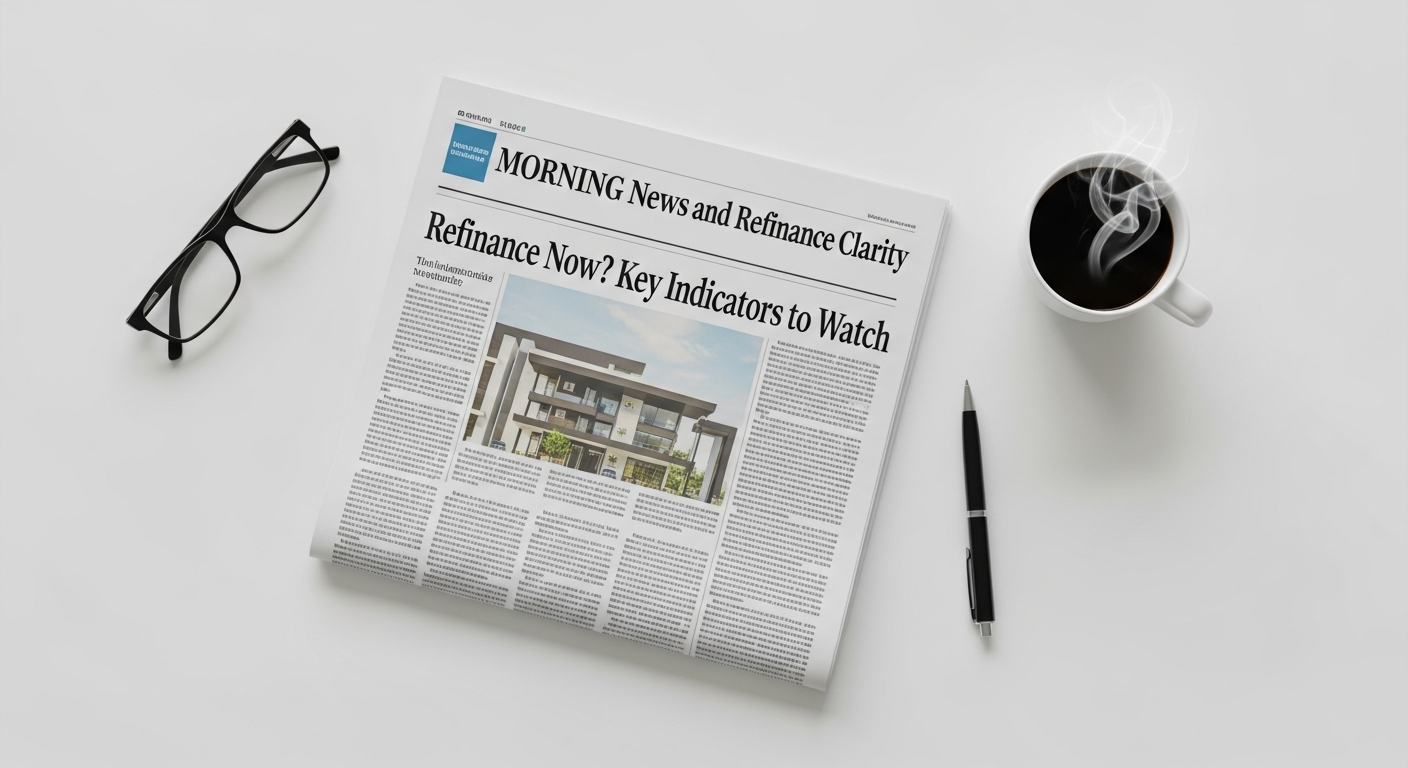
One of the most powerful and often cited signals that it might be time to refinance is a significant drop in prevailing interest rates compared to your current mortgage rate. This is perhaps the most straightforward trigger and the one that often generates the most buzz in the financial news cycle. Historically, a common rule of thumb suggests considering a refinance if current rates are at least 0.75% to 1% lower than your existing rate. However, this is a guideline, not a hard-and-fast rule, as even smaller rate differences can yield substantial savings over a long loan term, especially on larger mortgage balances.
Monitoring interest rates requires an understanding of broader economic trends and the actions of entities like the Federal Reserve. When the Fed signals a more dovish stance or undertakes measures to stimulate the economy, mortgage rates often follow suit, decreasing in response. Conversely, during periods of economic expansion or inflation concerns, rates tend to rise. Keeping an eye on these macroeconomic indicators, along with reputable financial news sources, can give you an edge in predicting rate movements. For instance, looking ahead to 2026, economists are projecting various scenarios based on inflation trends, employment data, and global economic stability. Staying informed about these forecasts can help you anticipate optimal refinancing windows.
When evaluating a potential rate drop, it’s essential to perform a careful cost-benefit analysis. While a lower interest rate translates to lower monthly payments and reduced total interest paid over the life of the loan, refinancing is not free. It involves closing costs, which can include appraisal fees, loan origination fees, title insurance, and other administrative charges. These costs can amount to 2% to 5% of the loan principal. You need to calculate your “break-even point” – the time it will take for the savings from your lower monthly payments to offset these closing costs. If you plan to sell your home before reaching this break-even point, refinancing might not be financially advantageous.
Furthermore, consider the remaining term of your current loan. If you’ve already paid down a significant portion of your mortgage and are far into your loan term, refinancing into a new 30-year mortgage, even at a lower rate, could mean paying more interest over the long run because you’re extending the repayment period. In such cases, a shorter-term refinance (e.g., a 15-year mortgage) might be more appropriate, allowing you to save interest and pay off your home faster, assuming the higher monthly payment is affordable. The key is to run the numbers meticulously, perhaps with the help of an online refinance calculator or a trusted loan officer, to truly understand the long-term financial implications of a rate-driven refinance.
Financial Health Check: Assessing Your Equity and Credit Score
Home Equity: This is the portion of your home that you truly own, calculated as your home’s current market value minus your outstanding mortgage balance. Lenders typically prefer borrowers to have a certain amount of equity to approve a refinance, particularly for a cash-out refinance. A common benchmark is a Loan-to-Value (LTV) ratio of 80% or less, meaning you have at least 20% equity in your home. A lower LTV ratio often translates to more favorable interest rates and easier approval, as it indicates less risk for the lender. To calculate your approximate equity, you would obtain a current appraisal of your home’s value and subtract your remaining mortgage principal. Building equity can happen naturally over time as you make mortgage payments and as property values appreciate. For a business owner, perhaps someone running a successful HVAC business, leveraging home equity through a cash-out refinance could provide crucial capital for expansion, equipment upgrades, or even managing cash flow during lean periods. However, it’s a decision that must be made with careful consideration of the risks involved, as you are essentially re-leveraging your primary asset.
Credit Score: Your credit score is a numerical representation of your creditworthiness, based on your payment history, amounts owed, length of credit history, new credit, and credit mix. A strong credit score (generally 740 or higher) is paramount for securing the best refinance rates. Lenders view borrowers with high credit scores as lower risk, which translates into more competitive interest rates and better loan terms. If your credit score has significantly improved since you took out your original mortgage, this alone could be a strong reason to consider refinancing, as you might now qualify for rates that were previously out of reach. Conversely, if your credit score has dipped, it might be wise to focus on improving it before applying for a refinance. This could involve paying down existing debts, disputing inaccuracies on your credit report, or simply waiting for negative marks to age off. Just as a good credit score is vital for a personal refinance, it’s also essential for obtaining favorable business loans, whether for an HVAC business or any other entrepreneurial endeavor, underscoring the interconnectedness of personal and business financial health.
Beyond equity and credit score, lenders also assess your debt-to-income (DTI) ratio and your employment stability. A lower DTI ratio (your total monthly debt payments divided by your gross monthly income) indicates that you have sufficient income to manage your debts, which is another positive signal to lenders. Stable employment demonstrates a reliable income stream, further reassuring lenders of your ability to make consistent mortgage payments. Taking a holistic view of your financial health before diving into the refinance process will significantly improve your chances of approval and securing the most advantageous terms.
Lifestyle Shifts: Major Life Events as Refinancing Triggers
Life is a dynamic journey, filled with unpredictable turns and significant milestones. These major life events, while personal, often have profound financial implications that can make refinancing not just an option, but a strategic necessity. Recognizing these shifts and understanding how they impact your financial needs is key to knowing when it’s time to adjust your home loan.
- Marriage or Divorce: A change in marital status fundamentally alters household finances. Marriage might mean combining incomes and looking for a lower monthly payment, or perhaps a cash-out refinance to fund a joint venture or consolidate pre-existing individual debts. Divorce, on the other hand, often necessitates a refinance to remove one party from the mortgage, adjust ownership, or manage new financial obligations. This can be a complex process, requiring careful legal and financial planning.
- Job Change or Promotion: A significant increase in income from a new job or a promotion can open doors to new financial strategies. With greater disposable income, you might consider refinancing to a shorter-term mortgage (e.g., from 30 years to 15 years) to pay off your home faster and save a substantial amount on interest over time. Alternatively, if your new role comes with increased expenses or a desire for greater financial flexibility, a rate-and-term refinance could lower your monthly payments, freeing up cash flow.
- Growing Family: The arrival of children or the need to care for aging parents often brings increased financial responsibilities. This could trigger a need for a cash-out refinance to fund home renovations (adding a nursery, an accessible bathroom), cover educational expenses, or manage rising healthcare costs. For example, if there are uncertainties regarding how the new administration will impact health coverage for Americans in 2026, building a stronger financial buffer through a cash-out refinance might provide peace of mind and allow families to better absorb potential increases in out-of-pocket medical expenses.
- Retirement Planning: As you approach retirement, your financial priorities shift. Many homeowners consider refinancing to a shorter term to ensure their mortgage is paid off before they stop working, eliminating a major fixed expense during retirement. Others might opt for a cash-out refinance to supplement retirement savings, pay for a dream vacation, or make necessary home modifications to age in place comfortably. The goal is often to create greater financial certainty and reduce monthly outflows during a period of fixed income.
- Unexpected Expenses and Debt Consolidation: Life throws curveballs. A sudden job loss, major medical emergency, or unexpected home repair can strain finances. In such scenarios, a cash-out refinance might be considered to consolidate high-interest credit card debt or personal loans into a single, lower-interest mortgage payment. While this can provide immediate relief and simplify payments, it’s crucial to address the underlying spending habits to avoid falling back into debt. The goal is to improve cash flow and reduce the overall burden of interest, creating a more stable financial foundation for the future.
Each of these life events presents a unique set of financial circumstances that warrant a fresh look at your existing mortgage. A proactive approach to evaluating your refinancing options during these periods can lead to significant financial advantages and greater peace of mind, allowing you to navigate life’s changes with more financial resilience.
Beyond Lower Payments: Other Strategic Reasons to Refinance
While securing a lower monthly payment and reducing overall interest costs are primary motivators for refinancing, there are several other strategic reasons that make this financial tool incredibly versatile. These less obvious, yet equally powerful, motives often align with broader financial planning goals and can significantly impact your long-term wealth and well-being.
- Shortening Your Loan Term: If your financial situation has improved significantly, you might consider refinancing from a 30-year mortgage to a 15-year mortgage. While this typically results in a higher monthly payment, it dramatically reduces the total interest you pay over the life of the loan and allows you to become debt-free much faster. This accelerated path to homeownership can free up substantial financial resources in the future for retirement, investments, or other major life goals. It’s a powerful strategy for building equity more rapidly and enhancing your financial independence.
- Converting an Adjustable-Rate Mortgage (ARM) to a Fixed-Rate Mortgage: Many homeowners initially opt for an ARM due to lower introductory rates. However, as the fixed-rate period expires, the interest rate can adjust periodically, leading to unpredictable monthly payments. In an environment where interest rates are expected to rise, or simply for the sake of financial stability, converting an ARM to a fixed-rate mortgage can provide invaluable peace of mind. A fixed rate locks in your interest rate for the entire life of the loan, making your monthly payments predictable and safeguarding you against future rate increases. This stability is often preferred by those who value consistent budgeting and long-term financial foresight.
- Cash-Out Refinance for Specific Purposes: As discussed, a cash-out refinance allows you to tap into your home equity. Beyond debt consolidation, this capital can be strategically deployed for various purposes:
- Home Improvements: Funding major renovations, additions, or repairs can increase your home’s value and improve your quality of life. Using a lower-interest mortgage to finance these projects is often more cost-effective than high-interest personal loans or credit cards.
- Investment Opportunities: Some homeowners use cash-out proceeds to invest in other assets, such as real estate, stocks, or even to start or expand a business. For instance, an ambitious entrepreneur might leverage their home equity to fund the initial capital for a new venture, much like someone might strategize how to run a successful HVAC business by securing initial funding. This is a higher-risk strategy that requires careful financial planning and a thorough understanding of investment risks.
- Education Funding: Covering college tuition or other significant educational expenses can be a burden. A cash-out refinance can provide a lump sum to manage these costs, potentially at a lower interest rate than traditional student loans.
- Debt Consolidation to Improve Mental Well-being: One of the most overlooked benefits of refinancing for debt consolidation is its profound impact on mental health. Juggling multiple high-interest debts can be incredibly stressful, leading to anxiety, sleep disturbances, and a constant feeling of being overwhelmed. By consolidating these debts into a single, lower-interest mortgage payment, you simplify your finances, reduce the pressure of high monthly payments, and often gain a clearer path to becoming debt-free. This reduction in financial stress can significantly improve mental well-being, which in turn has a demonstrable connection between sexual and mental health. When financial burdens ease, individuals often experience greater peace of mind, improved relationships, and a renewed sense of control over their lives, all of which contribute positively to overall health and intimacy. Therefore, a refinance can be a powerful tool not just for financial gain, but for holistic personal well-being.
Each of these strategic reasons requires careful consideration of your financial goals, risk tolerance, and the long-term implications. Refinancing is a powerful financial tool, but like any powerful tool, it must be used judiciously and with a clear understanding of its purpose.
The Refinancing Process: What to Expect and How to Prepare
Once you’ve determined that refinancing aligns with your financial goals and current circumstances, understanding the process itself is the next crucial step. While it shares similarities with obtaining your original mortgage, there are distinct aspects to be aware of. Being prepared can streamline the experience and ensure you secure the best possible terms.
1. Gather Your Documents: The first step is to compile a comprehensive financial dossier. Lenders will require proof of income (pay stubs, W-2s, tax returns, profit-and-loss statements if self-employed), asset statements (bank accounts, investment portfolios), and information about your current mortgage and any other debts. Having these documents organized and readily available will expedite the application process. For self-employed individuals, such as an HVAC business owner, detailed and consistent financial records are particularly important to demonstrate stable income.
2. Shop for Lenders: Do not simply go with your current mortgage provider. It is imperative to shop around and compare offers from multiple lenders, including banks, credit unions, and online mortgage brokers. Each lender will have different rates, fees, and qualification criteria. Obtain at least three to five quotes to ensure you’re getting the most competitive terms. Pay close attention to the Annual Percentage Rate (APR), which includes both the interest rate and certain closing costs, giving you a more accurate picture of the total cost of the loan.
3. Application and Pre-Approval: Once you’ve chosen a few potential lenders, you’ll complete a formal application. This will initiate a hard inquiry on your credit report, which can temporarily lower your score by a few points, but the impact is usually minimal if done within a short shopping window (typically 14-45 days). The lender will review your financial information and provide a pre-approval, outlining the loan amount and interest rate you qualify for, subject to further verification.
4. Appraisal and Underwriting: Similar to your original mortgage, an appraisal will be conducted to determine your home’s current market value. This is crucial for calculating the Loan-to-Value (LTV) ratio for the new loan. Concurrently, the lender’s underwriting department will meticulously verify all the information you provided, assess your creditworthiness, and ensure the loan meets their guidelines. This stage can involve requests for additional documentation or clarification.
5. Closing Costs and Final Review: As mentioned, refinancing involves closing costs. These can include application fees, appraisal fees, title insurance, attorney fees, and loan origination fees. You can typically either pay these costs upfront at closing or roll them into your new loan. Rolling them in increases your loan amount and total interest paid, so it’s important to weigh this decision carefully. Before closing, you will receive a Closing Disclosure, which details all the terms, costs, and fees associated with your new loan. Review this document meticulously and compare it against your initial loan estimate to ensure there are no surprises.
6. Closing: The final step involves signing the new loan documents. This typically occurs at a title company or attorney’s office. Once signed, the new mortgage officially replaces your old one. You will typically have a three-day right of rescission period for a refinance on a primary residence, allowing you to cancel the loan without penalty within that timeframe.
When NOT to Refinance: It’s equally important to know when refinancing might not be a good idea. If you have a very short time remaining on your existing mortgage, the savings from a slightly lower rate might not outweigh the closing costs. Similarly, if your credit score has significantly deteriorated, you might not qualify for favorable rates, making a refinance counterproductive. If you plan to sell your home in the very near future (e.g., within 1-2 years), the time it takes to break even on closing costs will likely make refinancing a losing proposition. Always consider your long-term plans and the true financial benefit over the entire period you expect to remain in the home. A thorough cost-benefit analysis is essential before committing to a refinance.
FAQ Section
What is the “break-even point” for refinancing?
The break-even point in refinancing is the amount of time it takes for the savings from your lower monthly mortgage payments to equal the total closing costs you paid to refinance. For example, if your closing costs were $3,000 and your monthly payment savings are $100, your break-even point would be 30 months (3,000 / 100 = 30). You would need to stay in your home and keep the new mortgage for at least 30 months to start realizing net savings.
How often can I refinance my home?
There isn’t a strict limit on how often you can refinance your home. However, each refinance incurs closing costs, so it’s generally not advisable to do it too frequently unless there’s a significant financial benefit (e.g., a substantial drop in interest rates or a major life event). Most lenders also prefer a certain period (e.g., 6 to 12 months) to pass between refinances, especially if you’re refinancing with the same lender or if it’s a cash-out refinance.
Will refinancing hurt my credit score?
Refinancing can have a temporary, minor impact on your credit score. When you apply, lenders perform a “hard inquiry” on your credit report, which can slightly lower your score by a few points for a short period. Additionally, opening a new credit account (your new mortgage) and closing an old one (your previous mortgage) can briefly affect your credit mix and average age of accounts. However, if you continue to make timely payments, your score typically recovers quickly, and the long-term benefits of a better mortgage often outweigh this minor short-term dip.
What are the common closing costs associated with refinancing?
Common closing costs for refinancing typically range from 2% to 5% of the loan amount and can include: loan origination fees, appraisal fees, title insurance, recording fees, attorney fees (in some states), credit report fees, survey fees, and escrow fees. Some lenders may offer “no-closing-cost” refinances, but these usually involve a slightly higher interest rate to cover the costs over the life of the loan.
Can I refinance if I have bad credit?
While a higher credit score (generally 740+) will secure the best rates, it may still be possible to refinance with a lower score. However, you might not qualify for the lowest advertised rates and could face higher interest rates or stricter loan terms. It’s often advisable to focus on improving your credit score before applying for a refinance, as even a modest improvement can lead to significant savings over the life of the loan. Some government-backed programs like FHA refinances might have more flexible credit requirements.
Is a cash-out refinance always a good idea?
A cash-out refinance can be a powerful financial tool, but it’s not always a good idea. It allows you to tap into your home equity, but it also means you’re taking on a larger mortgage and increasing your debt. It’s generally a good idea if the cash is used for appreciating assets (like home improvements that increase value or wise investments) or to consolidate high-interest debt (where the new mortgage interest rate is significantly lower). It can be risky if the cash is used for depreciating assets, impulse purchases, or if you struggle with managing debt, as you’re putting your home at greater risk.
Recommended Resources
You might also enjoy Maternity Leave Rights Guide from Protect Families Protect Choices.
For more on how to know, see Just In Time Manufacturing Explained on Mitsubishi Manufacturing.