
Your YouTube Journey to Financial Freedom: A Comprehensive Guide for 2026
Hey there, future content creator! Ever dreamed of turning your passions, knowledge, or unique perspective into a thriving income stream? Well, in 2026, YouTube isn’t just a platform for entertainment; it’s a legitimate business opportunity, a digital goldmine waiting for savvy individuals like you. If you’re looking to improve your financial and professional life, understanding how to effectively leverage YouTube could be one of the smartest moves you make. This comprehensive guide will walk you through everything you need to know, from laying the groundwork to diversifying your income, all in plain English, with actionable steps, and real-world examples. Let’s dive in and unlock your earning potential!
Laying the Foundation: Niche, Audience, and Content Strategy
Before you even think about hitting record, you need a solid plan. Think of your YouTube channel as a business, and every successful business starts with a clear vision.
Finding Your Niche: What Will You Talk About?
This is perhaps the most critical first step. A niche is your specific topic or area of focus. Trying to appeal to everyone means appealing to no one.
- Passion Meets Expertise: What are you genuinely interested in and knowledgeable about? Your enthusiasm will be contagious, and your expertise will build trust.
- Market Demand: Is there an audience for your chosen topic? Use tools like Google Trends, YouTube’s search bar (look at autocomplete suggestions), and competitor analysis to gauge interest. For example, “budget travel tips for families” is a niche that combines passion (travel), expertise (budgeting), and clear market demand.
-
Examples of Profitable Niches:
- Personal Finance: Budgeting, investing for beginners, debt repayment strategies.
- Tech Reviews: Unboxing new gadgets, software tutorials, smart home setups.
- DIY & Crafts: Home renovation projects, specific craft tutorials (e.g., resin art, pottery).
- Health & Fitness: Home workouts for busy professionals, healthy meal prep, mental wellness tips.
- Educational Content: Language learning, coding tutorials, historical deep dives.
Action Step: Brainstorm 3-5 topics you love. For each, do a quick YouTube search to see what kind of content already exists and identify gaps you could fill.
Defining Your Target Audience: Who Are You Talking To?
Once you have a niche, picture your ideal viewer.
- Demographics: How old are they? Where do they live? What’s their income level?
- Psychographics: What are their interests, challenges, goals, and values?
- Why it Matters: Knowing your audience helps you tailor your content, tone, language, and even your monetization strategies. For example, if your audience is young professionals, discussing investment apps might resonate more than retirement planning.
Action Step: Create an “avatar” for your ideal viewer. Give them a name, age, job, and a few core problems they’re trying to solve.
Content Pillars & Strategy: What Will You Create?
With your niche and audience defined, it’s time to plan your content.
- Content Pillars: These are 3-5 overarching themes within your niche. If your niche is “personal finance for millennials,” your pillars might be “budgeting tips,” “beginner investing,” and “side hustles.”
- Content Calendar: Consistency is key. Plan your video topics weeks or even months in advance. This prevents burnout and ensures a steady stream of content.
- Video Formats: Experiment with tutorials, reviews, vlogs, interviews, Q&As, explainers, and short-form content (YouTube Shorts).
- Keyword Research: Use tools like TubeBuddy, vidIQ (free versions available), or even YouTube’s search bar to find what people are actively searching for in your niche. If you’re in the personal finance niche, relevant keywords could be “how to save money,” “best investment apps,” or “start a side hustle.”
Action Step: Outline your first 10 video ideas, including potential titles and a brief summary of what each video will cover.
Building Your Channel: Production, Optimization, and Growth Hacks
Having great ideas is one thing; bringing them to life and getting them seen is another. This section covers the practical aspects of creating and promoting your videos.
Video Production Basics: Quality Matters (But Don’t Break the Bank)
You don’t need Hollywood equipment to start, but good quality is essential for viewer retention.
-
Equipment:
- Camera: Your smartphone is perfectly capable for beginners. As you grow, consider a mirrorless camera (e.g., Sony ZV-E10, Canon M50 Mark II).
- Audio: This is often more important than video. A simple lavalier microphone (like the Rode SmartLav+ for phones or a basic USB mic for computers) can make a huge difference.
- Lighting: Natural light is best. Position yourself facing a window. For indoor setups, a cheap ring light or softbox kit can elevate your production.
- Editing Software: DaVinci Resolve (free, professional-grade), CapCut (free, excellent for mobile), KineMaster (mobile), or paid options like Adobe Premiere Pro.
-
Filming Tips:
- Shoot in a quiet, well-lit environment.
- Look directly at the camera to connect with your audience.
- Keep videos concise and to the point. Respect your viewers’ time.
- Add B-roll footage (supplementary clips) to make your videos more engaging.
Action Step: Practice recording a short video (2-3 minutes) on your phone. Pay attention to your audio quality and lighting. Don’t aim for perfection, just progress.
YouTube SEO: Getting Discovered
Search Engine Optimization (SEO) helps YouTube understand your content and show it to the right viewers.
- Keyword-Rich Titles: Include your main keyword at the beginning of your title. Make it catchy and benefit-driven (e.g., “How to Save $1000 in 30 Days: A Beginner’s Guide”).
- Detailed Descriptions: Write a comprehensive description (200-500 words) that includes keywords, a summary of your video, links to resources, and relevant social media. Put important links at the top.
- Relevant Tags: Use a mix of broad and specific tags related to your video. Don’t keyword stuff.
- Compelling Thumbnails: Your thumbnail is a billboard. Make it high-resolution, easy to read, and intriguing. Use bright colors, clear text, and expressive faces. Canva is an excellent free tool for this.
- End Screens & Cards: Use these to promote other videos on your channel, encourage subscriptions, or link to external resources. This keeps viewers on your channel longer.
Action Step: For your next video, spend 15-20 minutes crafting an optimized title, description, and thumbnail before you even upload.
Audience Engagement: Building a Community
YouTube rewards channels that foster interaction.
- Respond to Comments: Engage with your viewers. Answer questions, thank them for feedback, and show you appreciate their presence.
- Ask Questions: Encourage interaction by asking questions in your videos (e.g., “What are your biggest challenges with X? Let me know in the comments!”).
- Community Tab: Use this feature to post polls, updates, behind-the-scenes content, or ask for video ideas.
- Go Live: Live streams are excellent for real-time interaction and building a strong community connection.
Action Step: Commit to replying to every comment on your next three videos within 24 hours.
Promoting Your Videos: Expanding Your Reach
Don’t just upload and hope. Promote your content!
- Social Media: Share your videos on Instagram, TikTok, Facebook, X (formerly Twitter), LinkedIn, and relevant subreddits. Create short teasers for other platforms.
- Email List: If you have one, send out new video notifications.
- Collaborations: Partner with other YouTubers in your niche. This exposes your channel to their audience and vice versa.
- Embeds: Embed your videos on your blog or website.
Action Step: Identify two other social media platforms where your target audience spends time and create a plan to share your next video there.
The Path to Monetization: Activating Income Streams
This is where your efforts start translating into real money. YouTube offers multiple avenues for income, and the smartest creators diversify.
1. YouTube Partner Program (YPP): Ad Revenue
This is the most common way creators earn directly from YouTube.
-
Requirements (as of 2026): To be eligible, you generally need:
- 1,000 subscribers.
- 4,000 valid public watch hours in the past 12 months OR 10 million valid public Shorts views in the past 90 days.
- Adherence to all YouTube monetization policies.
- An AdSense account.
- How it Works: Once accepted, YouTube places ads on your videos, and you earn a share of the revenue. The amount you earn varies widely based on your audience demographics, niche, and advertiser demand.
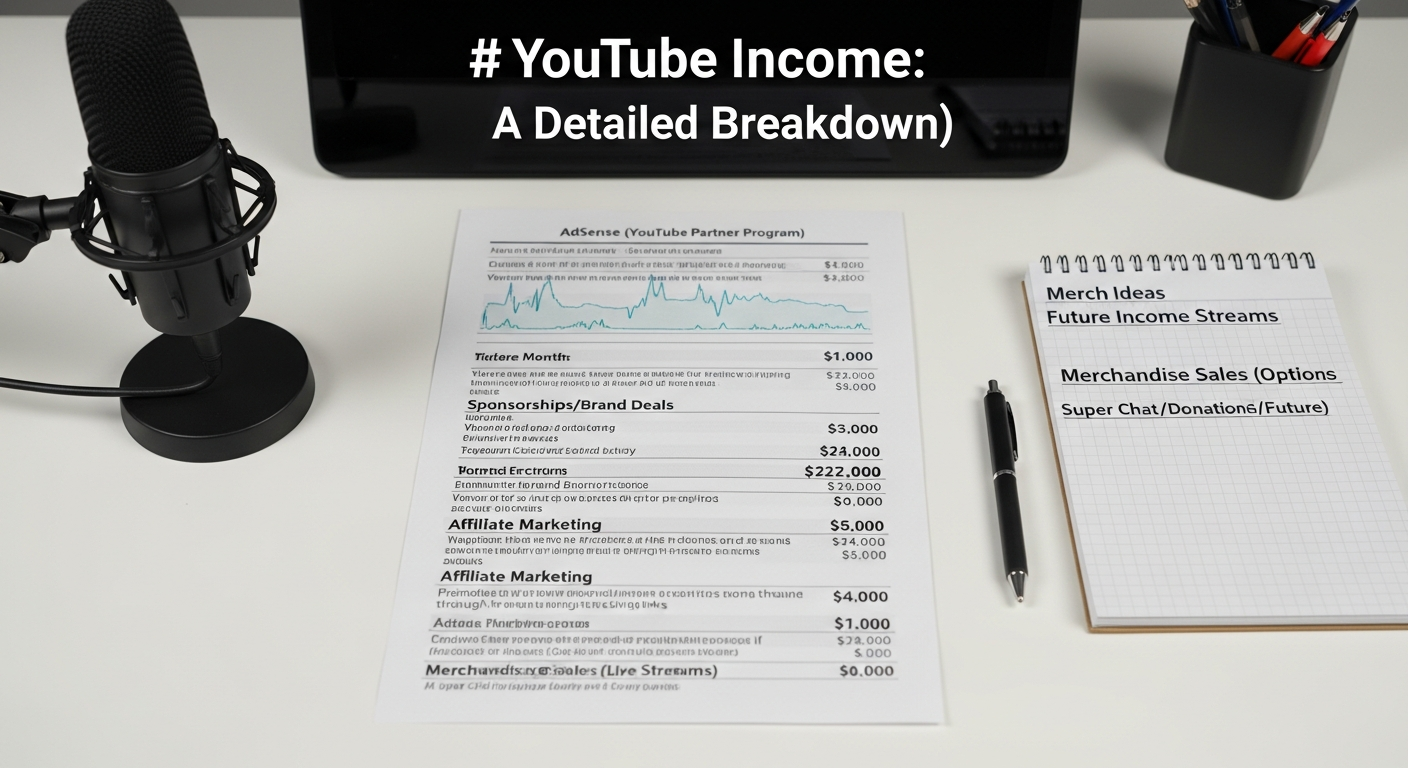
- Real Numbers: You’ll often hear about CPM (Cost Per Mille, or cost per 1,000 ad impressions) and RPM (Revenue Per Mille, or revenue per 1,000 views). RPM for creators can range from $3 to $10+ per 1,000 views, depending on your niche and audience location. For example, a channel with 100,000 views in a month could earn $300-$1,000+ from ads alone.
Action Step: Track your current subscriber and watch hour count. Set clear milestones to reach YPP eligibility.
2. Affiliate Marketing: Promoting Products You Love
This is a powerful income stream that doesn’t require YPP eligibility.
- How it Works: You recommend products or services in your videos and description box. When viewers click your unique affiliate link and make a purchase, you earn a commission.
-
Finding Programs:
- Amazon Associates: Easy to join, vast product selection.
- Specific Brands: Many companies have their own affiliate programs (e.g., software companies, fitness brands).
- Affiliate Networks: ShareASale, CJ Affiliate, Rakuten Advertising host thousands of programs.
-
Best Practices:
- Only recommend products you genuinely use and trust. Authenticity is key.
- Always disclose your affiliate relationships (it’s legally required and builds trust). A simple “Links in the description are affiliate links, meaning I may earn a small commission at no extra cost to you” suffices.
- Integrate recommendations naturally into your content, don’t just hard sell.
- Real Numbers: Commissions vary from 1% (Amazon physical products) to 50%+ (digital products, software subscriptions). A channel with 5,000 views on a product review video could generate $50-$500+ in affiliate sales, depending on the product’s price and commission rate.
Action Step: Identify 1-2 products or services you already use and love. Check if they have an affiliate program and sign up.
3. Brand Sponsorships & Integrations: Direct Partnerships
As your channel grows, brands will pay you to feature their products or services.
- How it Works: A brand pays you a flat fee to create dedicated content (e.g., a full review) or integrate their product/message into an existing video.
-
Getting Sponsorships:
- Create a Media Kit: A professional document outlining your channel’s stats (subscribers, average views, demographics), past brand collaborations, and contact info.
- Reach Out: Proactively pitch brands relevant to your niche once you have a decent audience (e.g., 5,000+ subscribers).
- Use Platforms: FameBit (by YouTube), Grapevine Logic, and other influencer marketing platforms can connect you with brands.
- Pricing: Rates vary wildly based on your niche, audience engagement, and video length/complexity. Small channels (5k-20k subscribers) might charge $100-$500 per integrated mention, while larger channels can command thousands or tens of thousands for dedicated videos. A good rule of thumb for starting out might be $100 per 1,000 average views on your recent videos.
- Disclosure: Always disclose sponsored content using YouTube’s built-in “paid promotion” feature and verbally in your video.
Action Step: Once you hit 5,000 subscribers and have consistent views, create a simple media kit template to prepare for outreach.
4. Selling Your Own Products & Services: Maximum Control
This is where you have the highest profit margins.
- Merchandise: T-shirts, mugs, hoodies with your channel’s branding or catchphrases. Platforms like Printful or Printify integrate directly with e-commerce sites and handle printing/shipping.
- Digital Products: Ebooks, online courses, presets (for photos/videos), templates, worksheets related to your niche. Platforms like Teachable, Kajabi, Gumroad make selling easy.
- Services: Offer coaching, consulting, graphic design, video editing, or other services related to your expertise.
Real Numbers: A digital product like an ebook could sell for $20-$50, while an online course might go for $99-$499+. With a good sales funnel, this can quickly become your primary income. A channel with 20,000 subscribers could realistically sell 50-100 units of a $25 ebook, generating $1,250-$2,500.
Action Step: Brainstorm one digital product or service idea you could offer based on your channel’s niche.
5. Fan Funding: Direct Support from Your Community
Your most loyal fans often want to support you directly.
- YouTube Memberships: Viewers pay a monthly fee for exclusive perks like custom emojis, badges, and members-only content.
- Super Chat & Super Stickers: During live streams and Premieres, viewers can pay to have their messages highlighted.
- Patreon: An external platform where fans pledge monthly financial support in exchange for exclusive content, early access, or behind-the-scenes glimpses.
Real Numbers: A channel with 10,000 subscribers might have 50-200 active members/patrons paying $5-$10 per month, generating $250-$2,000+ monthly in recurring income.
Action Step: Once you have a dedicated audience, consider enabling YouTube Memberships or setting up a simple Patreon page with a few perk tiers.
Scaling and Sustaining Your YouTube Business in 2026

Making money is great, but building a sustainable YouTube business requires continuous learning and adaptation.
Analytics Deep Dive: Your Data is Gold
YouTube Studio Analytics provides invaluable insights.
- Audience Retention: Where do viewers drop off? This tells you what parts of your videos are engaging and what needs improvement.
- Traffic Sources: How are people finding your videos? (YouTube Search, Suggested Videos, External). This helps you refine your SEO and promotion strategy.
- Audience Demographics: Who is watching? (Age, gender, location). This informs content creation, brand outreach, and product development.
- Real-time Views: See how your latest video is performing.
Action Step: Spend 30 minutes each week reviewing your channel analytics. Look for patterns and actionable insights.
Diversification: Don’t Put All Your Eggs in One Basket
Relying solely on ad revenue is risky. YouTube algorithm changes, ad market fluctuations, or even a single video getting demonetized can impact your income. Aim to have at least 3-4 active income streams.
Team Building (Optional): When to Delegate
As your channel grows, your time becomes more valuable.
- Editors: If editing takes too much time, hire a freelance video editor.
- Thumbnail Designer: Outsource this to someone who specializes in creating click-worthy visuals.
- Virtual Assistant: For managing comments, research, or scheduling.
Action Step: List tasks you spend the most time on that don’t directly require your unique voice. When your income allows, consider outsourcing one of them.
Staying Current: The Ever-Evolving Platform
YouTube is constantly changing.
- Algorithm Updates: Stay informed by following official YouTube Creator channels and reputable industry news.
- New Features: Embrace YouTube Shorts, Live streams, and other new tools as they roll out.
- Content Trends: While staying true to your niche, be aware of what’s currently popular and how you might adapt it to your content.
Legal & Financial: Protect Your Business
As you start earning significant income, treat your channel like a business.
- Taxes: Understand your local tax obligations for self-employment income. Keep meticulous records of all earnings and expenses.
- Disclosures: Always disclose paid promotions and affiliate links.
- Business Registration: Depending on your income and location, you might need to register your YouTube channel as a sole proprietorship or LLC. Consult a local accountant.
Action Step: Set up a separate bank account for your YouTube earnings and expenses to simplify financial tracking.
Tools and Resources for the Modern Creator
Here’s a quick list of essential tools to help you on your journey:
- Video Editing: DaVinci Resolve (free), CapCut (free mobile), Adobe Premiere Pro (paid).
- Audio Recording/Editing: Audacity (free), Adobe Audition (paid).
- Thumbnail/Graphic Design: Canva (free/paid), Adobe Photoshop (paid).
- YouTube SEO & Analytics: TubeBuddy (free/paid), vidIQ (free/paid).
- Affiliate Networks: Amazon Associates, ShareASale, CJ Affiliate.
- Merchandise: Printful, Printify.
- Digital Products/Courses: Gumroad, Teachable, Kajabi.
- Fan Funding: Patreon, YouTube Memberships.
- Stock Footage/Music: Epidemic Sound, Artlist (paid subscriptions for royalty-free assets).
FAQ Section: Your Burning Questions Answered
Q: How long does it take to start making money on YouTube?
A: It varies greatly. You can start earning immediately with affiliate marketing or selling your own products, even with a small audience. For ad revenue via the YouTube Partner Program, you need to meet the subscriber and watch hour requirements, which can take anywhere from 6 months to 2 years or more of consistent effort. It’s a marathon, not a sprint.
Q: How much money can a small channel (e.g., 5,000-10,000 subscribers) make?
A: A small channel might not earn much from ad revenue alone (perhaps $50-$200/month). However, by strategically using affiliate marketing and securing a few brand sponsorships, they could realistically earn $500-$1,500+ per month. Selling a single digital product could significantly boost this figure.
Q: Do I need expensive equipment to start a YouTube channel?
A: Absolutely not! You can start with just your smartphone (for video and audio), natural light, and free editing software like CapCut or DaVinci Resolve. Focus on delivering valuable content first. You can upgrade your gear as your channel grows and generates income.
Q: What are the biggest mistakes new YouTubers make?
A: Common mistakes include: not picking a niche (trying to appeal to everyone), inconsistent uploads, ignoring analytics, not optimizing videos for search, giving up too soon, and not engaging with their community. The biggest mistake is often waiting for perfection instead of starting.
Q: How often should I upload videos to grow my channel?
A: Consistency is more important than frequency. Most successful smaller channels upload once or twice a week. Find a schedule you can realistically maintain without burning out, ensuring each video maintains quality. For YouTube Shorts, more frequent uploads (daily) can be beneficial.
Conclusion: Your Creative & Financial Future Awaits
Starting and monetizing a YouTube channel in 2026 is a journey that demands dedication, creativity, and a willingness to learn. It’s not a get-rich-quick scheme, but a legitimate entrepreneurial path with immense potential for financial independence and personal fulfillment. By focusing on a clear niche, understanding your audience, consistently producing quality content, and strategically diversifying your income streams, you can build a thriving online business. Remember, every major YouTuber started with zero subscribers. Your unique voice and perspective are valuable. Take these steps, be patient, and start building your financial and creative legacy on YouTube today!