The Ultimate Guide to Negotiating Your Bills and Unlocking Serious Savings
Why Negotiate? The Power of Asking (and Saving!)
Before we dive into the “how,” let’s talk about the “why.” Why should you spend your precious time negotiating? Because it works, and the financial impact can be significant. Many companies, especially those in competitive industries like telecommunications, insurance, and even banking, have built-in budgets for customer retention and loyalty discounts. They’d rather keep you as a paying customer, even at a slightly lower rate, than lose you entirely to a competitor.
Consider this: If you manage to save just $25 a month on your internet bill, $15 on your phone bill, and $30 on your car insurance, that’s a total of $70 in monthly savings. Over a year, that adds up to $840! Imagine what you could do with an extra $840: build up your emergency fund, pay down debt, invest in a new skill, or finally take that weekend trip you’ve been dreaming about. The cumulative effect of small savings across multiple bills is truly powerful.
Beyond the direct financial benefit, negotiating empowers you. It shifts your mindset from passively accepting charges to actively managing your finances. It teaches you to advocate for yourself and recognize that your loyalty as a customer has value. Companies want your business, and they often have the flexibility to adjust rates for valued customers – you just have to ask.
Preparation is Key: Your Negotiation Toolkit
You wouldn’t go into a job interview without preparing, and negotiating your bills is no different. The more information you have, the stronger your position will be. Here’s what to gather before you pick up the phone:
-
Your Current Bill Information:
- Account Numbers: Have them ready for each service you plan to negotiate.
- Current Plan Details: What are you actually paying for? How much internet speed, how many TV channels, what insurance coverage?
- Usage Data: For services like data plans or utilities, knowing your typical usage can help you argue for a better-suited (and cheaper) plan.
-
Competitor Offers:
- This is your strongest leverage. Research what new customers are being offered by competing providers in your area for similar services. For example, if you’re paying $80 for 100 Mbps internet, but a competitor offers 150 Mbps for $60, you have a powerful argument.
- Don’t just look at new customer deals. See if there are any current promotions for existing customers or bundles you could qualify for.
- Make a note of the competitor’s name, their specific offer, and the price.
-
Your Loyalty & History:
- How long have you been a customer? “I’ve been a loyal customer for X years” is a powerful opening.
- Do you have a good payment history? Mentioning that you always pay on time shows you’re a reliable customer worth keeping.
-
Your Goal:
- What do you want to achieve? A specific percentage off? A lower monthly rate? A faster internet speed for the same price? A waiver of a fee? Have a clear target in mind, but also be open to alternatives.
-
A Calm Demeanor:
- Negotiation is about being polite but firm. Frustration won’t get you anywhere. Remember, the person on the other end of the line is just doing their job. A friendly, respectful approach is much more likely to yield positive results.
Mastering the Art of the Call: Step-by-Step Negotiation Strategies
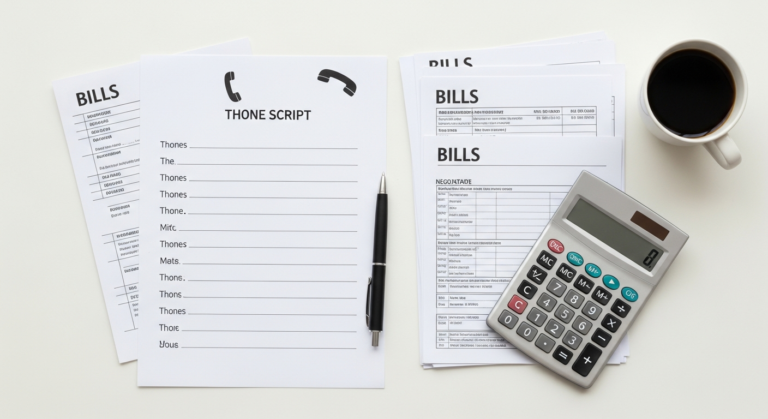
With your toolkit ready, it’s time to make the call. Here’s a general script and strategy that works across many types of bills:
-
Start with a Clear Purpose:
- When you get a representative, state your intention clearly and politely.
- Example: “Hi, my name is [Your Name], and I’m calling to discuss my monthly bill. I’ve been a loyal customer for [X years], and I’m looking to see if there are any options available to lower my current rate.”
-
State Your Value (Loyalty & Payment History):
- Reiterate your long-standing relationship and good payment record. This builds rapport and reminds them why they should want to keep you.
-
Introduce Your Leverage (Competitor Offers):
- This is where your research comes in.
- Example: “I’ve noticed that [Competitor Name] is offering a similar package for [specific price], which is significantly lower than what I’m currently paying. While I’d prefer to stay with your company, I need to explore all my options to reduce my expenses.”
- If you don’t have a direct competitor offer, you can say, “I’m reviewing all my household expenses and looking for ways to cut costs. Are there any loyalty discounts or promotions I might be eligible for?”
-
Be Specific with Your Ask:
- Don’t just say “lower my bill.” Ask for a specific amount or a specific plan.
- Example: “Would it be possible to get my monthly rate closer to [Target Price]?” or “Can you match [Competitor’s Offer]?”
-
Listen Carefully & Be Patient:
- The representative might need to check various options. Be prepared for them to offer a smaller discount than you hoped.
- Don’t jump at the first offer if it’s not what you want.
-
Escalate if Necessary:
- If the first representative says they can’t help, politely ask, “Is there anyone else I could speak to who might have access to different promotions or retention offers, perhaps in the loyalty or retention department?”
- Often, the “retention” department has more power to offer discounts.
-
Be Prepared to Walk Away (or Threaten To):
- This is the ultimate leverage. If you’ve done your research and are truly prepared to switch, saying, “I understand, but if we can’t find a way to lower my bill, I may have to consider canceling my service” can sometimes prompt a better offer.
- Important: Only use this if you are genuinely willing to follow through.
-
Document Everything:
- Once you reach an agreement, write down the date, the name of the representative, their employee ID (if they give it), the exact details of the new plan or discount, and when it goes into effect.
- Confirm they will send you an email confirmation or update your online account.
Targeting Your Bills: Where to Find the Biggest Savings
Let’s get specific about which bills are prime targets for negotiation and how to approach each one.
Internet, Cable, and Phone Bills
These are often the easiest to negotiate due to fierce competition. Many providers offer aggressive “new customer” rates that existing customers rarely see. Your goal is to get as close to those new customer rates as possible, or at least a significant loyalty discount.
- Strategy: Call and speak to the “customer retention” or “loyalty” department. Mention competitor offers (e.g., “Xfinity is offering 200 Mbps for $50, and I’m paying $85 for 100 Mbps with you”). Ask about bundling services if you have multiple with the same company. Be firm about potentially switching providers if they can’t meet your needs.
- Real Example: “I was paying $110 for internet and basic cable. After calling, mentioning a local fiber optic competitor’s $70 internet-only deal, and asking to speak to retention, I got my internet-only plan for $65/month, saving $45 monthly.”
Insurance (Auto, Home, Renters, Health)
Insurance premiums can fluctuate wildly between providers and even within the same provider over time. Don’t just auto-renew!
- Strategy: Get quotes from at least three different insurance companies every 1-2 years. Use online comparison tools. Once you have competing quotes, call your current insurer. Ask if they can match or beat the lower quote. Inquire about specific discounts you might qualify for (e.g., good driver, multi-policy, home security systems, low mileage, bundling auto and home). Consider increasing your deductible if you have a solid emergency fund, as this can lower premiums.
- Real Example: “After getting a new auto insurance quote that was $400 cheaper annually, my current insurer matched it and even found an additional multi-policy discount, saving me a total of $450 a year.”
Credit Card Interest Rates
If you carry a balance, a high APR (Annual Percentage Rate) can cost you a fortune. Lowering it can significantly reduce your minimum payments and the total interest you pay.
- Strategy: Call your credit card issuer. Explain that you’re looking to reduce your interest rate and mention your good payment history (if applicable). You can also mention that you’re considering a balance transfer to another card with a lower introductory APR. Many card companies would rather lower your rate slightly than lose your business or have you transfer your balance elsewhere.
- Real Example: “I called my credit card company and asked if they could lower my 22% APR. After a brief discussion about my on-time payments, they dropped it to 14.99%, saving me about $30 a month on interest payments.”
Medical Bills
Medical bills can be confusing and often negotiable, especially if you’re uninsured or facing high out-of-pocket costs.
- Strategy:
- Ask for an Itemized Bill: Sometimes there are errors or duplicate charges.
- Negotiate a Cash Discount: If you can pay a lump sum upfront, many providers will offer a significant discount (e.g., 20-40% off) for self-pay patients or those paying immediately.
- Apply for Financial Assistance: Hospitals often have programs for low-income patients.
- Set Up a Payment Plan: If you can’t pay in full, negotiate an interest-free payment plan that fits your budget.
- Real Example: “I received a $1,200 bill for a procedure. I called and asked for an itemized bill, then inquired about a self-pay discount. They offered a 30% reduction if I paid within 30 days, bringing the total down to $840.”
Utilities (Electricity, Gas, Water)
While often less negotiable than other services, there are still ways to save.
- Strategy:
- Compare Providers: In some deregulated areas, you can choose your electricity or gas supplier. Shop around for the best rates.
- Budget Billing: Ask your utility company about budget billing, which averages your annual usage into consistent monthly payments, avoiding seasonal spikes.
- Energy Audits: Many utility companies offer free or low-cost home energy audits to identify areas where you’re losing energy (and money).
- Government Programs: Inquire about assistance programs for low-income households.
- Real Example: “My gas bill spiked in winter. I called and enrolled in budget billing, which smoothed out my payments, making it easier to manage cash flow. I also got a free energy audit, which led me to seal some drafty windows, cutting my overall usage by 10%.”
Subscriptions & Memberships
These are often “set it and forget it” expenses that quietly drain your bank account.
- Strategy: Review your bank statements regularly to identify all recurring subscriptions. Cancel any you don’t use or need. For those you do use (streaming services, gym memberships, software), call or chat with customer service. Ask if there are any loyalty discounts, student/senior rates (if applicable), or promotions you can switch to. Sometimes, simply threatening to cancel will prompt an offer.
- Real Example: “I was paying $15/month for a streaming service I barely watched. I called to cancel, and they offered me three months at half price to keep me. I decided to take the deal, saving $22.50 over that period, and made a mental note to reassess after the promotion.”
Beyond the Phone Call: Other Negotiation Tactics
While the phone call is often the most effective, there are other avenues to explore:
-
Online Chat Support:
- Many companies offer online chat. This can be less intimidating for some, and you get a written record of the conversation. The agents often have access to similar deals as phone reps.
-
Leverage Switching:
- Sometimes, the only way to get the best deal is to actually switch providers. If you’re truly prepared to do this, research the process (e.g., number porting for phones, installation for internet). The savings from switching can often outweigh the hassle.
-
Automated Bill Negotiation Services:
- Several apps and services claim to negotiate bills for you. While convenient, they often take a percentage of your savings (e.g., 30-50%). Consider these only if you genuinely lack the time or confidence to do it yourself, and always read the fine print regarding fees. For Diaal News readers, we recommend learning the DIY approach first!
-
Bundle and Save:
- Often, getting multiple services from the same provider (e.g., internet + mobile, auto + home insurance) can lead to significant discounts. Always ask about bundling options.
Maintaining Your Savings Momentum
Negotiating your bills isn’t a one-time event. To truly maximize your savings, you need to make it an ongoing practice:
-
Set Calendar Reminders:
- Most promotional rates or contracts last for 12 or 24 months. Set a reminder in your digital calendar (e.g., Google Calendar, Outlook) for 10-11 months after your successful negotiation. This gives you time to research new deals before your current one expires.
-
Review Statements Regularly:
- Monthly, glance over your bank and credit card statements. Look for unexpected charges, price increases, or subscriptions you forgot about. This vigilance helps catch issues early.
-
Keep Records:
- Maintain a simple spreadsheet or document noting your current service, price, contract end date, and the date you plan to re-negotiate. This makes future calls much easier.
-
Automate Savings (Optional but Recommended):
- Once you save money, consider setting up an automatic transfer of that saved amount from your checking account to a savings account or investment account. This ensures the money actually contributes to your financial goals rather than just disappearing into daily spending.