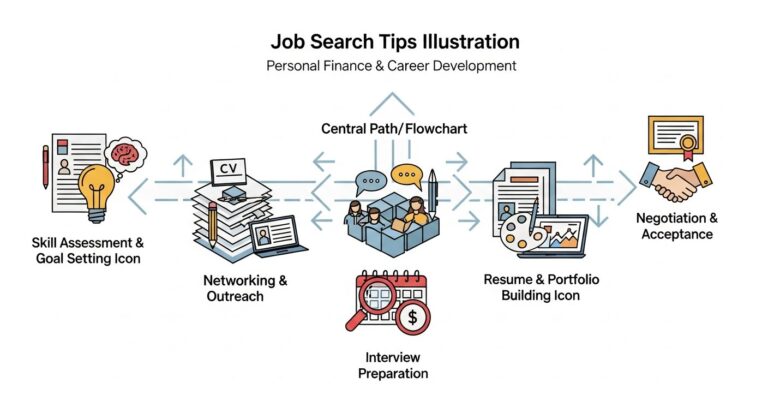
Job Search Tips: Your Ultimate Guide to Landing Your Dream Role
Embarking on a job search can often feel overwhelming, but with the right job search tips and proven strategies, you can confidently navigate the path to your ideal career. This comprehensive guide provides essential job search tips covering everything from strategic resume tailoring and proactive networking to mastering interviews and confident salary negotiation. Our goal is to equip you with actionable advice to enhance your career development and secure a role that aligns with your professional aspirations and personal finance goals. Discover the micro-level tactics that significantly increase your chances of success in 2026 and beyond.
The modern job market demands more than just sending out generic applications; it requires a strategic and personalized approach where job seekers actively manage their personal branding and demonstrate their unique value proposition. These crucial job search tips involve a blend of online and offline activities, ensuring maximum visibility and credibility. Ignoring any facet can significantly hinder your progress. Furthermore, aligning your job search with your long-term career development objectives is crucial, moving beyond short-term gains to sustainable growth and stability for your personal finance.
What Are the Most Effective Job Search Strategies Today?
In today’s competitive job market, a multi-faceted approach is essential for any job seeker. The most effective job search strategies combine digital prowess with human connection, focusing on tailored applications, robust networking, and continuous skill refinement. Successful job seekers understand that a proactive and strategic mindset is paramount. They embrace technology while prioritizing genuine human connections, recognizing that both are vital cogs in the career development machine. Understanding the “what,” “why,” and “how” of these strategies allows individuals to optimize their efforts and stand out from the crowd.
The modern landscape demands more than just sending out generic applications. It requires a strategic and personalized approach where job seekers actively manage their personal branding and demonstrate their unique value proposition. This involves a blend of online and offline activities, ensuring visibility and credibility. Ignoring any facet can significantly hinder your progress. Furthermore, aligning your job search with your long-term career development objectives is crucial, moving beyond short-term gains to sustainable growth and stability for your personal finance.
Here’s an overview of key strategies that define success in today’s job market:
- Strategic Application Customization: Tailoring your application materials, especially your resume and cover letter, to each specific job description is non-negotiable. Generic submissions rarely pass the initial screening.
- Proactive Networking: Building and nurturing professional relationships, both online (via platforms like LinkedIn) and offline, significantly broadens your opportunities and provides access to the hidden job market.
- Interview Mastery: Thorough preparation for various interview formats, including behavioral and situational questions, allows you to articulate your skills and experiences effectively.
- Strong Online Presence: A professional and consistent online presence, reflecting your skills and aspirations, reinforces your credibility and makes you discoverable to recruiters.
- Continuous Skill Development: Staying abreast of industry trends and continuously upgrading your skills ensures your marketability and relevance.
Why Do Traditional Job Search Methods Fall Short in the Modern Market?
Many traditional job search methods, while once effective, now often fall short due to the evolution of technology and hiring practices. Simply browsing job boards and submitting a generic resume is no longer sufficient. Applicant Tracking Systems (ATS) filter out many unqualified candidates before a human even sees their application, emphasizing the need for keyword optimization and tailored content. The “why” behind this shift is the sheer volume of applications and the need for efficiency in the hiring process. This means job seekers must adapt their “how” to meet these new demands, embracing data-driven approaches and personalized communication.
| Strategy (Entity) | Description (Attribute) | Key Benefit (Attribute) | Best For (Attribute) |
|---|---|---|---|
| Tailored Resumes | Customizing your resume and cover letter for each specific job. | Higher interview rates, bypasses ATS filters. | All job seekers, especially for competitive roles. |
| Proactive Networking | Building professional relationships through platforms and events. | Access to hidden job market, mentorship, referrals. | Job seekers looking for specific roles or career transitions. |
| Interview Preparation | Practicing responses, researching companies, preparing questions. | Increased confidence, clear articulation of value. | All job seekers preparing for any interview type. |
| Online Presence | Optimizing LinkedIn, professional websites, and social media. | Enhanced visibility, personal branding, recruiter outreach. | Professionals at all levels, particularly those in tech/creative fields. |
| Skill Development | Acquiring new skills or enhancing existing ones relevant to industry. | Increased marketability, career advancement, adaptability. | Individuals seeking career growth, transitions, or upskilling. |
How Do You Craft a Standout Resume and Cover Letter?
Your resume and cover letter are often the first impression you make on a potential employer. Crafting documents that stand out requires meticulous attention to detail, strategic keyword usage, and a clear articulation of your value proposition. These aren’t just summaries of your past; they are marketing tools designed to secure an interview. The “what” is a concise, impactful document; the “why” is to grab attention and pass initial screenings; and the “how” involves tailoring every aspect to the specific job and company.
How to Optimize Your Resume for Applicant Tracking Systems (ATS)
Applicant Tracking Systems (ATS) are software programs used by nearly all large companies to manage job applications. These systems scan resumes for keywords, formatting, and relevance, often filtering out up to 75% of applicants before a human recruiter even sees them. Optimizing your resume for ATS is therefore a critical job search tip. To succeed, you must understand how these systems work. This means using common job titles, mirroring keywords directly from the job description, and employing a clean, standard format. Avoid complex graphics, unusual fonts, and unnecessary tables which can confuse the ATS. For example, if a job description lists “project management,” use that exact phrase rather than a synonym like “project coordination.”
When optimizing, consider the following attributes: readability for machines, keyword density, and clear section headings. Ensure your resume directly addresses the requirements outlined in the job description, demonstrating a clear match. The “when” is before every single application, as each job description will have unique keywords. The “who” benefits from this is literally every job seeker applying online, making it a universal and indispensable strategy.
What Are the Key Elements of a Compelling Cover Letter?
While your resume presents your qualifications, a cover letter tells your story, connecting your skills and experiences directly to the specific role and company culture. It’s an opportunity to show personality and passion that a bullet-point resume cannot convey. A compelling cover letter acts as a bridge, explaining “why” you are the ideal candidate for this specific job at this specific company. It should introduce you, highlight your most relevant achievements, and express genuine interest.
Key attributes of an effective cover letter include: personalization, conciseness, and enthusiasm. Address it to a specific hiring manager if possible, not “To Whom It May Concern.” Start with a strong opening that grabs attention, detail 2-3 specific accomplishments that align with the job requirements (using quantifiable achievements), and conclude with a forward-looking statement expressing your eagerness for an interview. The “how” involves extensive research into the company and role to genuinely demonstrate fit, transforming a generic letter into a powerful advocacy piece.
Should You Use a Functional or Chronological Resume?
Choosing the right resume format is crucial, as it dictates how your experience and skills are presented. The two most common types are chronological and functional, with a combination format also gaining traction. The “when” and “who” for each type vary significantly based on your career history and the type of role you’re pursuing. Understanding their attributes helps you select the format that best highlights your strengths and mitigates potential weaknesses.
| Resume Type (Entity) | When to Use (Attribute) | Pros (Attribute) | Cons (Attribute) |
|---|---|---|---|
| Chronological Resume | Most common; stable career path, progressive growth. | Highlights career progression, familiar to recruiters, ATS-friendly. | Exposes employment gaps, emphasizes lack of experience for career changers. |
| Functional Resume | Career changer, extensive gaps, diverse experience without clear progression. | Emphasizes skills over work history, good for specific skill sets. | Less common, can be viewed with suspicion by recruiters, less ATS-friendly. |
| Combination Resume | Mid-career professionals, specific skills & stable work history, career changers with relevant transferable skills. | Combines best of both, highlights skills and relevant work history. | Can be longer, requires careful structuring, less effective for entry-level. |
Most recruiters and ATS prefer a chronological resume due to its clear depiction of work history. A functional resume, while highlighting skills, can sometimes raise red flags about employment gaps or lack of direct experience. A combination resume offers a flexible alternative, leveraging both skills and chronological experience, often favored by those with diverse backgrounds seeking specific roles.

How Can You Master Networking and Relationship Building?
While optimizing your application materials is essential, mastering the art of networking and relationship building is arguably the most powerful of all job search tips. It’s estimated that a significant portion of jobs are found through connections, demonstrating the profound “why” behind this strategy. Networking isn’t just about collecting business cards; it’s about building genuine relationships, sharing knowledge, and creating opportunities for mutual benefit. The “what” is the continuous cultivation of your professional circle, and the “how” involves strategic engagement and sincere interest in others.
How to Leverage LinkedIn for Professional Connections?
LinkedIn stands as the premier professional networking platform, offering unparalleled opportunities for job seekers. Optimizing your profile is the first crucial step: ensure it’s up-to-date, features a professional photo, summarizes your experience effectively, and includes relevant keywords found in job descriptions. This enhances your personal branding and discoverability. The “how” involves actively engaging with content, sharing insights, joining relevant groups, and connecting with individuals in your target industries or companies. Don’s just connect; interact and build rapport through thoughtful messages and comments.
Beyond profile optimization, actively use LinkedIn for informational interviews. Reach out to professionals in roles you admire, asking for 15-20 minutes of their time to learn about their career path and industry. These are not job interviews, but opportunities to gain insights and expand your network. The “when” for LinkedIn engagement is continuous, integrating it into your weekly routine rather than just during active job searches. This builds a strong foundation for future career development.
What is the Power of Informational Interviews and Mentors?
Informational interviews are invaluable job search tips for gaining industry insights, exploring career paths, and expanding your professional network without directly asking for a job. The “what” is a brief meeting (virtual or in-person) with someone working in a field or company of interest. The “why” is to gather firsthand knowledge, validate career choices, and make meaningful connections that could lead to future opportunities or mentorship. When conducting these, focus on asking thoughtful questions about their role, company, industry trends, and advice for entering the field.
Mentors, on the other hand, provide long-term guidance and support in your career development. They can offer advice on navigating challenges, provide industry insights, and help you strategize your professional growth. Finding a mentor often begins through networking – someone you connect with during an informational interview or through a professional organization who sees potential in you and is willing to invest their time. The “how” for both involves clear communication, respect for their time, and genuine gratitude for their insights. Both contribute significantly to your long-term success and growth.
How to Excel in Job Interviews: Preparation and Performance?
The job interview is your ultimate opportunity to demonstrate your skills, experience, and cultural fit. Excelling in interviews is one of the most critical job search tips, as it directly leads to an offer. Preparation is paramount, covering everything from researching the company to practicing your responses. The “what” is a confident and articulate presentation of yourself, the “why” is to convince the hiring team you are the best candidate, and the “how” involves meticulous planning and self-awareness.
How to Master Behavioral and Situational Questions with the STAR Method?
Many interviews today utilize behavioral questions (e.g., “Tell me about a time you failed”) and situational questions (e.g., “What would you do if…”). These questions aim to understand your past behavior as an indicator of future performance, or how you would handle hypothetical scenarios. The most effective way to answer these is using the STAR method: Situation, Task, Action, Result. This structured approach ensures your answers are clear, concise, and demonstrate your problem-solving abilities and impact.
- Situation: Briefly set the scene, providing necessary context.
- Task: Describe the goal you were working towards.
- Action: Detail the specific steps you took to address the situation or complete the task. Focus on “I” statements.
- Result: Explain the outcome of your actions, ideally with quantifiable achievements.
Practicing your responses to common behavioral questions using the STAR method is crucial. This not only makes you articulate your experiences effectively but also builds confidence. Consider the “when” as continuous practice before any interview, and the “who” as anyone seeking to provide structured and impactful answers, from entry-level to executive positions.
How to Prepare for Virtual and In-Person Interviews?
The interview landscape has evolved, with virtual interviews becoming increasingly common. Both virtual and in-person interviews require distinct preparation, yet share the core objective of showcasing your best self. For virtual interviews, ensure a professional background, good lighting, stable internet connection, and test your audio/video equipment beforehand. Maintain eye contact with the camera, and be mindful of your body language. For in-person interviews, plan your commute, dress professionally, and arrive a few minutes early.
Regardless of the format, thorough company research is non-negotiable. Understand their mission, values, recent news, and the specific challenges their industry faces. Prepare insightful questions to ask the interviewer, demonstrating your engagement and critical thinking. This is also your opportunity to assess if the company culture aligns with your career development goals and personal values. A well-prepared candidate stands out, reflecting dedication and a serious commitment to the role and their future personal finance.
| Question Type (Entity) | Example Question (Attribute) | Best Response Strategy (Attribute) |
|---|---|---|
| Behavioral Question | “Tell me about a time you overcame a significant challenge at work.” | Use the STAR method to detail Situation, Task, Action, Result, focusing on your specific contributions. |
| Situational Question | “How would you handle a conflict with a team member on a critical project?” | Outline a logical, step-by-step approach, emphasizing communication, problem-solving, and collaboration. |
| Technical Question | “Explain the difference between SQL and NoSQL databases.” | Provide a clear, concise definition of each, including their respective strengths, weaknesses, and use cases. |
| Strengths/Weaknesses | “What are your greatest strengths and weaknesses?” | For strengths, provide examples. For weaknesses, discuss an actual weakness and what steps you’ve taken to improve it. |

How to Navigate Salary Negotiation and Offer Acceptance?
Successfully navigating the interview process leads directly to the critical stage of salary negotiation. This is where your preparedness impacts your personal finance and long-term career development. Approaching negotiation with confidence and a clear understanding of your market value is paramount. The “what” is the discussion around your compensation package, the “why” is to ensure fair compensation aligned with your value, and the “how” involves research, clear communication, and strategic counter-offers.
Researching Market Value: What to Know Before You Negotiate?
Before you even step into a salary negotiation, robust market research is essential. Knowing your worth empowers you to negotiate effectively. Research average salaries for similar roles in your target location and industry using reputable sources like Glassdoor, LinkedIn Salary, Salary.com, and the U.S. Bureau of Labor Statistics. Consider your experience level, specific skills, and the company’s size and financial health. The “when” for this research is before the interview process begins, or at the very least, before discussing compensation. This ensures you enter discussions with data, not just assumptions.
Beyond salary, research the typical compensation package for the industry, which often includes benefits such as health insurance, retirement plans (401k matching), paid time off, bonuses, stock options, and professional development allowances. Understand that the total rewards package extends beyond the base salary, significantly impacting your personal finance. This holistic view allows for a more comprehensive negotiation, where you can trade off elements to create an offer that truly meets your needs.
What Are Effective Strategies for Successful Salary Negotiation?
When the offer arrives, take your time to review it. Never accept or decline on the spot. Express gratitude, then request a reasonable timeframe (e.g., 24-48 hours) to consider the offer. This demonstrates professionalism and gives you time to strategize. The “how” of negotiation involves articulating your value, referencing your market research, and presenting a counter-offer with confidence. Focus on the value you bring to the organization and how your skills align with their needs.
Key salary negotiation attributes include: confidence, clarity, and flexibility. Start with a figure slightly higher than your target, allowing room for negotiation. Be prepared to justify your request with data and your accomplishments. If direct salary negotiation hits a wall, consider negotiating other aspects of the compensation package, such as additional vacation days, a signing bonus, or professional development funds. Always aim for a win-win outcome, fostering a positive relationship with your future employer from the outset. Remember, this conversation sets the tone for your long-term personal finance journey within the company.
How to Ensure Continuous Career Development and Personal Branding?
Securing a job is not the end of the job search tips journey; it’s the beginning of a continuous process of career development. In today’s dynamic professional landscape, continuous learning and robust personal branding are non-negotiable for sustained success and relevance. The “what” is proactively managing your professional growth, the “why” is to remain competitive and advance, and the “how” involves strategic planning and consistent effort.
How to Build a Strong Personal Brand for Long-Term Success?
Your personal branding is the unique combination of skills, experience, and personality that you want the world to see. It’s how you differentiate yourself in a crowded market. Building a strong personal brand involves consistency across all your professional platforms – your LinkedIn profile, professional website (if applicable), resume, and even your interactions at networking events. The “why” is to establish yourself as an expert, build credibility, and attract opportunities rather than solely chasing them. For example, regularly sharing insightful articles or contributing to industry discussions online reinforces your expertise.
The “how” involves identifying your core strengths and values, crafting a compelling narrative around them, and consistently communicating that narrative. This could mean becoming a thought leader in your field, speaking at industry events, or publishing articles. A strong personal brand not only aids in your current role but also opens doors for future career development, making you discoverable for promotions, new projects, or even opportunities you hadn’t considered, ultimately contributing to your personal finance growth.
What Are Key Strategies for Lifelong Learning and Skill Upgrading?
The pace of change in industries today means that skills can quickly become obsolete. Therefore, strategies for lifelong learning and skill upgrading are paramount for continuous career development. The “what” is the commitment to acquiring new knowledge and competencies, the “why” is to maintain marketability and adapt to evolving demands, and the “how” involves intentional effort and resource utilization. According to a World Economic Forum report, 50% of all employees will need reskilling by 2025.
Consider the following actionable job search tips for lifelong learning:
- Online Courses and Certifications: Platforms like Coursera, edX, and Udemy offer a vast array of courses from reputable institutions, allowing you to learn new skills or deepen existing ones.
- Industry Conferences and Workshops: Attending these events provides exposure to the latest trends, technologies, and best practices, as well as valuable networking opportunities.
- Professional Associations: Joining and actively participating in professional organizations specific to your industry can provide access to resources, mentorship, and continuous learning opportunities.
- Reading and Research: Regularly reading industry publications, academic journals, and books keeps you informed and intellectually stimulated.
- Mentorship: As discussed earlier, a mentor can guide your learning journey, suggesting relevant resources and growth areas.
- Cross-Functional Projects: Volunteering for projects outside your immediate responsibilities can expose you to new skills and areas of the business, broadening your expertise.
Investing in your career development is an investment in your future personal finance and overall professional satisfaction. These ongoing efforts ensure you remain a valuable asset in the workforce, adaptable to change, and continually progressing toward your long-term career aspirations.
What Are Common Job Search Mistakes to Avoid?
Even with the best intentions, job seekers can fall into common traps that hinder their progress. Recognizing and avoiding these pitfalls is a crucial job search tip for a more efficient and successful journey. Understanding the “what” of these mistakes helps you proactively adjust your “how” to prevent them.
- Generic Applications: Sending out the same resume and cover letter for every job. This rarely passes ATS and shows a lack of genuine interest.
- Lack of Networking: Relying solely on online job boards and neglecting the power of professional connections. Many jobs are filled through referrals.
- Poor Interview Follow-Up: Failing to send a timely and personalized thank-you note after an interview. This is a missed opportunity to reiterate interest and professionalism.
- Ignoring Personal Branding: Not cultivating a consistent and professional online presence (e.g., an outdated or unprofessional LinkedIn profile).
- Insufficient Research: Going into interviews or salary negotiations without thorough research on the company, role, or market value.
- Giving Up Too Soon: The job search can be long and challenging. Persistence and resilience are key.
By being aware of these common missteps, you can refine your approach and significantly improve your chances of landing your desired role, ultimately supporting your personal finance and career development goals.
Conclusion: Empowering Your Job Search for Lasting Success
Navigating the modern job market requires more than just a well-written resume; it demands a strategic, proactive, and continuously evolving approach. The job search tips outlined in this comprehensive guide, from optimizing your application for ATS to mastering salary negotiation and embracing lifelong career development, provide a robust framework for success. By understanding the “what,” “why,” “how,” “when,” and “who” behind each strategy, you empower yourself to confidently pursue and secure your ideal role.
Remember that a successful job search is a journey, not a destination. It intertwines elements of personal finance, personal branding, and continuous learning, all contributing to your overall professional growth. Implement these expert job search tips, stay persistent, and actively manage your career trajectory to unlock lasting success and achieve your professional aspirations. The investment you make in your job search today will pay dividends in your career development and personal finance for years to come.