Zero-Based Budgeting Explained: A Practical Guide to Taking Control of Your Money
At Diaal News, we believe that informed decisions are the cornerstone of financial well-being. This comprehensive guide will demystify zero-based budgeting, breaking down its core principles, outlining its benefits and challenges, and providing a step-by-step roadmap for implementation. By the end of this article, you’ll understand not just what zero-based budgeting is, but how to harness its potential to transform your personal finance landscape, accelerate your goals, and finally achieve true financial clarity and control.
What Exactly Is Zero-Based Budgeting?
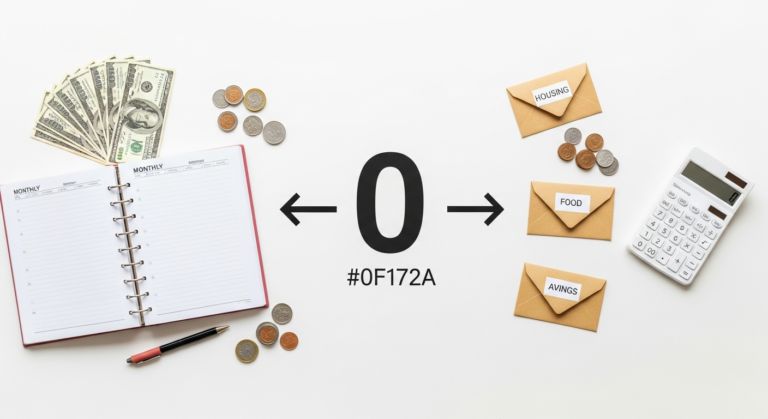
At its heart, zero-based budgeting (ZBB) is a budgeting method where every single dollar of your income is allocated to a specific expense, saving goal, or debt repayment until your income minus your expenses equals zero. The fundamental principle is that every penny has a purpose; no money is left unaccounted for or treated as “leftover.” This doesn’t mean you should have zero money in your bank account at the end of the month; rather, it means your budget should reflect that every dollar has been intentionally assigned a role, including being transferred to savings, investments, or designated spending categories.
Originally a corporate accounting strategy pioneered by Peter Pyhrr in the 1970s at Texas Instruments, zero-based budgeting was designed to force companies to justify every line item in their budget from scratch, rather than simply rolling over previous expenditures. This approach prevents automatic spending and encourages a critical review of all financial outflows. In recent decades, this rigorous method has been successfully adapted for personal finance, offering individuals a highly effective way to manage their money with unparalleled precision.
Unlike traditional budgeting, which often starts with previous spending habits and leaves “extra” money at the end (which can then be spent without a clear purpose), ZBB demands a fresh slate each budgeting period. You don’t just estimate your spending; you intentionally decide where every dollar will go. This forces you to be hyper-aware of your financial decisions and align them directly with your priorities and goals.
For instance, if your net monthly income is $4,000, your zero-based budget would ensure that $4,000 is distributed among categories like rent, groceries, transportation, loan payments, entertainment, and savings, so that when you subtract all these allocations from your income, the remainder is $0. This meticulous allocation ensures that nothing is overlooked and every financial decision is a conscious one.
Practical Tip: Think of your income as a finite resource, and your budget as a blueprint for how that resource will be deployed. With zero-based budgeting, you are the architect of your financial future, actively designing where every dollar contributes to your overall plan.
The Philosophy Behind Zero-Based Budgeting: Why Every Dollar Needs a Job
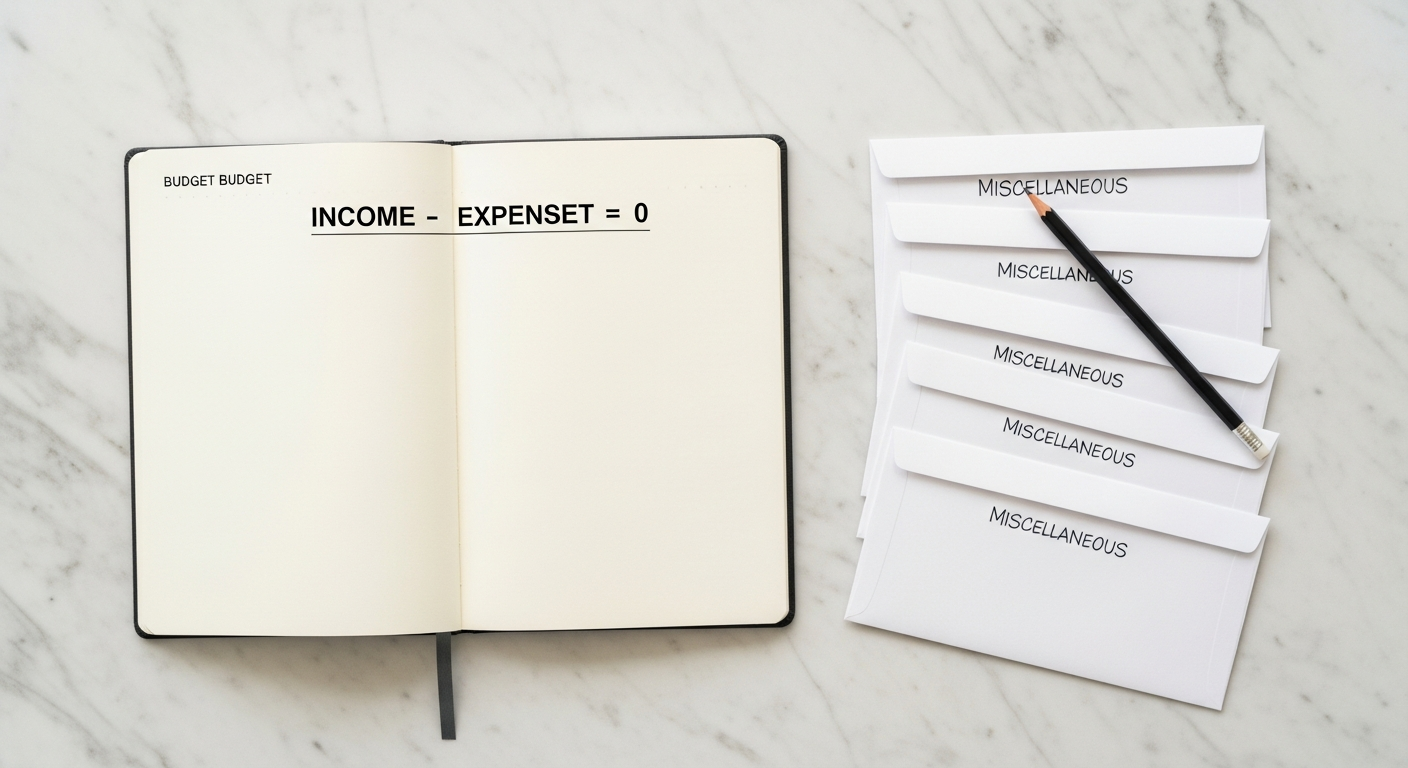
The core philosophy of zero-based budgeting extends beyond mere arithmetic; it’s a mindset shift that promotes intentionality, awareness, and proactive financial management. It operates on the premise that if you don’t tell your money where to go, you’ll wonder where it went. By assigning a “job” to every dollar, you transform passive spending into active financial decision-making.
This approach combats what many financial experts call “phantom money loss”—the gradual erosion of your funds through unrecorded, impulse, or undefined expenditures. When money isn’t accounted for, it’s easy for small, seemingly insignificant purchases to accumulate and derail your financial goals without you even realizing it. ZBB eliminates this ambiguity by creating a clear purpose for every dollar, whether it’s for immediate needs, future savings, or discretionary spending.
The psychological benefits are profound. Gaining clarity on your financial situation can significantly reduce stress and anxiety related to money. Instead of feeling reactive to bills and unexpected costs, you become proactive, knowing exactly what money is available for what purpose. This empowers you to make confident spending choices, as you understand their immediate and long-term impact on your budget.
Financially, the advantages are numerous. ZBB inherently encourages you to scrutinize every expense. By starting from zero each month, you’re not just topping up last month’s categories; you’re justifying them anew. This scrutiny often reveals areas where you can cut back, reallocate funds, or identify subscriptions you no longer use, freeing up valuable capital. This freed-up money can then be deliberately directed towards high-impact areas like accelerating debt repayment, boosting emergency savings, or investing towards major life goals such as a down payment on a home or retirement.
Consider the common financial advice to follow the 50/30/20 rule (50% needs, 30% wants, 20% savings/debt). While a useful guideline, ZBB takes this concept further by making it uniquely customized to your specific situation. Instead of broad percentages, you assign exact dollar amounts based on your actual income and detailed expense categories. For example, if your housing costs are 35% of your income but you’re determined to save 25% for a house down payment, ZBB forces you to make conscious trade-offs in other “want” categories to achieve your specific savings target.
Real-world Data Point: A study by the National Bureau of Economic Research found that households using budgeting tools tend to save more and reduce debt faster than those who don’t. Zero-based budgeting, with its emphasis on granular control, amplifies these effects by creating an explicit plan for every dollar.
Actionable Tip: Before you even start building your zero-based budget, take some time to reflect on your current financial habits. Where do you suspect your “phantom money” is going? What are your top three financial priorities right now? This introspection will form the foundation for your intentional budgeting decisions.
Key Benefits of Adopting a Zero-Based Budget
Embracing zero-based budgeting can be a transformative experience for your personal finances. While it demands an initial investment of time and effort, the rewards in terms of clarity, control, and accelerated goal achievement are substantial.
1. Enhanced Financial Awareness & Control
The most immediate and profound benefit of ZBB is the deep understanding it fosters about your own money. By categorizing and assigning a role to every dollar, you become intimately familiar with your income and expenditure patterns. You’ll know exactly how much you spend on groceries, entertainment, utilities, and more. This level of awareness eradicates financial ambiguity, allowing you to make informed decisions rather than guessing. You move from a reactive stance, wondering where your money went, to a proactive one, dictating its every move.
2. Debt Acceleration & Faster Savings Growth
One of the most powerful applications of ZBB is its ability to free up funds for debt repayment and savings. When you scrutinize every expense and ensure no dollar is wasted, you invariably find areas to cut back. That $50 you were unknowingly spending on forgotten subscriptions or impulsive purchases can now be redirected. Imagine consistently adding an extra $100 or $200 to your credit card payment or emergency fund each month. Over time, this accelerates debt payoff and rapidly builds your savings, reducing interest paid and reaching financial milestones much faster.
Real-world Example: Sarah, a freelance graphic designer, struggled with inconsistent income and accumulating credit card debt. After implementing zero-based budgeting, she discovered she was spending nearly $300 a month on dining out and premium streaming services. By reallocating $200 of that towards her highest-interest credit card, she managed to pay off over $5,000 in debt within two years, a full year ahead of her original schedule. The ZBB framework gave her the clarity and discipline to make those targeted adjustments.
3. Goal Alignment & Prioritization
ZBB inherently forces you to align your spending with your financial goals. Whether you’re saving for a down payment, a new car, retirement, or a dream vacation, you explicitly budget for these goals. Instead of hoping to save “whatever is left,” you designate specific amounts for savings categories. This makes your goals tangible and provides a clear pathway to achieving them. Every dollar you assign is a vote for your financial future.
4. Reduced Financial Stress & Anxiety
A significant source of stress for many individuals is the unknown in their finances. Will I have enough for that unexpected repair? Can I afford to take this trip? With a zero-based budget, these questions become much easier to answer. You know exactly what money is available in each category, including your emergency fund. This transparency fosters a sense of security and control, dramatically reducing financial anxiety and improving overall peace of mind.
5. Flexibility & Adaptability
While ZBB might appear rigid on the surface, it is, in fact, incredibly flexible. Life is unpredictable, and your budget needs to adapt. Because you create a new budget from scratch each month, you can easily adjust categories based on changing circumstances. Did you have an unexpected car repair? You can temporarily reduce your entertainment budget or dining-out funds for that month to cover it without derailing your entire financial plan. Got a bonus at work? You can immediately assign that extra income to a specific goal, like an investment account or an extra debt payment, preventing it from being aimlessly spent.
Navigating the Challenges: Potential Drawbacks and How to Overcome Them
While zero-based budgeting offers immense advantages, it’s not without its challenges. Understanding these potential hurdles and equipping yourself with strategies to overcome them is crucial for long-term success.
1. Time Commitment & Initial Effort
The Challenge: Setting up a zero-based budget for the first time requires a significant upfront investment of time and mental energy. You need to meticulously list all income sources, identify every expense, and then meticulously assign every dollar until your budget zeroes out. This can feel overwhelming, especially if you’ve never closely tracked your spending before.
How to Overcome:
- Start Small: Don’t try to perfect it in one sitting. Break down the process into manageable chunks. Dedicate one evening to listing income, another to fixed expenses, and a third to variable expenses.
- Gather Data: Before you even start budgeting, spend a month or two simply tracking your spending. This will give you a realistic baseline for your variable expenses like groceries and dining out.
- Leverage Technology: Budgeting apps or robust spreadsheets can automate some calculations and make the tracking process less cumbersome.
- Embrace Imperfection: Your first budget won’t be perfect. That’s okay! It’s an iterative process. Focus on getting started rather than achieving immediate flawlessness.
2. Risk of Over-Budgeting or Under-Budgeting
The Challenge: It’s easy to misestimate variable expenses like groceries, utilities, or entertainment, especially when you’re new to detailed tracking. You might budget too little and run out of funds in a category, or budget too much, leaving unused money that needs re-allocation.
How to Overcome:
- Review Past Spending: Use bank statements and credit card bills from the last 3-6 months to get an accurate average for variable categories.
- Create a “Buffer” Category: Some ZBB practitioners recommend a small “miscellaneous” or “buffer” category for unexpected small expenses that don’t fit neatly elsewhere. This prevents you from constantly dipping into other categories.
- Adjust Relentlessly: This is key. ZBB is not set-it-and-forget-it. At your weekly or bi-weekly check-ins, if you see you’re consistently overspending in one area (e.g., groceries) and underspending in another (e.g., clothing), reallocate funds mid-month.
3. Perceived Rigidity
The Challenge: The idea of assigning every dollar can feel restrictive and inflexible, leading some to believe it’s too difficult to maintain, particularly with unexpected expenses or lifestyle changes.
How to Overcome:
- Understand its True Flexibility: ZBB isn’t about being rigid; it’s about being intentional. If an unexpected expense arises, you’re not failing. You simply go back to your budget, find funds to cover it (perhaps by reducing a “want” category for the month), and adjust. The power lies in making conscious choices, not in strict adherence to a pre-set plan that no longer serves you.
- Incorporate Sinking Funds: For predictable but irregular expenses (car insurance, annual subscriptions, holiday gifts), create “sinking funds.” Break down the annual cost into monthly contributions and budget for it. E.g., if car insurance is $1,200 annually, budget $100/month into a “Car Insurance Savings” category.
4. Dealing with Variable Income or Expenses
The Challenge: If you’re a freelancer, commission-based earner, or have irregular income, forecasting your monthly earnings can be difficult. Similarly, some expenses (like utilities) can fluctuate significantly.
How to Overcome:
- For Variable Income:
- Budget with the Lowest Estimate: Base your budget on your lowest expected income. When you receive more, assign the “extra” to high-priority categories like debt repayment, emergency fund, or future irregular expenses.
- Income-First Allocation: Many ZBB users with variable income prioritize “needs” first, then “wants,” and then allocate any remaining funds as they come in.
- Build a Buffer: Aim to build a buffer of one month’s expenses in your bank account. This way, you’re always budgeting with last month’s income, smoothing out fluctuations.
- For Variable Expenses:
- Average it Out: Use historical data to find an average, and then budget slightly above that average to create a small buffer.
- “Rollover” Categories: Some ZBB apps allow categories to roll over. If you underspend in groceries one month, that extra money can stay in the grocery category for the next month, allowing for higher spending if needed.
How to Implement Zero-Based Budgeting: A Step-by-Step Guide
Ready to take the plunge? Implementing zero-based budgeting is a structured process that, when followed diligently, can bring unprecedented clarity to your finances. Here’s a practical, step-by-step guide to get you started:
Step 1: Calculate Your Monthly Income (Accurately)
Your starting point is a precise understanding of how much money you have coming in. This should be your net income – the amount that actually hits your bank account after taxes, health insurance premiums, retirement contributions, and any other deductions.
- For Salaried Employees: Look at your pay stubs. Sum up all direct deposits for the month.
- For Freelancers/Variable Income Earners: This can be trickier. It’s often best to use your lowest expected monthly income, or an average of your income over the last 3-6 months. When you earn more than budgeted, you can then allocate those “extra” funds to savings, debt, or investments.
- Include All Sources: Don’t forget any other regular income, such as side hustles, rental income, or child support.
Example: Let’s say your net monthly income is $4,500.
Actionable Tip: Don’t estimate! Pull up your bank statements and pay stubs to get exact figures. Accuracy here is paramount.
Step 2: List All Your Expenses (Fixed & Variable)
This is where you categorize every single outgoing dollar. Don’t leave anything out, no matter how small.
- Fixed Expenses: These are consistent each month and typically don’t change.
- Rent/Mortgage: $1,500
- Car Payment: $350
- Student Loan Payment: $200
- Insurance (Car, Health, Renter’s): $180
- Subscriptions (Netflix, Spotify, Gym): $70
- Variable Expenses: These fluctuate month-to-month and require more careful estimation.
- Groceries: $400
- Dining Out/Takeaway: $250
- Utilities (Electricity, Gas, Water, Internet): $220
- Transportation (Gas, Public Transit): $100
- Personal Care (Haircuts, Toiletries): $50
- Entertainment/Hobbies: $150
- Clothing: $80
- Irregular Expenses (Sinking Funds): These occur periodically (quarterly, annually) but need to be budgeted for monthly to avoid financial shocks.
- Car Maintenance/Registration ($600/year): $50/month
- Holiday/Birthday Gifts ($300/year): $25/month
- Medical Co-pays/Deductibles: $30/month
- Debt Repayment (Above Minimums): If you’re aggressively paying down debt, include this.
- Credit Card Payment (above minimum): $100
- Savings & Investments: This is a crucial “expense” that pays your future self.
- Emergency Fund: $200
- Retirement Savings (beyond employer deductions): $150
- Vacation Fund: $75
Actionable Tip: Go through your bank statements and credit card bills from the last 2-3 months. This will give you the most accurate picture of your actual spending patterns, especially for variable expenses.
Step 3: Assign Every Dollar a Job (The “Zero” Part)
Now, subtract your total planned expenses from your total income. Your goal is for this number to be zero. If you have money left over, you need to assign it a job. If you have a deficit, you need to adjust your budget by reducing discretionary spending or finding ways to increase income.
Using our example:
Total Income: $4,500
Total Expenses:
- Rent/Mortgage: $1,500
- Car Payment: $350
- Student Loan: $200
- Insurance: $180
- Subscriptions: $70
- Groceries: $400
- Dining Out: $250
- Utilities: $220
- Transportation: $100
- Personal Care: $50
- Entertainment: $150
- Clothing: $80
- Car Maintenance Fund: $50
- Gift Fund: $25
- Medical Fund: $30
- Credit Card Debt: $100
- Emergency Fund: $200
- Retirement Savings: $150
- Vacation Fund: $75
Sum of Expenses: $4,280
Income – Expenses = $4,500 – $4,280 = $220
In this scenario, we have $220 left over. This is not “extra” money to be spent mindlessly. It needs a job! You could decide to:
- Add it to your Emergency Fund (now $420)
- Increase your Credit Card Debt payment (now $320)
- Invest it further in Retirement Savings (now $370)
- Create a new savings goal (e.g., “New Laptop Fund”)
Let’s say you decide to put an additional $120 towards your credit card and $100 into your emergency fund.
Now, your adjusted budget looks like this:
- Credit Card Payment: $220 ($100 original + $120 extra)
- Emergency Fund: $300 ($200 original + $100 extra)
New Sum of Expenses: $4,500
Income – New Sum of Expenses = $4,500 – $4,500 = $0. Mission accomplished!
Actionable Tip: Prioritize your “needs” (housing, food, utilities, minimum debt payments) first. Then allocate to your “wants” (dining out, entertainment). Finally, fill up your savings and accelerated debt categories until you hit zero. Don’t be afraid to make tough choices here; that’s the power of ZBB.
Step 4: Track Your Spending Diligently
Creating the budget is only half the battle; tracking is where the rubber meets the road. You need to know if you’re sticking to your plan.
- Choose Your Tool: Whether it’s a spreadsheet, a dedicated budgeting app (like YNAB, Mint, or EveryDollar), or even a pen and paper notebook, pick a method you’ll actually use consistently.
- Record Every Transaction: As you spend money, record it in the appropriate category. This can be done daily or every few days.
- Regular Check-ins: Don’t wait until the end of the month. Check your budget weekly, or even bi-weekly, to see how you’re performing against your plan. This allows you to make adjustments mid-month if you’re overspending in one category.
Actionable Tip: Link your budgeting tool to your bank accounts if possible, to automate transaction import and simplify tracking. However, still manually review and categorize to ensure accuracy.
Step 5: Review and Adjust Monthly (The Iterative Process)
Your first budget will likely be imperfect, and that’s completely normal. Life happens, and your spending patterns might shift.
- End-of-Month Review: At the end of each month, compare your actual spending against your budgeted amounts for each category.
- Where did you overspend? Why?
- Where did you underspend? Can that extra money be reallocated next month?
- Create a New Budget: Every month, you start with a blank slate. Use the insights from your previous month’s review to inform the next month’s budget. Maybe you consistently went over on groceries, so you need to increase that allocation and find cuts elsewhere. Or perhaps you realize you don’t need that subscription anymore.
- Adapt to Life Changes: Did you get a raise? Start a new job? Have an unexpected expense? Adjust your budget accordingly. ZBB thrives on this adaptability.
Actionable Tip: Set a recurring reminder in your calendar for your monthly budget review and creation. Treat it like an important financial meeting with yourself.
Tools and Resources to Simplify Your Zero-Based Budgeting Journey
Embarking on your zero-based budgeting journey doesn’t mean you have to do it alone with just a pen and paper. While a simple notebook can work, a variety of tools and resources exist to streamline the process, automate tracking, and provide valuable insights. Choosing the right tool can significantly impact your success and make ZBB feel less daunting.
1. Spreadsheets (Google Sheets, Microsoft Excel)
- Pros: Highly customizable, free (Google Sheets), gives you full control over categories and formulas. You can find numerous free templates online specifically designed for zero-based budgeting.
- Cons: Requires manual entry or some technical know-how to import bank data. Can be intimidating for those uncomfortable with spreadsheets.
- Who it’s for: Individuals who enjoy customization, have a basic understanding of spreadsheets, and prefer a hands-on approach.
- Actionable Tip: Search for “zero-based budgeting spreadsheet template” on Google. Many personal finance bloggers offer excellent free templates that you can adapt to your needs.
2. Dedicated Budgeting Apps
- You Need A Budget (YNAB): Often considered the gold standard for zero-based budgeting apps. YNAB’s philosophy is built entirely around assigning every dollar a job (“Give Every Dollar a Job”). It helps you create a buffer, manage irregular expenses, and stay on track with its real-time tracking and reporting.
- EveryDollar: Created by financial expert Dave Ramsey, EveryDollar is another popular app that uses a zero-based budgeting approach. It’s known for its user-friendly interface and focus on the “cash envelope” system digitally.
- Mint: While not strictly a zero-based budgeting app by default, Mint allows you to manually create and adjust budget categories to emulate the ZBB approach. It excels at automatically pulling in transactions from linked accounts and providing a comprehensive overview of your finances.
- Pros: Automated transaction import, real-time tracking, goal setting, visual reports, and often mobile accessibility. Designed specifically for ZBB principles.
- Cons: Most dedicated ZBB apps (like YNAB) come with a subscription fee. While free versions exist (like EveryDollar’s basic plan), they often have limited features.
- Who it’s for: Individuals looking for an integrated, guided experience, willing to pay for premium features, and those who want to automate as much of the tracking as possible.
- Actionable Tip: Many apps offer free trials. Try out 2-3 different options for a month to see which interface and feature set resonate most with your budgeting style.
3. Pen and Paper
- Pros: Absolutely free, no tech required, and the act of physically writing down your budget and tracking expenses can enhance mindfulness and retention. Highly portable.
- Cons: Requires strict discipline for manual tracking, no automation, prone to errors, and difficult to generate complex reports or make quick recalculations.
- Who it’s for: Minimalists, those who prefer a tactile approach, or individuals who want to start very simply without any digital distractions.
- Actionable Tip: Invest in a dedicated notebook or planner. Create columns for “Budgeted,” “Actual Spent,” and “Difference” for each category to facilitate your monthly review.
4. Financial Coaches and Online Communities
- Pros: A financial coach can provide personalized guidance, accountability, and help you navigate specific challenges unique to your situation. Online communities (e.g., Reddit’s r/ynab, personal finance forums) offer peer support, tips, and motivation.
- Cons: Financial coaches come with a significant cost. Online communities can sometimes offer conflicting advice or be overwhelming.
- Who it’s for: Those who need personalized expert guidance, or individuals who thrive on community support and shared experiences.
- Actionable Tip: Before hiring a coach, ensure they align with the zero-based budgeting philosophy if that’s your chosen method. For online communities, observe for a while before participating to get a feel for the culture.
Actionable Tip: Don’t let the choice of tool paralyze you. The most effective tool is the one you will consistently use. Start with something simple (even pen and paper) and upgrade as you become more comfortable and identify your specific needs. The method itself, “zero-based budgeting explained,” is more important than the gadget or software you use to implement it.
Conclusion: Empower Your Financial Future with Zero-Based Budgeting
The journey to true financial control can often feel like an uphill battle, but with the right strategy, it transforms into an empowering climb. Zero-based budgeting stands out as one of the most effective and insightful methods for personal finance management. By demanding that every dollar you earn is intentionally assigned a purpose—be it for rent, groceries, debt repayment, or robust savings—it eliminates the guesswork, prevents wasteful spending, and aligns your financial actions directly with your deepest goals.
We’ve walked through what zero-based budgeting explained means: moving from a reactive stance to a proactive one, where you are the master of your money. We’ve explored its profound benefits, from accelerated debt payoff and rapid savings growth to enhanced financial awareness and reduced stress. While it asks for an initial commitment of time and discipline, the strategies outlined for overcoming common challenges ensure that ZBB is a sustainable and adaptable system for virtually anyone.
The clarity, confidence, and control that zero-based budgeting provides are invaluable. It’s more than just a numbers game; it’s a fundamental shift in how you view and interact with your money, turning abstract concepts into concrete actions. So, if you’re ready to stop wondering where your money went and start directing it exactly where you want it to go, there’s no better time than now to begin. Take the first step today: calculate your income, list your expenses, and give every single dollar a job. Your financial future will thank you.
Are you ready to stop wishing and start achieving your financial goals? Begin your zero-based budgeting journey today and take definitive control of your money.
FAQ: Zero-Based Budgeting Explained
Here are some frequently asked questions about zero-based budgeting:
Q: Is zero-based budgeting only for individuals with steady income?
A: No, zero-based budgeting is highly adaptable for individuals with variable incomes, such as freelancers or commission-based earners. The key is to budget based on your lowest expected income, or an average of your past income, and then assign any “extra” income that comes in to high-priority categories like an emergency fund, debt repayment, or long-term savings.
Q: How long does it take to get used to zero-based budgeting?
A: Most people find that the first 2-3 months require the most effort as they learn their true spending patterns, fine-tune categories, and adjust to the discipline of daily or weekly tracking. After this initial period, it typically becomes a much smoother, more intuitive habit.
Q: What if I can’t get my budget to zero?
A: If your income minus your expenses doesn’t equal zero, it means either you have a surplus (money left over) or a deficit (spending more than you earn). If you have a surplus, assign that remaining money a job – put it towards savings, investments, or debt. If you have a deficit, you must go back and adjust your budget, cutting back on discretionary spending or finding ways to increase your income, until you reach zero.
Q: Is zero-based budgeting suitable for everyone?
A: Zero-based budgeting is suitable for most people who are serious about gaining control over their finances. While it requires discipline and an initial time commitment, its benefits are universal for those aiming for clarity, faster debt repayment, and accelerated savings. Individuals who prefer a very hands-off approach to money management might find it too detailed, but for those seeking intentionality, it’s highly effective.
Q: What’s the main difference between zero-based budgeting and traditional budgeting?
A: The main difference is the starting point and philosophical approach. Traditional budgeting often involves estimating spending based on previous months and allowing “leftover” money, which can be spent without a clear purpose. Zero-based budgeting, by contrast, starts from scratch each month, requiring every dollar of income to be explicitly assigned a job (to an expense, saving, or debt repayment category) until income minus expenses equals zero. This ensures no money is unaccounted for.