How Do Fractional Shares Work? The Definitive Guide to Modern Investing
Affiliate disclosure: This article may contain affiliate links. Recommendations are independent and editorially driven.
In the evolving landscape of personal finance, innovations constantly emerge to democratize access to wealth-building opportunities. Among the most impactful in recent years is the rise of fractional shares. Once a niche offering, the ability to buy a portion of a stock rather than a full share has fundamentally changed how millions approach investing. For many, the prohibitive cost of single shares from blue-chip companies or high-growth tech giants represented an insurmountable barrier. Fractional shares shatter this barrier, allowing investors with modest capital to build diversified portfolios that were previously out of reach.
This comprehensive guide from diaalnews will delve deep into the mechanics, benefits, risks, and practical applications of fractional shares. We will explore exactly how do fractional shares work, outlining the underlying technology that makes them possible and the various ways investors can leverage them to achieve their financial goals. Whether you are a novice investor taking your first steps into the market or an experienced hand looking to optimize your portfolio, understanding fractional shares is crucial in today’s investment climate.
The concept is simple yet revolutionary: instead of needing hundreds or even thousands of dollars to buy a single share of a company like Amazon, Google, or Nvidia, you can invest any dollar amount you choose – say, $50 or $100 – and own a corresponding fraction of that share. This means that a stock trading at $1,000 per share is no longer exclusively for those who can afford that full amount; an investor with $100 can own 0.1 of that share, participating in its growth and receiving proportional dividends.
Beyond simple accessibility, fractional shares offer powerful tools for diversification, dollar-cost averaging, and efficient capital allocation. They allow for precise investment strategies, ensuring every dollar put into the market works as hard as possible. However, like any financial instrument, they come with their own set of considerations and nuances that every investor should understand. By the end of this guide, you will have a complete picture of how fractional shares work and how you can integrate them effectively into your investment strategy for 2026 and beyond.
Understanding the Basics: What Exactly Are Fractional Shares?
At its core, a fractional share represents a partial ownership of a single share of a company’s stock. Traditionally, when you invested in the stock market, you had to purchase whole shares. If a stock was trading at $500 per share, you needed at least $500 (plus any commissions) to buy just one unit of that company. This presented a significant hurdle for many aspiring investors, particularly those with limited funds or those looking to diversify across several high-priced companies.
The advent of fractional shares changes this paradigm entirely. Instead of focusing on the number of shares, investors can now focus on the dollar amount they wish to invest. This dollar-based investing allows you to specify that you want to invest, for example, $25 into Apple stock, regardless of Apple’s current share price. If Apple shares are trading at $175, your $25 investment would purchase approximately 0.1428 shares ($25 / $175).
Demystifying the Concept: A Modern Investment Tool
Think of it like buying gold. You don’t necessarily have to buy a full ounce of gold; you can buy a gram, or even a fraction of a gram, depending on how much you want to invest. Fractional shares apply the same principle to equity investments. They break down the traditional barrier of “one share at a time” investing, opening up the market to a much broader audience.
The primary motivation behind the emergence of fractional shares was simple: accessibility. As the stock prices of many successful companies soared into the hundreds or even thousands of dollars per share, they became increasingly out of reach for everyday investors. This created an imbalance, where only those with substantial capital could truly participate in the growth of certain sectors or companies. Fractional shares were developed by brokerages to address this, recognizing that many individuals wanted to invest in these companies but couldn’t afford a full share.
The technology enabling fractional shares has also played a crucial role. Modern brokerage platforms, equipped with advanced trading systems and sophisticated account management software, can now efficiently manage and track these partial holdings. This was not feasible with older, more manual trading systems, which is why fractional shares are a relatively recent innovation, gaining significant traction only in the past few years.
The Evolution of Investment Accessibility
Historically, investing in the stock market required significant capital and often the assistance of a full-service broker. The process was opaque for many, and minimum investment amounts were high. Over time, discount brokerages emerged, lowering transaction costs and making self-directed investing more popular. The rise of online platforms further accelerated this trend, bringing investing to desktop computers and eventually mobile devices.
However, even with lower commissions and easier access, the barrier of high individual share prices persisted. For instance, in 2026, a single share of a leading tech company might still cost over $1,500. For an investor with $100 to spare each month, it could take more than a year of saving just to buy one share of that company. During that time, their capital sits idle, losing potential gains.
Fractional shares represent the latest, and arguably most significant, leap in democratizing investment. They eliminate the “price-per-share” problem, allowing investors to truly invest any amount they are comfortable with, whenever they want. This shift has profound implications for financial inclusion, enabling individuals from all economic backgrounds to participate directly in the growth of the world’s leading companies. It’s a powerful tool that empowers individuals to start building wealth earlier and more efficiently, regardless of their starting capital.
The Mechanics Behind Fractional Share Ownership
Understanding how do fractional shares work requires a look behind the scenes at how brokerages manage these partial investments. While you, the investor, see a fraction of a share in your account, the actual mechanics involve a slightly more complex, yet secure, system managed by your brokerage firm. It’s not as simple as physically cutting up a stock certificate, but rather a sophisticated system of record-keeping and aggregated ownership.
How Brokerages Facilitate Fractional Ownership
The most common model brokerages use to offer fractional shares is through what’s known as an “omnibus account.” In this setup, the brokerage itself purchases full shares of various companies. For example, if 100 different clients each want to buy $100 worth of a stock that trades at $1,000 per share, the brokerage would effectively aggregate these orders. Instead of each client buying 0.1 shares directly from the market, the brokerage would buy 10 full shares (100 clients * 0.1 shares each = 10 shares) and then internally allocate those 0.1 share equivalents to each client’s account.
Essentially, the brokerage holds the full shares in its name (or its custodian’s name) within a large omnibus account, and then maintains a detailed ledger of each individual client’s fractional ownership within that collective pool. From your perspective, you are the beneficial owner of that fraction, meaning you are entitled to the economic benefits, such as capital gains and dividends, proportional to your ownership. However, the legal title for the full shares resides with the brokerage.
This system of splitting and allocation is handled by sophisticated trading algorithms and internal accounting systems. When you place an order for a dollar amount, the brokerage calculates the exact fraction of a share your money can buy at the current market price, aggregates it with other fractional orders, and then executes a full share order in the market. This process happens seamlessly and usually within milliseconds, making it appear to the investor as if they are directly buying a fraction from the exchange.
The distinction between direct and indirect ownership is important, mainly regarding certain rights like voting, which we will discuss later. However, for the primary purpose of investing – participating in market growth and receiving dividends – the beneficial ownership model works effectively and securely, with regulatory bodies overseeing these practices to protect investor interests.
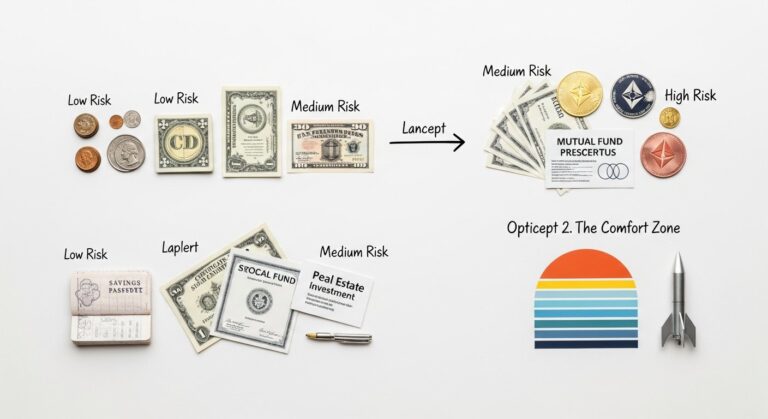
[INLINE IMAGE 1: place after second H2 | alt=”how do fractional shares work concept illustration”]
Buying and Selling Fractional Shares: The Process
The process of buying fractional shares is remarkably straightforward for the end-user, thanks to the intuitive interfaces of modern brokerage platforms. The key difference from traditional investing is that you typically specify a dollar amount rather than a number of shares.
- Specify Your Investment Amount: Instead of entering “1 share” or “5 shares,” you’ll enter “$100” or “$500” into the investment field for a particular stock.
- Brokerage Calculation: The brokerage platform immediately calculates the corresponding fraction of a share your dollar amount will purchase based on the stock’s current market price.
- Order Type: Most fractional share purchases are executed as market orders. This means they are bought at the prevailing market price. Some platforms may offer limit orders for fractional shares, allowing you to set a specific price at which you’re willing to buy. However, due to the aggregation process, execution for fractional limit orders might be less precise or take longer than for full shares.
- Execution: Fractional share orders are often executed at specific times during the day or at market close. This is because the brokerage needs to aggregate multiple small fractional orders into full share blocks before sending them to the market. This mechanism ensures efficiency and minimizes transaction costs for the brokerage, which in turn benefits investors through lower or zero commissions.
Selling fractional shares follows a very similar process. You specify the dollar amount you wish to sell (e.g., “sell $50 worth”) or the fraction you wish to sell (e.g., “sell 0.25 shares”). The brokerage then liquidates that portion of your holding, and the cash proceeds are deposited into your account, typically settling within two business days (T+2) as per standard market practices.
Dividends and Corporate Actions with Fractions
One of the significant advantages of fractional shares is that investors are entitled to dividends and participate in corporate actions proportional to their ownership. This ensures that even small investments can generate passive income and benefit from company growth strategies.
- Pro-Rata Dividends: When a company pays a dividend, your fractional share ownership entitles you to a proportionate share of that dividend. For example, if a stock pays a $1.00 per share dividend and you own 0.25 shares, you will receive $0.25. Many brokerages allow you to automatically reinvest these fractional dividends, which can accelerate compounding growth in your portfolio.
- Stock Splits: If a company undergoes a stock split (e.g., a 2-for-1 split), your fractional shares will also split proportionally. If you owned 0.5 shares before a 2-for-1 split, you would then own 1 full share after the split. This applies equally to reverse stock splits.
- Mergers and Acquisitions: In the event of a merger or acquisition, your fractional shares will be treated in the same way as full shares, proportional to your ownership. If the company is acquired for cash, you will receive a cash payout for your fractional holding. If it’s a stock-for-stock merger, you’ll receive a fractional amount of the acquiring company’s shares.
- Spin-offs: When a company spins off a subsidiary into a new, separate company, shareholders typically receive shares in the new entity. Fractional shareholders would receive a fractional amount of the new company’s stock, or a cash equivalent, depending on the brokerage’s policy and the nature of the spin-off.
It’s important to note that while the economic benefits are proportional, certain corporate actions, particularly those requiring shareholder votes, might have limitations for fractional shareholders, which we will cover in a subsequent section.
Key Benefits: Why Fractional Shares Revolutionize Investing
The transformative power of fractional shares extends far beyond mere convenience. They fundamentally alter the landscape of personal investing, offering significant advantages that were previously inaccessible to a vast segment of the population. Understanding these benefits is key to appreciating how do fractional shares work as a force for financial empowerment.
Lowering the Barrier to Entry for High-Value Stocks
Perhaps the most immediate and impactful benefit of fractional shares is their ability to democratize access to the stock market, particularly to shares of high-priced companies. Historically, many of the world’s most innovative and consistently growing companies – think tech giants, luxury brands, or pharmaceutical leaders – often had share prices in the hundreds or even thousands of dollars. This placed them out of reach for individuals who could only afford to invest smaller amounts at a time.
- Access to “Blue-Chip” and Growth Stocks: With fractional shares, an investor with as little as $5 or $10 can buy a piece of companies like Tesla, Berkshire Hathaway, or Google. This means that individuals with limited capital are no longer excluded from participating in the growth of these market leaders.
- No Need for Large Upfront Capital: You don’t need to save up for months to buy a single share. You can start investing immediately with whatever amount you have available, putting your money to work sooner and leveraging the power of compounding over time. This drastically reduces the psychological barrier to entry for new investors.
- Empowering New and Small Investors: Fractional shares are a game-changer for younger investors, students, or anyone just starting their investment journey. They provide a practical way to learn about the market and build a portfolio without requiring substantial initial wealth, fostering financial literacy and inclusion.
This low barrier to entry is crucial for encouraging widespread participation in the stock market, which historically has been one of the most effective ways to build long-term wealth.
Enhanced Diversification for Any Portfolio Size
Diversification is a cornerstone of sound investment strategy, aiming to reduce risk by spreading investments across various assets, industries, and geographies. Traditionally, achieving meaningful diversification with a limited budget was challenging. If you had $1,000 to invest and wanted to buy into five different companies, each company’s share price would need to average no more than $200 (assuming you only buy full shares). This severely limited your choices, often forcing you into less expensive, potentially riskier stocks, or consolidating your funds into fewer positions, thereby increasing concentration risk.
Fractional shares revolutionize diversification by enabling you to spread your capital much more broadly and precisely:
- Spreading Risk Across More Companies: With fractional shares, your $1,000 can be allocated to 20 different companies at $50 each, regardless of their individual share prices. This allows for far greater diversification across various sectors, industries, and company sizes, significantly reducing the impact of poor performance from any single stock.
- Sector-Specific Diversification: You can build a well-diversified portfolio within specific sectors (e.g., tech, healthcare, consumer staples) by investing small amounts into multiple leading companies in each sector. This fine-grained control was almost impossible with full-share-only investing for smaller portfolios.
- Creating a Truly Diversified Portfolio from Day One: New investors can immediately establish a robust, diversified portfolio encompassing a range of high-quality companies, rather than having to wait years to accumulate enough capital to do so. This early diversification sets a strong foundation for long-term growth and risk management.
By making diversification accessible and practical for all investors, fractional shares allow for more resilient and stable portfolios, even for those starting with small amounts.
Enabling Dollar-Cost Averaging with Precision
Dollar-Cost Averaging (DCA) is a powerful investment strategy where you invest a fixed amount of money at regular intervals, regardless of the asset’s price. This approach helps mitigate the risk of market timing by averaging out your purchase price over time. When prices are high, your fixed dollar amount buys fewer shares; when prices are low, it buys more shares. Over the long term, this strategy can lead to a lower average cost per share and smoother investment returns.
Fractional shares significantly enhance the effectiveness and ease of implementing DCA:
- Investing a Fixed Amount Regularly: With fractional shares, you can commit to investing, for instance, $50 every week or $200 every month into your chosen stocks or ETFs. This is possible regardless of how expensive the underlying assets become. Without fractional shares, if a stock’s price exceeds your regular investment amount, you’d be forced to save up or buy different, cheaper stocks, disrupting your DCA strategy.
- Automating Investments and Reducing Emotional Decisions: Many brokerages offering fractional shares also provide robust auto-investing features. You can set up recurring transfers and purchases, allowing your investment strategy to run on autopilot. This removes the emotional component of investing, preventing common pitfalls like panic selling or buying into bubbles.
- Maximizing DCA Effectiveness: By always investing the exact dollar amount, fractional shares ensure that your capital is consistently deployed, fully leveraging the principle of dollar-cost averaging without any interruptions or compromises due to fluctuating share prices. Every dollar contributes to growing your portfolio, precisely as intended by the DCA strategy.
Maximizing Every Dollar: No Leftover Cash
One often-overlooked but significant benefit of fractional shares is the ability to fully deploy your investment capital without any “cash drag.” In traditional investing, if you wanted to invest $1,000 and a share cost $175, you could buy 5 shares for $875, leaving $125 uninvested. This leftover cash might sit idle in your brokerage account, earning minimal or no interest, and not contributing to your portfolio’s growth.
- Investing Precisely the Amount You Want: With fractional shares, you can invest the full $1,000. Your $125 “leftover” from the previous example would now purchase approximately 0.71 shares (if the price remains $175), ensuring that 100% of your intended investment capital is put to work in the market.
- Avoiding “Cash Drag”: This eliminates cash drag, where uninvested funds dilute the overall returns of your portfolio. In a fractional share environment, every dollar you deposit and intend to invest can be immediately converted into a growth-generating asset.
- Efficient Capital Allocation: For investors looking to optimize their capital allocation, fractional shares provide unparalleled precision. You can meticulously distribute your funds across a chosen set of assets, ensuring your portfolio perfectly reflects your desired allocations down to the penny, not just the nearest whole share. This is particularly valuable for rebalancing strategies, where maintaining precise percentages is crucial.
These benefits collectively underscore how fractional shares are not just a convenient feature but a powerful tool revolutionizing access, diversification, and efficiency in personal investing.
Navigating the Downsides: Risks and Limitations of Fractional Shares
While the benefits of fractional shares are compelling, it’s equally important for investors to understand their limitations and potential risks. No investment tool is without its nuances, and a comprehensive understanding of how do fractional shares work includes acknowledging their specific characteristics that differ from traditional full-share ownership. Awareness of these aspects enables informed decision-making and helps set realistic expectations.
Broker-Specific Rules and Transferability Concerns
One of the primary distinctions of fractional shares is that they are largely a construct of your specific brokerage firm. Unlike full shares, which are typically registered with a transfer agent or held by a custodian and can be easily transferred between different brokerage houses via an ACATS (Automated Customer Account Transfer Service) transfer, fractional shares often face significant hurdles.
- Not All Brokers Offer Them: While many major online brokerages now offer fractional shares, some smaller or older institutions may not. This limits your choice if you wish to consolidate all your holdings with a specific broker or if your preferred broker doesn’t support the feature.
- Complex or Impossible Transfers: If you decide to move your account from one brokerage to another, full shares typically transfer seamlessly. However, fractional shares often cannot be directly transferred. Your current brokerage may require you to liquidate your fractional holdings into cash before initiating the transfer. This means you would be forced to sell your fractions, potentially incurring capital gains taxes if sold at a profit, and then repurchase them (possibly at a different price) at your new brokerage. This can complicate portfolio management and tax planning.
- Liquidation May Be Required: The requirement to liquidate fractions can be inconvenient, especially if you have a carefully constructed portfolio of fractional holdings across many different companies. It forces an undesired transaction and exposes you to market fluctuations during the transfer period.
Therefore, when choosing a brokerage for fractional share investing, consider the long-term implications of remaining with that platform and whether its fractional share policies align with your potential future needs.
Limited Voting Rights and Corporate Actions
While fractional share ownership grants you proportional economic rights (like dividends), it typically does not confer full voting rights in corporate matters. This is a direct consequence of the omnibus account structure mentioned earlier, where the brokerage holds the legal title to the full shares.
- Generally No Voting Rights: In most cases, if you own 0.5 shares of a company, you will not receive proxy materials or be able to vote on company resolutions, elect board members, or approve mergers. Voting rights are usually reserved for investors who hold at least one full share. Some brokers might aggregate fractional votes if enough clients collectively own a full share, but this is not universal and can be complex to administer.
- Implications for Shareholder Activism and Influence: For investors interested in shareholder activism or influencing corporate governance, relying solely on fractional shares will limit their ability to exert direct influence. While most small retail investors do not actively participate in proxy voting, it is a right that fractional share owners often forgo.
- Understanding Shareholder Rights. This article delves deeper into the different rights afforded to shareholders and how they apply to various investment types.
For the vast majority of retail investors, this limitation is minor compared to the benefits of accessibility and diversification. However, it’s a critical distinction for those who value direct participation in corporate governance.
Execution Variances and Bid-Ask Spreads
The way fractional share orders are executed can sometimes differ from traditional full-share orders, potentially leading to slight variations in pricing or execution speed.
- Execution Delays: Because brokerages often aggregate multiple fractional orders into a single full-share order to send to the market, there can be a slight delay in execution. This means your order might not be filled immediately at the exact price you saw when you placed it, especially during periods of high volatility. While usually negligible for long-term investors, it can be a consideration for day traders or those sensitive to micro-movements.
- Potential for Less Favorable Pricing: While brokerages strive for the best possible execution, the aggregation process means you are often receiving an average price over a short period. In rapidly moving markets, this might mean a slightly different fill price than if you were directly buying full shares with an instantaneous execution. However, for most retail investors, especially those employing dollar-cost averaging, these minor differences are unlikely to significantly impact long-term returns.
- The Role of Market Makers: Brokerages typically act as market makers or use market makers to facilitate fractional trades. This means they might execute orders internally from their own inventory or route them through specific channels. While regulated, this process can sometimes introduce nuances compared to direct exchange trading of full shares.
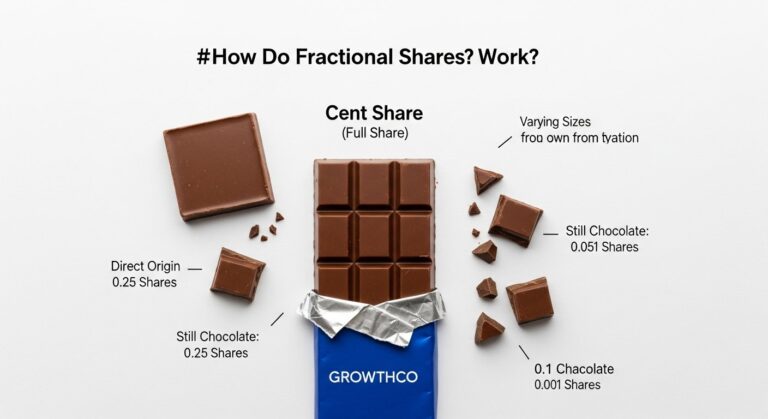
[INLINE IMAGE 2: place after fourth H2 | alt=”how do fractional shares work comparison illustration”]
Potential for Reduced Liquidity in Certain Scenarios
While the underlying full shares of companies are generally highly liquid (meaning they can be easily bought and sold in the open market), the “fraction” itself is a contractual agreement between you and your brokerage. This can impact liquidity in specific, albeit rare, scenarios.
- Brokerage-Specific Liquidation: When you sell fractional shares, you are essentially selling them back to your brokerage. While major brokerages have robust systems to handle these transactions smoothly, the sale is dependent on the brokerage’s ability to process and fulfill the order. In extreme, hypothetical scenarios where a brokerage faces severe operational issues, this could theoretically impact the immediate liquidation of fractional holdings.
- Less Direct Market Access: Full shares can be transferred to other brokers or even held as physical certificates (though rare now). Fractional shares lack this direct transferability and are inherently tied to the system of the specific broker. This means your ability to access or move your investment is entirely mediated by that single financial institution.
Despite these considerations, for the vast majority of investors using reputable and well-regulated brokerages, the practical risks associated with fractional shares are generally low. The benefits of accessibility and diversification often outweigh these limitations, especially for those building long-term portfolios with modest capital.
Choosing Your Platform: Brokers Offering Fractional Shares
The widespread adoption of fractional shares has led many leading brokerage firms to integrate this feature into their platforms. However, not all platforms are created equal, and understanding how do fractional shares work across different providers is crucial for making an informed choice. Selecting the right brokerage involves evaluating various factors, from fees and investment options to user experience and customer support.
Key Considerations When Selecting a Brokerage
Before committing to a brokerage, consider these critical factors to ensure the platform aligns with your investment goals and preferences:
- Fees:
- Commissions: Many brokers offer commission-free trading for stocks and ETFs, which is a significant advantage for fractional share investors who might be making frequent, small purchases.
- Account Maintenance Fees: Check if there are any monthly or annual fees for maintaining your account, especially if your balance falls below a certain threshold.
- Transfer Fees: If you ever need to transfer your account (or liquidate fractional shares before transferring), be aware of potential outgoing transfer fees.
- Investment Options:
- Stocks and ETFs: Most fractional share offerings are for individual stocks and Exchange Traded Funds (ETFs). Verify if the brokerage offers fractional trading for all listed stocks or a select subset (e.g., only S&P 500 companies).
- Other Assets: If you plan to invest in other asset classes like mutual funds, bonds, or cryptocurrencies, ensure the platform supports those as well, alongside fractional share capabilities.
- Minimums:
- Account Opening Minimum: Many online brokers have no minimum to open an account.
- Investment Minimums: Check the minimum amount required for a fractional share purchase. Some brokers allow investments as low as $1, while others might have a $5 or $10 minimum per trade.
- User Experience, Research Tools, and Customer Support:
- Platform Usability: Is the platform intuitive and easy to navigate, especially for placing fractional orders and managing your portfolio? This is critical for new investors.
- Research and Education: Does the brokerage provide robust research tools, analytical insights, and educational resources to help you make informed decisions?
- Customer Support: Evaluate the quality and availability of customer support (phone, email, chat) in case you encounter issues or have questions.
Leading Brokerages and Their Fractional Share Offerings
Several prominent brokerages have embraced fractional share investing, each with its unique strengths and features. Here’s a look at some of the leaders:
- Fidelity: A long-standing financial institution known for its comprehensive offerings, robust research, and excellent customer service. Fidelity offers fractional shares for a wide range of U.S. stocks and ETFs, with investment minimums as low as $1. Their “Stocks by the Slice” program is popular for its ease of use.
- Charles Schwab: Another industry giant, Schwab also offers fractional share investing (Schwab Stock Slices) for S&P 500 companies with a $5 minimum investment. They are known for their strong customer support and extensive research capabilities.
- Robinhood: Pioneering commission-free trading and a user-friendly mobile app, Robinhood was one of the early adopters of fractional shares. They allow investments from $1 in a broad selection of stocks and ETFs, appealing particularly to younger investors.
- M1 Finance: M1 Finance specializes in automated, customizable portfolio management, allowing users to create “Pies” of fractional investments. They offer automated rebalancing and dollar-cost averaging, making them ideal for long-term, passive investors with a low investment minimum.
- Interactive Brokers (IBKR): Known for its advanced trading tools and low costs for active traders, IBKR also offers fractional shares. They support a vast array of global assets and allow fractional trading for U.S. stocks and ETFs, making them suitable for more sophisticated investors looking for global reach.
The choice of brokerage largely depends on your personal investment style, whether you prioritize low costs, advanced tools, or hands-off automation.
| Brokerage | Minimum Investment | Available Assets (Fractional) | Auto-Invest Feature | Fractional Transferability | Notable Features | ||||||||||||||||||
|---|---|---|---|---|---|---|---|---|---|---|---|---|---|---|---|---|---|---|---|---|---|---|---|
| Fidelity | $1 | U.S. Stocks, ETFs | Yes (recurring investments) | Complex (often liquidates to cash) | Strong research, robust platform, excellent support | ||||||||||||||||||
| Charles Schwab | $5 | S&P 500 Stocks | Yes (recurring investments) | Limited (often liquidates to cash) | Strong customer service, comprehensive resources | ||||||||||||||||||
| Robinhood | $1 | U.S. StocksHow Do Fractional Shares Work? The Definitive Guide to Modern InvestingAffiliate disclosure: This article may contain affiliate links. Recommendations are independent and editorially driven. In the evolving landscape of personal finance, innovations constantly emerge to democratize access to wealth-building opportunities. Among the most impactful in recent years is the rise of fractional shares. Once a niche offering, the ability to buy a portion of a stock rather than a full share has fundamentally changed how millions approach investing. For many, the prohibitive cost of single shares from blue-chip companies or high-growth tech giants represented an insurmountable barrier. Fractional shares shatter this barrier, allowing investors with modest capital to build diversified portfolios that were previously out of reach. This comprehensive guide from diaalnews will delve deep into the mechanics, benefits, risks, and practical applications of fractional shares. We will explore exactly how do fractional shares work, outlining the underlying technology that makes them possible and the various ways investors can leverage them to achieve their financial goals. Whether you are a novice investor taking your first steps into the market or an experienced hand looking to optimize your portfolio, understanding fractional shares is crucial in today’s investment climate. The concept is simple yet revolutionary: instead of needing hundreds or even thousands of dollars to buy a single share of a company like Amazon, Google, or Nvidia, you can invest any dollar amount you choose – say, $50 or $100 – and own a corresponding fraction of that share. This means that a stock trading at $1,000 per share is no longer exclusively for those who can afford that full amount; an investor with $100 can own 0.1 of that share, participating in its growth and receiving proportional dividends. Beyond simple accessibility, fractional shares offer powerful tools for diversification, dollar-cost averaging, and efficient capital allocation. They allow for precise investment strategies, ensuring every dollar put into the market works as hard as possible. However, like any financial instrument, they come with their own set of considerations and nuances that every investor should understand. By the end of this guide, you will have a complete picture of how fractional shares work and how you can integrate them effectively into your investment strategy for 2026 and beyond. Understanding the Basics: What Exactly Are Fractional Shares?At its core, a fractional share represents a partial ownership of a single share of a company’s stock. Traditionally, when you invested in the stock market, you had to purchase whole shares. If a stock was trading at $500 per share, you needed at least $500 (plus any commissions) to buy just one unit of that company. This presented a significant hurdle for many aspiring investors, particularly those with limited funds or those looking to diversify across several high-priced companies. The advent of fractional shares changes this paradigm entirely. Instead of focusing on the number of shares, investors can now focus on the dollar amount they wish to invest. This dollar-based investing allows you to specify that you want to invest, for example, $25 into Apple stock, regardless of Apple’s current share price. If Apple shares are trading at $175, your $25 investment would purchase approximately 0.1428 shares ($25 / $175). Demystifying the Concept: A Modern Investment ToolThink of it like buying gold. You don’t necessarily have to buy a full ounce of gold; you can buy a gram, or even a fraction of a gram, depending on how much you want to invest. Fractional shares apply the same principle to equity investments. They break down the traditional barrier of “one share at a time” investing, opening up the market to a much broader audience. The primary motivation behind the emergence of fractional shares was simple: accessibility. As the stock prices of many successful companies soared into the hundreds or even thousands of dollars per share, they became increasingly out of reach for everyday investors. This created an imbalance, where only those with substantial capital could truly participate in the growth of certain sectors or companies. Fractional shares were developed by brokerages to address this, recognizing that many individuals wanted to invest in these companies but couldn’t afford a full share. The technology enabling fractional shares has also played a crucial role. Modern brokerage platforms, equipped with advanced trading systems and sophisticated account management software, can now efficiently manage and track these partial holdings. This was not feasible with older, more manual trading systems, which is why fractional shares are a relatively recent innovation, gaining significant traction only in the past few years. The Evolution of Investment AccessibilityHistorically, investing in the stock market required significant capital and often the assistance of a full-service broker. The process was opaque for many, and minimum investment amounts were high. Over time, discount brokerages emerged, lowering transaction costs and making self-directed investing more popular. The rise of online platforms further accelerated this trend, bringing investing to desktop computers and eventually mobile devices. However, even with lower commissions and easier access, the barrier of high individual share prices persisted. For instance, in 2026, a single share of a leading tech company might still cost over $1,500. For an investor with $100 to spare each month, it could take more than a year of saving just to buy one share of that company. During that time, their capital sits idle, losing potential gains. Fractional shares represent the latest, and arguably most significant, leap in democratizing investment. They eliminate the “price-per-share” problem, allowing investors to truly invest any amount they are comfortable with, whenever they want. This shift has profound implications for financial inclusion, enabling individuals from all economic backgrounds to participate directly in the growth of the world’s leading companies. It’s a powerful tool that empowers individuals to start building wealth earlier and more efficiently, regardless of their starting capital. The Mechanics Behind Fractional Share OwnershipUnderstanding how do fractional shares work requires a look behind the scenes at how brokerages manage these partial investments. While you, the investor, see a fraction of a share in your account, the actual mechanics involve a slightly more complex, yet secure, system managed by your brokerage firm. It’s not as simple as physically cutting up a stock certificate, but rather a sophisticated system of record-keeping and aggregated ownership. How Brokerages Facilitate Fractional OwnershipThe most common model brokerages use to offer fractional shares is through what’s known as an “omnibus account.” In this setup, the brokerage itself purchases full shares of various companies. For example, if 100 different clients each want to buy $100 worth of a stock that trades at $1,000 per share, the brokerage would effectively aggregate these orders. Instead of each client buying 0.1 shares directly from the market, the brokerage would buy 10 full shares (100 clients * 0.1 shares each = 10 shares) and then internally allocate those 0.1 share equivalents to each client’s account. Essentially, the brokerage holds the full shares in its name (or its custodian’s name) within a large omnibus account, and then maintains a detailed ledger of each individual client’s fractional ownership within that collective pool. From your perspective, you are the beneficial owner of that fraction, meaning you are entitled to the economic benefits, such as capital gains and dividends, proportional to your ownership. However, the legal title for the full shares resides with the brokerage. This system of splitting and allocation is handled by sophisticated trading algorithms and internal accounting systems. When you place an order for a dollar amount, the brokerage calculates the exact fraction of a share your money can buy at the current market price, aggregates it with other fractional orders, and then executes a full share order in the market. This process happens seamlessly and usually within milliseconds, making it appear to the investor as if they are directly buying a fraction from the exchange. The distinction between direct and indirect ownership is important, mainly regarding certain rights like voting, which we will discuss later. However, for the primary purpose of investing – participating in market growth and receiving dividends – the beneficial ownership model works effectively and securely, with regulatory bodies overseeing these practices to protect investor interests. [INLINE IMAGE 1: place after second H2 | alt=”how do fractional shares work concept illustration”] Buying and Selling Fractional Shares: The ProcessThe process of buying fractional shares is remarkably straightforward for the end-user, thanks to the intuitive interfaces of modern brokerage platforms. The key difference from traditional investing is that you typically specify a dollar amount rather than a number of shares.
Selling fractional shares follows a very similar process. You specify the dollar amount you wish to sell (e.g., “sell $50 worth”) or the fraction you wish to sell (e.g., “sell 0.25 shares”). The brokerage then liquidates that portion of your holding, and the cash proceeds are deposited into your account, typically settling within two business days (T+2) as per standard market practices. Dividends and Corporate Actions with FractionsOne of the significant advantages of fractional shares is that investors are entitled to dividends and participate in corporate actions proportional to their ownership. This ensures that even small investments can generate passive income and benefit from company growth strategies.
It’s important to note that while the economic benefits are proportional, certain corporate actions, particularly those requiring shareholder votes, might have limitations for fractional shareholders, which we will cover in a subsequent section. Key Benefits: Why Fractional Shares Revolutionize InvestingThe transformative power of fractional shares extends far beyond mere convenience. They fundamentally alter the landscape of personal investing, offering significant advantages that were previously inaccessible to a vast segment of the population. Understanding these benefits is key to appreciating how do fractional shares work as a force for financial empowerment. Lowering the Barrier to Entry for High-Value StocksPerhaps the most immediate and impactful benefit of fractional shares is their ability to democratize access to the stock market, particularly to shares of high-priced companies. Historically, many of the world’s most innovative and consistently growing companies – think tech giants, luxury brands, or pharmaceutical leaders – often had share prices in the hundreds or even thousands of dollars. This placed them out of reach for individuals who could only afford to invest smaller amounts at a time.
This low barrier to entry is crucial for encouraging widespread participation in the stock market, which historically has been one of the most effective ways to build long-term wealth. Enhanced Diversification for Any Portfolio SizeDiversification is a cornerstone of sound investment strategy, aiming to reduce risk by spreading investments across various assets, industries, and geographies. Traditionally, achieving meaningful diversification with a limited budget was challenging. If you had $1,000 to invest and wanted to buy into five different companies, each company’s share price would need to average no more than $200 (assuming you only buy full shares). This severely limited your choices, often forcing you into less expensive, potentially riskier stocks, or consolidating your funds into fewer positions, thereby increasing concentration risk. Fractional shares revolutionize diversification by enabling you to spread your capital much more broadly and precisely:
By making diversification accessible and practical for all investors, fractional shares allow for more resilient and stable portfolios, even for those starting with small amounts. Enabling Dollar-Cost Averaging with PrecisionDollar-Cost Averaging (DCA) is a powerful investment strategy where you invest a fixed amount of money at regular intervals, regardless of the asset’s price. This approach helps mitigate the risk of market timing by averaging out your purchase price over time. When prices are high, your fixed dollar amount buys fewer shares; when prices are low, it buys more shares. Over the long term, this strategy can lead to a lower average cost per share and smoother investment returns. Fractional shares significantly enhance the effectiveness and ease of implementing DCA:
Maximizing Every Dollar: No Leftover CashOne often-overlooked but significant benefit of fractional shares is the ability to fully deploy your investment capital without any “cash drag.” In traditional investing, if you wanted to invest $1,000 and a share cost $175, you could buy 5 shares for $875, leaving $125 uninvested. This leftover cash might sit idle in your brokerage account, earning minimal or no interest, and not contributing to your portfolio’s growth.
These benefits collectively underscore how fractional shares are not just a convenient feature but a powerful tool revolutionizing access, diversification, and efficiency in personal investing. Navigating the Downsides: Risks and Limitations of Fractional SharesWhile the benefits of fractional shares are compelling, it’s equally important for investors to understand their limitations and potential risks. No investment tool is without its nuances, and a comprehensive understanding of how do fractional shares work includes acknowledging their specific characteristics that differ from traditional full-share ownership. Awareness of these aspects enables informed decision-making and helps set realistic expectations. Broker-Specific Rules and Transferability ConcernsOne of the primary distinctions of fractional shares is that they are largely a construct of your specific brokerage firm. Unlike full shares, which are typically registered with a transfer agent or held by a custodian and can be easily transferred between different brokerage houses via an ACATS (Automated Customer Account Transfer Service) transfer, fractional shares often face significant hurdles.
Therefore, when choosing a brokerage for fractional share investing, consider the long-term implications of remaining with that platform and whether its fractional share policies align with your potential future needs. Limited Voting Rights and Corporate ActionsWhile fractional share ownership grants you proportional economic rights (like dividends), it typically does not confer full voting rights in corporate matters. This is a direct consequence of the omnibus account structure mentioned earlier, where the brokerage holds the legal title to the full shares.
For the vast majority of retail investors, this limitation is minor compared to the benefits of accessibility and diversification. However, it’s a critical distinction for those who value direct participation in corporate governance. Execution Variances and Bid-Ask SpreadsThe way fractional share orders are executed can sometimes differ from traditional full-share orders, potentially leading to slight variations in pricing or execution speed.
[INLINE IMAGE 2: place after fourth H2 | alt=”how do fractional shares work comparison illustration”] Potential for Reduced Liquidity in Certain ScenariosWhile the underlying full shares of companies are generally highly liquid (meaning they can be easily bought and sold in the open market), the “fraction” itself is a contractual agreement between you and your brokerage. This can impact liquidity in specific, albeit rare, scenarios.
Despite these considerations, for the vast majority of investors using reputable and well-regulated brokerages, the practical risks associated with fractional shares are generally low. The benefits of accessibility and diversification often outweigh these limitations, especially for those building long-term portfolios with modest capital. Choosing Your Platform: Brokers Offering Fractional SharesThe widespread adoption of fractional shares has led many leading brokerage firms to integrate this feature into their platforms. However, not all platforms are created equal, and understanding how do fractional shares work across different providers is crucial for making an informed choice. Selecting the right brokerage involves evaluating various factors, from fees and investment options to user experience and customer support. Key Considerations When Selecting a BrokerageBefore committing to a brokerage, consider these critical factors to ensure the platform aligns with your investment goals and preferences:
Leading Brokerages and Their Fractional Share OfferingsSeveral prominent brokerages have embraced fractional share investing, each with its unique strengths and features. Here’s a look at some of the leaders:
The choice of brokerage largely depends on your personal investment style, whether you prioritize low costs, advanced tools, or hands-off automation.
|