
Understanding Your Investment Risk Tolerance: A Comprehensive Guide to Smart Investing
Affiliate disclosure: This article may contain affiliate links. Recommendations are independent and editorially driven.
Embarking on the journey of investing is a pivotal step towards securing your financial future. Whether you dream of early retirement, funding your children’s education, purchasing a home, or simply building a robust safety net, thoughtful investment decisions are paramount. However, the path to wealth accumulation is rarely a straight line; it’s often fraught with market fluctuations, economic uncertainties, and unforeseen events. This is where the crucial concept of investment risk tolerance comes into play.
Your investment risk tolerance is more than just a passing preference; it’s a deep-seated psychological and financial metric that dictates how much volatility and potential loss you are comfortable enduring in pursuit of financial gains. It’s the balancing act between the desire for high returns and the aversion to significant downturns. Misjudging your own risk tolerance can lead to rash decisions during market corrections, missed opportunities during bull markets, and ultimately, an investment strategy that fails to serve your long-term objectives.
At diaalnews, we understand that navigating the complexities of personal finance requires clarity and actionable insights. This comprehensive guide aims to demystify investment risk tolerance, providing you with the tools and knowledge to accurately assess your personal profile, align your portfolio with your true comfort level, and foster a disciplined, resilient approach to investing that stands the test of time. By the end of this article, you will not only understand what investment risk tolerance means but also how to effectively integrate it into your financial planning for a more secure and prosperous future.
Understanding Investment Risk Tolerance: The Core Concept Defined
At its heart, investment risk tolerance refers to the degree of variability in investment returns that an investor is willing and able to withstand. It’s about your comfort level with potential losses in exchange for potential gains. This concept is fundamental because it directly influences your asset allocation decisions, portfolio construction, and even your emotional responses during periods of market stress.
What is Investment Risk Tolerance? Why Does it Matter So Much?
Investment risk tolerance is a multifaceted concept that encompasses both your psychological willingness to take risks and your financial ability to absorb potential losses. It’s not merely a desire for high returns; it’s also about your capacity to sleep soundly at night when your portfolio’s value fluctuates. An investor with high risk tolerance might remain calm during a 20% market dip, viewing it as a buying opportunity, while an investor with low risk tolerance might panic and sell all their holdings, locking in losses.
The significance of understanding your risk tolerance cannot be overstated. When your investment strategy is misaligned with your true risk profile, you become vulnerable to making irrational decisions. For instance, if you’re a low-risk investor adopting an aggressive strategy, you might find yourself constantly stressed, leading to premature withdrawals or selling during downturns. Conversely, a high-risk investor adhering to an overly conservative strategy might experience “opportunity cost,” missing out on significant growth potential over time.
Accurately identifying your investment risk tolerance ensures that your portfolio is structured in a way that aligns with your emotional disposition and financial capacity, promoting long-term discipline and better financial outcomes.
The Inherent Relationship Between Risk and Reward
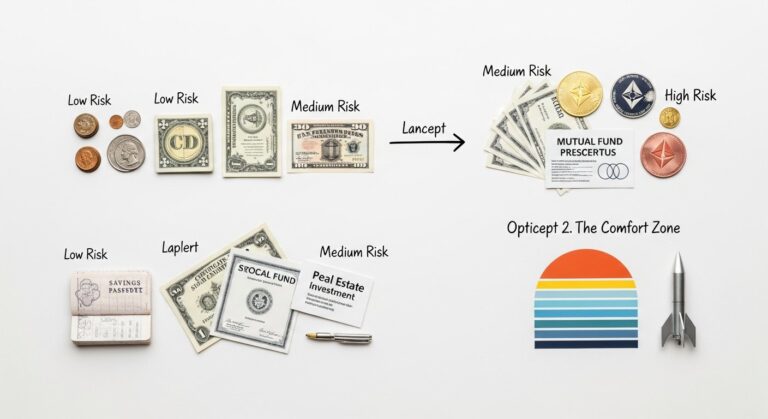
One of the most enduring principles in finance is the concept that higher potential returns generally come with higher levels of risk. This is the “risk-reward tradeoff.” Investments that promise substantial gains often carry a greater possibility of significant losses, while those offering more stability typically provide more modest returns.
Consider the spectrum of investments:
- Cash and Money Market Accounts: Very low risk, very low returns. Your principal is largely secure, but growth is minimal, often struggling to keep pace with inflation.
- Bonds: Generally lower risk than stocks, offering more predictable income. However, their returns are typically lower than equities over the long term.
- Stocks/Equities: Higher risk, but historically offer the greatest potential for long-term capital appreciation. They are subject to significant volatility based on company performance, industry trends, and broader economic conditions.
- Alternative Investments (e.g., private equity, venture capital, cryptocurrency, commodities): Often the highest risk category, with the potential for exponential gains but also complete loss of capital. These typically require specialized knowledge and a very high risk tolerance.
Your investment risk tolerance helps you determine where on this spectrum your portfolio should primarily reside. A low-risk tolerance investor might favor a portfolio heavily weighted towards bonds and cash, while a high-risk tolerance investor might lean heavily into stocks and alternatives, anticipating greater long-term growth despite short-term volatility.
The Psychological Aspect: How Emotions Influence Investment Decisions
Investing is not purely a numbers game; it’s deeply intertwined with human psychology and emotion. Even the most rational individuals can fall prey to behavioral biases when their money is on the line. Fear and greed are two primary emotions that can severely impact investment decisions, often leading investors to abandon well-thought-out strategies.
During market downturns, fear can manifest as panic selling, where investors liquidate assets at a loss to stop the bleeding, only to miss the subsequent recovery. Conversely, during bull markets, greed can lead to irrational exuberance, prompting investors to chase speculative assets or concentrate their portfolios in risky ventures, often buying at the peak and exposing themselves to greater downside. A clear understanding of your investment risk tolerance acts as an emotional compass, guiding your decisions and helping you maintain discipline even when market conditions are turbulent. It enables you to pre-commit to a strategy that you know you can stick with, preventing emotional impulses from derailing your long-term financial goals.
Factors Shaping Your Risk Tolerance Profile
Your investment risk tolerance is not a static characteristic; it’s a dynamic profile influenced by a confluence of personal, financial, and psychological factors. A change in any of these areas can shift your comfort level with risk, necessitating a re-evaluation of your investment strategy.
Financial Goals and Investment Time Horizon
Perhaps the most significant drivers of investment risk tolerance are your financial goals and the timeframe you have to achieve them.
- Short-Term Goals (e.g., buying a car next year, down payment for a house in 2-3 years): For these goals, your risk tolerance should generally be low. You cannot afford significant fluctuations in value, as you’ll need the capital soon. Investments should prioritize capital preservation over growth.
- Medium-Term Goals (e.g., child’s college fund in 5-10 years): Here, you might be able to tolerate a moderate amount of risk. There’s enough time to recover from minor market corrections, allowing for some growth-oriented investments.
- Long-Term Goals (e.g., retirement in 20+ years): With a longer time horizon, your ability to tolerate risk generally increases. You have ample time for your investments to recover from downturns and benefit from the power of compounding. Historically, equity markets have delivered strong returns over periods exceeding 10-15 years, despite short-term volatility.
Understanding the urgency and criticality of your goals helps determine how much risk you should take, which might be different from how much risk you feel comfortable taking.
Age and Life Stage
Age is often a proxy for investment time horizon and plays a substantial role in shaping risk tolerance.
- Young Investors (20s-30s): Typically have a very long time horizon, often 30-40+ years until retirement. This allows them to embrace higher risk, as they have ample time to recover from market setbacks. Aggressive growth strategies with a higher allocation to equities are often appropriate.
- Mid-Career Investors (40s-50s): While still having a significant time horizon, other financial responsibilities (e.g., mortgages, children’s education) might increase the need for stability. Risk tolerance may moderate, shifting towards a balanced portfolio.
- Pre-Retirees and Retirees (60s+): The time horizon shortens considerably, and the focus shifts from aggressive growth to capital preservation and income generation. Risk tolerance generally decreases significantly, favoring lower-volatility investments like bonds and income-producing assets.
It’s important to remember that these are general guidelines; individual circumstances can always alter this trajectory.
Income Stability and Net Worth
Your current financial standing and future earning potential significantly influence your ability to absorb investment losses.
- High Income Stability: If you have a secure job, a steady income, and a robust emergency fund, you are better positioned to withstand market downturns. You have the ability to continue contributing to your investments even if their value temporarily decreases, or to draw from other sources if necessary.
- Lower Income Stability: If your income is irregular or uncertain, or if you have significant debt, your ability to absorb losses is diminished. A more conservative approach may be necessary to protect essential capital.
- Substantial Net Worth: Investors with a high net worth generally have a greater capacity to take on risk. A percentage loss on a large portfolio is still a large amount of money, but it may not jeopardize their overall financial security in the same way it would for someone with limited assets.
Your emergency fund, specifically, is a critical component. A well-funded emergency fund provides a buffer, ensuring that short-term financial needs don’t force you to sell long-term investments at an inopportune time, thereby indirectly supporting a higher risk tolerance for the investment portion of your assets.
[INLINE IMAGE 1: place after second H2 | alt=”investment risk tolerance concept illustration”]
Knowledge, Experience, and Education
An investor’s understanding of financial markets, investment vehicles, and economic principles plays a crucial role in their risk tolerance.
- Experienced and Knowledgeable Investors: Those who have weathered market cycles, understand diversification, and are familiar with different asset classes often exhibit a higher, more rational risk tolerance. Their decisions are based on data and experience, not just emotion.
- Novice Investors: Individuals new to investing may initially have a lower risk tolerance due to unfamiliarity and fear of the unknown. Education and gaining experience can gradually increase this comfort level. However, a little knowledge can also be dangerous if it leads to overconfidence without a deep understanding of underlying risks.
Continuous learning about investing and economics can empower you to make more informed decisions and potentially increase your comfort with calculated risks.
Personality and Emotional Temperament
Beyond the purely financial aspects, your inherent personality traits and emotional temperament are deeply intertwined with your investment risk tolerance. Some individuals are naturally more cautious and risk-averse in all aspects of life, while others thrive on excitement and are comfortable with uncertainty.
- Risk-Averse Personalities: These individuals may experience significant stress and anxiety from market fluctuations, even if their financial situation could theoretically support more risk. Forcing an overly aggressive strategy on such a personality will likely lead to poor outcomes due to panic selling or constant worry.
- Risk-Seeking Personalities: These individuals might be comfortable with, or even enjoy, the volatility of the markets. However, this can sometimes lead to excessive risk-taking, speculative investments, or an insufficient understanding of potential downsides.
Self-awareness about your emotional responses to gain and loss is vital. It’s about finding a strategy that aligns not just with your financial capacity but also with your psychological well-being.
Market Conditions and Economic Outlook
While your personal risk tolerance should ideally remain consistent, external market conditions can influence your perception of risk and, to some extent, your willingness to take it.
- Bull Markets: During periods of sustained growth, investors often feel more confident and may perceive less risk, leading to increased risk-taking. This “fear of missing out” (FOMO) can sometimes lead to irrational decisions.
- Bear Markets/Recessions: Economic downturns and market crashes tend to heighten risk aversion. Investors may become overly cautious, even to the point of liquidating sound long-term investments.
It’s crucial to distinguish between a temporary shift in market sentiment and a fundamental change in your personal risk tolerance. A robust financial plan, built around your core risk tolerance, helps you avoid being swayed by short-term market noise.
Assessing Your Personal Investment Risk Tolerance
Accurately determining your investment risk tolerance is a foundational step towards building an effective and sustainable investment strategy. It’s not a simple guess; it requires a structured approach that considers both your financial capacity and your psychological comfort.
Utilizing Risk Assessment Questionnaires and Tools
One of the most common and accessible methods for assessing risk tolerance is through standardized questionnaires. Financial institutions, robo-advisors, and financial planning websites often provide these tools. These questionnaires typically ask a series of questions designed to gauge your comfort with market volatility, your past reactions to financial losses, your financial goals, and your understanding of investment concepts.
Typical questions might include:
- How would you react if your portfolio dropped by 20% in a single month? (e.g., “Panic and sell everything,” “Be concerned but hold,” “See it as a buying opportunity”)
- What is your primary financial goal for this investment? (e.g., “Preserve capital,” “Moderate growth,” “Aggressive growth”)
- How much investing experience do you have? (e.g., “None,” “Some,” “Extensive”)
- Which statement best describes your financial situation? (e.g., “Limited savings, rely on current income,” “Comfortable savings, stable income,” “Substantial assets, high income”)
These tools provide a quantitative score that categorizes you into a general risk profile (e.g., conservative, moderate, aggressive). While helpful, it’s important to remember that these are just starting points. They don’t capture the full nuance of your personal situation or behavioral tendencies.
The Invaluable Role of a Financial Advisor
For a more personalized and in-depth assessment, consulting a qualified financial advisor is highly recommended. A skilled advisor goes beyond a simple questionnaire. They engage in comprehensive discussions to understand:
- Your full financial picture: Assets, liabilities, income, expenses, insurance coverage, estate plans.
- Specific goals and timelines: Not just “retirement,” but when, where, and what lifestyle you envision.
- Past financial experiences: How you’ve reacted to financial ups and downs, both personal and market-related.
- Behavioral tendencies: Through conversation, an advisor can often identify underlying biases or emotional responses that a questionnaire might miss.
- Capacity for loss: Distinguishing between your emotional willingness to take risk and your actual financial ability to absorb losses without derailing your life.
An advisor can help you reconcile any discrepancies between your perceived risk tolerance and what is financially prudent for your situation. They can also educate you on various investment risks and strategies, empowering you to make more informed decisions. For complex financial situations or for those who prefer expert guidance, an advisor is often indispensable in accurately mapping your investment risk tolerance to a suitable portfolio.
Self-Reflection and Scenario Planning
Even with questionnaires and advisor input, personal self-reflection is a critical component of truly understanding your risk tolerance. Imagine yourself in various market scenarios and honestly assess your likely reactions:
- Market Crash Scenario: Your portfolio drops by 30% over a few months. How do you feel? Do you panic? Do you see it as a chance to buy more? Do you lose sleep?
- Stagnant Market Scenario: Your investments barely grow for five years. Are you patient? Do you feel frustrated and want to make drastic changes?
- Rapid Growth Scenario: Your portfolio skyrockets by 50% in a year. Do you become overly confident? Do you consider taking more risk?
Consider your past financial decisions. Have you ever sold an investment too early due to fear? Have you ever chased a “hot” stock due to greed? Reflecting on these experiences can provide valuable insights into your natural inclinations. Journaling your thoughts and feelings about money and investing can also reveal patterns in your decision-making. This introspective process helps align your conscious understanding with your subconscious reactions, leading to a more accurate and robust assessment of your investment risk tolerance.
Types of Investor Risk Profiles

While every investor is unique, financial professionals typically categorize individuals into broad risk profiles to help tailor investment strategies. These profiles serve as useful benchmarks, but remember that your actual tolerance might lie somewhere along a continuum rather than fitting neatly into a single box.
The Conservative Investor
Conservative investors prioritize capital preservation over aggressive growth. Their primary objective is to protect their principal and avoid significant losses, even if it means accepting lower returns. They have a low tolerance for volatility and are often made anxious by market fluctuations.
Characteristics:
- Priorities: Safety, liquidity, predictable income.
- Typical Portfolio Allocation: Heavily weighted towards low-risk assets such as cash, money market accounts, certificates of deposit (CDs), high-quality government bonds, and investment-grade corporate bonds. May include a small allocation to stable, dividend-paying stocks or balanced funds.
- Emotional Response to Downturns: High anxiety, likely to sell assets to prevent further losses, even if it means locking in a loss.
- Suitable For: Those nearing retirement, individuals with short-term financial goals, or anyone who cannot afford significant capital loss due to their financial situation or emotional disposition.
For a conservative investor, the peace of mind derived from stability often outweighs the potential for higher returns offered by riskier assets.
The Moderate Investor
Moderate investors seek a balance between capital preservation and growth. They are willing to accept some level of risk and volatility in exchange for moderate returns, but they still have a significant aversion to substantial losses. They are generally comfortable with market fluctuations but prefer a smoother ride.
Characteristics:
- Priorities: Balanced growth, reasonable income, some capital appreciation.
- Typical Portfolio Allocation: A diversified mix, often with a significant portion in bonds (40-60%) and the remainder in a diversified basket of stocks, including large-cap, value, and some growth stocks. May utilize balanced mutual funds or target-date funds.
- Emotional Response to Downturns: Concerned but generally able to stick to their plan, understanding that market corrections are part of investing. Might consider rebalancing.
- Suitable For: Mid-career professionals, those saving for medium-term goals like a child’s education, or individuals who want growth but aren’t comfortable with the full swing of the stock market.
A moderate approach aims for steady progress without exposing the investor to extreme market gyrations.
The Aggressive Investor
Aggressive investors prioritize maximizing long-term growth and are comfortable taking on significant risk and enduring substantial market volatility to achieve potentially higher returns. They view market downturns as opportunities and are generally unfazed by short-term losses.
Characteristics:
- Priorities: Maximum capital appreciation, long-term wealth accumulation.
- Typical Portfolio Allocation: Heavily weighted towards equities (70-100%), including growth stocks, small-cap stocks, international stocks, emerging markets, and potentially alternative investments. Bonds may be minimal or absent.
- Emotional Response to Downturns: Sees corrections as buying opportunities, maintains discipline, and may even increase contributions. Unlikely to panic sell.
- Suitable For: Young investors with a very long time horizon, individuals with high-income stability and substantial net worth, or those with a deep understanding of market dynamics and a strong emotional fortitude.
Aggressive investors understand that significant short-term losses are a potential consequence of seeking outsized long-term gains, and they have the psychological and financial capacity to weather these storms.
The Spectrum In Between: Blended Profiles
It’s rare for an individual to fit perfectly into one of these three categories. Many investors find themselves somewhere in between, such as a “moderately conservative” or “moderately aggressive” profile. For example, a moderately conservative investor might have a 60% bond / 40% stock allocation, while a moderately aggressive investor might be 30% bond / 70% stock.
These blended profiles allow for more nuanced portfolio construction that accurately reflects an individual’s unique blend of financial circumstances, goals, time horizon, and personal emotional comfort with risk. A good financial plan will consider these individual nuances to create a truly personalized investment strategy.
[INLINE IMAGE 2: place after fourth H2 | alt=”investment risk tolerance comparison illustration”]
Strategies for Aligning Investments with Your Risk Tolerance
Once you’ve accurately assessed your investment risk tolerance, the next critical step is to construct an investment portfolio that genuinely reflects it. This alignment is key to achieving your financial goals without undue stress or the temptation to make impulsive decisions.
Asset Allocation and Diversification: Cornerstones of Risk Management
Asset allocation is arguably the most crucial decision an investor makes. It refers to how you divide your investment portfolio among different asset classes, such as stocks, bonds, cash, and alternative investments. Your asset allocation should be the direct reflection of your investment risk tolerance.
- Conservative investors will typically have a higher allocation to bonds and cash, prioritizing stability and income. (e.g., 70% bonds, 30% stocks)
- Moderate investors will balance stocks and bonds, aiming for a mix of growth and stability. (e.g., 50% bonds, 50% stocks)
- Aggressive investors will lean heavily into stocks for maximum growth potential. (e.g., 20% bonds, 80% stocks)
These are general guidelines, and the specific percentages will vary based on individual circumstances and market conditions. The key is that your allocation should be consciously chosen to match your comfort with risk and your financial goals.
Diversification, on the other hand, is about spreading your investments within each asset class to reduce specific risks. Instead of putting all your stock investments into one company, you diversify across different companies, industries, market capitalizations (large-cap, mid-cap, small-cap), and geographical regions. Similarly, within bonds, you might diversify across different issuers, maturities, and credit qualities.
Proper diversification doesn’t eliminate risk entirely, but it significantly reduces “unsystematic risk” – the risk specific to a particular company or industry. By not having all your eggs in one basket, a poor performance from one investment won’t devastate your entire portfolio.
Rebalancing Your Portfolio: Staying on Track
Over time, market movements will inevitably cause your portfolio’s asset allocation to drift from its original targets. For example, if stocks have a strong bull run, their percentage in your portfolio might grow, increasing your overall risk exposure beyond your comfortable tolerance. Rebalancing is the process of periodically adjusting your portfolio back to your target asset allocation.
There are two primary ways to rebalance:
- Selling high and buying low: Selling a portion of the assets that have performed well (and are now overweight) and using the proceeds to buy assets that have underperformed (and are now underweight).
- Directing new contributions: If you’re regularly contributing to your investments, you can direct new funds to the underweight asset classes, bringing your portfolio back into balance without incurring transaction costs from selling.
Rebalancing ensures that your portfolio consistently reflects your chosen investment risk tolerance and prevents you from inadvertently taking on too much or too little risk. It’s a disciplined approach that forces you to adhere to your long-term strategy rather than being swayed by short-term market noise.
Understanding Different Investment Vehicles and Their Risk Profiles
A deeper understanding of various investment vehicles is crucial for constructing a portfolio aligned with your risk tolerance. Each vehicle carries a different inherent risk profile.
- Stocks (Equities): Represent ownership in a company. High growth potential, but also high volatility. Best for long-term growth and aggressive investors.
- Bonds (Fixed Income): Essentially loans made to governments or corporations. Generally lower risk than stocks, providing more stable income. Suitable for conservative and moderate investors, and for capital preservation.
- Mutual Funds & Exchange-Traded Funds (ETFs): Pooled investments that hold a diversified portfolio of stocks, bonds, or other assets. They offer instant diversification and professional management. Their risk profile depends on the underlying assets.
- Real Estate: Can be direct ownership or via Real Estate Investment Trusts (REITs). Offers potential for appreciation and income, but often illiquid and subject to market cycles. Can vary from moderate to aggressive risk.
- Alternative Investments: Include private equity, hedge funds, commodities, and cryptocurrencies. Often less liquid, less regulated, and carry very high risk, suitable only for very aggressive, experienced investors with significant capital.
Here’s a comparison of common investment vehicles based on typical risk and return profiles:
| Investment Vehicle | Typical Risk Level | Primary Return Source | Liquidity | Best For (Risk Profile) |
|---|---|---|---|---|
| Savings Accounts/CDs | Very Low | Interest | High | Conservative |
| Government Bonds | Low to Moderate | Interest | Moderate to High | Conservative to Moderate |
| Corporate Bonds | Moderate | Interest | Moderate | Moderate |
| Diversified Stock ETFs/Mutual Funds | Moderate to High | Capital Appreciation | High | Moderate to Aggressive |
| Individual Stocks (Large Cap) | High | Capital Appreciation, Dividends | High | Aggressive |
| Individual Stocks (Small Cap/Growth) | Very High | Capital Appreciation | High | Aggressive |
| Real Estate (Direct) | Moderate to High | Capital Appreciation, Rent | Low | Moderate to Aggressive (long-term) |
| Cryptocurrencies | Extremely High | Capital Appreciation | Moderate | Highly Aggressive (speculative) |
Dollar-Cost Averaging: Mitigating Volatility
Dollar-cost averaging (DCA) is an investment strategy where you invest a fixed amount of money at regular intervals (e.g., $200 every month), regardless of the asset’s price. This strategy helps manage risk, particularly for investors with a moderate to aggressive risk tolerance, by reducing the impact of market volatility.
How it works:
- When prices are high, your fixed dollar amount buys fewer shares.
- When prices are low, your fixed dollar amount buys more shares.
Over time, this strategy typically results in a lower average cost per share than if you tried to time the market by making lump-sum investments. DCA removes the emotional element of trying to predict market movements, which aligns well with a disciplined approach to investment risk tolerance. It’s particularly effective for long-term investors consistently contributing to their portfolios, such as through 401(k)s or IRA contributions. This systematic approach can provide peace of mind and help avoid the pitfalls of emotional investing.
Learn more about maximizing your retirement savings.
The Impact of Behavioral Biases on Risk Tolerance
Even with a clear understanding of your investment risk tolerance and a well-structured portfolio, human psychology can still introduce significant challenges. Behavioral biases are systematic errors in thinking that can influence our financial decisions, often leading to actions contrary to our long-term interests and stated risk tolerance.
Loss Aversion: The Pain of Losing
Loss aversion is the psychological phenomenon where the pain of losing a certain amount is felt more intensely than the pleasure of gaining the equivalent amount. Studies suggest that losses are roughly twice as psychologically powerful as gains. For investors, this can manifest in several ways:
- Holding onto Losing Investments Too Long: Investors may refuse to sell a stock that has fallen significantly, hoping it will recover, rather than realizing the loss and reallocating funds to more promising assets. This is often an attempt to avoid the “pain” of admitting a mistake.
- Selling Winning Investments Too Soon: Conversely, investors might sell profitable assets quickly to “lock in” gains, even if the investment has further growth potential. This is driven by a desire to avoid the psychological pain of seeing those gains erode.
Loss aversion can distort your true investment risk tolerance, making you act more conservatively than you need to during downturns, or more irrationally by holding onto bad investments.
Herd Mentality: Following the Crowd
Herd mentality describes the tendency for individuals to mimic the actions of a larger group, often ignoring their own analysis or better judgment. In financial markets, this can lead to:
- Chasing Bubbles: During periods of irrational exuberance, investors might flock to “hot” assets or sectors simply because everyone else is doing it, even if fundamental analysis suggests overvaluation. This can lead to taking on excessive, unexamined risk.
- Panic Selling: During market crashes, a herd mentality can trigger widespread panic selling, where investors liquidate assets out of fear, simply because others are doing so, regardless of their long-term investment plan or risk tolerance.
Resisting the urge to follow the crowd, whether during boom or bust, is crucial for maintaining a disciplined investment strategy aligned with your personal risk profile.
Overconfidence: Believing You Know Best
Overconfidence bias leads investors to overestimate their knowledge, abilities, and the accuracy of their predictions. This can be particularly dangerous in investing:
- Excessive Trading: Overconfident investors may trade too frequently, believing they can consistently beat the market, leading to higher transaction costs and often underperforming a buy-and-hold strategy.
- Concentrated Portfolios: They might invest too heavily in a small number of stocks or sectors they feel confident about, neglecting diversification and taking on unnecessary risk.
- Ignoring Negative Information: Overconfidence can lead investors to disregard information that contradicts their existing beliefs, making them blind to potential risks.
A healthy dose of humility and a recognition of the inherent unpredictability of markets are essential antidotes to overconfidence.
Anchoring: Sticking to Initial Reference Points
Anchoring bias occurs when individuals rely too heavily on the first piece of information offered (the “anchor”) when making decisions. In investing, this often means:
- Holding on to a Stock Priced at Your Purchase Point: An investor might anchor to the price at which they bought a stock, refusing to sell it for a loss even if its fundamentals have deteriorated, simply because they want to “break even.”
- Focusing on Historical Highs: Anchoring to a stock’s historical high price, even if it’s unlikely to reach that level again soon, can prevent rational decision-making about its current value.
Anchoring can prevent investors from objectively evaluating an investment’s current worth and making decisions aligned with their forward-looking financial goals and risk tolerance.
Confirmation Bias: Seeking Reinforcement
Confirmation bias is the tendency to search for, interpret, favor, and recall information in a way that confirms one’s pre-existing beliefs or hypotheses. For investors, this means:
- Selective Information Consumption: An investor bullish on a particular stock might only read articles or seek out news that supports their positive view, ignoring any bearish arguments or risks.
- Rationalizing Poor Decisions: After making an investment, an investor might seek out information that justifies their choice, even if subsequent events suggest it was a poor one.
Confirmation bias can lead to a distorted view of reality, making it difficult to objectively assess risks and adjust investment strategies when necessary. Actively seeking out diverse perspectives and challenging your own assumptions is vital to mitigate this bias.
Understand the basics of behavioral finance for smarter investing.
Adapting Your Risk Tolerance Over Time
Your investment risk tolerance is not set in stone; it’s a dynamic aspect of your financial personality that evolves throughout your life. Changes in personal circumstances, financial situations, and even market experiences can necessitate a re-evaluation and adjustment of your risk profile.
Life Changes and Milestones: Triggers for Re-evaluation
Major life events often have a profound impact on your financial goals, time horizons, and capacity for loss, thereby shifting your investment risk tolerance. It’s crucial to proactively review your risk profile after significant milestones:
- Marriage or Partnership: Combining finances means reassessing joint goals, income stability, and shared liabilities, which can alter both partners’ individual risk tolerance.
- Having Children: New dependents introduce new financial responsibilities (e.g., childcare, education savings) and often shorten the effective time horizon for certain funds, typically leading to a more conservative stance for those specific goals.
- Job Change or Loss: A significant career shift, especially one involving a decrease in income stability or a period of unemployment, will likely reduce your ability to absorb losses and therefore your comfortable risk tolerance.
- Buying a Home: A large down payment and mortgage obligations can tie up capital and increase fixed expenses, potentially making you more risk-averse in your investment portfolio.
- Inheritance or Windfall: A sudden influx of capital might increase your capacity for loss, potentially allowing for a higher risk tolerance, but it also demands careful planning to avoid irrational decisions.
- Divorce or Separation: The division of assets and creation of separate financial lives almost certainly requires a complete overhaul of investment strategy and risk assessment.
- Approaching Retirement: As mentioned, the transition from accumulation to preservation and income generation dictates a significant shift towards a lower risk tolerance.
Each of these events should prompt a serious conversation with yourself, your partner, or your financial advisor about whether your current investment strategy still aligns with your updated risk tolerance and objectives.
Market Volatility and Emotional Responses: The Test of Resilience
While your underlying risk tolerance should ideally be robust enough to weather market cycles, prolonged periods of extreme volatility can test even the most disciplined investor. It’s important to differentiate between a temporary emotional response to a market downturn and a fundamental change in your risk tolerance.
- During Bull Markets: Sustained periods of growth can inflate an investor’s perceived risk tolerance. It’s easy to be aggressive when everything is going up. However, this often leads to taking on more risk than you’re truly comfortable with when the inevitable correction occurs.
- During Bear Markets: Significant downturns can cause widespread fear and lead investors to question their entire strategy. For some, a severe market crash might reveal that their actual comfort with loss was lower than they previously thought. This is a crucial learning moment.
The key is to use these experiences as opportunities for self-assessment. If a market correction causes you profound anxiety and makes you question your long-term plan, it might indicate that your portfolio was too aggressive for your true emotional risk tolerance. Conversely, if you remain calm and see opportunities, your current risk profile might be well-suited.
Regular Reviews and Adjustments: The Proactive Approach
Given the dynamic nature of both your life and the markets, regularly reviewing your investment risk tolerance and portfolio strategy is essential. Most financial experts recommend an annual review, or certainly after any significant life event.
During these reviews, ask yourself:
- Have my financial goals changed?
- Is my time horizon still the same for my various investments?
- Has my income stability or net worth significantly altered?
- Am I still comfortable with the level of volatility in my portfolio?
- Have I experienced any behavioral biases recently that led me to question my strategy?
- Are there new investment opportunities or risks I need to consider?
These regular check-ins ensure that your investment strategy remains a living, breathing plan that evolves with you. It’s not about constantly tinkering with your portfolio, but rather ensuring that its foundational assumptions—particularly regarding your investment risk tolerance—are still valid and aligned with your current reality.
Common Misconceptions About Investment Risk
The concept of investment risk tolerance is often misunderstood, leading to suboptimal financial decisions. Dispelling these common myths is vital for a clear and effective investment strategy.
Misconception 1: Risk Means Certain Loss
Many individuals equate “risk” in investing solely with “losing money.” While the potential for loss is certainly a component of investment risk, it’s not the only one, nor does it imply certainty. Investment risk refers to the possibility of various outcomes, including:
- Volatility: The fluctuation in an investment’s value.
- Inflation Risk: The risk that your returns won’t keep pace with the rising cost of living, eroding your purchasing power.
- Liquidity Risk:
Understanding Your Investment Risk Tolerance: A Comprehensive Guide to Smart Investing
Affiliate disclosure: This article may contain affiliate links. Recommendations are independent and editorially driven.
Embarking on the journey of investing is a pivotal step towards securing your financial future. Whether you dream of early retirement, funding your children’s education, purchasing a home, or simply building a robust safety net, thoughtful investment decisions are paramount. However, the path to wealth accumulation is rarely a straight line; it’s often fraught with market fluctuations, economic uncertainties, and unforeseen events. This is where the crucial concept of investment risk tolerance comes into play.
Your investment risk tolerance is more than just a passing preference; it’s a deep-seated psychological and financial metric that dictates how much volatility and potential loss you are comfortable enduring in pursuit of financial gains. It’s the balancing act between the desire for high returns and the aversion to significant downturns. Misjudging your own risk tolerance can lead to rash decisions during market corrections, missed opportunities during bull markets, and ultimately, an investment strategy that fails to serve your long-term objectives.
At diaalnews, we understand that navigating the complexities of personal finance requires clarity and actionable insights. This comprehensive guide aims to demystify investment risk tolerance, providing you with the tools and knowledge to accurately assess your personal profile, align your portfolio with your true comfort level, and foster a disciplined, resilient approach to investing that stands the test of time. By the end of this article, you will not only understand what investment risk tolerance means but also how to effectively integrate it into your financial planning for a more secure and prosperous future.
Understanding Investment Risk Tolerance: The Core Concept Defined
At its heart, investment risk tolerance refers to the degree of variability in investment returns that an investor is willing and able to withstand. It’s about your comfort level with potential losses in exchange for potential gains. This concept is fundamental because it directly influences your asset allocation decisions, portfolio construction, and even your emotional responses during periods of market stress.
What is Investment Risk Tolerance? Why Does it Matter So Much?
Investment risk tolerance is a multifaceted concept that encompasses both your psychological willingness to take risks and your financial ability to absorb potential losses. It’s not merely a desire for high returns; it’s also about your capacity to sleep soundly at night when your portfolio’s value fluctuates. An investor with high risk tolerance might remain calm during a 20% market dip, viewing it as a buying opportunity, while an investor with low risk tolerance might panic and sell all their holdings, locking in losses.
The significance of understanding your risk tolerance cannot be overstated. When your investment strategy is misaligned with your true risk profile, you become vulnerable to making irrational decisions. For instance, if you’re a low-risk investor adopting an aggressive strategy, you might find yourself constantly stressed, leading to premature withdrawals or selling during downturns. Conversely, a high-risk investor adhering to an overly conservative strategy might experience “opportunity cost,” missing out on significant growth potential over time.
Accurately identifying your investment risk tolerance ensures that your portfolio is structured in a way that aligns with your emotional disposition and financial capacity, promoting long-term discipline and better financial outcomes.
The Inherent Relationship Between Risk and Reward
One of the most enduring principles in finance is the concept that higher potential returns generally come with higher levels of risk. This is the “risk-reward tradeoff.” Investments that promise substantial gains often carry a greater possibility of significant losses, while those offering more stability typically provide more modest returns.
Consider the spectrum of investments:
- Cash and Money Market Accounts: Very low risk, very low returns. Your principal is largely secure, but growth is minimal, often struggling to keep pace with inflation.
- Bonds: Generally lower risk than stocks, offering more predictable income. However, their returns are typically lower than equities over the long term.
- Stocks/Equities: Higher risk, but historically offer the greatest potential for long-term capital appreciation. They are subject to significant volatility based on company performance, industry trends, and broader economic conditions.
- Alternative Investments (e.g., private equity, venture capital, cryptocurrency, commodities): Often the highest risk category, with the potential for exponential gains but also complete loss of capital. These typically require specialized knowledge and a very high risk tolerance.
Your investment risk tolerance helps you determine where on this spectrum your portfolio should primarily reside. A low-risk tolerance investor might favor a portfolio heavily weighted towards bonds and cash, while a high-risk tolerance investor might lean heavily into stocks and alternatives, anticipating greater long-term growth despite short-term volatility.
The Psychological Aspect: How Emotions Influence Investment Decisions
Investing is not purely a numbers game; it’s deeply intertwined with human psychology and emotion. Even the most rational individuals can fall prey to behavioral biases when their money is on the line. Fear and greed are two primary emotions that can severely impact investment decisions, often leading investors to abandon well-thought-out strategies.
During market downturns, fear can manifest as panic selling, where investors liquidate assets at a loss to stop the bleeding, only to miss the subsequent recovery. Conversely, during bull markets, greed can lead to irrational exuberance, prompting investors to chase speculative assets or concentrate their portfolios in risky ventures, often buying at the peak and exposing themselves to greater downside. A clear understanding of your investment risk tolerance acts as an emotional compass, guiding your decisions and helping you maintain discipline even when market conditions are turbulent. It enables you to pre-commit to a strategy that you know you can stick with, preventing emotional impulses from derailing your long-term financial goals.
Factors Shaping Your Risk Tolerance Profile
Your investment risk tolerance is not a static characteristic; it’s a dynamic profile influenced by a confluence of personal, financial, and psychological factors. A change in any of these areas can shift your comfort level with risk, necessitating a re-evaluation of your investment strategy.
Financial Goals and Investment Time Horizon
Perhaps the most significant drivers of investment risk tolerance are your financial goals and the timeframe you have to achieve them.
- Short-Term Goals (e.g., buying a car next year, down payment for a house in 2-3 years): For these goals, your risk tolerance should generally be low. You cannot afford significant fluctuations in value, as you’ll need the capital soon. Investments should prioritize capital preservation over growth.
- Medium-Term Goals (e.g., child’s college fund in 5-10 years): Here, you might be able to tolerate a moderate amount of risk. There’s enough time to recover from minor market corrections, allowing for some growth-oriented investments.
- Long-Term Goals (e.g., retirement in 20+ years): With a longer time horizon, your ability to tolerate risk generally increases. You have ample time for your investments to recover from downturns and benefit from the power of compounding. Historically, equity markets have delivered strong returns over periods exceeding 10-15 years, despite short-term volatility.
Understanding the urgency and criticality of your goals helps determine how much risk you should take, which might be different from how much risk you feel comfortable taking.
Age and Life Stage
Age is often a proxy for investment time horizon and plays a substantial role in shaping risk tolerance.
- Young Investors (20s-30s): Typically have a very long time horizon, often 30-40+ years until retirement. This allows them to embrace higher risk, as they have ample time to recover from market setbacks. Aggressive growth strategies with a higher allocation to equities are often appropriate.
- Mid-Career Investors (40s-50s): While still having a significant time horizon, other financial responsibilities (e.g., mortgages, children’s education) might increase the need for stability. Risk tolerance may moderate, shifting towards a balanced portfolio.
- Pre-Retirees and Retirees (60s+): The time horizon shortens considerably, and the focus shifts from aggressive growth to capital preservation and income generation. Risk tolerance generally decreases significantly, favoring lower-volatility investments like bonds and income-producing assets.
It’s important to remember that these are general guidelines; individual circumstances can always alter this trajectory.
Income Stability and Net Worth
Your current financial standing and future earning potential significantly influence your ability to absorb investment losses.
- High Income Stability: If you have a secure job, a steady income, and a robust emergency fund, you are better positioned to withstand market downturns. You have the ability to continue contributing to your investments even if their value temporarily decreases, or to draw from other sources if necessary.
- Lower Income Stability: If your income is irregular or uncertain, or if you have significant debt, your ability to absorb losses is diminished. A more conservative approach may be necessary to protect essential capital.
- Substantial Net Worth: Investors with a high net worth generally have a greater capacity to take on risk. A percentage loss on a large portfolio is still a large amount of money, but it may not jeopardize their overall financial security in the same way it would for someone with limited assets.
Your emergency fund, specifically, is a critical component. A well-funded emergency fund provides a buffer, ensuring that short-term financial needs don’t force you to sell long-term investments at an inopportune time, thereby indirectly supporting a higher risk tolerance for the investment portion of your assets.
[INLINE IMAGE 1: place after second H2 | alt=”investment risk tolerance concept illustration”]
Knowledge, Experience, and Education
An investor’s understanding of financial markets, investment vehicles, and economic principles plays a crucial role in their risk tolerance.
- Experienced and Knowledgeable Investors: Those who have weathered market cycles, understand diversification, and are familiar with different asset classes often exhibit a higher, more rational risk tolerance. Their decisions are based on data and experience, not just emotion.
- Novice Investors: Individuals new to investing may initially have a lower risk tolerance due to unfamiliarity and fear of the unknown. Education and gaining experience can gradually increase this comfort level. However, a little knowledge can also be dangerous if it leads to overconfidence without a deep understanding of underlying risks.
Continuous learning about investing and economics can empower you to make more informed decisions and potentially increase your comfort with calculated risks.
Personality and Emotional Temperament
Beyond the purely financial aspects, your inherent personality traits and emotional temperament are deeply intertwined with your investment risk tolerance. Some individuals are naturally more cautious and risk-averse in all aspects of life, while others thrive on excitement and are comfortable with uncertainty.
- Risk-Averse Personalities: These individuals may experience significant stress and anxiety from market fluctuations, even if their financial situation could theoretically support more risk. Forcing an overly aggressive strategy on such a personality will likely lead to poor outcomes due to panic selling or constant worry.
- Risk-Seeking Personalities: These individuals might be comfortable with, or even enjoy, the volatility of the markets. However, this can sometimes lead to excessive risk-taking, speculative investments, or an insufficient understanding of potential downsides.
Self-awareness about your emotional responses to gain and loss is vital. It’s about finding a strategy that aligns not just with your financial capacity but also with your psychological well-being.
Market Conditions and Economic Outlook
While your personal risk tolerance should ideally remain consistent, external market conditions can influence your perception of risk and, to some extent, your willingness to take it.
- Bull Markets: During periods of sustained growth, investors often feel more confident and may perceive less risk, leading to increased risk-taking. This “fear of missing out” (FOMO) can sometimes lead to irrational decisions.
- Bear Markets/Recessions: Economic downturns and market crashes tend to heighten risk aversion. Investors may become overly cautious, even to the point of liquidating sound long-term investments.
It’s crucial to distinguish between a temporary shift in market sentiment and a fundamental change in your personal risk tolerance. A robust financial plan, built around your core risk tolerance, helps you avoid being swayed by short-term market noise.
Assessing Your Personal Investment Risk Tolerance
Accurately determining your investment risk tolerance is a foundational step towards building an effective and sustainable investment strategy. It’s not a simple guess; it requires a structured approach that considers both your financial capacity and your psychological comfort.
Utilizing Risk Assessment Questionnaires and Tools
One of the most common and accessible methods for assessing risk tolerance is through standardized questionnaires. Financial institutions, robo-advisors, and financial planning websites often provide these tools. These questionnaires typically ask a series of questions designed to gauge your comfort with market volatility, your past reactions to financial losses, your financial goals, and your understanding of investment concepts.
Typical questions might include:
- How would you react if your portfolio dropped by 20% in a single month? (e.g., “Panic and sell everything,” “Be concerned but hold,” “See it as a buying opportunity”)
- What is your primary financial goal for this investment? (e.g., “Preserve capital,” “Moderate growth,” “Aggressive growth”)
- How much investing experience do you have? (e.g., “None,” “Some,” “Extensive”)
- Which statement best describes your financial situation? (e.g., “Limited savings, rely on current income,” “Comfortable savings, stable income,” “Substantial assets, high income”)
These tools provide a quantitative score that categorizes you into a general risk profile (e.g., conservative, moderate, aggressive). While helpful, it’s important to remember that these are just starting points. They don’t capture the full nuance of your personal situation or behavioral tendencies.
The Invaluable Role of a Financial Advisor
For a more personalized and in-depth assessment, consulting a qualified financial advisor is highly recommended. A skilled advisor goes beyond a simple questionnaire. They engage in comprehensive discussions to understand:
- Your full financial picture: Assets, liabilities, income, expenses, insurance coverage, estate plans.
- Specific goals and timelines: Not just “retirement,” but when, where, and what lifestyle you envision.
- Past financial experiences: How you’ve reacted to financial ups and downs, both personal and market-related.
- Behavioral tendencies: Through conversation, an advisor can often identify underlying biases or emotional responses that a questionnaire might miss.
- Capacity for loss: Distinguishing between your emotional willingness to take risk and your actual financial ability to absorb losses without derailing your life.
An advisor can help you reconcile any discrepancies between your perceived risk tolerance and what is financially prudent for your situation. They can also educate you on various investment risks and strategies, empowering you to make more informed decisions. For complex financial situations or for those who prefer expert guidance, an advisor is often indispensable in accurately mapping your investment risk tolerance to a suitable portfolio.
Self-Reflection and Scenario Planning
Even with questionnaires and advisor input, personal self-reflection is a critical component of truly understanding your risk tolerance. Imagine yourself in various market scenarios and honestly assess your likely reactions:
- Market Crash Scenario: Your portfolio drops by 30% over a few months. How do you feel? Do you panic? Do you see it as a chance to buy more? Do you lose sleep?
- Stagnant Market Scenario: Your investments barely grow for five years. Are you patient? Do you feel frustrated and want to make drastic changes?
- Rapid Growth Scenario: Your portfolio skyrockets by 50% in a year. Do you become overly confident? Do you consider taking more risk?
Consider your past financial decisions. Have you ever sold an investment too early due to fear? Have you ever chased a “hot” stock due to greed? Reflecting on these experiences can provide valuable insights into your natural inclinations. Journaling your thoughts and feelings about money and investing can also reveal patterns in your decision-making. This introspective process helps align your conscious understanding with your subconscious reactions, leading to a more accurate and robust assessment of your investment risk tolerance.
Types of Investor Risk Profiles
While every investor is unique, financial professionals typically categorize individuals into broad risk profiles to help tailor investment strategies. These profiles serve as useful benchmarks, but remember that your actual tolerance might lie somewhere along a continuum rather than fitting neatly into a single box.
The Conservative Investor
Conservative investors prioritize capital preservation over aggressive growth. Their primary objective is to protect their principal and avoid significant losses, even if it means accepting lower returns. They have a low tolerance for volatility and are often made anxious by market fluctuations.
Characteristics:
- Priorities: Safety, liquidity, predictable income.
- Typical Portfolio Allocation: Heavily weighted towards low-risk assets such as cash, money market accounts, certificates of deposit (CDs), high-quality government bonds, and investment-grade corporate bonds. May include a small allocation to stable, dividend-paying stocks or balanced funds.
- Emotional Response to Downturns: High anxiety, likely to sell assets to prevent further losses, even if it means locking in a loss.
- Suitable For: Those nearing retirement, individuals with short-term financial goals, or anyone who cannot afford significant capital loss due to their financial situation or emotional disposition.
For a conservative investor, the peace of mind derived from stability often outweighs the potential for higher returns offered by riskier assets.
The Moderate Investor
Moderate investors seek a balance between capital preservation and growth. They are willing to accept some level of risk and volatility in exchange for moderate returns, but they still have a significant aversion to substantial losses. They are generally comfortable with market fluctuations but prefer a smoother ride.
Characteristics:
- Priorities: Balanced growth, reasonable income, some capital appreciation.
- Typical Portfolio Allocation: A diversified mix, often with a significant portion in bonds (40-60%) and the remainder in a diversified basket of stocks, including large-cap, value, and some growth stocks. May utilize balanced mutual funds or target-date funds.
- Emotional Response to Downturns: Concerned but generally able to stick to their plan, understanding that market corrections are part of investing. Might consider rebalancing.
- Suitable For: Mid-career professionals, those saving for medium-term goals like a child’s education, or individuals who want growth but aren’t comfortable with the full swing of the stock market.
A moderate approach aims for steady progress without exposing the investor to extreme market gyrations.
The Aggressive Investor
Aggressive investors prioritize maximizing long-term growth and are comfortable taking on significant risk and enduring substantial market volatility to achieve potentially higher returns. They view market downturns as opportunities and are generally unfazed by short-term losses.
Characteristics:
- Priorities: Maximum capital appreciation, long-term wealth accumulation.
- Typical Portfolio Allocation: Heavily weighted towards equities (70-100%), including growth stocks, small-cap stocks, international stocks, emerging markets, and potentially alternative investments. Bonds may be minimal or absent.
- Emotional Response to Downturns: Sees corrections as buying opportunities, maintains discipline, and may even increase contributions. Unlikely to panic sell.
- Suitable For: Young investors with a very long time horizon, individuals with high-income stability and substantial net worth, or those with a deep understanding of market dynamics and a strong emotional fortitude.
Aggressive investors understand that significant short-term losses are a potential consequence of seeking outsized long-term gains, and they have the psychological and financial capacity to weather these storms.
The Spectrum In Between: Blended Profiles
It’s rare for an individual to fit perfectly into one of these three categories. Many investors find themselves somewhere in between, such as a “moderately conservative” or “moderately aggressive” profile. For example, a moderately conservative investor might have a 60% bond / 40% stock allocation, while a moderately aggressive investor might be 30% bond / 70% stock.
These blended profiles allow for more nuanced portfolio construction that accurately reflects an individual’s unique blend of financial circumstances, goals, time horizon, and personal emotional comfort with risk. A good financial plan will consider these individual nuances to create a truly personalized investment strategy.
[INLINE IMAGE 2: place after fourth H2 | alt=”investment risk tolerance comparison illustration”]
Strategies for Aligning Investments with Your Risk Tolerance
Once you’ve accurately assessed your investment risk tolerance, the next critical step is to construct an investment portfolio that genuinely reflects it. This alignment is key to achieving your financial goals without undue stress or the temptation to make impulsive decisions.
Asset Allocation and Diversification: Cornerstones of Risk Management
Asset allocation is arguably the most crucial decision an investor makes. It refers to how you divide your investment portfolio among different asset classes, such as stocks, bonds, cash, and alternative investments. Your asset allocation should be the direct reflection of your investment risk tolerance.
- Conservative investors will typically have a higher allocation to bonds and cash, prioritizing stability and income. (e.g., 70% bonds, 30% stocks)
- Moderate investors will balance stocks and bonds, aiming for a mix of growth and stability. (e.g., 50% bonds, 50% stocks)
- Aggressive investors will lean heavily into stocks for maximum growth potential. (e.g., 20% bonds, 80% stocks)
These are general guidelines, and the specific percentages will vary based on individual circumstances and market conditions. The key is that your allocation should be consciously chosen to match your comfort with risk and your financial goals.
Diversification, on the other hand, is about spreading your investments within each asset class to reduce specific risks. Instead of putting all your stock investments into one company, you diversify across different companies, industries, market capitalizations (large-cap, mid-cap, small-cap), and geographical regions. Similarly, within bonds, you might diversify across different issuers, maturities, and credit qualities.
Proper diversification doesn’t eliminate risk entirely, but it significantly reduces “unsystematic risk” – the risk specific to a particular company or industry. By not having all your eggs in one basket, a poor performance from one investment won’t devastate your entire portfolio.
Rebalancing Your Portfolio: Staying on Track
Over time, market movements will inevitably cause your portfolio’s asset allocation to drift from its original targets. For example, if stocks have a strong bull run, their percentage in your portfolio might grow, increasing your overall risk exposure beyond your comfortable tolerance. Rebalancing is the process of periodically adjusting your portfolio back to your target asset allocation.
There are two primary ways to rebalance:
- Selling high and buying low: Selling a portion of the assets that have performed well (and are now overweight) and using the proceeds to buy assets that have underperformed (and are now underweight).
- Directing new contributions: If you’re regularly contributing to your investments, you can direct new funds to the underweight asset classes, bringing your portfolio back into balance without incurring transaction costs from selling.
Rebalancing ensures that your portfolio consistently reflects your chosen investment risk tolerance and prevents you from inadvertently taking on too much or too little risk. It’s a disciplined approach that forces you to adhere to your long-term strategy rather than being swayed by short-term market noise.
Understanding Different Investment Vehicles and Their Risk Profiles
A deeper understanding of various investment vehicles is crucial for constructing a portfolio aligned with your risk tolerance. Each vehicle carries a different inherent risk profile.
- Stocks (Equities): Represent ownership in a company. High growth potential, but also high volatility. Best for long-term growth and aggressive investors.
- Bonds (Fixed Income): Essentially loans made to governments or corporations. Generally lower risk than stocks, providing more stable income. Suitable for conservative and moderate investors, and for capital preservation.
- Mutual Funds & Exchange-Traded Funds (ETFs): Pooled investments that hold a diversified portfolio of stocks, bonds, or other assets. They offer instant diversification and professional management. Their risk profile depends on the underlying assets.
- Real Estate: Can be direct ownership or via Real Estate Investment Trusts (REITs). Offers potential for appreciation and income, but often illiquid and subject to market cycles. Can vary from moderate to aggressive risk.
- Alternative Investments: Include private equity, hedge funds, commodities, and cryptocurrencies. Often less liquid, less regulated, and carry very high risk, suitable only for very aggressive, experienced investors with significant capital.
Here’s a comparison of common investment vehicles based on typical risk and return profiles:
Investment Vehicle Typical Risk Level Primary Return Source Liquidity Best For (Risk Profile) Savings Accounts/CDs Very Low Interest High Conservative Government Bonds Low to Moderate Interest Moderate to High Conservative to Moderate Corporate Bonds Moderate Interest Moderate Moderate Diversified Stock ETFs/Mutual Funds Moderate to High Capital Appreciation High Moderate to Aggressive Individual Stocks (Large Cap) High Capital Appreciation, Dividends High Aggressive Individual Stocks (Small Cap/Growth) Very High Capital Appreciation High Aggressive Real Estate (Direct) Moderate to High Capital Appreciation, Rent Low Moderate to Aggressive (long-term) Cryptocurrencies Extremely High Capital Appreciation Moderate Highly Aggressive (speculative) Dollar-Cost Averaging: Mitigating Volatility
Dollar-cost averaging (DCA) is an investment strategy where you invest a fixed amount of money at regular intervals (e.g., $200 every month), regardless of the asset’s price. This strategy helps manage risk, particularly for investors with a moderate to aggressive risk tolerance, by reducing the impact of market volatility.
How it works:
- When prices are high, your fixed dollar amount buys fewer shares.
- When prices are low, your fixed dollar amount buys more shares.
Over time, this strategy typically results in a lower average cost per share than if you tried to time the market by making lump-sum investments. DCA removes the emotional element of trying to predict market movements, which aligns well with a disciplined approach to investment risk tolerance. It’s particularly effective for long-term investors consistently contributing to their portfolios, such as through 401(k)s or IRA contributions. This systematic approach can provide peace of mind and help avoid the pitfalls of emotional investing.
Learn more about maximizing your retirement savings.
The Impact of Behavioral Biases on Risk Tolerance
Even with a clear understanding of your investment risk tolerance and a well-structured portfolio, human psychology can still introduce significant challenges. Behavioral biases are systematic errors in thinking that can influence our financial decisions, often leading to actions contrary to our long-term interests and stated risk tolerance.
Loss Aversion: The Pain of Losing
Loss aversion is the psychological phenomenon where the pain of losing a certain amount is felt more intensely than the pleasure of gaining the equivalent amount. Studies suggest that losses are roughly twice as psychologically powerful as gains. For investors, this can manifest in several ways:
- Holding onto Losing Investments Too Long: Investors may refuse to sell a stock that has fallen significantly, hoping it will recover, rather than realizing the loss and reallocating funds to more promising assets. This is often an attempt to avoid the “pain” of admitting a mistake.
- Selling Winning Investments Too Soon: Conversely, investors might sell profitable assets quickly to “lock in” gains, even if the investment has further growth potential. This is driven by a desire to avoid the psychological pain of seeing those gains erode.
Loss aversion can distort your true investment risk tolerance, making you act more conservatively than you need to during downturns, or more irrationally by holding onto bad investments.
Herd Mentality: Following the Crowd
Herd mentality describes the tendency for individuals to mimic the actions of a larger group, often ignoring their own analysis or better judgment. In financial markets, this can lead to:
- Chasing Bubbles: During periods of irrational exuberance, investors might flock to “hot” assets or sectors simply because everyone else is doing it, even if fundamental analysis suggests overvaluation. This can lead to taking on excessive, unexamined risk.
- Panic Selling: During market crashes, a herd mentality can trigger widespread panic selling, where investors liquidate assets out of fear, simply because others are doing so, regardless of their long-term investment plan or risk tolerance.
Resisting the urge to follow the crowd, whether during boom or bust, is crucial for maintaining a disciplined investment strategy aligned with your personal risk profile.
Overconfidence: Believing You Know Best
Overconfidence bias leads investors to overestimate their knowledge, abilities, and the accuracy of their predictions. This can be particularly dangerous in investing:
- Excessive Trading: Overconfident investors may trade too frequently, believing they can consistently beat the market, leading to higher transaction costs and often underperforming a buy-and-hold strategy.
- Concentrated Portfolios: They might invest too heavily in a small number of stocks or sectors they feel confident about, neglecting diversification and taking on unnecessary risk.
- Ignoring Negative Information: Overconfidence can lead investors to disregard information that contradicts their existing beliefs, making them blind to potential risks.
A healthy dose of humility and a recognition of the inherent unpredictability of markets are essential antidotes to overconfidence.
Anchoring: Sticking to Initial Reference Points
Anchoring bias occurs when individuals rely too heavily on the first piece of information offered (the “anchor”) when making decisions. In investing, this often means:
- Holding on to a Stock Priced at Your Purchase Point: An investor might anchor to the price at which they bought a stock, refusing to sell it for a loss even if its fundamentals have deteriorated, simply because they want to “break even.”
- Focusing on Historical Highs: Anchoring to a stock’s historical high price, even if it’s unlikely to reach that level again soon, can prevent rational decision-making about its current value.
Anchoring can prevent investors from objectively evaluating an investment’s current worth and making decisions aligned with their forward-looking financial goals and risk tolerance.
Confirmation Bias: Seeking Reinforcement
Confirmation bias is the tendency to search for, interpret, favor, and recall information in a way that confirms one’s pre-existing beliefs or hypotheses. For investors, this means:
- Selective Information Consumption: An investor bullish on a particular stock might only read articles or seek out news that supports their positive view, ignoring any bearish arguments or risks.
- Rationalizing Poor Decisions: After making an investment, an investor might seek out information that justifies their choice, even if subsequent events suggest it was a poor one.
Confirmation bias can lead to a distorted view of reality, making it difficult to objectively assess risks and adjust investment strategies when necessary. Actively seeking out diverse perspectives and challenging your own assumptions is vital to mitigate this bias.
Understand the basics of behavioral finance for smarter investing.
Adapting Your Risk Tolerance Over Time
Your investment risk tolerance is not set in stone; it’s a dynamic aspect of your financial personality that evolves throughout your life. Changes in personal circumstances, financial situations, and even market experiences can necessitate a re-evaluation and adjustment of your risk profile.
Life Changes and Milestones: Triggers for Re-evaluation
Major life events often have a profound impact on your financial goals, time horizons, and capacity for loss, thereby shifting your investment risk tolerance. It’s crucial to proactively review your risk profile after significant milestones:
- Marriage or Partnership: Combining finances means reassessing joint goals, income stability, and shared liabilities, which can alter both partners’ individual risk tolerance.
- Having Children: New dependents introduce new financial responsibilities (e.g., childcare, education savings) and often shorten the effective time horizon for certain funds, typically leading to a more conservative stance for those specific goals.
- Job Change or Loss: A significant career shift, especially one involving a decrease in income stability or a period of unemployment, will likely reduce your ability to absorb losses and therefore your comfortable risk tolerance.
- Buying a Home: A large down payment and mortgage obligations can tie up capital and increase fixed expenses, potentially making you more risk-averse in your investment portfolio.
- Inheritance or Windfall: A sudden influx of capital might increase your capacity for loss, potentially allowing for a higher risk tolerance, but it also demands careful planning to avoid irrational decisions.
- Divorce or Separation: The division of assets and creation of separate financial lives almost certainly requires a complete overhaul of investment strategy and risk assessment.
- Approaching Retirement: As mentioned, the transition from accumulation to preservation and income generation dictates a significant shift towards a lower risk tolerance.
Each of these events should prompt a serious conversation with yourself, your partner, or your financial advisor about whether your current investment strategy still aligns with your updated risk tolerance and objectives.
Market Volatility and Emotional Responses: The Test of Resilience
While your underlying risk tolerance should ideally be robust enough to weather market cycles, prolonged periods of extreme volatility can test even the most disciplined investor. It’s important to differentiate between a temporary emotional response to a market downturn and a fundamental change in your risk tolerance.
- During Bull Markets: Sustained periods of growth can inflate an investor’s perceived risk tolerance. It’s easy to be aggressive when everything is going up. However, this often leads to taking on more risk than you’re truly comfortable with when the inevitable correction occurs.
- During Bear Markets: Significant downturns can cause widespread fear and lead investors to question their entire strategy. For some, a severe market crash might reveal that their actual comfort with loss was lower than they previously thought. This is a crucial learning moment.
The key is to use these experiences as opportunities for self-assessment. If a market correction causes you profound anxiety and makes you question your long-term plan, it might indicate that your portfolio was too aggressive for your true emotional risk tolerance. Conversely, if you remain calm and see opportunities, your current risk profile might be well-suited.
Regular Reviews and Adjustments: The Proactive Approach
Given the dynamic nature of both your life and the markets, regularly reviewing your investment risk tolerance and portfolio strategy is essential. Most financial experts recommend an annual review, or certainly after any significant life event.
During these reviews, ask yourself:
- Have my financial goals changed?
- Is my time horizon still the same for my various investments?
- Has my income stability or net worth significantly altered?
- Am I still comfortable with the level of volatility in my portfolio?
- Have I experienced any behavioral biases recently that led me to question my strategy?
- Are there new investment opportunities or risks I need to consider?
These regular check-ins ensure that your investment strategy remains a living, breathing plan that evolves with you. It’s not about constantly tinkering with your portfolio, but rather ensuring that its foundational assumptions—particularly regarding your investment risk tolerance—are still valid and aligned with your current reality.
Common Misconceptions About Investment Risk
The concept of investment risk tolerance is often misunderstood, leading to suboptimal financial decisions. Dispelling these common myths is vital for a clear and effective investment strategy.
Misconception 1: Risk Means Certain Loss
Many individuals equate “risk” in investing solely with “losing money.” While the potential for loss is certainly a component of investment risk, it’s not the only one, nor does it imply certainty. Investment risk refers to the possibility of various outcomes, including:
- Volatility: The fluctuation in an investment’s value.
- Inflation Risk: The risk that your returns won’t keep pace with the rising cost of living, eroding your purchasing power.
- Liquidity Risk: