
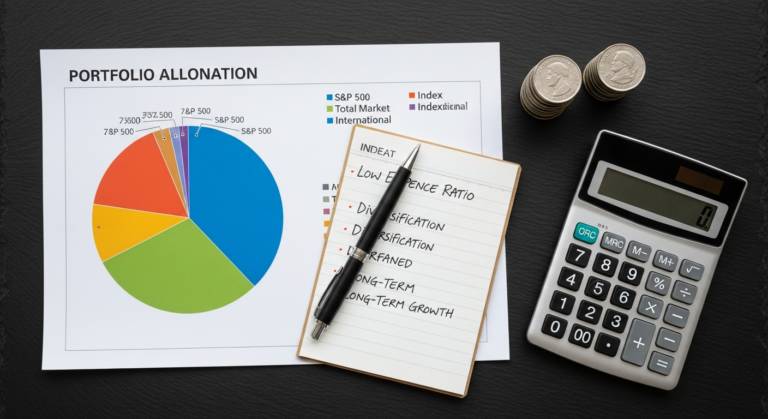
What Are Index Funds and Why Are They So Popular?
At its core, an index fund is a type of mutual fund or exchange-traded fund (ETF) with a unique mission: to passively track the performance of a specific market index. Instead of relying on a fund manager to pick individual stocks or bonds in an attempt to outperform the market (a strategy often referred to as active management), an index fund simply buys and holds the same securities, in the same proportions, as the index it follows. Think of it like this: if you invest in an S&P 500 index fund, your fund will hold shares in all 500 of the largest U.S. publicly traded companies, mirroring the composition of the S&P 500 index itself.
This passive approach is precisely what makes index funds so revolutionary and increasingly popular. Rather than aiming to beat the market, they aim to be the market. This strategy is rooted in the efficient market hypothesis, which suggests that it’s notoriously difficult for even professional investors to consistently outperform the market over the long term. Numerous studies, including those by S&P Dow Jones Indices, have consistently shown that a significant majority of actively managed funds fail to beat their benchmark index after fees over extended periods.
The Rise to Prominence: Key Drivers of Popularity
- Simplicity: For beginners and seasoned investors alike, index funds offer unparalleled simplicity. You don’t need to research individual companies or analyze complex financial statements. By investing in an index fund, you gain immediate diversification across an entire market segment with a single purchase.
- Diversification: Instant diversification is one of the most compelling benefits. A single S&P 500 index fund, for instance, exposes you to 500 companies across various sectors, significantly reducing the risk associated with any single company’s poor performance. If one company struggles, its impact on your overall portfolio is cushioned by the performance of hundreds of others.
- Low Costs: Because index funds are passively managed, they don’t require a team of highly paid analysts or active traders making constant buy and sell decisions. This translates into significantly lower expense ratios (the annual fee charged as a percentage of your investment) compared to actively managed funds. These lower costs directly translate to higher net returns for investors over time.
- Consistent Performance: While no investment is without risk, index funds offer the reassurance of market-like returns. Over the long run, major market indexes have historically trended upwards, reflecting economic growth and corporate profitability. By simply tracking the market, index funds allow investors to capture this broad economic growth without the volatility and uncertainty of trying to pick winners.
- Accessibility: The proliferation of online brokerage platforms and the availability of index ETFs have made investing in index funds more accessible than ever before, often with very low minimum investment requirements.
For many, index funds represent an elegant solution to the challenge of long-term wealth creation, aligning with a philosophy that prioritizes broad market participation, cost efficiency, and reduced complexity. They are a testament to the idea that sometimes, the simplest path is indeed the most effective.
The Core Benefits of Investing in Index Funds
Understanding what index funds are is the first step; appreciating their profound benefits is what truly highlights their value as a cornerstone of a robust investment strategy. These advantages are not merely theoretical; they translate directly into tangible financial gains and peace of mind for investors committed to a long-term approach.
Unlocking Key Advantages for Your Portfolio
- Unmatched Diversification: Perhaps the most significant advantage of index funds is the immediate and extensive diversification they provide. Instead of putting all your eggs in one basket by investing in a few individual stocks, an index fund spreads your investment across dozens, hundreds, or even thousands of companies. An S&P 500 index fund diversifies you across 500 leading U.S. companies. A total stock market index fund might include thousands more, encompassing large-cap, mid-cap, and small-cap stocks. This broad exposure significantly mitigates specific company risk, meaning that if one or two companies in the index perform poorly, the impact on your overall portfolio is minimal because it’s offset by the performance of many others. This inherent diversification is a powerful tool for risk management, providing a smoother ride through market fluctuations.
- Significantly Lower Costs: Active management comes with a price tag. Actively managed mutual funds employ portfolio managers, analysts, and researchers, and they engage in frequent trading, all of which incur substantial costs. These costs are passed on to investors through higher expense ratios, which can range from 0.5% to over 2% annually. Index funds, by contrast, are passively managed; they simply replicate an index. This minimal human intervention leads to dramatically lower expense ratios, often as low as 0.03% to 0.2%. Over decades, the compounding effect of these lower fees can save you tens, if not hundreds, of thousands of dollars, allowing more of your money to stay invested and grow.
- Superior Long-Term Performance: While it might seem counterintuitive, the passive strategy of index funds often leads to superior performance compared to actively managed funds over extended periods. Numerous academic studies and market analyses, including the SPIVA (S&P Index Versus Active) reports, consistently demonstrate that a vast majority of active managers fail to beat their benchmark index after fees, especially over 10, 15, or 20 years. By simply tracking the market, index funds ensure you capture the market’s long-term growth, rather than falling victim to the often-fruitless quest to outperform it.
- Simplicity and Ease of Use: For investors looking to build wealth without dedicating excessive time to market research and analysis, index funds are an ideal solution. They are straightforward to understand and manage. Once you’ve chosen your funds, the ongoing maintenance is minimal. This simplicity makes them particularly appealing for beginners, allowing them to participate in the stock market with confidence and without feeling overwhelmed.
- Tax Efficiency: Index funds, especially ETFs, can often be more tax-efficient than actively managed funds. Because they trade less frequently, they tend to generate fewer capital gains distributions, which are taxable events. This allows your investments to grow more tax-deferred, enhancing your overall after-tax returns, particularly in taxable brokerage accounts.
- Transparency: With an index fund, you always know what you own because the fund’s holdings directly mirror the index it tracks. There are no hidden strategies or sudden shifts in portfolio composition, providing investors with complete clarity and predictability.
These benefits collectively underscore why index funds are not just a viable option, but often the preferred choice for individuals seeking a straightforward, cost-effective, and historically proven path to building significant long-term wealth. They remove much of the guesswork and anxiety from investing, allowing you to focus on your long-term financial goals.
Understanding the Types: Index Mutual Funds vs. Index ETFs
Index Mutual Funds
Index mutual funds are the older, more traditional format for pooled investments. When you invest in an index mutual fund, you are buying shares directly from the fund company (or through a brokerage that offers it). The price at which you buy or sell shares is determined once a day, after the market closes, based on the fund’s Net Asset Value (NAV). This means all buy and sell orders placed during the day are executed at the same end-of-day price.
Pros of Index Mutual Funds:
- Automatic Reinvestment: Many index mutual funds automatically reinvest dividends and capital gains back into buying more shares of the fund, compounding your returns without any manual intervention.
- Fractional Share Ownership: You can often invest specific dollar amounts, leading to fractional share ownership. If you invest $100 and a share costs $70, you’ll own 1.42 shares, ensuring all your capital is put to work.
- Automated Investing: Setting up recurring, automated investments (e.g., $100 every month) is typically very easy with mutual funds, fostering disciplined saving. This is particularly beneficial for those figuring out how to budget money low income, as it allows for consistent, smaller contributions to build up over time.
- No Trading Commissions: If you buy directly from the fund company (e.g., Vanguard, Fidelity), there are often no trading commissions, though some brokerages might charge fees for non-proprietary funds.
Cons of Index Mutual Funds:
- Once-a-Day Pricing: You cannot trade mutual funds throughout the day; your order will be executed at the closing NAV. This lack of intraday trading flexibility can be a minor disadvantage for those who want to react to market movements.
- Higher Minimums: Some index mutual funds, especially those offered directly by fund companies, may have initial minimum investment requirements that can range from $1,000 to $3,000, though this is becoming less common with certain providers.
Index Exchange-Traded Funds (ETFs)
Index ETFs are newer and have rapidly grown in popularity due to their unique structure. Unlike mutual funds, ETFs are traded on stock exchanges throughout the day, much like individual stocks. You buy and sell ETF shares through a brokerage account at market prices that fluctuate continuously during trading hours.
Pros of Index ETFs:
- Intraday Trading: ETFs offer the flexibility to buy and sell shares at any point during market hours, allowing you to react to real-time price changes.
- Lower Expense Ratios: While both types of index funds have low fees, ETFs often boast slightly lower average expense ratios than their mutual fund counterparts.
- No Minimum Investment (per share): You can buy as little as one share of an ETF. If an ETF trades at $50 per share, you can start with just $50 (plus commission, if any). This makes them incredibly accessible.
- Tax Efficiency: Due to their unique creation/redemption mechanism, ETFs can be more tax-efficient in taxable accounts, as they tend to generate fewer capital gains distributions.
Cons of Index ETFs:
- Trading Commissions: While many major brokerages now offer commission-free ETF trading, some still charge a commission per trade, which can eat into returns for small, frequent investments.
- No Fractional Shares (typically): Most brokerages do not allow fractional share purchases for ETFs, meaning you must buy whole shares. This can leave small amounts of cash uninvested.
- Manual Dividend Reinvestment: While some brokerages offer automatic dividend reinvestment plans (DRIPs) for ETFs, it’s not as universally standard or seamless as with mutual funds and may require manual setup.
Which One is Right for You?
The choice between an index mutual fund and an index ETF often comes down to personal preference and investment strategy:
- If you prioritize simplicity, automated investing, fractional shares, and don’t need intraday trading flexibility, especially for regular, set contributions, an index mutual fund might be ideal.
- If you value intraday trading flexibility, potentially lower expense ratios, and want to start with very small amounts (buying just one share), an index ETF could be a better fit. Many new investors, particularly those leveraging side hustle ideas 2026 to accumulate initial capital, find ETFs appealing due to their low entry point per share.
In many cases, reputable brokerages like Vanguard, Fidelity, and Charles Schwab offer both mutual fund and ETF versions of popular index funds, often with very similar underlying holdings and performance. You might even find yourself using a combination of both, leveraging the strengths of each for different parts of your portfolio.
How to Start Investing in Index Funds: A Step-by-Step Guide
Embarking on your index fund investment journey is a straightforward process when broken down into manageable steps. This guide will walk you through the essentials, ensuring you build a solid foundation for your financial future.
Step 1: Get Your Financial House in Order
Before you commit any money to investments, it’s crucial to ensure your personal finances are stable. This foundational step is critical for long-term success and peace of mind.
- Establish an Emergency Fund: Aim to save 3-6 months’ worth of living expenses in an easily accessible, high-yield savings account. This fund acts as a financial safety net, preventing you from having to sell investments prematurely during unexpected life events (job loss, medical emergency, car repairs).
- Address High-Interest Debt: Prioritize paying off high-interest debt, such as credit card balances or personal loans. The guaranteed return from eliminating a 15-25% interest rate far outweighs the potential (but not guaranteed) returns from investing. Student loans and mortgages with lower interest rates can often be managed alongside investing, but high-interest debt is typically an immediate priority.
- Master Your Budget: Understanding where your money goes is paramount. If you’re wondering how to budget money low income, start by tracking every dollar you spend for a month. Identify areas where you can cut back to free up funds for investing. Tools like budgeting apps or even a simple spreadsheet can be immensely helpful. The goal isn’t deprivation, but conscious spending that aligns with your financial priorities.
Step 2: Define Your Investment Goals and Time Horizon
Clarity about your goals will dictate your investment strategy.
- What are you saving for? Retirement, a down payment on a house, your children’s education, or simply general wealth accumulation?
- When do you need the money? Your time horizon (e.g., 30 years for retirement, 5 years for a down payment) will influence your risk tolerance and asset allocation. Longer time horizons generally allow for more aggressive, stock-heavy portfolios, as there’s more time to recover from market downturns.
Step 3: Choose a Reputable Brokerage Account
You’ll need an account to hold your index funds. Popular options include:
- Online Brokerages: Companies like Fidelity, Vanguard, Charles Schwab, E*TRADE, and TD Ameritrade offer robust platforms with extensive investment options, research tools, and often commission-free trading for many ETFs and their own mutual funds.
- Robo-Advisors: Services like Betterment or Wealthfront automate portfolio management based on your risk tolerance and goals. They typically invest in a diversified portfolio of low-cost ETFs and rebalance them automatically for a small fee. This can be an excellent option for beginners who prefer a hands-off approach.
- Retirement Accounts: Don’t forget employer-sponsored plans like 401(k)s or 403(b)s, and individual retirement accounts (IRAs) like Roth IRAs or Traditional IRAs. These accounts offer significant tax advantages and often have excellent index fund options.
When choosing, compare fees, available investment products, customer service, and platform usability.
Step 4: Fund Your Account
Once your account is open, you’ll need to transfer money into it. Common methods include:
- Electronic Funds Transfer (EFT): Link your bank account for easy transfers.
- Wire Transfer: Faster but often with fees.
- Check Deposit: Slower but still an option.
- Direct Deposit: Some brokerages allow you to set up a portion of your paycheck to go directly into your investment account, making saving automatic.
This is where effective budgeting truly pays off. By meticulously managing your expenses and actively seeking opportunities to increase your income, such as exploring side hustle ideas 2026, you can free up more capital to consistently fund your investment account. Even small, regular contributions can grow significantly over time due to the power of compounding.
Step 5: Select Your Index Funds
This is where you choose the specific funds that align with your goals. A common starting point for many investors is a broad-market index fund.
- U.S. Total Stock Market Index Fund: Provides exposure to the entire U.S. stock market, including large, mid, and small-cap companies (e.g., VTSAX/VTI, FSKAX/ITOT).
- S&P 500 Index Fund: Focuses on the 500 largest U.S. companies, representing about 80% of the U.S. stock market value (e.g., VFIAX/VOO, FXAIX/SPY).
- International Stock Market Index Fund: Diversifies your portfolio globally, reducing concentration risk in a single country (e.g., VTIAX/VXUS, FZILX/IXUS).
- Total Bond Market Index Fund: Adds stability and income to your portfolio, especially as you approach retirement (e.g., VBTLX/BND, FXNAX/AGG).
For many beginners, a simple two-fund or three-fund portfolio (e.g., U.S. Total Stock Market + International Total Stock Market + Total Bond Market) offers excellent diversification and is easy to manage.
Step 6: Automate Your Investments
The most powerful habit for successful investing is consistency. Set up automatic transfers from your bank account to your brokerage account on a regular schedule (e.g., weekly, bi-weekly, or monthly). This strategy, known as dollar-cost averaging, helps you invest consistently regardless of market fluctuations and removes emotion from the process. By automating, you ensure that even small amounts from your side hustle ideas 2026 are immediately put to work, maximizing their compounding potential.
By following these steps, you’ll establish a robust and disciplined approach to investing in index funds, laying a strong foundation for your financial independence.
Building Your Index Fund Portfolio and Long-Term Strategy
While the beauty of index funds lies in their simplicity, building a truly effective portfolio and maintaining a long-term strategy requires a thoughtful approach. It’s not just about buying a fund; it’s about aligning your investments with your life goals and sticking to the plan through various market cycles.
Asset Allocation: Your Portfolio’s Blueprint
The first and arguably most critical decision in portfolio construction is asset allocation — how you divide your investment across different asset classes, primarily stocks and bonds. Stocks (equities) generally offer higher growth potential but come with greater volatility. Bonds (fixed income) typically provide stability and income, acting as a buffer during stock market downturns.
- Determine Your Risk Tolerance: This is deeply personal. How much fluctuation can you emotionally and financially withstand? A younger investor with a 30+ year time horizon might comfortably hold a higher percentage of stocks (e.g., 80-90%), while someone nearing retirement might prefer a more conservative mix (e.g., 40-60% stocks).
- Consider Your Time Horizon: As discussed, longer time horizons generally allow for more aggressive allocations. If you need money in less than 5 years, a high stock allocation is usually not advisable.
- Common Rule of Thumb: A classic, though overly simplistic, rule is to subtract your age from 100 or 110 to get your approximate stock allocation percentage. For a 30-year-old, this might suggest 70-80% stocks. This is a starting point, not a strict rule.
For index funds, this means selecting a blend of stock index funds (e.g., U.S. total market, international total market) and bond index funds (e.g., total U.S. bond market). Target-date funds, offered by many brokerages, automate this allocation and gradually shift towards a more conservative mix as you approach a specific retirement year, simplifying the process even further.
Diversification Beyond Basic Indexes
While a single total stock market index fund offers broad diversification within its market, you can enhance your portfolio’s resilience by diversifying across different types of indexes:
- Global Exposure: Don’t limit yourself to just your home country. International stock index funds (developed markets, emerging markets) provide exposure to global growth and can help smooth out returns if one country’s market underperforms.
- Different Market Caps: A total stock market fund covers large, mid, and small-cap stocks. However, some investors might choose dedicated index funds for specific market cap segments to slightly overweight them based on their beliefs or strategy.
- Sector Diversification: While broad market funds inherently offer sector diversification, some specialized index funds track specific industries (e.g., technology, healthcare). While this can increase risk, it’s an option for those seeking targeted exposure (though often best avoided by beginners).
The Importance of Rebalancing
Over time, market movements will cause your asset allocation to drift from your original target. If stocks have a strong bull run, your stock allocation might grow to 85% when you intended 70%. Rebalancing is the process of adjusting your portfolio back to your desired allocation.
- Why Rebalance? It helps manage risk by preventing one asset class from becoming disproportionately large. It also forces you to “buy low and sell high” — you sell some of your outperforming assets and buy more of your underperforming ones to restore your target percentages.
- How Often? Annually is a common and effective frequency. Some prefer semi-annually. Avoid rebalancing too frequently, as it can incur unnecessary transaction costs or lead to short-term emotional decisions.
- Methods: You can rebalance by selling some of the overweight asset and buying more of the underweight asset. Alternatively, you can simply direct new contributions towards the underweight asset until your target allocation is restored, which is often more tax-efficient in taxable accounts.
Dollar-Cost Averaging: Your Best Friend
As mentioned earlier, dollar-cost averaging (investing a fixed amount of money at regular intervals, regardless of market conditions) is a powerful strategy. It removes emotion from investing, prevents you from trying to “time the market” (a notoriously difficult and often detrimental practice), and ensures you buy more shares when prices are low and fewer when prices are high. This systematic approach is a cornerstone of long-term investing success with index funds.
Stay the Course: The Long-Term Mindset
Perhaps the most critical aspect of an index fund strategy is patience and discipline. Market downturns are inevitable. When they occur, the temptation to panic sell can be overwhelming. However, historical data consistently shows that remaining invested through these periods and continuing to contribute (dollar-cost averaging) eventually yields positive results when the market recovers. Index funds are designed for the long haul, leveraging the power of compounding over decades. Resist the urge to check your portfolio daily or react to every news headline. Instead, focus on your long-term goals.
In fact, this commitment to a long-term perspective can be enhanced by mindful financial habits. Consider implementing how to reduce screen time tips in your daily routine. By consciously setting aside specific, focused periods for financial review, rather than impulsively checking market apps, you can avoid the constant noise and emotional triggers that often lead to poor investment decisions. Use that saved screen time for other productive activities or simply to de-stress, reinforcing a calm and rational approach to your investments.
Review and Adjust Annually
While index funds are largely hands-off, it’s wise to conduct an annual review of your portfolio. This isn’t about tinkering; it’s about ensuring your asset allocation still aligns with your current goals, risk tolerance, and life stage. Have your financial circumstances changed? Are you closer to retirement? These are the times to consider making strategic adjustments, not reacting to short-term market movements.
By embracing these principles — smart asset allocation, consistent rebalancing, dollar-cost averaging, and a steadfast long-term perspective — you can harness the full power of index funds to build substantial wealth and achieve your financial aspirations well into 2026 and beyond.
Common Misconceptions and Risks to Consider
While index funds offer numerous advantages, it’s important to approach any investment with a clear understanding of both its benefits and its inherent limitations and risks. Dispelling common myths and acknowledging potential downsides will help you make informed decisions and maintain realistic expectations for your investment journey.
Debunking Common Index Fund Myths
- Myth 1: “Index Funds are Only for Beginners or Passive Investors.” While index funds are incredibly accessible for new investors due to their simplicity, they are also a cornerstone of sophisticated portfolios for experienced investors, financial advisors, and even institutional funds. Warren Buffett, one of the world’s most successful investors, famously advocates for index funds for most people. Their low cost and broad diversification appeal to anyone seeking efficient market returns.
- Myth 2: “Index Funds are Completely Risk-Free.” No investment is entirely risk-free, and index funds are no exception. They carry market risk, meaning the value of your investment can decline if the overall market or the index they track experiences a downturn. If the S&P 500 drops 20%, an S&P 500 index fund will also drop approximately 20%. The “risk-free” misconception often arises from their diversification, which reduces single-company risk, but not overall market risk.
- Myth 3: “You Can ‘Set It and Forget It’ with Index Funds.” While index funds require less active management than individual stocks, they are not entirely “set it and forget it.” You still need to:
- Rebalance: Periodically adjust your asset allocation back to your target percentages.
- Contribute Regularly: Consistent contributions are key to compounding wealth.
- Review: Annually review your portfolio to ensure it still aligns with your financial goals and life stage.
- Stay Educated: Understand the basic principles of investing and economics.
The “forget it” part often refers to avoiding constant tinkering and market timing, but responsible oversight is still necessary.
- Myth 4: “Index Funds Will Make You Rich Quickly.” Index funds are a tool for long-term wealth accumulation, not get-rich-quick schemes. They deliver market returns, which historically average around 7-10% per year over very long periods. While powerful due to compounding, this growth is gradual and requires patience and consistent contributions over decades.
Acknowledging the Risks
Understanding the inherent risks helps you prepare for market volatility and make rational decisions during challenging times:
- Market Risk (Systematic Risk
Recommended Resources
Related reading: Six Sigma Methodology Guide (Mitsubishi Manufacturing).
Explore Domestic Violence Resources For Families for additional insights.