

The Transformative Power of Journaling: More Than Just Writing
Journaling, at its core, is the practice of regularly recording your thoughts, feelings, experiences, and ideas. It’s a personal conversation with yourself, an unfiltered space where you can explore your inner landscape without judgment. While many associate journaling with adolescent diaries filled with daily anecdotes, the adult practice of journaling is a sophisticated tool for introspection, problem-solving, and personal development. It serves as a mirror, reflecting your inner world back to you, allowing for deeper self-awareness and understanding.
The act of putting pen to paper (or fingers to keyboard) forces a certain level of articulation and clarity that simply thinking about issues often doesn’t achieve. This process externalizes your thoughts, making them tangible and easier to analyze. It’s a therapeutic release, a creative outlet, and a strategic planning session all rolled into one. For centuries, thinkers, artists, and leaders have harnessed the power of journaling to process complex ideas, manage emotions, and chart their courses. In the contemporary world, its relevance has only grown, offering a much-needed antidote to stress and a powerful catalyst for personal evolution.
Consider journaling not as another item on your to-do list, but as an investment in your mental, emotional, and even financial well-being. It’s a commitment to self-care that yields dividends across all facets of your life, from improving relationships to enhancing career prospects and fostering a stronger sense of self. Understanding the comprehensive journaling benefits and how to start will unlock this powerful potential for you.
Unpacking the Myriad Benefits of Journaling
The advantages of maintaining a regular journaling practice are extensive and touch upon virtually every aspect of human experience. From psychological improvements to tangible progress in personal and professional realms, the benefits are profound and cumulative.
Mental and Emotional Well-being
- Stress Reduction: One of the most immediate and widely recognized benefits of journaling is its ability to alleviate stress. By externalizing worries, frustrations, and anxieties, you move them from your mind onto the page, creating a psychological distance. This act of “downloading” your thoughts can prevent rumination and offer a sense of relief and calm.
- Emotional Regulation: Journaling provides a safe space to process complex emotions like anger, sadness, fear, and joy. By writing about your feelings, you can identify triggers, understand patterns, and develop healthier coping mechanisms. It fosters emotional intelligence, allowing you to respond to situations more thoughtfully rather than reacting impulsively.
- Improved Mood: Regularly expressing gratitude, celebrating small wins, or simply acknowledging positive experiences in your journal can significantly enhance your overall mood and outlook on life. It trains your brain to focus on the good, even amidst challenges.
- Better Sleep: For many, a racing mind at night is a primary cause of insomnia. A quick journaling session before bed can help clear your head, processing the day’s events and leaving you calmer and more prepared for restful sleep.
Enhanced Self-Awareness and Personal Growth
- Self-Discovery: Journaling is a journey of self-discovery. As you write, you uncover your core values, beliefs, strengths, and weaknesses. You start to recognize recurring themes in your life, understand your motivations, and clarify your desires.
- Clarity of Thought: The act of writing forces you to organize your thoughts. What might feel like a chaotic jumble in your mind becomes clearer and more coherent when articulated on paper. This clarity extends to problem-solving, decision-making, and understanding complex situations.
- Identifying Patterns: Over time, reviewing your journal entries allows you to identify patterns in your behavior, relationships, and reactions. This insight is invaluable for breaking negative cycles and reinforcing positive ones.
- Tracking Progress: A journal serves as a chronological record of your personal evolution. Looking back at past entries can be incredibly motivating, showcasing how far you’ve come, the challenges you’ve overcome, and the wisdom you’ve gained.
Sharpening Your Financial Acumen
While often associated with emotional processing, journaling is an exceptionally powerful tool for financial management and wealth building. It’s not just about recording transactions; it’s about understanding your financial psychology and creating a robust strategy.
- Financial Self-Reflection: Journaling allows you to explore your relationship with money. What are your beliefs about wealth, scarcity, and spending? What financial fears or aspirations do you harbor? Understanding these underlying attitudes is crucial for effective financial planning.
- Budgeting and Tracking: A financial journal can be an invaluable companion for those learning How To Budget Money Low Income. By regularly noting income, expenses, and savings goals, you gain a granular view of your financial flow. It helps you identify unnecessary expenditures, track progress toward savings, and make informed adjustments. This hands-on approach builds a deeper connection to your money than simply using an app.
- Goal Setting and Planning: Journaling is excellent for articulating your financial goals, whether it’s saving for a down payment, investing for retirement, or paying off debt. You can use it to outline steps, brainstorm strategies, and develop a personalized financial plan. This proactive engagement is key to answering the question of How To Create Financial Plan effectively, as it allows you to break down large objectives into manageable, actionable steps.
- Decision Making: When faced with significant financial decisions, writing out the pros and cons, potential risks, and desired outcomes in your journal can provide clarity and help you make more rational, less emotionally driven choices.
Boosting Productivity and Goal Achievement
- Goal Clarification: Writing down your goals makes them more concrete and real. Journaling helps you articulate what you truly want to achieve, why it matters to you, and the specific steps required to get there.
- Action Planning: Once goals are clear, a journal becomes a space for brainstorming action plans, breaking down large projects into smaller tasks, and setting deadlines. This structured approach significantly enhances productivity.
- Overcoming Obstacles: When you encounter roadblocks, journaling allows you to analyze the challenges, explore potential solutions, and re-strategize. It helps you maintain perspective and resilience in the face of setbacks.
- Accountability: Regular check-ins with your journal can serve as a form of self-accountability, prompting you to review your progress, celebrate achievements, and adjust your course when necessary.
Cultivating Gratitude and Positivity
A dedicated gratitude journaling practice can profoundly shift your perspective, making you more attuned to the positive aspects of your life.
- Shifting Focus: By consciously listing things you are grateful for, you train your brain to seek out and appreciate the good, even on difficult days. This shift from a scarcity mindset to an abundance mindset can dramatically improve overall happiness.
- Enhanced Well-being: Research consistently shows a strong link between gratitude and increased levels of happiness, optimism, and overall life satisfaction.
- Improved Relationships: Expressing gratitude, even if only in your journal, can make you more appreciative of the people in your life, fostering stronger and more positive relationships.
Building Confidence And Self Esteem
For many, the journey to a stronger sense of self passes directly through the pages of a journal. Journaling is a powerful catalyst to Build Confidence And Self Esteem by offering a space for self-validation and introspection.
- Acknowledging Achievements: Regularly documenting your successes, no matter how small, reinforces your capabilities and reminds you of your strengths. Over time, this builds a robust internal narrative of competence and accomplishment.
- Challenging Negative Self-Talk: Your journal is a battlefield where you can confront and dismantle limiting beliefs and negative self-talk. By writing down these thoughts and then logically refuting them, you can rewire your internal monologue towards more positive and empowering statements.
- Self-Validation: In a world that often seeks external validation, journaling provides an internal source. It confirms that your experiences, feelings, and thoughts are valid and worthy of attention, fostering a deep sense of self-acceptance.
- Understanding Your Value: Through consistent reflection, you gain a clearer understanding of your unique qualities, talents, and contributions. This recognition is fundamental to developing a strong and healthy self-image.
- Overcoming Fear of Failure: By documenting lessons learned from setbacks, you reframe failures as learning opportunities rather than definitive judgments of your worth, which is crucial for building resilience and confidence.
Debunking Common Journaling Myths
- Myth 1: You need to be a good writer. Reality: Journaling is not about literary prowess or perfect grammar. It’s about authentic self-expression. No one else needs to read it, so feel free to write in fragments, use shorthand, or even draw if that helps you express yourself.
- Myth 2: You need to journal every day. Reality: Consistency is beneficial, but perfection is not the goal. Start with what feels manageable—three times a week, or even just once a week. The key is to establish a routine that you can stick to, rather than aiming for daily perfection and burning out.
- Myth 3: You need to write about profound topics. Reality: While journaling can certainly delve into deep philosophical questions, it’s equally valuable for everyday reflections. Write about your day, a conversation, a feeling, or simply what you had for breakfast. The goal is to engage in self-reflection, regardless of the topic’s perceived importance.
- Myth 4: It takes too much time. Reality: Even 5-10 minutes a day can yield significant benefits. The time commitment is flexible and can be adjusted to fit your schedule. The quality of your reflection is more important than the quantity of words.
- Myth 5: It’s just for teenagers. Reality: As explored above, adult journaling is a sophisticated tool for personal development, stress management, and strategic planning across all age groups and professions. It’s a lifelong practice for self-improvement.
Your Step-by-Step Guide: How to Start Journaling Effectively
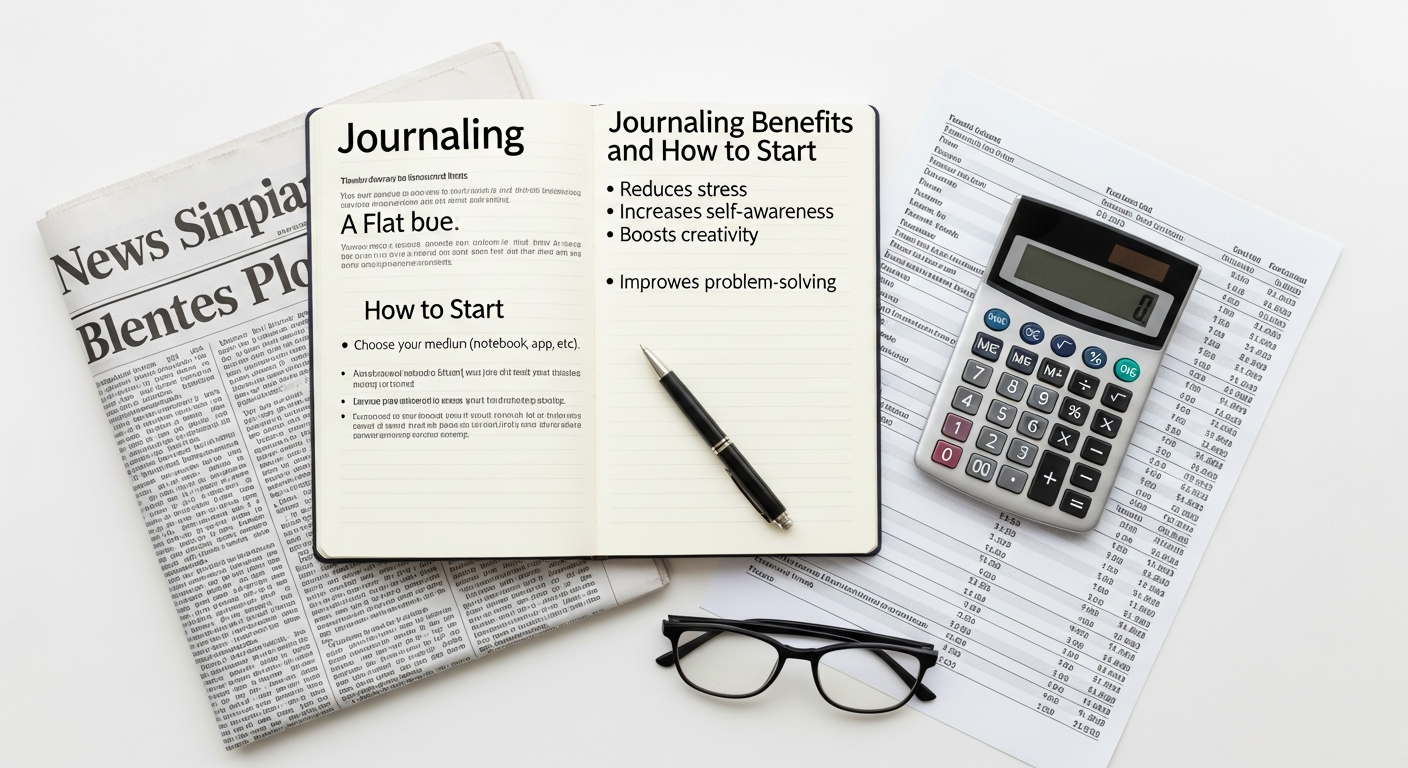
Embarking on your journaling journey doesn’t have to be complicated. With a few simple steps, you can establish a rewarding practice that suits your lifestyle.
Choosing Your Medium: Digital vs. Analog
The first decision is whether you prefer the tactile experience of pen and paper or the convenience of digital tools.
- Analog (Pen and Paper):
- Pros: Many find the physical act of writing more meditative and less distracting. It can stimulate different parts of the brain and offer a sense of permanence. There’s no screen glare or temptation to switch to another app.
- Cons: Can be less private if left lying around. Not easily searchable or shareable (if that’s a goal).
- What to choose: A simple notebook and your favorite pen are all you need. Consider a dedicated journal with a sturdy cover and good quality paper.
- Digital (Apps, Software, Word Processors):
- Pros: Convenient, portable, easily searchable, can be password-protected, and often allows for quick entries on the go. Many apps offer prompts, tags, and formatting options.
- Cons: Can be prone to distractions from other notifications. Requires a device and power.
- What to choose: Simple word processors (like Google Docs or Microsoft Word), dedicated journaling apps (e.g., Day One, Journey), or even a private blog can work.
There’s no right or wrong answer; choose what feels most comfortable and sustainable for you. Many people even use a hybrid approach.
Finding Your Perfect Time and Place
Consistency is more important than duration. Integrating journaling into your existing routine makes it easier to stick with.
- Time:
- Morning: A great way to set intentions for the day, clear your mind, and plan your priorities.
- Evening: Ideal for reflecting on the day’s events, processing emotions, and clearing your head before sleep.
- Mid-day: A quick break to re-center, assess progress, or brainstorm solutions to current challenges.
Experiment to find when you feel most reflective and least rushed. Even 5-10 minutes can be sufficient.
- Place:
- Find a quiet, comfortable spot where you won’t be interrupted. This could be a specific chair, a corner of your room, or even a local coffee shop.
- Make it an intentional space, free from digital distractions if possible, especially if you’re using an analog journal.
What to Write About: Prompts and Ideas
The blank page can be intimidating. Here are some ideas to get you started:
- Free Writing/Stream of Consciousness: Simply write whatever comes to mind without stopping or editing for a set amount of time (e.g., 5-10 minutes). Don’t worry about grammar or coherence; just let the words flow.
- Daily Reflection:
- What happened today that stood out?
- What did I learn today?
- What emotions did I experience, and why?
- What am I grateful for?
- Goal Setting:
- What are my short-term and long-term goals for 2026?
- What steps do I need to take to achieve them?
- What obstacles might I face, and how will I overcome them?
- Problem Solving:
- Describe a current challenge you’re facing.
- Brainstorm possible solutions without judgment.
- What are the pros and cons of each solution?
- Emotional Exploration:
- How am I feeling right now, and why?
- What triggered this emotion?
- What do I need to do to support myself through this feeling?
- Gratitude Practice:
- List 3-5 things you are genuinely grateful for today. Be specific.
- Why are you grateful for them?
- Prompts: If you’re stuck, search online for “journaling prompts.” There are countless resources available for specific themes like self-discovery, creativity, or stress relief.
Consistency Over Perfection
The most important aspect of journaling is consistency, not perfection. Don’t worry about writing eloquently or filling pages every time. Even a few sentences or bullet points can be beneficial. If you miss a day or a week, don’t beat yourself up; just pick up where you left off. The goal is to build a sustainable habit that serves you, not to create another source of pressure.
Setting Intentions and Reviewing Progress
To maximize the benefits, consider setting an intention before you start writing. For example, “Today, I want to explore why I felt frustrated during that meeting” or “I want to brainstorm ways to improve my financial savings for 2026.” After a few weeks or months, take time to review past entries. You’ll be amazed at the insights you gain into your growth, patterns, and resilience. This review process itself is a powerful form of self-coaching and validation.
Advanced Journaling Techniques for Deeper Impact
Once you’ve established a basic journaling routine, you might want to explore more structured or specialized techniques to deepen your practice.
Themed Journaling
Instead of a general journal, you can dedicate specific notebooks or digital files to particular areas of your life:
- Financial Journal: Specifically for tracking income, expenses, budgeting (especially useful for those learning How To Budget Money Low Income), investment ideas, and long-term financial goals (tying into How To Create Financial Plan).
- Dream Journal: Record your dreams immediately upon waking to better understand your subconscious mind.
- Travel Journal: Document experiences, observations, and feelings during your trips.
- Creative Journal: A space for brainstorming ideas, sketching, writing poetry, or developing stories.
- Professional Journal: Reflect on career goals, challenges, achievements, and professional development.
Bullet Journaling for Organization
Developed by Ryder Carroll, the Bullet Journal (BuJo) system combines journaling, planning, and task management into one highly customizable system. It uses “rapid logging” with bullet points to track tasks, events, and notes. This method can be incredibly effective for those who want their journal to double as a productivity tool, helping them achieve goals and manage their daily lives more efficiently.
Gratitude Journaling
As mentioned earlier, a dedicated gratitude journal focuses solely on cultivating appreciation. Each day, write down 3-5 specific things you are grateful for and why. This consistent practice can profoundly shift your mindset towards positivity and abundance.
Shadow Work Journaling
For those ready for deeper psychological exploration, shadow work journaling involves confronting and integrating the repressed aspects of your personality—the “shadow” self. This can involve exploring fears, insecurities, negative traits you project onto others, or suppressed desires. It’s a powerful tool for radical self-acceptance and healing, often best approached with a sense of gentle curiosity.
Sustaining Your Journaling Practice for Long-Term Rewards
Starting a journaling practice is one thing; sustaining it for months and years is where the true, long-term benefits materialize. Here are strategies to keep your practice alive and thriving:
- Be Flexible: Life happens. Some days you’ll have 30 minutes, others only 5. Don’t let a missed day derail your entire practice. Be kind to yourself and pick it up when you can.
- Experiment: If your current method feels stale, try something new. Switch from analog to digital, change your prompts, or try a different time of day. Variety can keep the practice fresh and engaging.
- Connect It to Your Goals: Remind yourself why you journal. Is it to reduce stress, achieve financial freedom, or Build Confidence And Self Esteem? Connecting your journaling directly to your personal aspirations provides powerful motivation.
- Review Your Entries: Periodically re-read old entries. This isn’t just for nostalgia; it’s a powerful way to see your growth, learn from past mistakes, and appreciate your journey. It reinforces the value of the practice.
- Share (Cautiously): While journaling is primarily a private practice, sometimes discussing insights gained from your journal with a trusted friend, partner, or therapist can provide additional perspective and support. However, always prioritize your privacy and comfort.
- Make It Enjoyable: Use a beautiful notebook, a special pen, or a journaling app with features you love. Create a ritual around your journaling time—perhaps with a cup of tea or calming music. The more you enjoy the process, the more likely you are to stick with it.
Conclusion: Your Journey to a More Fulfilling Life Starts Now
The practice of journaling is a profound act of self-care and self-investment, offering a comprehensive suite of benefits that extend from enhanced mental clarity and emotional regulation to improved financial literacy and robust self-esteem. It is a dynamic tool for introspection, planning, and personal growth, proving invaluable whether you are navigating complex emotions, striving to How To Create Financial Plan for a secure future, learning How To Budget Money Low Income effectively, or seeking to Build Confidence And Self Esteem in every aspect of your life.
As we navigate the complexities of 2026 and beyond, the ability to pause, reflect, and intentionally direct our lives becomes ever more critical. Journaling provides that essential space. It’s a commitment to understanding your inner world, empowering you to make conscious choices that align with your deepest values and aspirations. By embracing the simple yet powerful act of writing, you unlock a pathway to greater self-awareness, resilience, and a life lived with purpose. Don’t delay; the journey to a more centered, confident, and prosperous you begins the moment you pick up your pen or open your journaling app.
Frequently Asked Questions
Recommended Resources
Check out Reproductive Rights Organizations To Support on Protect Families Protect Choices for a deeper dive.
Check out What Is Additive Manufacturing on Mitsubishi Manufacturing for a deeper dive.