Understanding the Basics: What is a 401(k) and a Roth IRA?
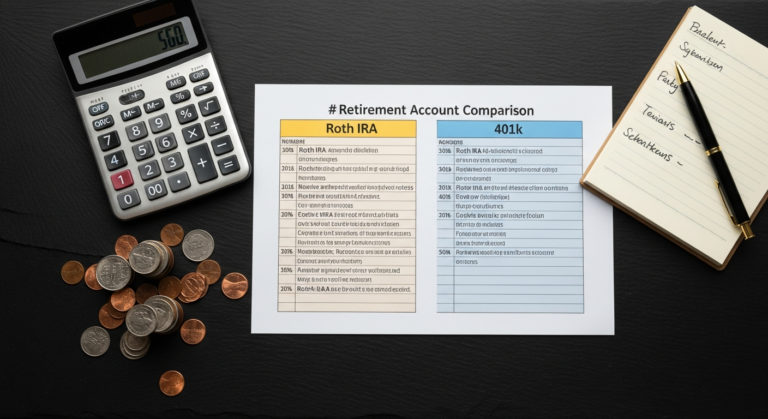
Before diving into a head-to-head comparison, it’s essential to grasp the fundamental nature of each retirement account. Both the 401(k) and the Roth IRA are designed to help individuals save for retirement, but they differ significantly in their tax treatment, contribution flexibility, and accessibility.
The 401(k): Your Employer-Sponsored Retirement Plan
A 401(k) is an employer-sponsored retirement savings plan that allows employees to contribute a portion of their salary, pre-tax, directly from their paycheck. This means the money goes into your account before income taxes are deducted, effectively lowering your taxable income in the current year. Your contributions and any investment earnings grow tax-deferred until retirement, at which point withdrawals are taxed as ordinary income. Many employers offer a matching contribution, which is essentially free money and a powerful incentive to participate. For 2026, the specific contribution limits will be set by the IRS, but historically they have increased year over year to account for inflation. It’s crucial to understand that while a traditional 401(k) offers upfront tax benefits, you’ll pay taxes on your withdrawals in retirement.
In addition to the traditional pre-tax 401(k), many employers now also offer a Roth 401(k) option. This works similarly to a Roth IRA, but within the 401(k) structure. Contributions to a Roth 401(k) are made with after-tax dollars, meaning they don’t reduce your current taxable income. However, qualified withdrawals in retirement are entirely tax-free. This hybrid option combines the higher contribution limits of a 401(k) with the tax-free withdrawal benefits of a Roth account, offering a compelling alternative for many savers.
The Roth IRA: A Personal, After-Tax Retirement Account
A Roth IRA (Individual Retirement Arrangement) is a personal retirement savings plan that allows you to contribute money on an after-tax basis. Unlike a traditional 401(k) or IRA, your contributions to a Roth IRA do not reduce your current taxable income. The magic of the Roth IRA lies in its tax-free growth and tax-free withdrawals in retirement. Once your contributions have been in the account for at least five years and you are age 59½ or older (or meet certain other conditions like disability or first-time home purchase), all qualified withdrawals, including earnings, are completely tax-free. This makes the Roth IRA particularly attractive to individuals who anticipate being in a higher tax bracket in retirement than they are today.
Unlike a 401(k), a Roth IRA is not tied to your employer; you open and manage it yourself through a brokerage firm. This offers greater control over investment choices. However, there are income limitations for contributing directly to a Roth IRA. If your modified adjusted gross income (MAGI) exceeds certain thresholds in 2026, you may be phased out or ineligible to contribute directly. For those who exceed these income limits, a “backdoor Roth IRA” strategy can often be utilized, which involves contributing to a traditional IRA and then converting it to a Roth IRA.
Taxation in 2026: A Closer Look at the Differences
The core distinction between a traditional 401(k) and a Roth IRA, or even a Roth 401(k), revolves around their tax treatment. Understanding when you pay taxes—now or later—is paramount to making the right decision for your unique financial situation in 2026.
Traditional 401(k) & Traditional IRA: Tax-Deferred Growth
With a traditional 401(k), your contributions are typically made with pre-tax dollars. This means that for every dollar you contribute, your taxable income for the year is reduced by that amount. For instance, if you earn $60,000 and contribute $10,000 to your 401(k) in 2026, your taxable income effectively becomes $50,000. This immediate tax deduction can lead to significant tax savings in the present. Your investments within the 401(k) then grow tax-deferred, meaning you don’t pay taxes on the dividends, interest, or capital gains each year. Taxes are only paid when you withdraw the money in retirement, at your then-current income tax rate. This strategy is generally favored by individuals who expect to be in a lower tax bracket in retirement than they are during their working years.
Roth IRA & Roth 401(k): Tax-Free Withdrawals
Conversely, contributions to a Roth IRA or Roth 401(k) are made with after-tax dollars. You pay income taxes on your contributions in the year you earn the money. While this means no immediate tax deduction, it offers a powerful future benefit: qualified withdrawals in retirement are completely tax-free. This includes both your original contributions and all the accumulated earnings. The allure of tax-free income in retirement is particularly strong for those who believe tax rates will be higher in the future or who anticipate being in a higher tax bracket when they retire. Imagine a scenario where tax rates climb significantly over the next few decades; having a substantial portion of your retirement income free from federal (and potentially state) taxes could be an immense advantage.
The choice between paying taxes now or paying them later is a fundamental decision that should align with your long-term financial projections and tax outlook. For individuals just starting their careers or those with lower incomes in 2026, a Roth account can be particularly appealing. Their current tax bracket might be relatively low, making it an opportune time to pay taxes on contributions. By the time they retire, their income (and potentially tax bracket) will likely be higher, making tax-free withdrawals incredibly valuable. This aligns perfectly with the principles of How To Create Financial Plan, where forecasting future tax environments plays a significant role in optimizing your savings strategy.
Contribution Limits and Eligibility in 2026
401(k) Contribution Limits for 2026
The 401(k) generally offers significantly higher contribution limits than IRAs, reflecting its role as a primary employer-sponsored retirement vehicle. For 2026, the employee contribution limit for a 401(k) (including both traditional and Roth 401(k) options) is expected to be well over $20,000, likely increasing from previous years. This limit applies to the money you contribute from your salary. For individuals aged 50 and over, an additional “catch-up contribution” is permitted, allowing them to contribute several thousand dollars more annually. This higher limit is a major advantage for those who are able to maximize their contributions, especially when combined with potential employer matching contributions.
Furthermore, the total contribution limit to a 401(k) in 2026, including both employee and employer contributions (matching and profit-sharing), as well as any forfeitures, can be substantially higher, often exceeding $60,000. This comprehensive limit underscores the power of the 401(k) as a wealth-building tool, particularly for those with generous employers.
Roth IRA Contribution Limits and Income Eligibility for 2026
Roth IRAs have a lower individual contribution limit compared to 401(k)s, which for 2026 is expected to be around $7,000-$7,500, with an additional catch-up contribution for those age 50 and over. While lower, this amount can still grow substantially over decades. The most significant eligibility constraint for a Roth IRA is the modified adjusted gross income (MAGI) limit. For 2026, if your MAGI exceeds certain thresholds, your ability to contribute directly to a Roth IRA will be phased out or eliminated entirely. These income limits are adjusted annually for inflation.
For example, in 2026, single filers with MAGI above a certain level (e.g., ~$160,000) might see their Roth IRA contribution ability reduced or eliminated, with similar, but higher, thresholds for married couples filing jointly (e.g., ~$240,000). These figures are illustrative and will be precisely defined by the IRS for 2026. If your income exceeds these limits, you may still be able to utilize the “backdoor Roth IRA” strategy, which involves contributing to a traditional IRA (where there are no income limits for non-deductible contributions) and then converting it to a Roth IRA. This maneuver allows high-income earners to benefit from the tax-free growth of a Roth, albeit with some additional steps and considerations, particularly regarding the pro-rata rule if you hold other pre-tax IRAs.
For many individuals, especially those focused on How To Budget Money Low Income, meeting the Roth IRA income thresholds is not an issue, making it a straightforward and attractive option. Leveraging your budget to consistently contribute, even small amounts, can lay a strong foundation for future financial independence.
Flexibility and Access to Funds Before Retirement
While both Roth IRAs and 401(k)s are designed for retirement, understanding the rules for accessing your money before age 59½ can be crucial, especially in unexpected financial situations. The flexibility and penalties associated with early withdrawals differ significantly between the two account types.
Accessing 401(k) Funds Early
Generally, accessing funds from a 401(k) before age 59½ is highly discouraged and often comes with substantial penalties. Withdrawals from a traditional 401(k) before this age are typically subject to ordinary income tax rates and an additional 10% early withdrawal penalty. There are a few exceptions, such as separation from service after age 55, qualified medical expenses, or disability, but these are limited. Some 401(k) plans also allow for loans, where you can borrow against your vested balance and repay yourself with interest. While this avoids taxes and penalties if repaid on time, failure to repay can result in the outstanding balance being treated as a taxable withdrawal subject to penalties.
Hardship withdrawals are another option offered by some 401(k) plans, allowing access to funds for immediate and heavy financial needs (e.g., medical expenses, preventing eviction, burial expenses). However, these are still subject to income tax and the 10% penalty, and you cannot contribute to your 401(k) for six months after taking a hardship withdrawal. The strict rules surrounding 401(k) withdrawals underscore the importance of having an emergency fund and a solid How To Create Financial Plan that accounts for unforeseen circumstances without needing to raid your retirement savings.
Accessing Roth IRA Funds Early
The Roth IRA offers significantly more flexibility when it comes to accessing funds before retirement, making it a valuable tool for financial planning beyond just retirement. This flexibility stems from the fact that contributions are made with after-tax dollars.
You can withdraw your contributions from a Roth IRA at any time, for any reason, completely tax-free and penalty-free. This is a major advantage. Since you’ve already paid taxes on this money, the IRS doesn’t tax it again when you take it out. This feature can provide a safety net, acting as a secondary emergency fund or allowing you to access funds for significant life events without incurring penalties or taxes, as long as you only withdraw your original contributions. For example, if you contributed $20,000 over several years, you can withdraw up to $20,000 tax and penalty-free, even if the account has grown to $30,000.
Withdrawing earnings from a Roth IRA before age 59½ and before the account has been open for five years (the “five-year rule”) will generally trigger income tax and a 10% early withdrawal penalty. However, there are exceptions for penalty-free withdrawals of earnings, such as for a first-time home purchase (up to $10,000 lifetime limit), qualified education expenses, birth or adoption expenses, or due to disability. Even in these cases, the earnings may still be subject to income tax if the five-year rule has not been met. This unique flexibility of the Roth IRA makes it an attractive option for younger savers or those who value the peace of mind of having accessible, albeit carefully considered, funds.
Employer Matching and Investment Options
Beyond tax advantages and withdrawal flexibility, the presence of employer matching contributions and the breadth of investment options are critical factors when comparing Roth IRAs and 401(k)s. These elements can significantly influence the growth potential of your retirement nest egg.
The Power of Employer Matching in 401(k)s
One of the most compelling reasons to contribute to a 401(k) is the employer matching contribution. Many companies offer to match a percentage of your contributions, often up to a certain limit (e.g., 50% of your contributions up to 6% of your salary). This is essentially free money and represents an immediate, guaranteed return on your investment. Failing to contribute enough to receive the full employer match is akin to leaving money on the table. For 2026, employer matching remains a cornerstone of 401(k) plans, and it’s always advisable to contribute at least enough to capture the full match, regardless of whether you choose a traditional or Roth 401(k) option.
It’s important to note that employer matching contributions are always made on a pre-tax basis, even if you contribute to a Roth 401(k). This means that while your own Roth 401(k) contributions are after-tax, the employer’s matching contributions and their earnings will be subject to taxes upon withdrawal in retirement. This can sometimes be a point of confusion for those utilizing Roth 401(k)s.
Investment Options: 401(k) vs. Roth IRA
The range of investment options available can vary significantly between a 401(k) and a Roth IRA, influencing your ability to tailor your portfolio to your risk tolerance and financial goals.
- 401(k) Investment Options: With a 401(k), your investment choices are typically limited to a curated menu of funds selected by your plan administrator. This menu usually includes a selection of mutual funds, exchange-traded funds (ETFs), target-date funds, and sometimes individual stocks or bonds. While the selection might not be as broad as a personal brokerage account, it’s designed to offer diversified options suitable for most investors. The downside is that you have less control, and some plans may have higher fees associated with their limited fund options compared to what you might find in the open market.
- Roth IRA Investment Options: A Roth IRA offers virtually unlimited investment options. Since you open a Roth IRA through a brokerage firm, you have access to almost any investment product available through that brokerage. This typically includes individual stocks, bonds, mutual funds, ETFs, real estate investment trusts (REITs), and more. This freedom allows you to construct a highly personalized portfolio, potentially with lower expense ratios than some 401(k) plans. This level of control is particularly appealing to experienced investors or those who prefer to actively manage their portfolios.
For individuals who are just beginning to learn How To Create Financial Plan, the structured options of a 401(k) can be simpler to navigate. However, as your financial literacy grows, the expansive choices within a Roth IRA can offer greater opportunities for optimization and alignment with your specific investment philosophy. Regularly reviewing your investment choices, regardless of the account type, is a vital part of effective financial management.
When to Choose Which: Tailoring Your Strategy for 2026
The “better” choice between a Roth IRA and a 401(k) isn’t universal; it depends entirely on your individual circumstances, financial goals, and projections for 2026 and beyond. Often, the most effective strategy involves utilizing both.
When a Traditional 401(k) Might Be Best
A traditional 401(k) is often the preferred choice for individuals who:
- Are in a higher tax bracket now: If you anticipate being in a lower tax bracket in retirement than you are currently, the immediate tax deduction from traditional 401(k) contributions can be very beneficial. You reduce your current taxable income and save on taxes today.
- Have access to an employer match: Always prioritize contributing enough to your 401(k) to get the full employer match. This is free money and an instant return on your investment, making the 401(k) an indispensable part of your retirement plan, regardless of your tax bracket.
- Want to defer taxes: If you prefer to pay taxes later and believe your income (and thus your tax bracket) will decrease in retirement, the tax-deferred growth of a traditional 401(k) is advantageous.
When a Roth IRA (or Roth 401(k)) Might Be Best
A Roth IRA or Roth 401(k) typically shines for individuals who:
- Are in a lower tax bracket now: If you are early in your career, have a relatively low income, or expect your income to grow significantly in the future, paying taxes on your contributions now (when your tax rate is lower) and enjoying tax-free withdrawals in retirement (when your tax rate might be higher) is a powerful strategy. This is especially true for those learning How To Budget Money Low Income, as every dollar saved now in a tax-advantageous way can multiply over decades.
- Anticipate higher tax rates in the future: If you believe that overall income tax rates will increase in the decades leading up to your retirement, locking in tax-free withdrawals with a Roth account offers tremendous peace of mind.
- Value flexibility and early access to contributions: The ability to withdraw your Roth IRA contributions tax-free and penalty-free at any time offers a unique level of financial flexibility, serving as an emergency fund or for other life expenses without disrupting long-term growth.
- Exceed traditional IRA deduction limits: If your income is too high to deduct traditional IRA contributions, a Roth IRA (or backdoor Roth IRA) becomes a much more attractive option than a non-deductible traditional IRA.
The Hybrid Approach: Leveraging Both for Optimal Results in 2026
For many, the optimal strategy in 2026 involves a combination of both a 401(k) and a Roth IRA. This hybrid approach allows you to diversify your tax exposure in retirement, giving you options when it comes time to withdraw funds. A common strategy looks like this:
- Contribute enough to your 401(k) (traditional or Roth, depending on your current tax situation) to get the full employer match. This is priority number one.
- If you’ve maxed out your employer match, then consider contributing to a Roth IRA up to its annual limit, especially if you expect your income to rise or tax rates to increase.
- If you’ve maxed out both your 401(k) and Roth IRA, consider contributing more to your 401(k) up to its maximum limit, or explore other tax-advantaged accounts like an HSA if eligible.
This layered approach ensures you benefit from employer contributions, diversify your tax exposure, and maximize your overall retirement savings. Developing such a strategy is a cornerstone of How To Create Financial Plan, where careful consideration of all available tools leads to the most robust financial future.
Maximizing Your Retirement Savings: Beyond Roth vs. 401(k)
While the Roth IRA vs. 401(k) debate is central to retirement planning, it’s just one piece of a larger financial puzzle. To truly maximize your retirement savings and achieve financial independence by 2026 and beyond, a holistic approach is essential. This involves considering other investment vehicles, maintaining financial discipline, and continuously educating yourself.
Explore Other Tax-Advantaged Accounts
Once you’ve optimized your 401(k) and Roth IRA contributions, consider other accounts that offer unique tax advantages:
- Health Savings Account (HSA): If you have a high-deductible health plan (HDHP), an HSA offers a triple tax advantage: tax-deductible contributions, tax-free growth, and tax-free withdrawals for qualified medical expenses. After age 65, funds can be withdrawn for any purpose, subject to income tax, essentially making it another retirement account. For 2026, HSA contribution limits will likely be higher, making it an even more powerful tool.
- Traditional IRA: If you don’t have access to a 401(k) or want to save beyond its limits, a traditional IRA offers tax-deferred growth. Contributions may be tax-deductible depending on your income and whether you have an employer-sponsored plan.
- Brokerage Accounts: For savings beyond tax-advantaged limits, a taxable brokerage account provides unlimited contribution potential and flexibility, albeit without the tax benefits of retirement accounts.
The Importance of a Comprehensive Financial Plan
Choosing between a Roth IRA and a 401(k) is a fundamental decision, but it must be integrated into a broader financial strategy. How To Create Financial Plan involves setting clear goals, understanding your risk tolerance, managing debt, building an emergency fund, and regularly reviewing your progress. Your retirement accounts are powerful tools within this plan, not isolated decisions. A well-crafted plan considers your current income, future expectations, family needs, and legacy goals.
For those starting with limited resources, a focus on How To Budget Money Low Income is paramount. Every dollar saved and invested wisely, even small amounts, can compound significantly over time. Prioritizing contributions to your 401(k) (especially to get the employer match) and a Roth IRA should be a core component of that budget.
Cultivating Financial Discipline and Education
Finally, the most sophisticated financial plans are ineffective without consistent discipline. This means sticking to your budget, making regular contributions, avoiding unnecessary debt, and resisting the urge to prematurely tap into your retirement funds. Continuous financial education is also key. The world of personal finance is dynamic, with changing tax laws, market conditions, and investment opportunities.
One practical tip to foster this discipline and improve financial literacy is to manage your time effectively. Many people find themselves spending hours on social media or passively consuming entertainment. By implementing How To Reduce Screen Time Tips, you can free up valuable time that can be redirected towards reviewing your financial statements, researching investment options, reading personal finance books, or even meeting with a financial advisor. Dedicating just a few hours a week to your financial well-being can yield immense returns, empowering you to make smarter decisions about your Roth IRA, 401(k), and overall financial future for 2026 and beyond.
Frequently Asked Questions
Can I have both a 401(k) and a Roth IRA in 2026?▾
What is the “backdoor Roth IRA” and is it relevant for 2026?▾
How does an employer match work with a Roth 401(k)?▾
Which is better if I’m on a low income right now?▾
What if I change jobs? What happens to my 401(k) or Roth IRA?▾
Are there any penalties for early withdrawals from these accounts in 2026?▾
Recommended Resources
Explore Surface Finishing Techniques Manufacturing for additional insights.
Related reading: How To Write To Congress About Family Issues (Protect Families Protect Choices).