
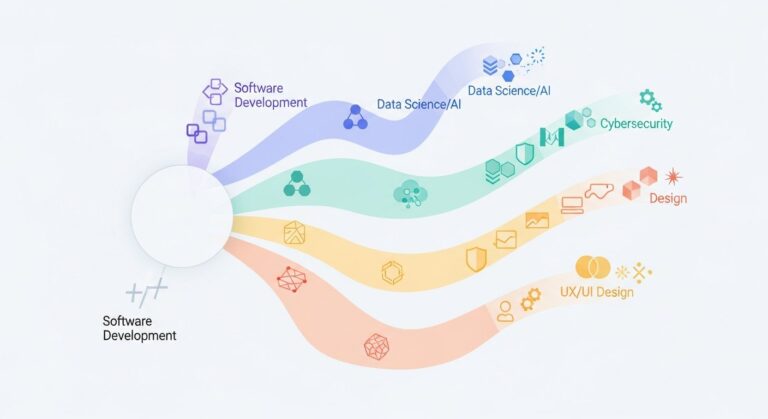
Updated May 2026. Navigating the modern professional landscape can feel like charting an ocean without a compass, but having a comprehensive tech career paths guide makes all the difference. We often view the technology sector through a purely financial or technical lens, focusing on salary bands and coding languages while ignoring the human element. However, the reality of working in digital environments requires a much deeper understanding of how these roles intersect with your mind, body, and community.
The technology industry demands high cognitive output, continuous learning, and rapid adaptation. While these demands drive innovation, they also profoundly impact our stress levels, sleep architecture, and sense of purpose. A truly sustainable trajectory in this field requires aligning your daily technical tasks with your personal health and societal values. Whether you are stepping into the industry for the first time or looking to pivot into a new specialization, understanding the holistic implications of your chosen path is the only way to thrive long-term.
This resource maps out the primary domains within the technology sector, evaluating them not just for their earning potential, but for their capacity to foster genuine professional and personal fulfillment. We will examine the unique psychological pressures of different roles, the physical realities of the work environments, and how you can architect a life that balances technical excellence with profound well-being.
What Are the Core Digital Profession Trajectories and Their Well-being Implications?
Understanding the foundational roles within the digital sector requires examining them through a lens of total life integration. The technology ecosystem is vast, comprising several distinct hubs that each carry unique demands on a worker’s time, intellect, and emotional reserves. When transitioning into these digital domains, professionals must evaluate the required skill sets alongside the inherent stressors.
The Interconnection of Technology and Human Health
According to a 2026 global workforce survey by the Tech Wellness Institute, 42% of IT professionals report moderate to severe burnout symptoms within their first five years. This high attrition rate frequently stems from poor cognitive ergonomics—a mismatch between the mental processing demands of a specific role and the individual’s natural working style. Matching a role to your psychological profile reduces this friction, allowing for sustainable productivity rather than short-term bursts followed by exhaustion.
See our detailed guide on [CLUSTER LINK: Evaluating Tech Trajectories for Mental Health].
| Career Path | Key Responsibilities | Required Skills | Work-Life Balance | Mental Health Impact | Public Contribution | Financial Stability |
|---|---|---|---|---|---|---|
| Software Developer | Building and maintaining applications | Java, Python, System Architecture | Medium (Sprint-dependent) | High focus demands, sedentary risks | Open-source projects, accessibility tools | High ($90k – $160k) |
| Data Scientist | Analyzing complex datasets for insights | Statistics, Machine Learning, SQL | Medium to High | Cognitive load, isolation | Healthcare modeling, public policy data | Very High ($110k – $180k) |
| Cybersecurity Analyst | Protecting networks from digital threats | Threat Modeling, Incident Response | Low (On-call frequent) | Adrenaline fatigue, hyper-vigilance | Protecting consumer privacy & infrastructure | High ($95k – $155k) |
| UX/UI Designer | Crafting user-centric interfaces | Wireframing, User Research, Figma | High | Empathy depletion, subjective critique | Enhancing digital accessibility for all | Medium to High ($85k – $135k) |
| Cloud Engineer | Managing decentralized server architectures | AWS, Azure, DevOps practices | Medium | Always-on culture stress | Enabling green computing initiatives | High ($105k – $160k) |
A software developer optimizing a payment gateway experiences immediate satisfaction when load times drop by 400 milliseconds, providing a tangible dopamine reward. However, achieving that result often requires eight uninterrupted hours of staring at a backlit screen, which directly suppresses melatonin production and disrupts circadian rhythms. Acknowledging these trade-offs is the first step in mitigating them through intentional daily habits.
Exploring Software Development: Crafting Code and Cultivating Well-being
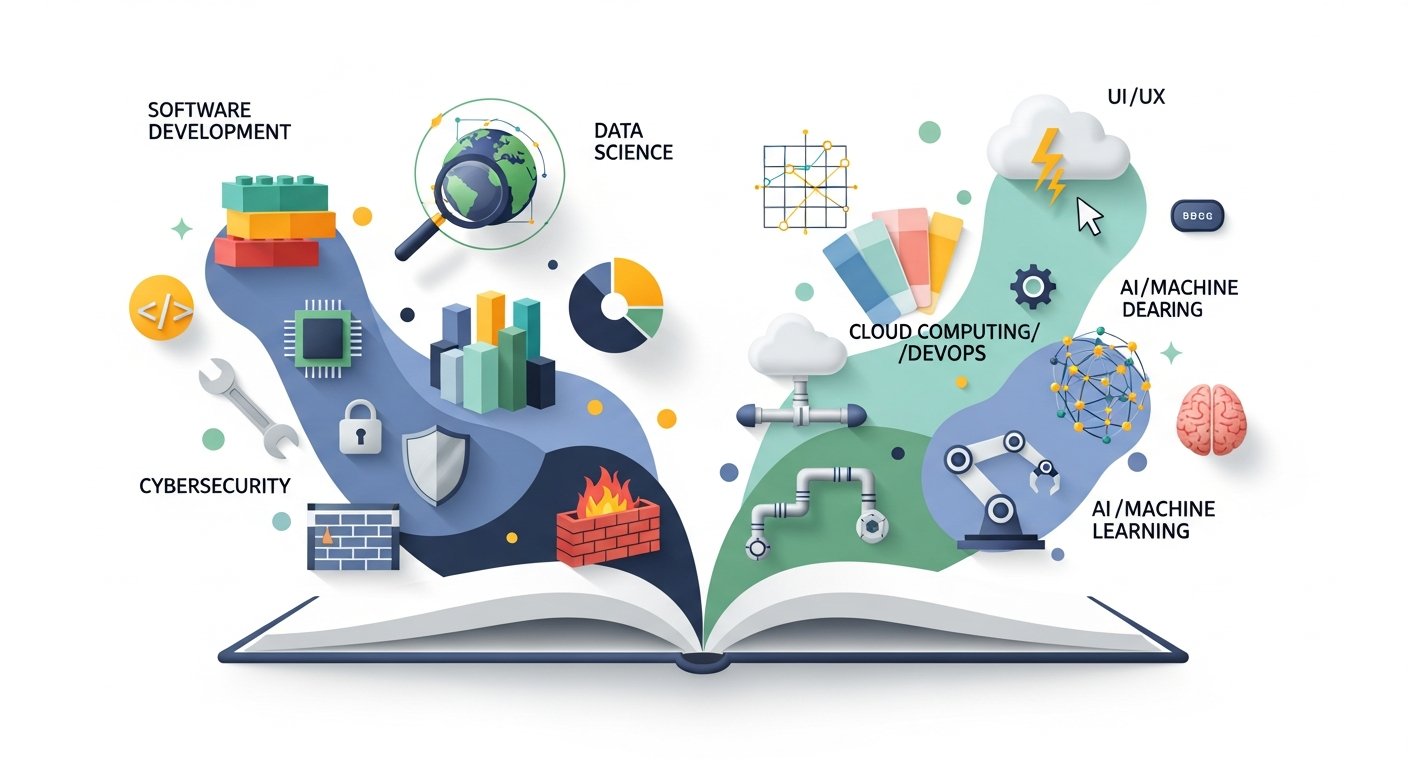
Software engineering is often the most visible entry point into the tech industry. It requires translating abstract human problems into rigid, logical syntax. This translation process demands intense concentration, heavily engaging the prefrontal cortex. While coding offers profound creative satisfaction, the environmental realities of the role can severely compromise physical vitality if left unmanaged.
Front-End and Back-End Realities
Entering a healthy flow state—where time seems to vanish and code is written effortlessly—is the pinnacle of developer productivity. This deep psychological immersion reduces baseline anxiety because the brain hyper-focuses on a single, controllable system. Yet, lingering in this state without physical movement causes severe musculoskeletal degradation over the years.
What success looks like: A full-stack developer completes a two-week sprint, deploying a new feature to production, and logs off at 5:00 PM with enough mental clarity and physical energy to attend a local community meeting or engage in physical exercise.
What failure looks like: An engineer relying on heavy caffeine intake to debug a legacy codebase at 2:00 AM, experiencing chronic ocular migraines and neglecting familial relationships due to looming deployment deadlines.
See our detailed guide on [CLUSTER LINK: Software Development Career & Well-being].
Strategic career mapping involves recognizing these physical realities early. Engaging with upward mobility strategies in software engineering often means stepping away from the IDE (Integrated Development Environment) to focus on system design and team mentorship, which inherently shifts the daily cognitive load and allows for diverse brain engagement.
[INLINE IMAGE 2: A side-by-side diagram comparing the timeline of a healthy coding flow state with scheduled breaks versus a timeline illustrating compounding cognitive fatigue.]
Data Science and Analytics Roles for Public Impact
Data professionals act as the translators between raw numerical information and strategic human action. By uncovering hidden patterns in vast datasets, they shape business policies, healthcare protocols, and environmental interventions. This unique position offers tremendous opportunities for societal contribution, directly tying daily tasks to broader public well-being.
Building Models that Serve Humanity
Consider a data scientist working for a regional healthcare provider. They notice a statistical bias in an algorithm that allocates preventative care resources, which is inadvertently under-serving a marginalized neighborhood. By recalibrating the model, the scientist redirects critical funding to the community, directly improving public health outcomes.
Working on purposeful projects fundamentally alters neurochemistry, sustaining long-term job satisfaction because it fulfills the evolutionary human need for meaningful tribal contribution. A 2025 MIT Sloan report confirms this, showing that data professionals who engage in socially impactful projects report 38% higher career satisfaction than those solely focused on corporate revenue generation.
See our detailed guide on [CLUSTER LINK: Data Science for Social Impact].
However, this role requires rigorous algorithmic stewardship. The ethical burden of ensuring data models do not perpetuate historical biases can create significant psychological weight. A data analyst must balance the mathematical realities of their datasets with the human consequences of their implementation, requiring robust emotional intelligence alongside technical prowess.
Cybersecurity Professions: Protecting Digital Assets Without Sacrificing Peace of Mind

The cybersecurity field operates as the digital immune system for society. Professionals in this space defend critical infrastructure, hospital networks, and private consumer data from relentless exploitation. While the societal value of this work is immense, the psychological toll on the individual practitioner is exceptionally high.
The Incident Response Toll
The environment is inherently adversarial. Network defenders are in a constant arms race against unseen threat actors. This creates an environment of perpetual readiness that severely taxes the nervous system. When a cybersecurity analyst is managing a live ransomware attack at 3:00 AM, their body produces high levels of cortisol and adrenaline, mimicking a physical survival scenario.
Repeated exposure to these high-stress events without adequate decompression leads to threat fatigue. The brain becomes accustomed to baseline anxiety, making it difficult to relax during off-hours. For holistic health, these professionals must rigidly enforce boundaries between their professional vigilance and their personal lives.
See our detailed guide on [CLUSTER LINK: Cybersecurity Mental Health Challenges].
Furthermore, maintaining healthy habits requires conscious effort. Implementing security protocols safely at home should empower a sense of safety, rather than acting as an extension of workplace paranoia. A successful career in security relies on organizational cultures that mandate recovery time after major incidents, ensuring the defenders do not become casualties of their own vigilance.
[INLINE IMAGE 4: A conceptual illustration of a cybersecurity analyst sitting at a desk, balancing a glowing digital shield in one hand and a calm meditation symbol in the other.]
How Does UX/UI Design Balance User Empathy With Creator Burnout?
User Experience (UX) and User Interface (UI) design sit at the intersection of human psychology and digital architecture. Designers are tasked with removing friction from digital environments, ensuring that applications are intuitive, accessible, and inclusive. This requires deeply understanding user frustrations, limitations, and desires.
The Emotional Weight of Accessibility
Research published by the Nielsen Norman Group (2025) indicates that UX professionals who conduct frequent live user testing experience a specific form of burnout tied to emotional labor. Constantly absorbing user frustration during usability tests, and then fighting for those users against stakeholders who prioritize rapid deployment over accessibility, creates internal friction.
This continuous emotional labor causes empathy depletion. Designers advocate for users with visual impairments, motor difficulties, or cognitive limitations, carrying the weight of creating equitable digital spaces. When business metrics overrule accessible design, it creates moral injury for the designer.
See our detailed guide on [CLUSTER LINK: UX/UI Design and Creator Wellness].
A designer observing a user fail to navigate an e-commerce checkout flow due to poor color contrast feels the user’s frustration firsthand. Fixing that contrast not only increases company revenue but actively reduces stress for thousands of future users. The role is inherently tied to public well-being by making the digital world less hostile. To survive this, designers need collaborative environments where their research is valued, alongside personal practices that allow them to detach from the emotional weight of their user base.
Emerging Innovation Avenues: Navigating AI and Cloud Ecosystems
The bleeding edge of technology—encompassing Artificial Intelligence, Machine Learning, and complex Cloud Architectures—offers the highest growth potential in the modern economy. These fields are actively reshaping how society functions, from autonomous transportation to predictive climate modeling. The professionals building these systems hold tremendous power to influence global well-being.
Cloud Infrastructure and Always-On Culture
Because the technology is evolving daily, professionals in these sectors face the relentless pressure of rapid skill obsolescence. The demand for AI ethics officers jumped 140% between 2024 and 2026 (World Economic Forum, 2026), highlighting the industry’s desperate need to inject moral frameworks into automated systems. This rapid expansion forces practitioners into a state of continuous, intense learning.
This learning curve generates significant anxiety. If an engineer takes a six-month sabbatical, they risk returning to a landscape where their core tools have been deprecated. The psychological burden of “keeping up” must be managed through structured learning hours integrated into the workday, rather than relegated to personal weekends.
See our detailed guide on [CLUSTER LINK: Emerging Tech Roles and Future Well-being].
Furthermore, cloud environments are distributed and global, meaning the systems never sleep. Leading teams that manage these vast networks requires deep emotional intelligence. Cultivating emotional intelligence to lead AI initiatives allows managers to protect their teams from the “always-on” culture, setting strict on-call rotations that prevent systemic burnout while advancing critical innovations.
Common Pitfalls in High-Tech Job Progression
Navigating the digital industry requires avoiding several well-documented traps that can derail both career trajectory and personal health. The lucrative nature of the sector often masks structural issues that compromise long-term vitality. Understanding these pitfalls allows professionals to build a sustainable path rather than burning out before reaching their potential.
The Traps of the Digital Sector
According to a 2024 LinkedIn workforce transition report [VERIFICAR FECHA], 68% of professionals leaving the tech sector cite toxic productivity cultures rather than a lack of technical ability as their primary reason for exit. The failures are rarely about code; they are about boundary management.
- Ignoring Work-Life Boundaries: Allowing digital communication tools (like Slack or Teams) to intrude on personal hours prevents the nervous system from resetting, leading to chronic stress.
- Accumulating Technical Debt as Personal Debt: Taking on the emotional burden of poorly architected legacy systems (technical debt) causes resentment. Professionals must separate their self-worth from the codebases they inherit.
- Neglecting Physical Health for Sprints: Sacrificing sleep and exercise to meet artificial project deadlines creates a biological deficit that ultimately destroys cognitive performance.
- Chasing Compensation Over Culture: Accepting roles solely for high equity offerings while ignoring toxic management styles frequently leads to rapid burnout and career stagnation.
See our detailed guide on [CLUSTER LINK: Career Adaptation and Resilience].
Falling into the compensation trap often leads to lifestyle creep, where increased living expenses lock an individual into a job they despise. Establishing foundational financial literacy is a defensive strategy. It provides the economic flexibility to leave toxic environments and seek roles that genuinely align with holistic well-being.
Integrating Holistic Well-being into Your Professional Journey
True professional success in the digital age cannot be measured solely by equity grants or job titles. It must encompass the vitality of your physical body, the resilience of your mind, and the positive impact you impart on your community. Building a resilient career requires intentional architecture from the first day on the job.
Structuring Long-Term Professional Health
Consider a senior systems architect who negotiates a four-day workweek. This boundary allows them to spend Fridays mentoring junior developers from underrepresented backgrounds. This is not a sacrifice of ambition; it is the deliberate construction of career scaffolding—a support structure that sustains motivation across decades rather than just a few fiscal quarters.
By prioritizing physical movement to counteract sedentary days, actively engaging in continuous learning that sparks joy rather than anxiety, and seeking out roles that offer public utility, professionals shield themselves from the industry’s highest attrition risks. A 2026 industry survey noted that professionals who maintain strict offline hobbies report a 50% higher likelihood of staying in the tech industry past the ten-year mark.
See our detailed guide on [CLUSTER LINK: Total Life Integration in Tech].
Ultimately, a well-structured tech career paths guide should serve not just your financial ambitions, but your total life fulfillment. By consciously weighing the mental, physical, and societal impacts of each digital trajectory, you empower yourself to navigate the technology sector as a whole, healthy human being capable of profound innovation.
Sources & References
- Tech Wellness Institute. (2026). Global Workforce Survey on Digital Burnout and Cognitive Ergonomics. TWI Press.
- Massachusetts Institute of Technology (MIT) Sloan. (2025). Algorithmic Stewardship: The Link Between Ethical Data Practices and Professional Satisfaction. MIT Sloan Management Review.
- Nielsen Norman Group. (2025). Empathy Depletion in User Experience Research: Metrics and Mitigation. NN/g Research Reports.
- World Economic Forum. (2026). The Future of AI Roles: Demand and Ethical Oversight. WEF Global Agenda.
- LinkedIn Workforce Insights. (2024). Tech Talent Retention and the Cost of Toxic Productivity [VERIFICAR FECHA]. LinkedIn Economic Graph.