
The Unemployment Rate Explained: A Deep Dive into What This Key Economic Indicator Means for You
Affiliate disclosure: This article may contain affiliate links. Recommendations are independent and editorially driven.
In the vast landscape of economic news, few figures capture public attention and ignite debate quite like the unemployment rate. It’s a statistic regularly reported across all major news outlets, influencing everything from stock market reactions to political discourse. But for the average individual navigating their personal finances and career path, what does the unemployment rate truly represent? Is it merely a number, or a complex tapestry woven from millions of individual stories of job searching, career changes, and economic opportunity?
At diaalnews, we believe that understanding the fundamental mechanisms of the economy is crucial for making informed financial decisions. The unemployment rate is not just a barometer of a nation’s economic health; it’s a direct reflection of the job market’s vitality, impacting wage growth, consumer spending, and even the stability of your own financial future. A rising unemployment rate can signal economic distress, prompting governments and central banks to take action, while a falling rate often indicates growth and opportunity. However, beneath the headline number lies a wealth of detail that can dramatically alter its interpretation.
This comprehensive guide aims to demystify the unemployment rate, breaking down its definition, how it’s measured, the different types of joblessness it encompasses, and its profound implications for both the broader economy and your individual circumstances. We’ll explore the factors that cause it to fluctuate, delve into its historical context, and consider how policymakers attempt to influence it. By the end of this article, you’ll possess a nuanced understanding of this critical indicator, empowering you to better interpret economic news and make more strategic financial choices in 2026 and beyond.
What Exactly is the Unemployment Rate? Defining a Key Economic Indicator
At its core, the unemployment rate is a percentage that reflects the number of unemployed people as a share of the total labor force. While seemingly straightforward, each component of this definition—”unemployed” and “labor force”—carries specific criteria that are vital to grasp for an accurate understanding. This single figure serves as a snapshot of the labor market’s health, offering insights into how efficiently an economy is utilizing its human capital.
The Basic Definition: Who is “Unemployed”?
To be counted as “unemployed” by official statistical agencies, an individual must meet three strict conditions:
- Without a job: The person must not have worked for pay or profit in the survey week, even for a single hour.
- Currently available for work: The person must be available to take a job if one were offered during the survey week.
- Actively seeking work: The person must have made specific efforts to find employment within the prior four weeks (e.g., submitting resumes, interviewing, contacting employers).
This definition is crucial because it excludes several groups who might not have a job but are not considered unemployed in the official statistics. For instance, individuals who are retired, full-time students not seeking work, stay-at-home parents, or those who have given up looking for work (known as “discouraged workers”) are not included in the unemployment count. While these groups are certainly without jobs, they do not fit the criteria of being actively engaged in the job search process, hence their exclusion from the official unemployment calculation.
The Importance of the Labor Force
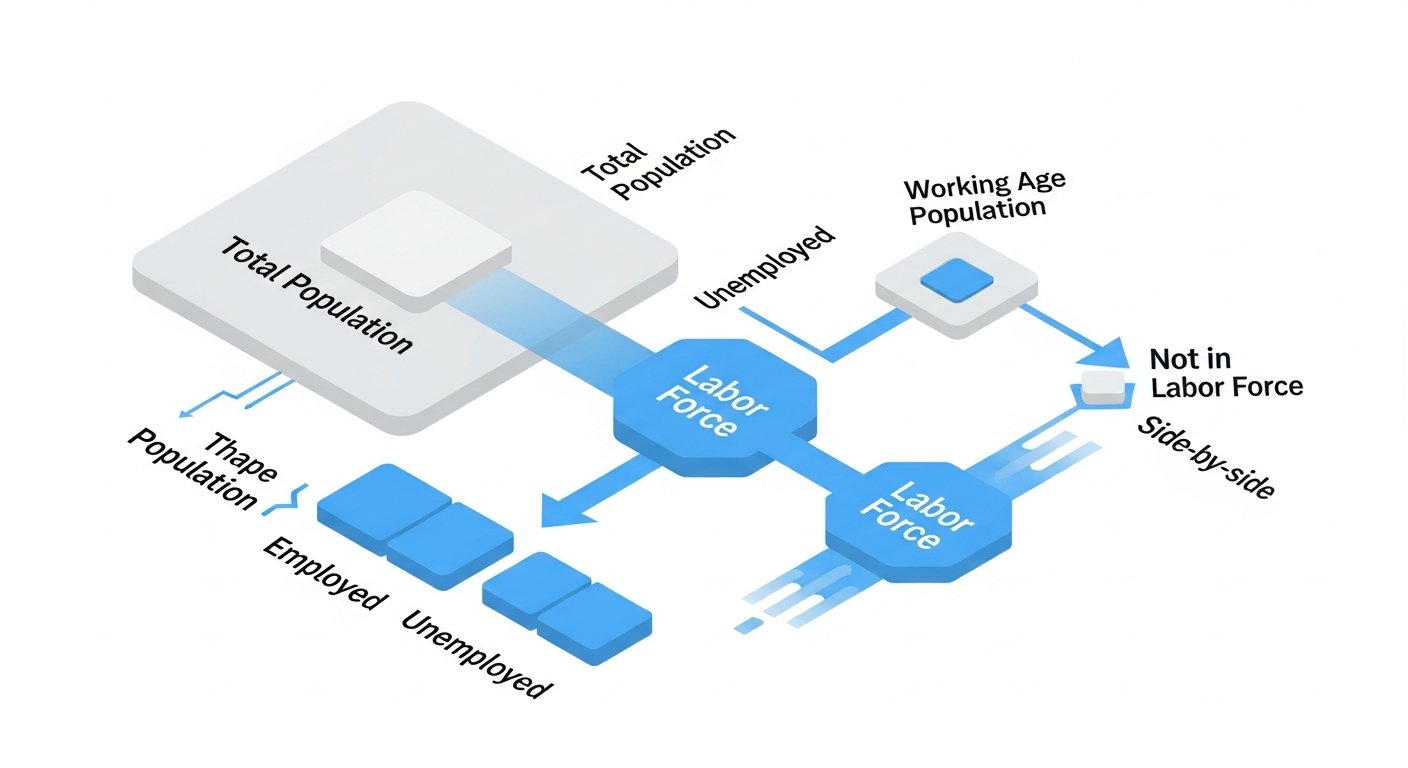
The “labor force” is the denominator in the unemployment rate calculation, and it’s equally important to define precisely. The labor force comprises all individuals who are either employed or actively unemployed. It represents the total pool of people available for work. To be part of the labor force, a person must be:
- At least 16 years old.
- Not in the armed forces.
- Not institutionalized (e.g., in prison, a nursing home, or a mental health facility).
Essentially, the labor force includes everyone who is working or wants to work and is actively looking for a job. Therefore, children, retirees, and institutionalized individuals are not part of the labor force. The size and composition of the labor force can shift over time due to demographic changes, educational attainment, and societal trends, influencing how the unemployment rate is perceived.
Why the Unemployment Rate Matters to You
Beyond its academic definition, the unemployment rate has tangible effects on your daily life and financial planning. A high unemployment rate typically signals a weaker economy, leading to:
- Reduced job security: Companies may be less likely to hire and more likely to downsize.
- Stagnant wage growth: With more people competing for fewer jobs, employers have less pressure to increase salaries.
- Lower consumer spending: Job insecurity and fewer paychecks mean people spend less, which can further slow economic growth.
- Increased competition for jobs: Even if you are employed, finding a new or better job becomes more challenging.
- Government policy shifts: High unemployment often triggers government interventions, such as stimulus packages, unemployment benefits extensions, or monetary policy adjustments like interest rate cuts, which can impact savings rates, mortgage rates, and investment returns.
Conversely, a low unemployment rate generally suggests a robust economy. In such an environment, businesses are expanding, job opportunities are plentiful, wages tend to rise as employers compete for talent, and consumer confidence is higher. Understanding this dynamic connection is the first step in using the unemployment rate as a tool for personal financial foresight.
Deciphering the Nuances: Various Types of Unemployment
The headline unemployment rate paints a broad picture, but not all unemployment is created equal. Economists categorize joblessness into several distinct types, each with different causes and implications. Recognizing these categories helps us understand the underlying health of the economy and the specific challenges faced by various segments of the workforce. It also informs the types of policies governments might implement to address different forms of joblessness.
Frictional Unemployment: The Natural Flow of Labor
Frictional unemployment is considered a natural and often healthy part of a dynamic economy. It refers to the temporary unemployment that occurs when people are voluntarily between jobs, searching for their first job, or transitioning from one career to another. Examples include recent college graduates looking for their entry-level positions, individuals moving to a new city seeking employment, or someone leaving one job to find another that better suits their skills or preferences. This type of unemployment is typically short-term and is not seen as a major economic problem. In fact, a certain level of frictional unemployment is desirable, as it indicates a flexible labor market where people can find jobs that align with their talents, ultimately increasing productivity and economic efficiency.
Structural Unemployment: A Mismatch of Skills
Structural unemployment is a more persistent and challenging form of joblessness. It arises from a fundamental mismatch between the skills workers possess and the skills employers demand. This can be due to technological advancements that render certain jobs obsolete (e.g., automation in manufacturing), shifts in industry structure (e.g., decline of coal mining), or global competition. For instance, if a region’s primary industry closes down, leaving many workers with specialized skills that are no longer in demand, those workers face structural unemployment. Addressing structural unemployment often requires significant investment in retraining programs, education, and incentives for workers to relocate or acquire new skills relevant to emerging industries. It often leads to longer periods of unemployment and can be particularly disruptive to individuals and communities.
Cyclical Unemployment: The Economic Rollercoaster
Cyclical unemployment is directly tied to the business cycle – the natural ebb and flow of economic activity. During economic contractions, recessions, or slowdowns, businesses face reduced demand for their products and services. To cut costs, they may lay off workers, leading to an increase in cyclical unemployment. Conversely, during periods of economic expansion and growth, businesses hire more workers, and cyclical unemployment declines. This is the type of unemployment that economic policymakers often try to address through fiscal and monetary stimulus measures, aiming to boost demand and encourage hiring. It is often the most talked-about type of unemployment when the overall unemployment rate rises significantly, as it affects a broad swathe of the economy.
Seasonal Unemployment: Predictable Fluctuations
Seasonal unemployment occurs due to predictable, recurring changes in demand for labor at different times of the year. Industries such as agriculture, tourism, construction, and retail (especially during holiday seasons) are prime examples. A ski resort instructor might be employed during the winter months but face unemployment in the summer, or a lifeguard might work during the summer but be jobless in the winter. While seasonal unemployment can be significant for individuals in affected sectors, it is generally anticipated and often accounted for in economic data through seasonal adjustments. These adjustments attempt to smooth out the predictable ups and downs to reveal underlying trends in the labor market.
Real-Wage (Classical) Unemployment: Market Rigidities
Less commonly discussed than the other types but still relevant is real-wage, or classical, unemployment. This occurs when wages are held artificially high, above the market-clearing equilibrium level, preventing the labor market from naturally adjusting. This can be due to factors like strong labor unions negotiating high wages, minimum wage laws set above the equilibrium, or government regulations that make it expensive to hire or fire workers. When wages are too high, employers may be less willing to hire additional staff or may even reduce their existing workforce, leading to unemployment. While minimum wage laws are often seen as beneficial for low-income workers, economists debate the extent to which they contribute to real-wage unemployment, especially for less-skilled or entry-level workers. This type of unemployment suggests that market forces are being hindered, leading to an excess supply of labor at the prevailing wage.
[INLINE IMAGE 1: place after second H2 | alt=”unemployment rate explained concept illustration”]
The Mechanics of Measurement: How the Unemployment Rate is Calculated
Understanding the definition of unemployment is just the beginning; knowing how this crucial statistic is actually measured is equally important. The unemployment rate is not simply a count of everyone without a job. It’s derived from a sophisticated survey process designed to capture a representative snapshot of the labor market. In the United States, this process is primarily managed by the Bureau of Labor Statistics (BLS) through a monthly survey known as the Current Population Survey (CPS).
The Household Survey: A Foundation of Data
Every month, the U.S. Census Bureau, on behalf of the BLS, conducts the Current Population Survey (CPS). This is a broad sample survey of about 60,000 households across the country, encompassing individuals in all 50 states and the District of Columbia. Interviewers collect information on the employment status of each eligible member (age 16 and over) in these households. The questions are carefully designed to determine whether individuals are employed, unemployed, or not in the labor force, according to the strict definitions discussed earlier.
The survey asks about a person’s activities during a specific reference week, typically the week that includes the 12th of the month. Key questions include whether they worked for pay or profit, even for an hour, in that week; whether they were available for work; and whether they actively looked for work in the past four weeks. Based on the responses, individuals are categorized into one of three groups: employed, unemployed, or not in the labor force.
The data collected from this sample is then weighted and extrapolated to represent the entire civilian non-institutional population aged 16 and over. This allows the BLS to estimate the total number of people employed, unemployed, and the overall size of the labor force for the entire nation.
Defining “Employed” and “Unemployed” in Practice
To reiterate the practical application of these definitions within the survey:
- Employed: This category includes all persons who, during the reference week, performed any work for pay or profit, worked 15 hours or more as unpaid family workers in a family business, or held a job but were not at work due to illness, vacation, bad weather, labor-management disputes, or personal reasons, whether or not they were paid for the time off and whether or not they were seeking other jobs.
- Unemployed: This category includes all persons who had no employment during the reference week, were available for work, and had made specific efforts to find employment sometime during the 4-week period ending with the reference week. Persons laid off from their jobs and expecting recall are also counted as unemployed.
- Not in the Labor Force: This category includes all persons 16 years and over who are not classified as employed or unemployed. This includes retirees, students, stay-at-home parents, institutionalized individuals, and discouraged workers.
The official unemployment rate (often referred to as U-3) is then calculated as:
Unemployment Rate (U-3) = (Number of Unemployed Persons / Total Labor Force) x 100
Where the Total Labor Force = Number of Employed Persons + Number of Unemployed Persons.
The Labor Force Participation Rate: A Broader View
While the unemployment rate focuses on those actively seeking work, the Labor Force Participation Rate (LFPR) offers a broader perspective on the economy’s engagement. The LFPR measures the percentage of the working-age population (16 years and older, civilian non-institutional) that is either employed or actively looking for work.
Labor Force Participation Rate = (Total Labor Force / Civilian Non-institutional Population) x 100
A declining LFPR, even with a stable or falling unemployment rate, can signal underlying issues. For example, if many people become “discouraged workers” and stop looking for jobs, the unemployment rate might fall because they are no longer counted in the labor force. However, the LFPR would also fall, indicating that a smaller proportion of the population is engaged in productive work, which can have long-term economic consequences, such as slower economic growth and an increased dependency ratio. Conversely, a rising LFPR often indicates optimism about job prospects, encouraging more people to enter or re-enter the workforce.
Beyond U-3: Understanding Alternative Measures (U-1 through U-6)
The official unemployment rate (U-3) is the most widely cited figure, but the BLS also publishes five alternative measures (U-1, U-2, U-4, U-5, U-6) to provide a more comprehensive view of labor underutilization. These alternative measures capture different facets of job market distress, offering a spectrum from very restrictive definitions to broader ones that include individuals marginally attached to the labor force or working part-time for economic reasons.
| Measure | Description | Key Inclusions Beyond U-3 | Significance |
|---|---|---|---|
| U-1 | Persons unemployed 15 weeks or longer, as a percentage of the civilian labor force. | None (subset of U-3) | Focuses on long-term unemployment, which is often more damaging to individuals and the economy. |
| U-2 | Job losers and persons who completed temporary jobs, as a percentage of the civilian labor force. | None (subset of U-3) | Highlights joblessness due to layoffs or temporary job endings, rather than voluntary job changes or new entrants. |
| U-3 | Total unemployed, as a percentage of the civilian labor force (official unemployment rate). | All unemployed individuals meeting active search criteria. | The widely reported headline unemployment rate; a standard measure of labor market slack. |
| U-4 | Total unemployed plus discouraged workers, as a percentage of the civilian labor force plus discouraged workers. | Discouraged workers | Includes those who have given up looking for work due to perceived lack of opportunities. |
| U-5 | Total unemployed, plus discouraged workers, plus all other persons marginally attached to the labor force, as a percentage of the civilian labor force plus all persons marginally attached to the labor force. | Discouraged workers + Marginally attached workers | Adds individuals who want a job, are available for work, but haven’t actively searched recently (for reasons other than discouragement). |
| U-6 | Total unemployed, plus all persons marginally attached to the labor force, plus total employed part-time for economic reasons, as a percentage of the civilian labor force plus all persons marginally attached to the labor force. | Discouraged workers + Marginally attached workers + Part-time for economic reasons | The broadest measure of unemployment and underemployment, reflecting “hidden” unemployment and those working fewer hours than desired due to economic conditions. |
The U-6 measure, often called the “real unemployment rate,” is particularly insightful. It includes discouraged workers (those who want a job but have given up looking) and individuals working part-time who would prefer full-time employment but cannot find it for economic reasons. This broader measure often runs higher than U-3, especially during and after recessions, providing a more complete picture of labor market slack and underutilization. For personal finance decisions, considering U-6 can offer a more cautious outlook on the job market’s true strength, especially if you are contemplating career changes or job searches. Understanding labor market statistics is key to savvy financial planning.
Economic Health Barometer: The Broader Implications of Unemployment Figures
The unemployment rate is far more than a statistical curiosity; it’s a critical barometer of an economy’s overall health and vitality. Its movements have ripple effects across virtually every sector, influencing everything from government budgets to consumer confidence and even the social fabric of a nation. For personal finance planning, interpreting these broader implications can help individuals anticipate economic shifts and adjust their strategies accordingly.
Impact on Economic Growth and GDP
A high unemployment rate directly correlates with lower economic output. When a significant portion of the workforce is jobless, fewer goods and services are being produced. This leads to a decline in the Gross Domestic Product (GDP), which is the total value of all goods and services produced in an economy. Unemployed individuals also contribute less to the economy through consumption and investment. The loss of human capital and potential output during periods of high unemployment is a significant drag on a nation’s prosperity. Businesses, facing reduced consumer demand and uncertainty, are less likely to invest in expansion, hire new staff, or innovate, further perpetuating the cycle of slow growth.
Consumer Confidence and Spending Habits
One of the most immediate and palpable effects of the unemployment rate is on consumer confidence. When people are worried about their job security or the ability of their friends and family to find work, they tend to become more cautious with their spending. This leads to a decrease in consumer demand, which can further dampen economic activity. Households may postpone major purchases like homes, cars, or appliances, opt for cheaper alternatives, or reduce discretionary spending on dining out and entertainment. This slowdown in consumption can create a negative feedback loop, where businesses respond to lower sales by cutting production and potentially laying off more workers, further exacerbating the unemployment problem.
Government Revenue and Public Services
High unemployment rates also have a profound impact on government finances. A large number of unemployed individuals means a reduction in income tax revenue for the government, as fewer people are earning taxable wages. Simultaneously, government expenditures tend to increase due to higher demand for social safety nets, such as unemployment benefits, welfare programs, and food assistance. This combination of decreased revenue and increased spending can lead to larger budget deficits, potentially forcing governments to either raise taxes, cut public services, or increase borrowing, all of which can have long-term economic consequences.
Social and Personal Costs of Joblessness
Beyond the purely economic implications, high unemployment extracts a significant social and personal toll. For individuals, job loss can lead to financial distress, stress, anxiety, and a decline in mental and physical health. It can erode self-esteem, strain family relationships, and lead to a sense of hopelessness. Prolonged unemployment can also result in skill erosion, making it even harder for individuals to re-enter the workforce. On a societal level, widespread joblessness can contribute to increased crime rates, social unrest, and a general decline in community well-being. It can also exacerbate existing inequalities, disproportionately affecting vulnerable populations. Managing personal finances during a recession becomes even more critical when job markets are tight.
[INLINE IMAGE 2: place after fourth H2 | alt=”unemployment rate explained comparison illustration”]
Driving Forces: Key Factors Influencing the Unemployment Rate
The unemployment rate is not a static figure; it constantly fluctuates in response to a complex interplay of forces. Understanding these driving factors is essential for comprehending economic trends and anticipating future shifts in the labor market. These influences range from global economic conditions to specific policy decisions and demographic changes within a nation.
Economic Cycles and Business Investment
The most prominent driver of cyclical unemployment is the overall business cycle. During periods of economic expansion, businesses experience rising demand, increased profits, and greater confidence. This encourages them to invest in new projects, expand operations, and hire more workers, leading to a decline in the unemployment rate. Conversely, during economic contractions or recessions, demand falls, profits shrink, and uncertainty reigns. Businesses cut back on investment, postpone expansion plans, and often resort to layoffs or hiring freezes, causing the unemployment rate to rise. These cycles are influenced by factors like interest rates, credit availability, consumer confidence, and global economic health.
Technological Advancements and Automation
Technological change is a double-edged sword when it comes to unemployment. On one hand, new technologies create entirely new industries and job categories (e.g., AI specialists, data scientists). On the other hand, automation and other technological advancements can displace workers in existing industries, leading to structural unemployment. For example, robots replacing assembly line workers or AI algorithms taking over routine administrative tasks can render certain skills obsolete. The pace of technological change and the ability of the workforce to adapt through retraining and upskilling are critical determinants of its net effect on the unemployment rate. Nations that embrace innovation while simultaneously investing in worker education tend to fare better in managing this transition.
Global Competition and Trade Policies
In an increasingly interconnected global economy, international trade and competition play a significant role. If a country’s industries struggle to compete with foreign producers—perhaps due to lower labor costs abroad or more efficient foreign production methods—domestic companies may face pressure to reduce their workforce or even relocate production overseas. This can lead to job losses and an increase in structural unemployment. Trade policies, such as tariffs or trade agreements, can either exacerbate or mitigate these effects, depending on how they are structured and their impact on domestic industries. Outsourcing and offshoring of jobs to countries with lower wages are direct results of global competition, impacting specific sectors and communities.
Demographics and Workforce Composition
Demographic shifts within a population can significantly impact the unemployment rate and the labor force participation rate. An aging population, for instance, might see a decline in the overall labor force participation rate as more people retire, potentially leading to labor shortages in some sectors. Conversely, a surge in young workers entering the labor force might initially push up the unemployment rate if the economy isn’t creating enough jobs to absorb them. Immigration patterns, birth rates, and educational attainment levels all contribute to the size and composition of the labor force, influencing both the supply and demand for labor at various skill levels. Gender dynamics in the workforce also evolve, with changing participation rates and career paths.
Government Policies and Labor Market Regulations
Government policies, both directly and indirectly, wield considerable influence over the unemployment rate. Fiscal policies (government spending and taxation) can stimulate or dampen economic activity, thereby affecting cyclical unemployment. Monetary policies (managed by central banks, influencing interest rates and money supply) impact borrowing costs for businesses, affecting investment and hiring. Labor market regulations, such as minimum wage laws, unemployment benefits, hiring and firing restrictions, and occupational licensing requirements, can also affect the supply and demand for labor, potentially contributing to frictional or real-wage unemployment. For example, generous unemployment benefits might extend the job search period, while strict firing regulations might make employers more hesitant to hire in the first place. Striking the right balance is a constant challenge for policymakers.
The Historical Lens: Unemployment Trends and the Modern Economy (2026 Context)
Examining the unemployment rate through a historical lens reveals patterns that help us understand its present state and anticipate future movements. The labor market has undergone significant transformations over decades, marked by major economic shocks, technological revolutions, and evolving societal structures. Understanding these trends provides valuable context for interpreting the unemployment landscape in 2026.
Major Economic Shocks and Their Aftermath
History is replete with examples of economic crises that dramatically impacted unemployment. The Great Depression of the 1930s saw unemployment rates soar to unprecedented levels, illustrating the devastating effects of prolonged economic contraction. More recently, the Global Financial Crisis of 2008-2009 led to a substantial surge in unemployment, particularly in sectors like construction and finance, as credit markets froze and consumer demand plummeted. The unique and swift economic disruption caused by the global pandemic in the early 2020s also triggered a sharp, albeit temporary, spike in unemployment as businesses shut down and widespread layoffs occurred. Each of these events demonstrated how external shocks can quickly unravel labor market stability, leading to significant cyclical unemployment.
The aftermath of such shocks often involves a slow and uneven recovery. Policy responses, including massive fiscal stimulus and unconventional monetary policies, have played a crucial role in mitigating the severity and duration of these unemployment spikes. However, the long-term impacts, such as increased long-term unemployment, skills gaps, and changes in labor force participation, can persist for years.
Long-Term Shifts in Labor Market Dynamics
Beyond cyclical fluctuations, the labor market has experienced profound structural changes over the past several decades. The decline of manufacturing and the rise of the service economy have reshaped the demand for specific skills. Automation and globalization have continued to exert pressure on certain job categories, leading to structural unemployment in some regions while creating new opportunities elsewhere. The nature of work itself has evolved, with an increasing prevalence of contract work, the gig economy, and remote employment. These shifts mean that the “natural” rate of unemployment (the lowest sustainable rate without triggering inflation) may also change over time, influenced by demographic factors, labor market flexibility, and the speed of technological adoption.
Furthermore, educational attainment has become increasingly critical. Economies that invest heavily in higher education and vocational training tend to have more adaptable workforces, better equipped to navigate these structural transformations. Conversely, regions with lower educational attainment often face more persistent challenges in reducing long-term unemployment.
The Post-Pandemic Landscape and 2026 Outlook
The global pandemic response irrevocably altered the labor market, accelerating trends already underway, such as remote work and e-commerce, while also creating new challenges. In 2026, we observe a labor market still adapting to these changes. Many industries have seen a permanent shift in how work is performed, requiring new skills and flexible work arrangements. Some sectors, particularly in hospitality and specific services, continue to face labor shortages, while others grapple with lingering automation impacts.
The 2026 outlook for unemployment is influenced by several factors: the ongoing pace of technological adoption, the effectiveness of government policies in promoting job creation and skill development, and the overall trajectory of global economic growth. Many economies are focused on fostering resilient labor markets, ensuring that workers have access to lifelong learning opportunities, and addressing inequalities that became more pronounced during recent crises. The debate around the “future of work” and the role of universal basic income or robust social safety nets remains central to discussions about long-term unemployment trends. Forecasting economic trends requires careful consideration of these historical and contemporary forces.
The Phillips Curve and Beyond: Unemployment’s Relationship with Inflation
One of the most significant and often debated relationships in macroeconomics is the inverse correlation between unemployment and inflation. This concept is encapsulated in the Phillips Curve, which has been a cornerstone of economic policy discussions for decades, though its applicability has evolved over time. Understanding this relationship is crucial for comprehending how central banks and governments attempt to manage both price stability and full employment.
The Traditional View: A Trade-Off
The Phillips Curve, named after economist A.W. Phillips, originally suggested an inverse relationship between the rate of unemployment and the rate of wage inflation in an economy. In simple terms, when unemployment is low, meaning there’s a tight labor market, employers must compete more vigorously for a limited pool of workers. This competition leads to higher wage demands from employees and, consequently, higher wages offered by employers. As labor costs rise, businesses tend to pass these increased costs onto consumers in the form of higher prices for goods and services, leading to inflation. Conversely, when unemployment is high, there’s a surplus of available labor. Workers have less bargaining power, wages stagnate or even fall, and businesses face less pressure to raise prices, resulting in lower inflation or even deflation.
This implied trade-off suggested that policymakers could choose a point on the curve – accepting a certain level of inflation to achieve lower unemployment, or vice versa. For decades, central banks used this concept to guide monetary policy, attempting to stimulate the economy to reduce unemployment while being mindful of the inflation implications. This forms the basis of the dual mandate often given to central banks: maximizing employment while maintaining price stability.
Stagflation and the Limitations of the Phillips Curve
While the Phillips Curve held significant sway, its predictive power was challenged in the 1970s by a phenomenon known as “stagflation.” Stagflation refers to a period characterized by simultaneously high inflation and high unemployment – a scenario that the traditional Phillips Curve suggested was impossible. This economic puzzle led economists to rethink the relationship, incorporating the role of inflationary expectations. If workers and businesses expect inflation to rise, they will factor this into wage negotiations and pricing decisions, regardless of the unemployment rate. This can lead to a “shifting” of the Phillips Curve, where the trade-off becomes less clear or even disappears in the short run.
Economists like Milton Friedman and Edmund Phelps introduced the concept of the “natural rate of unemployment” (NAIRU – Non-Accelerating Inflation Rate of Unemployment). They argued that in the long run, there is no trade-off between unemployment and inflation. Attempts by policymakers to push unemployment below its natural rate through expansionary policies would only lead to ever-accelerating inflation, without permanently reducing unemployment. The natural rate of unemployment is influenced by structural factors, such as labor market efficiency, demographics, and technology, rather than short-term demand. The stagflation era demonstrated that supply shocks (like oil price increases) could also trigger both high unemployment and high inflation, further complicating the simple Phillips Curve relationship.
Modern Monetary Policy Considerations
In 2026, the relationship between unemployment and inflation remains a critical consideration for central banks, though interpreted with greater nuance. Modern monetary policy often focuses on anchoring inflation expectations. If inflation expectations remain stable, central banks have more flexibility to use monetary tools to support employment without necessarily triggering runaway inflation. However, periods of low unemployment in recent years have not always led to the anticipated significant wage growth and inflation, leading some to question whether the Phillips Curve relationship has flattened or changed due to factors like globalization, technological disruption, and declining union power.
Central banks now employ a broader set of data and models, moving beyond a simplistic Phillips Curve, to assess the amount of “slack” in the labor market and its potential impact on future inflation. This includes monitoring U-6 unemployment, labor force participation, wage growth across different sectors, and various measures of inflation expectations. The goal remains to achieve a balance: fostering maximum sustainable employment without allowing inflation to become a destabilizing force in the economy.
Uneven Burdens: Disparities and Equity in Unemployment
While the national unemployment rate provides an aggregate view, it often masks significant disparities among different demographic groups, regions, and industries. Understanding these uneven burdens is crucial for policymakers seeking to create equitable economic opportunities and for individuals evaluating their own career prospects. The impact of economic downturns and labor market shifts is rarely uniform, often exacerbating existing inequalities.
Demographic Discrepancies: Age, Gender, and Race/Ethnicity
Unemployment rates frequently vary across different demographic groups. Historically, younger workers (those aged 16-24) tend to experience higher unemployment rates than older, more experienced workers. This is often due to a combination of factors, including less work experience, higher rates of job turnover (frictional unemployment), and being more susceptible to layoffs during economic downturns (last-hired, first-fired). However, in specific industries, an aging workforce can lead to skill gaps and labor shortages.
Unemployment rates can also differ by gender, though these disparities have shifted over time with changes in labor force participation and industry composition. Historically, men faced higher unemployment in manufacturing-heavy recessions, while women might be more impacted in service-sector downturns. In the current year, factors like access to childcare and flexible work options can influence labor force attachment and unemployment for women.
Perhaps most persistently, significant disparities exist across racial and ethnic lines. In many countries, minority groups often experience higher unemployment rates, lower wages, and less job security compared to the majority population, even when controlling for education levels. These disparities are rooted in historical discrimination, systemic barriers, unequal access to quality education and job networks, and occupational segregation. Addressing these deep-seated inequalities requires targeted policies that promote diversity, equity, and inclusion in hiring practices, education reform, and community development initiatives.
Regional Variations and Localized Shocks
The national unemployment rate is an average and can obscure vastly different conditions at the state, provincial, or local level. A low national rate might coexist with pockets of very high unemployment in specific regions. This can be due to localized economic shocks, such as the closure of a major industry, natural disasters, or a lack of diversification in the local economy. For example, a region heavily reliant on a single manufacturing plant might see its unemployment rate skyrocket if that plant closes, even if the national economy is booming. Conversely, areas with thriving tech sectors or robust tourism industries might enjoy exceptionally low unemployment rates.
These regional disparities can lead to internal migration as people move to areas with better job prospects, but they can also create social and economic challenges in areas experiencing long-term decline. Government policies, such as regional development funds, infrastructure projects, and incentives for businesses to invest in struggling areas, are often aimed at mitigating these regional imbalances.
The Unemployment Rate Explained: A Deep Dive into What This Key Economic Indicator Means for You
Affiliate disclosure: This article may contain affiliate links. Recommendations are independent and editorially driven.
In the vast landscape of economic news, few figures capture public attention and ignite debate quite like the unemployment rate. It’s a statistic regularly reported across all major news outlets, influencing everything from stock market reactions to political discourse. But for the average individual navigating their personal finances and career path, what does the unemployment rate truly represent? Is it merely a number, or a complex tapestry woven from millions of individual stories of job searching, career changes, and economic opportunity?
At diaalnews, we believe that understanding the fundamental mechanisms of the economy is crucial for making informed financial decisions. The unemployment rate is not just a barometer of a nation’s economic health; it’s a direct reflection of the job market’s vitality, impacting wage growth, consumer spending, and even the stability of your own financial future. A rising unemployment rate can signal economic distress, prompting governments and central banks to take action, while a falling rate often indicates growth and opportunity. However, beneath the headline number lies a wealth of detail that can dramatically alter its interpretation.
This comprehensive guide aims to demystify the unemployment rate, breaking down its definition, how it’s measured, the different types of joblessness it encompasses, and its profound implications for both the broader economy and your individual circumstances. We’ll explore the factors that cause it to fluctuate, delve into its historical context, and consider how policymakers attempt to influence it. By the end of this article, you’ll possess a nuanced understanding of this critical indicator, empowering you to better interpret economic news and make more strategic financial choices in 2026 and beyond.
What Exactly is the Unemployment Rate? Defining a Key Economic Indicator
At its core, the unemployment rate is a percentage that reflects the number of unemployed people as a share of the total labor force. While seemingly straightforward, each component of this definition—”unemployed” and “labor force”—carries specific criteria that are vital to grasp for an accurate understanding. This single figure serves as a snapshot of the labor market’s health, offering insights into how efficiently an economy is utilizing its human capital.
The Basic Definition: Who is “Unemployed”?
To be counted as “unemployed” by official statistical agencies, an individual must meet three strict conditions:
- Without a job: The person must not have worked for pay or profit in the survey week, even for a single hour.
- Currently available for work: The person must be available to take a job if one were offered during the survey week.
- Actively seeking work: The person must have made specific efforts to find employment within the prior four weeks (e.g., submitting resumes, interviewing, contacting employers).
This definition is crucial because it excludes several groups who might not have a job but are not considered unemployed in the official statistics. For instance, individuals who are retired, full-time students not seeking work, stay-at-home parents, or those who have given up looking for work (known as “discouraged workers”) are not included in the unemployment count. While these groups are certainly without jobs, they do not fit the criteria of being actively engaged in the job search process, hence their exclusion from the official unemployment calculation.
The Importance of the Labor Force
The “labor force” is the denominator in the unemployment rate calculation, and it’s equally important to define precisely. The labor force comprises all individuals who are either employed or actively unemployed. It represents the total pool of people available for work. To be part of the labor force, a person must be:
- At least 16 years old.
- Not in the armed forces.
- Not institutionalized (e.g., in prison, a nursing home, or a mental health facility).
Essentially, the labor force includes everyone who is working or wants to work and is actively looking for a job. Therefore, children, retirees, and institutionalized individuals are not part of the labor force. The size and composition of the labor force can shift over time due to demographic changes, educational attainment, and societal trends, influencing how the unemployment rate is perceived.
Why the Unemployment Rate Matters to You
Beyond its academic definition, the unemployment rate has tangible effects on your daily life and financial planning. A high unemployment rate typically signals a weaker economy, leading to:
- Reduced job security: Companies may be less likely to hire and more likely to downsize.
- Stagnant wage growth: With more people competing for fewer jobs, employers have less pressure to increase salaries.
- Lower consumer spending: Job insecurity and fewer paychecks mean people spend less, which can further slow economic growth.
- Increased competition for jobs: Even if you are employed, finding a new or better job becomes more challenging.
- Government policy shifts: High unemployment often triggers government interventions, such as stimulus packages, unemployment benefits extensions, or monetary policy adjustments like interest rate cuts, which can impact savings rates, mortgage rates, and investment returns.
Conversely, a low unemployment rate generally suggests a robust economy. In such an environment, businesses are expanding, job opportunities are plentiful, wages tend to rise as employers compete for talent, and consumer confidence is higher. Understanding this dynamic connection is the first step in using the unemployment rate as a tool for personal financial foresight.
Deciphering the Nuances: Various Types of Unemployment
The headline unemployment rate paints a broad picture, but not all unemployment is created equal. Economists categorize joblessness into several distinct types, each with different causes and implications. Recognizing these categories helps us understand the underlying health of the economy and the specific challenges faced by various segments of the workforce. It also informs the types of policies governments might implement to address different forms of joblessness.
Frictional Unemployment: The Natural Flow of Labor
Frictional unemployment is considered a natural and often healthy part of a dynamic economy. It refers to the temporary unemployment that occurs when people are voluntarily between jobs, searching for their first job, or transitioning from one career to another. Examples include recent college graduates looking for their entry-level positions, individuals moving to a new city seeking employment, or someone leaving one job to find another that better suits their skills or preferences. This type of unemployment is typically short-term and is not seen as a major economic problem. In fact, a certain level of frictional unemployment is desirable, as it indicates a flexible labor market where people can find jobs that align with their talents, ultimately increasing productivity and economic efficiency.
Structural Unemployment: A Mismatch of Skills
Structural unemployment is a more persistent and challenging form of joblessness. It arises from a fundamental mismatch between the skills workers possess and the skills employers demand. This can be due to technological advancements that render certain jobs obsolete (e.g., automation in manufacturing), shifts in industry structure (e.g., decline of coal mining), or global competition. For instance, if a region’s primary industry closes down, leaving many workers with specialized skills that are no longer in demand, those workers face structural unemployment. Addressing structural unemployment often requires significant investment in retraining programs, education, and incentives for workers to relocate or acquire new skills relevant to emerging industries. It often leads to longer periods of unemployment and can be particularly disruptive to individuals and communities.
Cyclical Unemployment: The Economic Rollercoaster
Cyclical unemployment is directly tied to the business cycle – the natural ebb and flow of economic activity. During economic contractions, recessions, or slowdowns, businesses face reduced demand for their products and services. To cut costs, they may lay off workers, leading to an increase in cyclical unemployment. Conversely, during periods of economic expansion and growth, businesses hire more workers, and cyclical unemployment declines. This is the type of unemployment that economic policymakers often try to address through fiscal and monetary stimulus measures, aiming to boost demand and encourage hiring. It is often the most talked-about type of unemployment when the overall unemployment rate rises significantly, as it affects a broad swathe of the economy.
Seasonal Unemployment: Predictable Fluctuations
Seasonal unemployment occurs due to predictable, recurring changes in demand for labor at different times of the year. Industries such as agriculture, tourism, construction, and retail (especially during holiday seasons) are prime examples. A ski resort instructor might be employed during the winter months but face unemployment in the summer, or a lifeguard might work during the summer but be jobless in the winter. While seasonal unemployment can be significant for individuals in affected sectors, it is generally anticipated and often accounted for in economic data through seasonal adjustments. These adjustments attempt to smooth out the predictable ups and downs to reveal underlying trends in the labor market.
Real-Wage (Classical) Unemployment: Market Rigidities
Less commonly discussed than the other types but still relevant is real-wage, or classical, unemployment. This occurs when wages are held artificially high, above the market-clearing equilibrium level, preventing the labor market from naturally adjusting. This can be due to factors like strong labor unions negotiating high wages, minimum wage laws set above the equilibrium, or government regulations that make it expensive to hire or fire workers. When wages are too high, employers may be less willing to hire additional staff or may even reduce their existing workforce, leading to unemployment. While minimum wage laws are often seen as beneficial for low-income workers, economists debate the extent to which they contribute to real-wage unemployment, especially for less-skilled or entry-level workers. This type of unemployment suggests that market forces are being hindered, leading to an excess supply of labor at the prevailing wage.
[INLINE IMAGE 1: place after second H2 | alt=”unemployment rate explained concept illustration”]
The Mechanics of Measurement: How the Unemployment Rate is Calculated
Understanding the definition of unemployment is just the beginning; knowing how this crucial statistic is actually measured is equally important. The unemployment rate is not simply a count of everyone without a job. It’s derived from a sophisticated survey process designed to capture a representative snapshot of the labor market. In the United States, this process is primarily managed by the Bureau of Labor Statistics (BLS) through a monthly survey known as the Current Population Survey (CPS).
The Household Survey: A Foundation of Data
Every month, the U.S. Census Bureau, on behalf of the BLS, conducts the Current Population Survey (CPS). This is a broad sample survey of about 60,000 households across the country, encompassing individuals in all 50 states and the District of Columbia. Interviewers collect information on the employment status of each eligible member (age 16 and over) in these households. The questions are carefully designed to determine whether individuals are employed, unemployed, or not in the labor force, according to the strict definitions discussed earlier.
The survey asks about a person’s activities during a specific reference week, typically the week that includes the 12th of the month. Key questions include whether they worked for pay or profit, even for an hour, in that week; whether they were available for work; and whether they actively looked for work in the past four weeks. Based on the responses, individuals are categorized into one of three groups: employed, unemployed, or not in the labor force.
The data collected from this sample is then weighted and extrapolated to represent the entire civilian non-institutional population aged 16 and over. This allows the BLS to estimate the total number of people employed, unemployed, and the overall size of the labor force for the entire nation.
Defining “Employed” and “Unemployed” in Practice
To reiterate the practical application of these definitions within the survey:
- Employed: This category includes all persons who, during the reference week, performed any work for pay or profit, worked 15 hours or more as unpaid family workers in a family business, or held a job but were not at work due to illness, vacation, bad weather, labor-management disputes, or personal reasons, whether or not they were paid for the time off and whether or not they were seeking other jobs.
- Unemployed: This category includes all persons who had no employment during the reference week, were available for work, and had made specific efforts to find employment sometime during the 4-week period ending with the reference week. Persons laid off from their jobs and expecting recall are also counted as unemployed.
- Not in the Labor Force: This category includes all persons 16 years and over who are not classified as employed or unemployed. This includes retirees, students, stay-at-home parents, institutionalized individuals, and discouraged workers.
The official unemployment rate (often referred to as U-3) is then calculated as:
Unemployment Rate (U-3) = (Number of Unemployed Persons / Total Labor Force) x 100
Where the Total Labor Force = Number of Employed Persons + Number of Unemployed Persons.
The Labor Force Participation Rate: A Broader View
While the unemployment rate focuses on those actively seeking work, the Labor Force Participation Rate (LFPR) offers a broader perspective on the economy’s engagement. The LFPR measures the percentage of the working-age population (16 years and older, civilian non-institutional) that is either employed or actively looking for work.
Labor Force Participation Rate = (Total Labor Force / Civilian Non-institutional Population) x 100
A declining LFPR, even with a stable or falling unemployment rate, can signal underlying issues. For example, if many people become “discouraged workers” and stop looking for jobs, the unemployment rate might fall because they are no longer counted in the labor force. However, the LFPR would also fall, indicating that a smaller proportion of the population is engaged in productive work, which can have long-term economic consequences, such as slower economic growth and an increased dependency ratio. Conversely, a rising LFPR often indicates optimism about job prospects, encouraging more people to enter or re-enter the workforce.
Beyond U-3: Understanding Alternative Measures (U-1 through U-6)
The official unemployment rate (U-3) is the most widely cited figure, but the BLS also publishes five alternative measures (U-1, U-2, U-4, U-5, U-6) to provide a more comprehensive view of labor underutilization. These alternative measures capture different facets of job market distress, offering a spectrum from very restrictive definitions to broader ones that include individuals marginally attached to the labor force or working part-time for economic reasons.
| Measure | Description | Key Inclusions Beyond U-3 | Significance |
|---|---|---|---|
| U-1 | Persons unemployed 15 weeks or longer, as a percentage of the civilian labor force. | None (subset of U-3) | Focuses on long-term unemployment, which is often more damaging to individuals and the economy. |
| U-2 | Job losers and persons who completed temporary jobs, as a percentage of the civilian labor force. | None (subset of U-3) | Highlights joblessness due to layoffs or temporary job endings, rather than voluntary job changes or new entrants. |
| U-3 | Total unemployed, as a percentage of the civilian labor force (official unemployment rate). | All unemployed individuals meeting active search criteria. | The widely reported headline unemployment rate; a standard measure of labor market slack. |
| U-4 | Total unemployed plus discouraged workers, as a percentage of the civilian labor force plus discouraged workers. | Discouraged workers | Includes those who have given up looking for work due to perceived lack of opportunities. |
| U-5 | Total unemployed, plus discouraged workers, plus all other persons marginally attached to the labor force, as a percentage of the civilian labor force plus all persons marginally attached to the labor force. | Discouraged workers + Marginally attached workers | Adds individuals who want a job, are available for work, but haven’t actively searched recently (for reasons other than discouragement). |
| U-6 | Total unemployed, plus all persons marginally attached to the labor force, plus total employed part-time for economic reasons, as a percentage of the civilian labor force plus all persons marginally attached to the labor force. | Discouraged workers + Marginally attached workers + Part-time for economic reasons | The broadest measure of unemployment and underemployment, reflecting “hidden” unemployment and those working fewer hours than desired due to economic conditions. |
The U-6 measure, often called the “real unemployment rate,” is particularly insightful. It includes discouraged workers (those who want a job but have given up looking) and individuals working part-time who would prefer full-time employment but cannot find it for economic reasons. This broader measure often runs higher than U-3, especially during and after recessions, providing a more complete picture of labor market slack and underutilization. For personal finance decisions, considering U-6 can offer a more cautious outlook on the job market’s true strength, especially if you are contemplating career changes or job searches. Understanding labor market statistics is key to savvy financial planning.
Economic Health Barometer: The Broader Implications of Unemployment Figures
The unemployment rate is far more than a statistical curiosity; it’s a critical barometer of an economy’s overall health and vitality. Its movements have ripple effects across virtually every sector, influencing everything from government budgets to consumer confidence and even the social fabric of a nation. For personal finance planning, interpreting these broader implications can help individuals anticipate economic shifts and adjust their strategies accordingly.
Impact on Economic Growth and GDP
A high unemployment rate directly correlates with lower economic output. When a significant portion of the workforce is jobless, fewer goods and services are being produced. This leads to a decline in the Gross Domestic Product (GDP), which is the total value of all goods and services produced in an economy. Unemployed individuals also contribute less to the economy through consumption and investment. The loss of human capital and potential output during periods of high unemployment is a significant drag on a nation’s prosperity. Businesses, facing reduced consumer demand and uncertainty, are less likely to invest in expansion, hire new staff, or innovate, further perpetuating the cycle of slow growth.
Consumer Confidence and Spending Habits
One of the most immediate and palpable effects of the unemployment rate is on consumer confidence. When people are worried about their job security or the ability of their friends and family to find work, they tend to become more cautious with their spending. This leads to a decrease in consumer demand, which can further dampen economic activity. Households may postpone major purchases like homes, cars, or appliances, opt for cheaper alternatives, or reduce discretionary spending on dining out and entertainment. This slowdown in consumption can create a negative feedback loop, where businesses respond to lower sales by cutting production and potentially laying off more workers, further exacerbating the unemployment problem.
Government Revenue and Public Services
High unemployment rates also have a profound impact on government finances. A large number of unemployed individuals means a reduction in income tax revenue for the government, as fewer people are earning taxable wages. Simultaneously, government expenditures tend to increase due to higher demand for social safety nets, such as unemployment benefits, welfare programs, and food assistance. This combination of decreased revenue and increased spending can lead to larger budget deficits, potentially forcing governments to either raise taxes, cut public services, or increase borrowing, all of which can have long-term economic consequences.
Social and Personal Costs of Joblessness
Beyond the purely economic implications, high unemployment extracts a significant social and personal toll. For individuals, job loss can lead to financial distress, stress, anxiety, and a decline in mental and physical health. It can erode self-esteem, strain family relationships, and lead to a sense of hopelessness. Prolonged unemployment can also result in skill erosion, making it even harder for individuals to re-enter the workforce. On a societal level, widespread joblessness can contribute to increased crime rates, social unrest, and a general decline in community well-being. It can also exacerbate existing inequalities, disproportionately affecting vulnerable populations. Managing personal finances during a recession becomes even more critical when job markets are tight.
[INLINE IMAGE 2: place after fourth H2 | alt=”unemployment rate explained comparison illustration”]
Driving Forces: Key Factors Influencing the Unemployment Rate
The unemployment rate is not a static figure; it constantly fluctuates in response to a complex interplay of forces. Understanding these driving factors is essential for comprehending economic trends and anticipating future shifts in the labor market. These influences range from global economic conditions to specific policy decisions and demographic changes within a nation.
Economic Cycles and Business Investment
The most prominent driver of cyclical unemployment is the overall business cycle. During periods of economic expansion, businesses experience rising demand, increased profits, and greater confidence. This encourages them to invest in new projects, expand operations, and hire more workers, leading to a decline in the unemployment rate. Conversely, during economic contractions or recessions, demand falls, profits shrink, and uncertainty reigns. Businesses cut back on investment, postpone expansion plans, and often resort to layoffs or hiring freezes, causing the unemployment rate to rise. These cycles are influenced by factors like interest rates, credit availability, consumer confidence, and global economic health.
Technological Advancements and Automation
Technological change is a double-edged sword when it comes to unemployment. On one hand, new technologies create entirely new industries and job categories (e.g., AI specialists, data scientists). On the other hand, automation and other technological advancements can displace workers in existing industries, leading to structural unemployment. For example, robots replacing assembly line workers or AI algorithms taking over routine administrative tasks can render certain skills obsolete. The pace of technological change and the ability of the workforce to adapt through retraining and upskilling are critical determinants of its net effect on the unemployment rate. Nations that embrace innovation while simultaneously investing in worker education tend to fare better in managing this transition.
Global Competition and Trade Policies
In an increasingly interconnected global economy, international trade and competition play a significant role. If a country’s industries struggle to compete with foreign producers—perhaps due to lower labor costs abroad or more efficient foreign production methods—domestic companies may face pressure to reduce their workforce or even relocate production overseas. This can lead to job losses and an increase in structural unemployment. Trade policies, such as tariffs or trade agreements, can either exacerbate or mitigate these effects, depending on how they are structured and their impact on domestic industries. Outsourcing and offshoring of jobs to countries with lower wages are direct results of global competition, impacting specific sectors and communities.
Demographics and Workforce Composition
Demographic shifts within a population can significantly impact the unemployment rate and the labor force participation rate. An aging population, for instance, might see a decline in the overall labor force participation rate as more people retire, potentially leading to labor shortages in some sectors. Conversely, a surge in young workers entering the labor force might initially push up the unemployment rate if the economy isn’t creating enough jobs to absorb them. Immigration patterns, birth rates, and educational attainment levels all contribute to the size and composition of the labor force, influencing both the supply and demand for labor at various skill levels. Gender dynamics in the workforce also evolve, with changing participation rates and career paths.
Government Policies and Labor Market Regulations
Government policies, both directly and indirectly, wield considerable influence over the unemployment rate. Fiscal policies (government spending and taxation) can stimulate or dampen economic activity, thereby affecting cyclical unemployment. Monetary policies (managed by central banks, influencing interest rates and money supply) impact borrowing costs for businesses, affecting investment and hiring. Labor market regulations, such as minimum wage laws, unemployment benefits, hiring and firing restrictions, and occupational licensing requirements, can also affect the supply and demand for labor, potentially contributing to frictional or real-wage unemployment. For example, generous unemployment benefits might extend the job search period, while strict firing regulations might make employers more hesitant to hire in the first place. Striking the right balance is a constant challenge for policymakers.
The Historical Lens: Unemployment Trends and the Modern Economy (2026 Context)
Examining the unemployment rate through a historical lens reveals patterns that help us understand its present state and anticipate future movements. The labor market has undergone significant transformations over decades, marked by major economic shocks, technological revolutions, and evolving societal structures. Understanding these trends provides valuable context for interpreting the unemployment landscape in 2026.
Major Economic Shocks and Their Aftermath
History is replete with examples of economic crises that dramatically impacted unemployment. The Great Depression of the 1930s saw unemployment rates soar to unprecedented levels, illustrating the devastating effects of prolonged economic contraction. More recently, the Global Financial Crisis of 2008-2009 led to a substantial surge in unemployment, particularly in sectors like construction and finance, as credit markets froze and consumer demand plummeted. The unique and swift economic disruption caused by the global pandemic in the early 2020s also triggered a sharp, albeit temporary, spike in unemployment as businesses shut down and widespread layoffs occurred. Each of these events demonstrated how external shocks can quickly unravel labor market stability, leading to significant cyclical unemployment.
The aftermath of such shocks often involves a slow and uneven recovery. Policy responses, including massive fiscal stimulus and unconventional monetary policies, have played a crucial role in mitigating the severity and duration of these unemployment spikes. However, the long-term impacts, such as increased long-term unemployment, skills gaps, and changes in labor force participation, can persist for years.
Long-Term Shifts in Labor Market Dynamics
Beyond cyclical fluctuations, the labor market has experienced profound structural changes over the past several decades. The decline of manufacturing and the rise of the service economy have reshaped the demand for specific skills. Automation and globalization have continued to exert pressure on certain job categories, leading to structural unemployment in some regions while creating new opportunities elsewhere. The nature of work itself has evolved, with an increasing prevalence of contract work, the gig economy, and remote employment. These shifts mean that the “natural” rate of unemployment (the lowest sustainable rate without triggering inflation) may also change over time, influenced by demographic factors, labor market flexibility, and the speed of technological adoption.
Furthermore, educational attainment has become increasingly critical. Economies that invest heavily in higher education and vocational training tend to have more adaptable workforces, better equipped to navigate these structural transformations. Conversely, regions with lower educational attainment often face more persistent challenges in reducing long-term unemployment.
The Post-Pandemic Landscape and 2026 Outlook
The global pandemic response irrevocably altered the labor market, accelerating trends already underway, such as remote work and e-commerce, while also creating new challenges. In 2026, we observe a labor market still adapting to these changes. Many industries have seen a permanent shift in how work is performed, requiring new skills and flexible work arrangements. Some sectors, particularly in hospitality and specific services, continue to face labor shortages, while others grapple with lingering automation impacts.
The 2026 outlook for unemployment is influenced by several factors: the ongoing pace of technological adoption, the effectiveness of government policies in promoting job creation and skill development, and the overall trajectory of global economic growth. Many economies are focused on fostering resilient labor markets, ensuring that workers have access to lifelong learning opportunities, and addressing inequalities that became more pronounced during recent crises. The debate around the “future of work” and the role of universal basic income or robust social safety nets remains central to discussions about long-term unemployment trends. Forecasting economic trends requires careful consideration of these historical and contemporary forces.
The Phillips Curve and Beyond: Unemployment’s Relationship with Inflation
One of the most significant and often debated relationships in macroeconomics is the inverse correlation between unemployment and inflation. This concept is encapsulated in the Phillips Curve, which has been a cornerstone of economic policy discussions for decades, though its applicability has evolved over time. Understanding this relationship is crucial for comprehending how central banks and governments attempt to manage both price stability and full employment.
The Traditional View: A Trade-Off
The Phillips Curve, named after economist A.W. Phillips, originally suggested an inverse relationship between the rate of unemployment and the rate of wage inflation in an economy. In simple terms, when unemployment is low, meaning there’s a tight labor market, employers must compete more vigorously for a limited pool of workers. This competition leads to higher wage demands from employees and, consequently, higher wages offered by employers. As labor costs rise, businesses tend to pass these increased costs onto consumers in the form of higher prices for goods and services, leading to inflation. Conversely, when unemployment is high, there’s a surplus of available labor. Workers have less bargaining power, wages stagnate or even fall, and businesses face less pressure to raise prices, resulting in lower inflation or even deflation.
This implied trade-off suggested that policymakers could choose a point on the curve – accepting a certain level of inflation to achieve lower unemployment, or vice versa. For decades, central banks used this concept to guide monetary policy, attempting to stimulate the economy to reduce unemployment while being mindful of the inflation implications. This forms the basis of the dual mandate often given to central banks: maximizing employment while maintaining price stability.
Stagflation and the Limitations of the Phillips Curve
While the Phillips Curve held significant sway, its predictive power was challenged in the 1970s by a phenomenon known as “stagflation.” Stagflation refers to a period characterized by simultaneously high inflation and high unemployment – a scenario that the traditional Phillips Curve suggested was impossible. This economic puzzle led economists to rethink the relationship, incorporating the role of inflationary expectations. If workers and businesses expect inflation to rise, they will factor this into wage negotiations and pricing decisions, regardless of the unemployment rate. This can lead to a “shifting” of the Phillips Curve, where the trade-off becomes less clear or even disappears in the short run.
Economists like Milton Friedman and Edmund Phelps introduced the concept of the “natural rate of unemployment” (NAIRU – Non-Accelerating Inflation Rate of Unemployment). They argued that in the long run, there is no trade-off between unemployment and inflation. Attempts by policymakers to push unemployment below its natural rate through expansionary policies would only lead to ever-accelerating inflation, without permanently reducing unemployment. The natural rate of unemployment is influenced by structural factors, such as labor market efficiency, demographics, and technology, rather than short-term demand. The stagflation era demonstrated that supply shocks (like oil price increases) could also trigger both high unemployment and high inflation, further complicating the simple Phillips Curve relationship.
Modern Monetary Policy Considerations
In 2026, the relationship between unemployment and inflation remains a critical consideration for central banks, though interpreted with greater nuance. Modern monetary policy often focuses on anchoring inflation expectations. If inflation expectations remain stable, central banks have more flexibility to use monetary tools to support employment without necessarily triggering runaway inflation. However, periods of low unemployment in recent years have not always led to the anticipated significant wage growth and inflation, leading some to question whether the Phillips Curve relationship has flattened or changed due to factors like globalization, technological disruption, and declining union power.
Central banks now employ a broader set of data and models, moving beyond a simplistic Phillips Curve, to assess the amount of “slack” in the labor market and its potential impact on future inflation. This includes monitoring U-6 unemployment, labor force participation, wage growth across different sectors, and various measures of inflation expectations. The goal remains to achieve a balance: fostering maximum sustainable employment without allowing inflation to become a destabilizing force in the economy.
Uneven Burdens: Disparities and Equity in Unemployment
While the national unemployment rate provides an aggregate view, it often masks significant disparities among different demographic groups, regions, and industries. Understanding these uneven burdens is crucial for policymakers seeking to create equitable economic opportunities and for individuals evaluating their own career prospects. The impact of economic downturns and labor market shifts is rarely uniform, often exacerbating existing inequalities.
Demographic Discrepancies: Age, Gender, and Race/Ethnicity
Unemployment rates frequently vary across different demographic groups. Historically, younger workers (those aged 16-24) tend to experience higher unemployment rates than older, more experienced workers. This is often due to a combination of factors, including less work experience, higher rates of job turnover (frictional unemployment), and being more susceptible to layoffs during economic downturns (last-hired, first-fired). However, in specific industries, an aging workforce can lead to skill gaps and labor shortages.
Unemployment rates can also differ by gender, though these disparities have shifted over time with changes in labor force participation and industry composition. Historically, men faced higher unemployment in manufacturing-heavy recessions, while women might be more impacted in service-sector downturns. In the current year, factors like access to childcare and flexible work options can influence labor force attachment and unemployment for women.
Perhaps most persistently, significant disparities exist across racial and ethnic lines. In many countries, minority groups often experience higher unemployment rates, lower wages, and less job security compared to the majority population, even when controlling for education levels. These disparities are rooted in historical discrimination, systemic barriers, unequal access to quality education and job networks, and occupational segregation. Addressing these deep-seated inequalities requires targeted policies that promote diversity, equity, and inclusion in hiring practices, education reform, and community development initiatives.
Regional Variations and Localized Shocks
The national unemployment rate is an average and can obscure vastly different conditions at the state, provincial, or local level. A low national rate might coexist with pockets of very high unemployment in specific regions. This can be due to localized economic shocks, such as the closure of a major industry, natural disasters, or a lack of diversification in the local economy. For example, a region heavily reliant on a single manufacturing plant might see its unemployment rate skyrocket if that plant closes, even if the national economy is booming. Conversely, areas with thriving tech sectors or robust tourism industries might enjoy exceptionally low unemployment rates.
These regional disparities can lead to internal migration as people move to areas with better job prospects, but they can also create social and economic challenges in areas experiencing long-term decline. Government policies, such as regional development funds, infrastructure projects, and incentives for businesses to invest in struggling areas, are often aimed at mitigating these regional imbalances.