The Retail Sales Economic Indicator: Unpacking Its Power for Financial Insights
Affiliate disclosure: This article may contain affiliate links. Recommendations are independent and editorially driven.
In the complex tapestry of economic data, few threads are as vibrant and indicative of overall health as the retail sales economic indicator. For individuals, investors, business owners, and policymakers alike, understanding the nuances of retail sales provides a critical pulse check on consumer spending, market confidence, and the broader economic landscape. As we navigate the economic realities of 2026 and beyond, the ability to interpret these figures becomes an invaluable skill, offering foresight into everything from potential market shifts to personal financial planning strategies. This comprehensive guide from diaalnews will delve deep into what makes retail sales such a pivotal metric, how it’s measured, its profound impact, and how you can leverage this knowledge to make more informed decisions.
Consumer spending is the engine of most modern economies, and retail sales stand as its most direct and frequently updated measure. When consumers feel confident about their jobs, their income, and the future, they tend to spend more. Conversely, periods of uncertainty or financial strain often manifest as a noticeable slowdown in retail activity. This direct correlation makes the retail sales economic indicator a leading barometer for economists attempting to predict recessions or expansions, a critical tool for businesses planning inventory and staffing, and a key piece of the puzzle for investors evaluating market sectors. Join us as we explore the multifaceted role of retail sales and empower you with the insights needed to navigate the ever-evolving economic terrain.
What Are Retail Sales and Why Do They Matter So Much?
At its core, retail sales represent the total revenue generated by stores and online platforms selling goods and services directly to consumers. It’s a broad category that encompasses virtually every purchase made by the general public, from groceries and gasoline to clothing, electronics, cars, and even dining out. This comprehensive scope is precisely what lends the retail sales economic indicator its significant weight and relevance. Unlike other economic data points that might focus on specific sectors or abstract financial flows, retail sales offer a tangible, real-world snapshot of how households are deploying their disposable income.
The importance of retail sales stems from several key economic principles. Firstly, consumer spending typically accounts for a substantial portion—often two-thirds or more—of a nation’s Gross Domestic Product (GDP). This means that a robust retail sector is almost synonymous with a healthy, growing economy. When retail sales are strong, it suggests that consumers have the purchasing power and the willingness to spend, which in turn fuels production, creates jobs, and generates corporate profits. Conversely, a sustained decline in retail sales can signal a weakening economy, potentially leading to reduced production, layoffs, and a general economic contraction.
Defining the Scope: What’s Included in Retail Sales?
Retail sales data is meticulously collected and categorized to provide a detailed picture of consumer behavior. It typically includes sales from a vast array of retail establishments, segmented into categories such as:
- Motor vehicle and parts dealers
- Furniture and home furnishings stores
- Electronics and appliance stores
- Building material and garden equipment and supplies dealers
- Food and beverage stores
- Health and personal care stores
- Gasoline stations
- Clothing and clothing accessories stores
- Sporting goods, hobby, book, and music stores
- General merchandise stores (department stores, warehouse clubs)
- Miscellaneous store retailers (florists, office supplies, pet supplies, etc.)
- Nonstore retailers (e-commerce, mail-order, direct selling)
- Food services and drinking places (restaurants, bars)
This granular breakdown allows economists and analysts to pinpoint specific areas of strength or weakness within consumer spending, offering insights into shifting preferences, technological adoption (e.g., growth of nonstore retailers), and the impact of various economic factors on different sectors of the retail market.
The “Why It Matters” Beyond GDP Numbers
While the direct link to GDP is crucial, the retail sales economic indicator’s significance extends further. It acts as a bellwether for:
- Business Confidence: Retailers often adjust their inventory levels, hiring plans, and investment strategies based on their sales forecasts. Strong retail sales encourage expansion, while weak sales can lead to contraction.
- Employment Trends: The retail sector itself is a major employer. Robust sales often correlate with increased hiring in retail, logistics, and manufacturing, contributing significantly to overall employment figures.
- Inflationary Pressures: Sustained strong demand, as reflected in high retail sales, can contribute to inflationary pressures if supply cannot keep pace. Conversely, weak sales might signal disinflationary trends.
- Consumer Sentiment: While distinct from direct consumer sentiment surveys, retail sales data provides an observable outcome of consumer confidence. People spend when they feel good about their financial situation and future prospects.
- Monetary Policy Decisions: Central banks closely monitor retail sales as part of their assessment of economic health and inflationary pressures, which can influence interest rate decisions.
Understanding these broader implications allows for a much richer interpretation of the retail sales economic indicator, moving beyond a simple number to a comprehensive understanding of the economy’s vital signs.
How Retail Sales Data is Collected and Reported
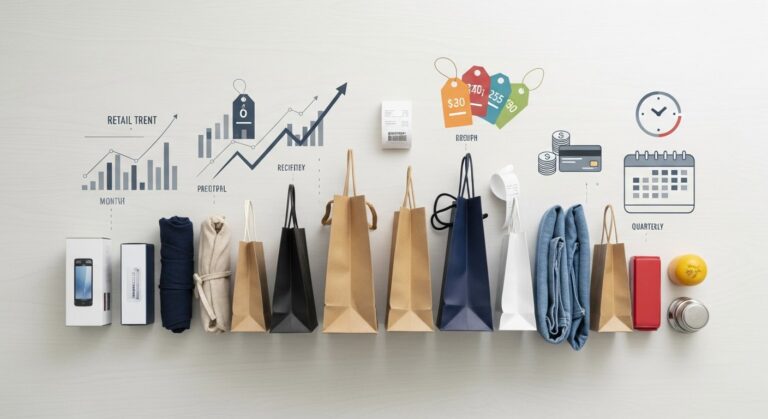
[INLINE IMAGE 1: place after second H2 | alt=”retail sales economic indicator concept illustration”]
The reliability and impact of the retail sales economic indicator depend heavily on the rigorous methods used for its collection and reporting. In the United States, for instance, the Census Bureau plays a pivotal role in gathering this data, compiling it into comprehensive monthly reports that are eagerly awaited by markets and analysts worldwide. These reports provide a timely snapshot of consumer spending trends and are often a primary driver of short-term market movements.
The Survey Process: From Stores to Statistics
The collection of retail sales data typically involves surveys distributed to a representative sample of retail businesses. These surveys gather information on sales revenue over a specific period, usually a month. The sample is carefully constructed to include businesses of various sizes, types, and geographic locations to ensure the data accurately reflects the entire retail landscape.
- Voluntary vs. Mandatory Surveys: Depending on the country and specific survey, participation might be voluntary or mandatory for certain businesses.
- Data Granularity: Businesses typically report total sales, but may also provide breakdowns by product category or sales channel (e.g., in-store vs. online).
- Adjustment for Seasonality and Calendar Effects: Raw retail sales figures can be heavily influenced by seasonal factors (e.g., holiday shopping, back-to-school) and calendar effects (e.g., more selling days in one month than another). Statistical agencies apply seasonal adjustments to remove these predictable variations, allowing for a clearer view of underlying trends. They also adjust for trading day variations.
The accuracy of these surveys is paramount. Agencies like the Census Bureau employ sophisticated statistical methodologies to estimate total retail sales from their sample, minimizing sampling errors and ensuring the data’s representativeness. This meticulous process ensures that the retail sales economic indicator provides a credible and consistent measure over time.
Key Reporting Schedules and Updates
Retail sales data is often one of the earliest pieces of economic information released for a given period, making it particularly influential. In the US, for example, the Census Bureau releases its “Advance Monthly Sales for Retail Trade and Food Services” report roughly two weeks after the end of the reporting month. This report is then typically revised in subsequent months as more complete data becomes available.
These reports include:
- Headline Figures: The total percentage change in retail sales from the previous month and year-over-year.
- Ex-Autos Sales: Retail sales excluding motor vehicles and parts, often volatile and can skew the overall picture.
- Ex-Gasoline Sales: Retail sales excluding gasoline, which can fluctuate wildly with energy prices rather than underlying consumer demand.
- Core Retail Sales: Often defined as sales excluding autos, gasoline, and sometimes building materials, offering an even “purer” read on discretionary spending.
- Category-Specific Data: Detailed breakdowns by the various types of stores mentioned earlier.
Investors and analysts pay close attention to the advance figures, but also monitor revisions, as significant changes can alter market perceptions of economic momentum. The timely and frequent nature of these reports ensures that the retail sales economic indicator remains a dynamic and highly relevant source of economic intelligence.
Understanding the Nuances: Core Retail Sales vs. Headline Figures
When the monthly retail sales report is released, financial news outlets often lead with a “headline figure,” which represents the total change in retail and food services sales. However, an astute observer of the retail sales economic indicator knows that delving deeper into the report’s underlying components is crucial for a truly accurate understanding. Not all sales are created equal, and certain volatile categories can distort the broader picture of consumer health and discretionary spending.
The Headline Number: A First Glance
The headline retail sales figure is the broadest measure, encompassing all sales across the retail and food services sectors. It’s an important starting point, as it captures the aggregate activity. For example, if the headline figure shows a strong month-over-month increase, it generally signals a robust economic environment and healthy consumer demand. Conversely, a decline can raise concerns about a slowdown.
However, the headline number can sometimes be misleading because it includes categories that are highly volatile or don’t necessarily reflect underlying consumer confidence in the same way as other purchases. The two primary culprits for this volatility are:
- Motor Vehicle Sales: Purchases of cars and trucks are large-ticket items that can fluctuate significantly month-to-month due to factors like production schedules, financing availability, and consumer preferences for new models. A surge or dip in auto sales can heavily sway the overall retail sales number without necessarily indicating a broader shift in consumer spending habits on other goods.
- Gasoline Station Sales: The value of sales at gasoline stations is directly tied to the price of crude oil and pump prices. When oil prices spike, gasoline sales figures can show a significant increase, even if consumers are buying the same amount of fuel or even less. This inflation-driven increase in value doesn’t reflect increased purchasing power or discretionary spending on other items.
Diving Deeper: “Ex-Autos” and “Ex-Gasoline”
To provide a clearer picture, analysts frequently strip out these volatile components to arrive at more refined versions of the retail sales economic indicator:
- Retail Sales Excluding Motor Vehicles and Parts: This metric removes the often-lumpy impact of vehicle sales. It gives a better sense of how consumers are spending on a wider range of goods and services, from household items to apparel and dining. This figure is often a more reliable indicator of general consumer discretionary spending trends.
- Retail Sales Excluding Gasoline Stations: By removing gasoline sales, this figure isolates spending that is not directly influenced by fluctuations in energy prices. This is particularly useful when fuel prices are volatile, as it prevents misleading conclusions about overall consumer demand due to price changes rather than volume changes.
Both of these adjusted figures offer a more stable and arguably more accurate gauge of underlying consumer demand and economic momentum than the headline number alone.
The Gold Standard for Discretionary Spending: “Core Retail Sales”
For many economists and investors, the most critical iteration of the retail sales economic indicator is “core retail sales.” While definitions can vary slightly, core retail sales typically exclude:
- Motor vehicles and parts
- Gasoline stations
- Building material and garden equipment and supplies dealers
The rationale for excluding building materials is similar to that for autos—these are often large, infrequent purchases that can be influenced by factors like housing market cycles and weather, rather than everyday consumer confidence. By removing these particularly volatile and often non-discretionary (like gasoline) or large-ticket (like cars and home improvements) categories, core retail sales provide the purest measure of what consumers are spending on a day-to-day basis for a wide range of goods and services. This metric is often considered the best proxy for gauging underlying inflationary pressures and broad consumer demand, making it a favorite of central bankers and market strategists.
Therefore, while the headline retail sales figure catches initial attention, a thorough analysis of the retail sales economic indicator always involves dissecting the report to understand the contributions of its various components, with core retail sales often providing the most insightful signal.
The Impact of Retail Sales on Key Economic Players
[INLINE IMAGE 2: place after fourth H2 | alt=”retail sales economic indicator comparison illustration”]
The ripple effect of retail sales data extends far beyond the immediate headlines, influencing the strategic decisions and financial well-being of a diverse array of economic participants. From the everyday consumer trying to manage a budget to multinational corporations and government agencies, the retail sales economic indicator serves as a crucial input for planning and forecasting. Understanding these impacts reveals the true breadth of its importance.
Impact on Consumers: Jobs, Prices, and Confidence
While consumers are the source of retail sales, they are also deeply affected by its trends:
- Employment Opportunities: A strong retail sector translates directly into more jobs, not just in retail stores but also in logistics, manufacturing, and supporting industries. When sales decline, businesses may freeze hiring or resort to layoffs, impacting household incomes and job security.
- Pricing and Inflation: High retail sales, indicative of strong demand, can sometimes give businesses the leeway to raise prices, contributing to inflation. Conversely, weak sales often force retailers to offer discounts and promotions to move inventory, potentially leading to lower prices or disinflation. Consumers experience these shifts directly in their purchasing power.
- Consumer Confidence Cycle: There’s a cyclical relationship between retail sales and consumer confidence. Strong sales often boost confidence, encouraging further spending. However, prolonged weak sales can erode confidence, leading to a tightening of belts and a more cautious financial outlook for households. This can also affect access to credit and borrowing costs as banks assess economic risk.
- Investment Decisions: Savvy consumers, especially those with investment portfolios, might use retail sales data as a signal for the broader market. Strong sales could indicate a healthy environment for equities, while weak sales might suggest caution.
Ultimately, the health of the retail sales economic indicator is intertwined with the financial health and confidence of the general populace.
Impact on Businesses: Strategy, Profitability, and Investment
For businesses, retail sales data is nothing short of critical intelligence:
- Inventory Management: Retailers rely on sales forecasts to manage inventory levels. Strong sales necessitate larger orders and quicker replenishment, while weak sales can lead to overstocking, clearance sales, and reduced profitability.
- Production Planning: Manufacturers adjust their production schedules based on anticipated retail demand. A robust retail sales outlook encourages increased production, while a downturn can lead to production cuts.
- Hiring and Workforce Planning: Businesses in the retail and supporting sectors make hiring and staffing decisions based on expected sales volumes. Peaks in sales (like holiday seasons) often require temporary staff, while sustained growth can lead to permanent job creation.
- Investment and Expansion: Companies are more likely to invest in new stores, equipment, technology, and marketing campaigns when retail sales are strong and growing. Weak sales, however, can lead to deferred investments or even closures.
- Profit Margins: High sales volumes often lead to economies of scale and better profit margins. Conversely, weak sales can force price reductions and erode profitability, affecting shareholder value and business viability.
- Competitor Analysis: Businesses also use the aggregated retail sales economic indicator to gauge their performance against the broader market and their competitors, identifying areas for improvement or strategic shifts.
In essence, retail sales data dictates the operational rhythm and strategic direction for vast swathes of the private sector.
Impact on Government and Policymakers: Fiscal and Monetary Strategies
Government bodies and central banks are keen observers of the retail sales economic indicator for crafting both fiscal and monetary policy:
- Fiscal Policy: Governments consider retail sales trends when making decisions about tax policies, social welfare programs, and infrastructure spending. Strong sales suggest a healthy tax base from sales taxes and corporate profits, providing more revenue for public services. During downturns indicated by weak retail sales, governments might implement stimulus packages or tax cuts to encourage spending.
- Monetary Policy: Central banks, like the Federal Reserve in the US, scrutinize retail sales as a key input for setting interest rates. Strong, inflationary retail sales might prompt a central bank to raise interest rates to cool down demand and control inflation. Conversely, persistently weak retail sales could lead to interest rate cuts to stimulate borrowing and spending, especially if the economy is facing deflationary pressures. They use this data to assess the economy’s overall health and the effectiveness of previous policy actions.
- Economic Forecasting: Retail sales are a critical component in government economists’ models for forecasting GDP growth, employment, and inflation, informing long-term strategic planning.
The retail sales economic indicator, therefore, acts as a guiding star for those at the helm of national economies, informing decisions that affect every citizen and business within their jurisdiction.
Interpreting Retail Sales Trends: Growth, Stagnation, and Decline
Understanding the raw numbers of the retail sales economic indicator is only the first step; true insight comes from interpreting the trends these numbers reveal. Retail sales data can signal robust economic expansion, warning signs of stagnation, or confirm fears of an economic downturn. Learning to read these signals is essential for any informed individual or professional.
Signals of Growth: A Thriving Economy
Consistent, positive growth in retail sales is a hallmark of a healthy and expanding economy. When the monthly or year-over-year figures show steady increases, it suggests several positive underlying conditions:
- Robust Consumer Confidence: Consumers are feeling secure in their jobs and optimistic about their future incomes, leading them to spend more freely.
- Strong Labor Market: Low unemployment rates and rising wages provide the necessary disposable income for increased purchasing.
- Inflationary Pressures (Managed): Moderate retail sales growth can accommodate some level of healthy inflation, indicating strong demand. However, excessively high growth might signal overheating and potential runaway inflation.
- Business Expansion: Retailers and manufacturers respond to increased demand by expanding operations, investing in new inventory, and hiring more staff, creating a positive feedback loop.
Growth figures are often presented as month-over-month (MoM) and year-over-year (YoY) percentage changes. While MoM changes provide immediate insight into recent activity, YoY changes are generally more reliable for discerning underlying trends, as they smooth out monthly volatility and seasonal effects more effectively, even with seasonal adjustments in MoM data. A sustained period of positive YoY growth in core retail sales is a strong indicator of economic strength.
Learn more about the relationship between employment and economic growth.
The Warning Signs of Stagnation: A Cause for Concern
Stagnant retail sales, characterized by flat or minimal growth, are often a warning sign that economic momentum is faltering. This phase is distinct from outright decline and can be more insidious, as it might appear stable on the surface but masks underlying weaknesses:
- Erosion of Purchasing Power: Even if nominal retail sales are flat, if inflation is positive, real (inflation-adjusted) retail sales are actually declining, meaning consumers are buying less for the same amount of money.
- Weakening Consumer Confidence: Consumers might be becoming more cautious, saving more, or delaying discretionary purchases due to uncertainty about their jobs, incomes, or the broader economic outlook.
- Inventory Buildup: Retailers might find themselves with excess inventory as sales fail to meet expectations, leading to discounts, reduced future orders, and potential profit squeezes.
- Leading to Slowdowns: Prolonged stagnation in the retail sales economic indicator can foreshadow a broader economic slowdown or even a recession, as consumer demand is a major driver of GDP.
Analysts look for a pattern of several consecutive months of flat or near-zero growth, especially in core retail sales, to identify stagnation. This can prompt policymakers to consider stimulative measures.
Confirming a Downturn: Economic Contraction
A sustained period of declining retail sales is one of the most unambiguous signals of an economic contraction or recession. This indicates a significant pull-back in consumer spending, with severe implications for the economy:
- Reduced Demand: Consumers are actively cutting back on purchases, often due to job losses, wage stagnation, high debt levels, or severe economic uncertainty.
- Business Failures and Layoffs: Declining sales translate into reduced revenue and profits for businesses, leading to cost-cutting measures, including layoffs and, in severe cases, bankruptcies.
- Deflationary Pressures: Widespread discounting to entice reluctant consumers can lead to falling prices (deflation), which can further discourage spending as consumers wait for even lower prices.
- Deepening Recession: A vicious cycle can form where declining sales lead to job losses, which further reduces consumer income and spending, deepening the recession.
When the retail sales economic indicator shows significant month-over-month and year-over-year declines, particularly across multiple categories and especially in core retail sales, it provides strong evidence that the economy is contracting. Policymakers often react with aggressive fiscal and monetary interventions during such periods to try and reverse the trend.
Interpreting retail sales trends requires looking at the big picture, understanding the components, and considering the data in the context of other economic indicators to form a comprehensive view of economic health.
Factors Influencing Retail Sales Performance
The retail sales economic indicator is not determined in a vacuum; it is the culmination of numerous interconnected factors that shape consumer behavior and spending patterns. Understanding these influences is crucial for forecasting future trends and for consumers and businesses alike to anticipate potential shifts in the economic landscape.
Macroeconomic Conditions: The Broad Strokes
- Employment and Wages: Perhaps the most significant driver. When unemployment is low and wages are rising, consumers have more disposable income and feel more secure, leading to increased spending. Conversely, high unemployment and stagnant wages dampen retail sales.
- Inflation and Deflation: Inflation erodes purchasing power, meaning consumers can buy less with the same amount of money. While moderate inflation (2-3%) is often associated with a healthy economy, high inflation can suppress real retail sales. Deflation, on the other hand, can lead consumers to delay purchases, expecting prices to fall further.
- Interest Rates and Credit Availability: Lower interest rates make borrowing cheaper, encouraging purchases of big-ticket items like cars and appliances, which are often financed. Easy access to credit can also fuel spending. Higher rates and tighter credit conditions can act as a brake on retail sales.
- Consumer Confidence and Sentiment: While not a direct measure of spending, consumer confidence surveys (like the Conference Board’s Consumer Confidence Index or the University of Michigan’s consumer sentiment index) are strong leading indicators. Optimistic consumers are more likely to spend, while pessimistic ones tend to save.
- Government Policies (Fiscal and Monetary): Fiscal stimulus (e.g., tax cuts, direct payments) can directly boost retail sales. Conversely, tax increases can dampen spending. Monetary policy, through interest rate adjustments, significantly impacts borrowing costs and thus consumer spending on financed goods.
- Global Economic Health: For economies heavily reliant on exports or integrated into global supply chains, international economic conditions can indirectly impact domestic employment, wages, and thus retail sales.
Demographic Shifts and Social Trends: Evolving Preferences
- Population Growth and Age Distribution: A growing population naturally leads to more consumers. Changes in age demographics (e.g., an aging population, a growing youth demographic) influence demand for different types of goods and services.
- Urbanization vs. Suburban/Rural Shifts: Where people live can influence retail formats (e.g., growth of city-center boutiques vs. large suburban malls).
- Lifestyle Changes: Trends like health and wellness, sustainability, experiences over possessions, or the rise of remote work can shift spending patterns across retail categories. For example, a focus on health might boost sales of organic foods and fitness equipment, while remote work might reduce spending on professional attire but increase spending on home office supplies.
Explore how demographic trends influence investment opportunities.
Technological Advancements and Industry Disruptions: New Ways to Shop
- E-commerce Growth: The continuous shift from brick-and-mortar stores to online shopping fundamentally alters how and where retail sales occur. This changes the dynamics of traditional retail and boosts “nonstore retailers.”
- Mobile Shopping and Payment Technologies: The proliferation of smartphones and convenient digital payment methods makes shopping easier and more accessible, potentially increasing impulse purchases and overall spending.
- Supply Chain Innovations: Advances in logistics and supply chain management can influence product availability, delivery times, and ultimately consumer satisfaction and purchasing decisions.
- Personalization and AI: Data analytics and AI-driven personalization can enhance the shopping experience, potentially boosting sales by offering more relevant products to consumers.
Seasonal and Calendar Effects: Predictable Fluctuations
- Holiday Seasons: Major holidays (e.g., year-end holidays, Valentine’s Day, Mother’s Day) reliably drive surges in retail sales across many categories.
- Back-to-School Season: A significant boost for apparel, electronics, and school supplies.
- Weather Patterns: Extreme weather events (heavy snow, heatwaves) can temporarily disrupt retail sales, particularly for physical stores. Conversely, favorable weather can boost outdoor recreational sales.
- Number of Shopping Days: The number of weekdays, weekends, and holidays in a given month can slightly impact monthly retail sales figures. This is why seasonal and trading-day adjustments are so important for the retail sales economic indicator.
Each of these factors contributes to the dynamic nature of the retail sales economic indicator. A holistic view requires considering how these elements interact and collectively influence consumer behavior, shaping the broader economic narrative.
Retail Sales as a Predictor of Economic Cycles
One of the most valuable aspects of the retail sales economic indicator is its utility as a forward-looking signal for the broader economy. Because consumer spending is such a dominant component of GDP, significant shifts in retail sales often precede or coincide with turning points in the economic cycle, making it a crucial tool for economists and investors trying to anticipate recessions or expansions.
Leading Indicator for Recessions and Expansions
While some economic indicators are coincident (reflecting the current state of the economy) or lagging (confirming a trend after it has started), retail sales often exhibit characteristics of a leading indicator, particularly when analyzing core retail sales:
- Predicting Recessions: A sustained decline in retail sales, especially core retail sales, across multiple categories, can often be one of the earliest signs that an economy is heading into a recession. As consumers become more cautious, perhaps due to job insecurity or rising debt, they cut back on discretionary spending first. This reduction in demand cascades through the economy, leading to reduced production, layoffs, and a full-blown economic downturn. A significant drop in auto sales, for instance, can often signal broader consumer retrenchment.
- Signaling Expansions: Conversely, a consistent rebound in retail sales, particularly after a period of stagnation or decline, can signal the economy’s emergence from a recession and the beginning of an expansionary phase. Renewed consumer confidence and spending provide the necessary impetus for businesses to increase production and hiring, kickstarting growth.
The speed and magnitude of changes in the retail sales economic indicator are key. A sharp, widespread drop is more concerning than a minor, isolated dip. Similarly, a broad-based recovery signals stronger underlying economic health.
The Interplay with Other Leading Indicators
While powerful, retail sales are rarely interpreted in isolation. Economists typically look at it in conjunction with other leading indicators to build a more complete predictive picture:
- Consumer Confidence Indices: As mentioned, confidence surveys measure consumers’ future expectations, which often translate into actual spending trends observed in retail sales. A divergence might indicate a temporary anomaly.
- Manufacturing Orders (Durable Goods): New orders for durable goods (long-lasting items like machinery and electronics) reflect business investment intentions, which can indirectly signal future retail goods availability and pricing.
- Housing Market Data: Housing starts, existing home sales, and housing permits often precede broader economic shifts. A healthy housing market can stimulate retail sales through purchases of furniture, appliances, and home improvement items.
- Stock Market Performance: While volatile, a sustained bull market can create a “wealth effect,” encouraging consumers to spend more. A prolonged bear market can have the opposite effect.
- Yield Curve: An inverted yield curve (where short-term bond yields are higher than long-term yields) has historically been a strong predictor of recessions, often preceding downturns in retail sales.
By integrating the retail sales economic indicator with these other data points, analysts can enhance their predictive models, offering more robust forecasts for the trajectory of economic cycles.
Caution: Not a Perfect Crystal Ball
Despite its predictive power, it’s important to remember that the retail sales economic indicator is not a perfect crystal ball. There can be false signals or unique circumstances that alter its typical predictive pattern:
- One-off Events: Major natural disasters or unexpected global events can cause temporary spikes or dips in retail sales that don’t reflect underlying economic trends.
- Data Revisions: Initial retail sales reports are often revised in subsequent months. Significant revisions can change the interpretation of past trends.
- Shifting Consumer Behavior: Long-term structural changes, such as the increasing share of spending on services over goods, can alter how retail sales correlate with overall economic health.
Nonetheless, for those seeking to understand and anticipate economic shifts, the retail sales economic indicator remains an indispensable tool, offering timely and direct insights into the heartbeat of consumer activity, which in turn drives much of the economy’s ebb and flow.
Comparing Retail Sales with Other Economic Indicators
While the retail sales economic indicator offers unique insights into consumer spending, its full analytical power is unleashed when viewed in concert with other key economic metrics. Each indicator provides a different lens through which to examine the economy, and cross-referencing them helps paint a more complete and nuanced picture, confirming trends, identifying divergences, and refining forecasts.
Retail Sales vs. Gross Domestic Product (GDP)
Relationship: Retail sales are a major component of personal consumption expenditures, which typically constitute the largest part of GDP. Therefore, retail sales contribute directly to GDP growth.
Differences:
- Scope: Retail sales focus specifically on goods and food services sold to consumers. GDP is a much broader measure, encompassing all goods and services produced in an economy (consumption, investment, government spending, net exports).
- Timeliness: Retail sales data is usually released monthly, providing a very timely snapshot of consumer activity. GDP is typically released quarterly, making retail sales a more current indicator of consumer-driven economic momentum.
- Services vs. Goods: Retail sales primarily track goods, whereas GDP includes a vast array of services (healthcare, education, legal, financial, etc.). As economies mature, the service sector often grows in importance relative to goods, meaning retail sales alone may not capture the full extent of consumer activity in service-heavy economies.
Interpretation: Strong retail sales usually foreshadow or confirm healthy consumption components within GDP. A divergence, where retail sales are robust but GDP is weak, might suggest other areas of the economy (like business investment or net exports) are struggling, or that consumers are shifting spending heavily towards services not captured by retail sales.
Retail Sales vs. Consumer Price Index (CPI)
Relationship: Both indicators relate to consumer activity and prices. Retail sales reflect the nominal value of transactions, while CPI measures the change in prices paid by consumers for a basket of goods and services.
Differences:
- What They Measure: Retail sales measure the dollar volume of goods sold. CPI measures the rate of inflation (or deflation).
- Impact of Prices: Higher prices (inflation) can make retail sales look stronger in nominal terms, even if the actual volume of goods sold has decreased or remained flat. CPI explicitly accounts for price changes.
Interpretation:
A comparison of nominal retail sales growth with CPI is crucial for understanding real consumer spending:
- If nominal retail sales are growing faster than CPI, it indicates that consumers are genuinely buying more goods and services (real growth).
- If nominal retail sales growth is slower than or equal to CPI, it suggests that consumers are buying fewer or the same amount of goods and services, and any reported sales growth is primarily due to higher prices (stagnant or declining real growth). This is a significant distinction for policymakers.
Retail Sales vs. Employment Data (Nonfarm Payrolls, Unemployment Rate)
Relationship: A strong labor market (low unemployment, rising nonfarm payrolls, wage growth) provides consumers with the income and confidence to spend, directly fueling retail sales.
Differences:
- Causality: Employment data often acts as a precursor or foundational element for retail sales. People need jobs and income before they can spend.
- Timing: While correlated, employment data might lag or lead retail sales in certain phases of the economic cycle. For example, job losses might be announced, and then consumers cut back, leading to a retail sales decline.
Interpretation: A disconnect between strong employment figures and weak retail sales might suggest a cautious consumer base, possibly burdened by debt or high living costs, who are prioritizing savings over spending. Conversely, robust retail sales without significant job growth could indicate reliance on credit or drawing down savings.
Retail Sales vs. Consumer Confidence Surveys
Relationship: Consumer confidence surveys gauge consumer sentiment and expectations about future economic conditions, which directly influence their willingness to spend, thereby impacting retail sales.
Differences:
- Behavior vs. Intent: Confidence surveys measure intent and perception. Retail sales measure actual behavior (what people actually bought).
- Lag/Lead: Confidence can sometimes lead actual spending, as sentiment often shifts before spending habits fully adjust.
Interpretation: When consumer confidence is high, retail sales usually follow suit. A significant gap where confidence is high but retail sales are low could indicate factors like lack of desirable products, high prices, or external economic shocks preventing spending despite optimism. Similarly, low confidence but strong retail sales might suggest resilience or necessary spending despite worries.
| Economic Indicator | Primary Focus | Relationship to Retail Sales | Key Divergence Insight |
|---|---|---|---|
| Gross Domestic Product (GDP) | Total economic output (goods & services) | Retail sales are a major component of the consumption slice of GDP. | Strong retail sales but weak GDP could mean low business investment or weak net exports. |
| Consumer Price Index (CPI) | Inflation rate (change in prices) | Complements retail sales to show “real” (inflation-adjusted) spending power. | Nominal retail sales up, but CPI up more, means consumers are buying less in real terms. |
| Employment Data | Job creation, unemployment rate, wages | Provides income and confidence for consumers to spend; often a precursor to retail trends. | High employment but low retail sales could signal consumer caution or high savings. |
| Consumer Confidence | Consumer optimism/pessimism about future | Measures intent to spend; often a leading indicator for retail sales. | High confidence but low retail sales might indicate external barriers to spending. |
| Industrial Production | Output of manufacturing, mining, utilities | Reflects supply side’s response to demand; consumer goods manufacturing aligns with retail. | Strong retail sales but low industrial production could point to reliance on imports. |
By comparing the retail sales economic indicator with these other robust metrics, analysts can develop a comprehensive understanding of economic health, identifying areas of strength and weakness and providing more accurate forecasts for future economic trajectories.
Strategies for Individuals and Businesses to Respond to Retail Sales Trends
The retail sales economic indicator offers more than just academic insight; it provides actionable intelligence for both individuals managing their personal finances and businesses strategizing for growth and stability. Recognizing and adapting to these trends can lead to better financial outcomes and more resilient operations.
For Individuals: Navigating Personal Finance
Understanding retail sales trends can help individuals make more informed financial decisions:
- Budgeting and Saving:
- During Strong Retail Sales (Economic Expansion): While robust sales might reflect a healthy economy and potentially rising wages, it’s also a time when inflationary pressures can build. Individuals should prioritize increasing their savings rate and investing to outpace inflation. Resist the urge for excessive discretionary spending fueled by “keeping up with the Joneses.”
- During Weak/Declining Retail Sales (Economic Contraction/Stagnation): This signals economic caution. Individuals should focus on building an emergency fund, reducing discretionary spending, and paying down high-interest debt. Job security might be at risk, so financial preparedness is paramount.
- Investment Decisions:
- Sector-Specific Plays: Strong retail sales data for a particular category (e.g., e-commerce, automotive, luxury goods) can signal investment opportunities in companies within those sectors. Conversely, weak sales in a sector might warrant caution or short-selling consideration.
- Broader Market Sentiment: Consistently strong or weak retail sales can influence overall stock market sentiment. Investors might adjust their exposure to equities based on the perceived health of consumer spending, which is a major driver of corporate profits.
- Inflation Hedging: If retail sales growth significantly outpaces real growth (due to inflation), individuals might consider inflation-hedging investments like TIPS (Treasury Inflation-Protected Securities) or real estate.
- Career and Job Market Awareness:
- Industry Health: If retail sales are strong in a particular sector, it generally means that sector is hiring and growing. This can inform career choices or decisions about changing jobs.
- Economic Resilience: In times of declining retail sales, understanding which sectors are hit hardest can help
The Retail Sales Economic Indicator: Unpacking Its Power for Financial Insights
Affiliate disclosure: This article may contain affiliate links. Recommendations are independent and editorially driven.
In the complex tapestry of economic data, few threads are as vibrant and indicative of overall health as the retail sales economic indicator. For individuals, investors, business owners, and policymakers alike, understanding the nuances of retail sales provides a critical pulse check on consumer spending, market confidence, and the broader economic landscape. As we navigate the economic realities of 2026 and beyond, the ability to interpret these figures becomes an invaluable skill, offering foresight into everything from potential market shifts to personal financial planning strategies. This comprehensive guide from diaalnews will delve deep into what makes retail sales such a pivotal metric, how it’s measured, its profound impact, and how you can leverage this knowledge to make more informed decisions.
Consumer spending is the engine of most modern economies, and retail sales stand as its most direct and frequently updated measure. When consumers feel confident about their jobs, their income, and the future, they tend to spend more. Conversely, periods of uncertainty or financial strain often manifest as a noticeable slowdown in retail activity. This direct correlation makes the retail sales economic indicator a leading barometer for economists attempting to predict recessions or expansions, a critical tool for businesses planning inventory and staffing, and a key piece of the puzzle for investors evaluating market sectors. Join us as we explore the multifaceted role of retail sales and empower you with the insights needed to navigate the ever-evolving economic terrain.
What Are Retail Sales and Why Do They Matter So Much?
At its core, retail sales represent the total revenue generated by stores and online platforms selling goods and services directly to consumers. It’s a broad category that encompasses virtually every purchase made by the general public, from groceries and gasoline to clothing, electronics, cars, and even dining out. This comprehensive scope is precisely what lends the retail sales economic indicator its significant weight and relevance. Unlike other economic data points that might focus on specific sectors or abstract financial flows, retail sales offer a tangible, real-world snapshot of how households are deploying their disposable income.
The importance of retail sales stems from several key economic principles. Firstly, consumer spending typically accounts for a substantial portion—often two-thirds or more—of a nation’s Gross Domestic Product (GDP). This means that a robust retail sector is almost synonymous with a healthy, growing economy. When retail sales are strong, it suggests that consumers have the purchasing power and the willingness to spend, which in turn fuels production, creates jobs, and generates corporate profits. Conversely, a sustained decline in retail sales can signal a weakening economy, potentially leading to reduced production, layoffs, and a general economic contraction.
Defining the Scope: What’s Included in Retail Sales?
Retail sales data is meticulously collected and categorized to provide a detailed picture of consumer behavior. It typically includes sales from a vast array of retail establishments, segmented into categories such as:
- Motor vehicle and parts dealers
- Furniture and home furnishings stores
- Electronics and appliance stores
- Building material and garden equipment and supplies dealers
- Food and beverage stores
- Health and personal care stores
- Gasoline stations
- Clothing and clothing accessories stores
- Sporting goods, hobby, book, and music stores
- General merchandise stores (department stores, warehouse clubs)
- Miscellaneous store retailers (florists, office supplies, pet supplies, etc.)
- Nonstore retailers (e-commerce, mail-order, direct selling)
- Food services and drinking places (restaurants, bars)
This granular breakdown allows economists and analysts to pinpoint specific areas of strength or weakness within consumer spending, offering insights into shifting preferences, technological adoption (e.g., growth of nonstore retailers), and the impact of various economic factors on different sectors of the retail market.
The “Why It Matters” Beyond GDP Numbers
While the direct link to GDP is crucial, the retail sales economic indicator’s significance extends further. It acts as a bellwether for:
- Business Confidence: Retailers often adjust their inventory levels, hiring plans, and investment strategies based on their sales forecasts. Strong retail sales encourage expansion, while weak sales can lead to contraction.
- Employment Trends: The retail sector itself is a major employer. Robust sales often correlate with increased hiring in retail, logistics, and manufacturing, contributing significantly to overall employment figures.
- Inflationary Pressures: Sustained strong demand, as reflected in high retail sales, can contribute to inflationary pressures if supply cannot keep pace. Conversely, weak sales might signal disinflationary trends.
- Consumer Sentiment: While distinct from direct consumer sentiment surveys, retail sales data provides an observable outcome of consumer confidence. People spend when they feel good about their financial situation and future prospects.
- Monetary Policy Decisions: Central banks closely monitor retail sales as part of their assessment of economic health and inflationary pressures, which can influence interest rate decisions.
Understanding these broader implications allows for a much richer interpretation of the retail sales economic indicator, moving beyond a simple number to a comprehensive understanding of the economy’s vital signs.
How Retail Sales Data is Collected and Reported
[INLINE IMAGE 1: place after second H2 | alt=”retail sales economic indicator concept illustration”]
The reliability and impact of the retail sales economic indicator depend heavily on the rigorous methods used for its collection and reporting. In the United States, for instance, the Census Bureau plays a pivotal role in gathering this data, compiling it into comprehensive monthly reports that are eagerly awaited by markets and analysts worldwide. These reports provide a timely snapshot of consumer spending trends and are often a primary driver of short-term market movements.
The Survey Process: From Stores to Statistics
The collection of retail sales data typically involves surveys distributed to a representative sample of retail businesses. These surveys gather information on sales revenue over a specific period, usually a month. The sample is carefully constructed to include businesses of various sizes, types, and geographic locations to ensure the data accurately reflects the entire retail landscape.
- Voluntary vs. Mandatory Surveys: Depending on the country and specific survey, participation might be voluntary or mandatory for certain businesses.
- Data Granularity: Businesses typically report total sales, but may also provide breakdowns by product category or sales channel (e.g., in-store vs. online).
- Adjustment for Seasonality and Calendar Effects: Raw retail sales figures can be heavily influenced by seasonal factors (e.g., holiday shopping, back-to-school) and calendar effects (e.g., more selling days in one month than another). Statistical agencies apply seasonal adjustments to remove these predictable variations, allowing for a clearer view of underlying trends. They also adjust for trading day variations.
The accuracy of these surveys is paramount. Agencies like the Census Bureau employ sophisticated statistical methodologies to estimate total retail sales from their sample, minimizing sampling errors and ensuring the data’s representativeness. This meticulous process ensures that the retail sales economic indicator provides a credible and consistent measure over time.
Key Reporting Schedules and Updates
Retail sales data is often one of the earliest pieces of economic information released for a given period, making it particularly influential. In the US, for example, the Census Bureau releases its “Advance Monthly Sales for Retail Trade and Food Services” report roughly two weeks after the end of the reporting month. This report is then typically revised in subsequent months as more complete data becomes available.
These reports include:
- Headline Figures: The total percentage change in retail sales from the previous month and year-over-year.
- Ex-Autos Sales: Retail sales excluding motor vehicles and parts, often volatile and can skew the overall picture.
- Ex-Gasoline Sales: Retail sales excluding gasoline, which can fluctuate wildly with energy prices rather than underlying consumer demand.
- Core Retail Sales: Often defined as sales excluding autos, gasoline, and sometimes building materials, offering an even “purer” read on discretionary spending.
- Category-Specific Data: Detailed breakdowns by the various types of stores mentioned earlier.
Investors and analysts pay close attention to the advance figures, but also monitor revisions, as significant changes can alter market perceptions of economic momentum. The timely and frequent nature of these reports ensures that the retail sales economic indicator remains a dynamic and highly relevant source of economic intelligence.
Understanding the Nuances: Core Retail Sales vs. Headline Figures
When the monthly retail sales report is released, financial news outlets often lead with a “headline figure,” which represents the total change in retail and food services sales. However, an astute observer of the retail sales economic indicator knows that delving deeper into the report’s underlying components is crucial for a truly accurate understanding. Not all sales are created equal, and certain volatile categories can distort the broader picture of consumer health and discretionary spending.
The Headline Number: A First Glance
The headline retail sales figure is the broadest measure, encompassing all sales across the retail and food services sectors. It’s an important starting point, as it captures the aggregate activity. For example, if the headline figure shows a strong month-over-month increase, it generally signals a robust economic environment and healthy consumer demand. Conversely, a decline can raise concerns about a slowdown.
However, the headline number can sometimes be misleading because it includes categories that are highly volatile or don’t necessarily reflect underlying consumer confidence in the same way as other purchases. The two primary culprits for this volatility are:
- Motor Vehicle Sales: Purchases of cars and trucks are large-ticket items that can fluctuate significantly month-to-month due to factors like production schedules, financing availability, and consumer preferences for new models. A surge or dip in auto sales can heavily sway the overall retail sales number without necessarily indicating a broader shift in consumer spending habits on other goods.
- Gasoline Station Sales: The value of sales at gasoline stations is directly tied to the price of crude oil and pump prices. When oil prices spike, gasoline sales figures can show a significant increase, even if consumers are buying the same amount of fuel or even less. This inflation-driven increase in value doesn’t reflect increased purchasing power or discretionary spending on other items.
Diving Deeper: “Ex-Autos” and “Ex-Gasoline”
To provide a clearer picture, analysts frequently strip out these volatile components to arrive at more refined versions of the retail sales economic indicator:
- Retail Sales Excluding Motor Vehicles and Parts: This metric removes the often-lumpy impact of vehicle sales. It gives a better sense of how consumers are spending on a wider range of goods and services, from household items to apparel and dining. This figure is often a more reliable indicator of general consumer discretionary spending trends.
- Retail Sales Excluding Gasoline Stations: By removing gasoline sales, this figure isolates spending that is not directly influenced by fluctuations in energy prices. This is particularly useful when fuel prices are volatile, as it prevents misleading conclusions about overall consumer demand due to price changes rather than volume changes.
Both of these adjusted figures offer a more stable and arguably more accurate gauge of underlying consumer demand and economic momentum than the headline number alone.
The Gold Standard for Discretionary Spending: “Core Retail Sales”
For many economists and investors, the most critical iteration of the retail sales economic indicator is “core retail sales.” While definitions can vary slightly, core retail sales typically exclude:
- Motor vehicles and parts
- Gasoline stations
- Building material and garden equipment and supplies dealers
The rationale for excluding building materials is similar to that for autos—these are often large, infrequent purchases that can be influenced by factors like housing market cycles and weather, rather than everyday consumer confidence. By removing these particularly volatile and often non-discretionary (like gasoline) or large-ticket (like cars and home improvements) categories, core retail sales provide the purest measure of what consumers are spending on a day-to-day basis for a wide range of goods and services. This metric is often considered the best proxy for gauging underlying inflationary pressures and broad consumer demand, making it a favorite of central bankers and market strategists.
Therefore, while the headline retail sales figure catches initial attention, a thorough analysis of the retail sales economic indicator always involves dissecting the report to understand the contributions of its various components, with core retail sales often providing the most insightful signal.
The Impact of Retail Sales on Key Economic Players
[INLINE IMAGE 2: place after fourth H2 | alt=”retail sales economic indicator comparison illustration”]
The ripple effect of retail sales data extends far beyond the immediate headlines, influencing the strategic decisions and financial well-being of a diverse array of economic participants. From the everyday consumer trying to manage a budget to multinational corporations and government agencies, the retail sales economic indicator serves as a crucial input for planning and forecasting. Understanding these impacts reveals the true breadth of its importance.
Impact on Consumers: Jobs, Prices, and Confidence
While consumers are the source of retail sales, they are also deeply affected by its trends:
- Employment Opportunities: A strong retail sector translates directly into more jobs, not just in retail stores but also in logistics, manufacturing, and supporting industries. When sales decline, businesses may freeze hiring or resort to layoffs, impacting household incomes and job security.
- Pricing and Inflation: High retail sales, indicative of strong demand, can sometimes give businesses the leeway to raise prices, contributing to inflation. Conversely, weak sales often force retailers to offer discounts and promotions to move inventory, potentially leading to lower prices or disinflation. Consumers experience these shifts directly in their purchasing power.
- Consumer Confidence Cycle: There’s a cyclical relationship between retail sales and consumer confidence. Strong sales often boost confidence, encouraging further spending. However, prolonged weak sales can erode confidence, leading to a tightening of belts and a more cautious financial outlook for households. This can also affect access to credit and borrowing costs as banks assess economic risk.
- Investment Decisions: Savvy consumers, especially those with investment portfolios, might use retail sales data as a signal for the broader market. Strong sales could indicate a healthy environment for equities, while weak sales might suggest caution.
Ultimately, the health of the retail sales economic indicator is intertwined with the financial health and confidence of the general populace.
Impact on Businesses: Strategy, Profitability, and Investment
For businesses, retail sales data is nothing short of critical intelligence:
- Inventory Management: Retailers rely on sales forecasts to manage inventory levels. Strong sales necessitate larger orders and quicker replenishment, while weak sales can lead to overstocking, clearance sales, and reduced profitability.
- Production Planning: Manufacturers adjust their production schedules based on anticipated retail demand. A robust retail sales outlook encourages increased production, while a downturn can lead to production cuts.
- Hiring and Workforce Planning: Businesses in the retail and supporting sectors make hiring and staffing decisions based on expected sales volumes. Peaks in sales (like holiday seasons) often require temporary staff, while sustained growth can lead to permanent job creation.
- Investment and Expansion: Companies are more likely to invest in new stores, equipment, technology, and marketing campaigns when retail sales are strong and growing. Weak sales, however, can lead to deferred investments or even closures.
- Profit Margins: High sales volumes often lead to economies of scale and better profit margins. Conversely, weak sales can force price reductions and erode profitability, affecting shareholder value and business viability.
- Competitor Analysis: Businesses also use the aggregated retail sales economic indicator to gauge their performance against the broader market and their competitors, identifying areas for improvement or strategic shifts.
In essence, retail sales data dictates the operational rhythm and strategic direction for vast swathes of the private sector.
Impact on Government and Policymakers: Fiscal and Monetary Strategies
Government bodies and central banks are keen observers of the retail sales economic indicator for crafting both fiscal and monetary policy:
- Fiscal Policy: Governments consider retail sales trends when making decisions about tax policies, social welfare programs, and infrastructure spending. Strong sales suggest a healthy tax base from sales taxes and corporate profits, providing more revenue for public services. During downturns indicated by weak retail sales, governments might implement stimulus packages or tax cuts to encourage spending.
- Monetary Policy: Central banks, like the Federal Reserve in the US, scrutinize retail sales as a key input for setting interest rates. Strong, inflationary retail sales might prompt a central bank to raise interest rates to cool down demand and control inflation. Conversely, persistently weak retail sales could lead to interest rate cuts to stimulate borrowing and spending, especially if the economy is facing deflationary pressures. They use this data to assess the economy’s overall health and the effectiveness of previous policy actions.
- Economic Forecasting: Retail sales are a critical component in government economists’ models for forecasting GDP growth, employment, and inflation, informing long-term strategic planning.
The retail sales economic indicator, therefore, acts as a guiding star for those at the helm of national economies, informing decisions that affect every citizen and business within their jurisdiction.
Interpreting Retail Sales Trends: Growth, Stagnation, and Decline
Understanding the raw numbers of the retail sales economic indicator is only the first step; true insight comes from interpreting the trends these numbers reveal. Retail sales data can signal robust economic expansion, warning signs of stagnation, or confirm fears of an economic downturn. Learning to read these signals is essential for any informed individual or professional.
Signals of Growth: A Thriving Economy
Consistent, positive growth in retail sales is a hallmark of a healthy and expanding economy. When the monthly or year-over-year figures show steady increases, it suggests several positive underlying conditions:
- Robust Consumer Confidence: Consumers are feeling secure in their jobs and optimistic about their future incomes, leading them to spend more freely.
- Strong Labor Market: Low unemployment rates and rising wages provide the necessary disposable income for increased purchasing.
- Inflationary Pressures (Managed): Moderate retail sales growth can accommodate some level of healthy inflation, indicating strong demand. However, excessively high growth might signal overheating and potential runaway inflation.
- Business Expansion: Retailers and manufacturers respond to increased demand by expanding operations, investing in new inventory, and hiring more staff, creating a positive feedback loop.
Growth figures are often presented as month-over-month (MoM) and year-over-year (YoY) percentage changes. While MoM changes provide immediate insight into recent activity, YoY changes are generally more reliable for discerning underlying trends, as they smooth out monthly volatility and seasonal effects more effectively, even with seasonal adjustments in MoM data. A sustained period of positive YoY growth in core retail sales is a strong indicator of economic strength.
Learn more about the relationship between employment and economic growth.
The Warning Signs of Stagnation: A Cause for Concern
Stagnant retail sales, characterized by flat or minimal growth, are often a warning sign that economic momentum is faltering. This phase is distinct from outright decline and can be more insidious, as it might appear stable on the surface but masks underlying weaknesses:
- Erosion of Purchasing Power: Even if nominal retail sales are flat, if inflation is positive, real (inflation-adjusted) retail sales are actually declining, meaning consumers are buying less for the same amount of money.
- Weakening Consumer Confidence: Consumers might be becoming more cautious, saving more, or delaying discretionary purchases due to uncertainty about their jobs, incomes, or the broader economic outlook.
- Inventory Buildup: Retailers might find themselves with excess inventory as sales fail to meet expectations, leading to discounts, reduced future orders, and potential profit squeezes.
- Leading to Slowdowns: Prolonged stagnation in the retail sales economic indicator can foreshadow a broader economic slowdown or even a recession, as consumer demand is a major driver of GDP.
Analysts look for a pattern of several consecutive months of flat or near-zero growth, especially in core retail sales, to identify stagnation. This can prompt policymakers to consider stimulative measures.
Confirming a Downturn: Economic Contraction
A sustained period of declining retail sales is one of the most unambiguous signals of an economic contraction or recession. This indicates a significant pull-back in consumer spending, with severe implications for the economy:
- Reduced Demand: Consumers are actively cutting back on purchases, often due to job losses, wage stagnation, high debt levels, or severe economic uncertainty.
- Business Failures and Layoffs: Declining sales translate into reduced revenue and profits for businesses, leading to cost-cutting measures, including layoffs and, in severe cases, bankruptcies.
- Deflationary Pressures: Widespread discounting to entice reluctant consumers can lead to falling prices (deflation), which can further discourage spending as consumers wait for even lower prices.
- Deepening Recession: A vicious cycle can form where declining sales lead to job losses, which further reduces consumer income and spending, deepening the recession.
When the retail sales economic indicator shows significant month-over-month and year-over-year declines, particularly across multiple categories and especially in core retail sales, it provides strong evidence that the economy is contracting. Policymakers often react with aggressive fiscal and monetary interventions during such periods to try and reverse the trend.
Interpreting retail sales trends requires looking at the big picture, understanding the components, and considering the data in the context of other economic indicators to form a comprehensive view of economic health.
Factors Influencing Retail Sales Performance
The retail sales economic indicator is not determined in a vacuum; it is the culmination of numerous interconnected factors that shape consumer behavior and spending patterns. Understanding these influences is crucial for forecasting future trends and for consumers and businesses alike to anticipate potential shifts in the economic landscape.
Macroeconomic Conditions: The Broad Strokes
- Employment and Wages: Perhaps the most significant driver. When unemployment is low and wages are rising, consumers have more disposable income and feel more secure, leading to increased spending. Conversely, high unemployment and stagnant wages dampen retail sales.
- Inflation and Deflation: Inflation erodes purchasing power, meaning consumers can buy less with the same amount of money. While moderate inflation (2-3%) is often associated with a healthy economy, high inflation can suppress real retail sales. Deflation, on the other hand, can lead consumers to delay purchases, expecting prices to fall further.
- Interest Rates and Credit Availability: Lower interest rates make borrowing cheaper, encouraging purchases of big-ticket items like cars and appliances, which are often financed. Easy access to credit can also fuel spending. Higher rates and tighter credit conditions can act as a brake on retail sales.
- Consumer Confidence and Sentiment: While not a direct measure of spending, consumer confidence surveys (like the Conference Board’s Consumer Confidence Index or the University of Michigan’s consumer sentiment index) are strong leading indicators. Optimistic consumers are more likely to spend, while pessimistic ones tend to save.
- Government Policies (Fiscal and Monetary): Fiscal stimulus (e.g., tax cuts, direct payments) can directly boost retail sales. Conversely, tax increases can dampen spending. Monetary policy, through interest rate adjustments, significantly impacts borrowing costs and thus consumer spending on financed goods.
- Global Economic Health: For economies heavily reliant on exports or integrated into global supply chains, international economic conditions can indirectly impact domestic employment, wages, and thus retail sales.
Demographic Shifts and Social Trends: Evolving Preferences
- Population Growth and Age Distribution: A growing population naturally leads to more consumers. Changes in age demographics (e.g., an aging population, a growing youth demographic) influence demand for different types of goods and services.
- Urbanization vs. Suburban/Rural Shifts: Where people live can influence retail formats (e.g., growth of city-center boutiques vs. large suburban malls).
- Lifestyle Changes: Trends like health and wellness, sustainability, experiences over possessions, or the rise of remote work can shift spending patterns across retail categories. For example, a focus on health might boost sales of organic foods and fitness equipment, while remote work might reduce spending on professional attire but increase spending on home office supplies.
Explore how demographic trends influence investment opportunities.
Technological Advancements and Industry Disruptions: New Ways to Shop
- E-commerce Growth: The continuous shift from brick-and-mortar stores to online shopping fundamentally alters how and where retail sales occur. This changes the dynamics of traditional retail and boosts “nonstore retailers.”
- Mobile Shopping and Payment Technologies: The proliferation of smartphones and convenient digital payment methods makes shopping easier and more accessible, potentially increasing impulse purchases and overall spending.
- Supply Chain Innovations: Advances in logistics and supply chain management can influence product availability, delivery times, and ultimately consumer satisfaction and purchasing decisions.
- Personalization and AI: Data analytics and AI-driven personalization can enhance the shopping experience, potentially boosting sales by offering more relevant products to consumers.
Seasonal and Calendar Effects: Predictable Fluctuations
- Holiday Seasons: Major holidays (e.g., year-end holidays, Valentine’s Day, Mother’s Day) reliably drive surges in retail sales across many categories.
- Back-to-School Season: A significant boost for apparel, electronics, and school supplies.
- Weather Patterns: Extreme weather events (heavy snow, heatwaves) can temporarily disrupt retail sales, particularly for physical stores. Conversely, favorable weather can boost outdoor recreational sales.
- Number of Shopping Days: The number of weekdays, weekends, and holidays in a given month can slightly impact monthly retail sales figures. This is why seasonal and trading-day adjustments are so important for the retail sales economic indicator.
Each of these factors contributes to the dynamic nature of the retail sales economic indicator. A holistic view requires considering how these elements interact and collectively influence consumer behavior, shaping the broader economic narrative.
Retail Sales as a Predictor of Economic Cycles
One of the most valuable aspects of the retail sales economic indicator is its utility as a forward-looking signal for the broader economy. Because consumer spending is such a dominant component of GDP, significant shifts in retail sales often precede or coincide with turning points in the economic cycle, making it a crucial tool for economists and investors trying to anticipate recessions or expansions.
Leading Indicator for Recessions and Expansions
While some economic indicators are coincident (reflecting the current state of the economy) or lagging (confirming a trend after it has started), retail sales often exhibit characteristics of a leading indicator, particularly when analyzing core retail sales:
- Predicting Recessions: A sustained decline in retail sales, especially core retail sales, across multiple categories, can often be one of the earliest signs that an economy is heading into a recession. As consumers become more cautious, perhaps due to job insecurity or rising debt, they cut back on discretionary spending first. This reduction in demand cascades through the economy, leading to reduced production, layoffs, and a full-blown economic downturn. A significant drop in auto sales, for instance, can often signal broader consumer retrenchment.
- Signaling Expansions: Conversely, a consistent rebound in retail sales, particularly after a period of stagnation or decline, can signal the economy’s emergence from a recession and the beginning of an expansionary phase. Renewed consumer confidence and spending provide the necessary impetus for businesses to increase production and hiring, kickstarting growth.
The speed and magnitude of changes in the retail sales economic indicator are key. A sharp, widespread drop is more concerning than a minor, isolated dip. Similarly, a broad-based recovery signals stronger underlying economic health.
The Interplay with Other Leading Indicators
While powerful, retail sales are rarely interpreted in isolation. Economists typically look at it in conjunction with other leading indicators to build a more complete predictive picture:
- Consumer Confidence Indices: As mentioned, confidence surveys measure consumers’ future expectations, which often translate into actual spending trends observed in retail sales. A divergence might indicate a temporary anomaly.
- Manufacturing Orders (Durable Goods): New orders for durable goods (long-lasting items like machinery and electronics) reflect business investment intentions, which can indirectly signal future retail goods availability and pricing.
- Housing Market Data: Housing starts, existing home sales, and housing permits often precede broader economic shifts. A healthy housing market can stimulate retail sales through purchases of furniture, appliances, and home improvement items.
- Stock Market Performance: While volatile, a sustained bull market can create a “wealth effect,” encouraging consumers to spend more. A prolonged bear market can have the opposite effect.
- Yield Curve: An inverted yield curve (where short-term bond yields are higher than long-term yields) has historically been a strong predictor of recessions, often preceding downturns in retail sales.
By integrating the retail sales economic indicator with these other data points, analysts can enhance their predictive models, offering more robust forecasts for the trajectory of economic cycles.
Caution: Not a Perfect Crystal Ball
Despite its predictive power, it’s important to remember that the retail sales economic indicator is not a perfect crystal ball. There can be false signals or unique circumstances that alter its typical predictive pattern:
- One-off Events: Major natural disasters or unexpected global events can cause temporary spikes or dips in retail sales that don’t reflect underlying economic trends.
- Data Revisions: Initial retail sales reports are often revised in subsequent months. Significant revisions can change the interpretation of past trends.
- Shifting Consumer Behavior: Long-term structural changes, such as the increasing share of spending on services over goods, can alter how retail sales correlate with overall economic health.
Nonetheless, for those seeking to understand and anticipate economic shifts, the retail sales economic indicator remains an indispensable tool, offering timely and direct insights into the heartbeat of consumer activity, which in turn drives much of the economy’s ebb and flow.
Comparing Retail Sales with Other Economic Indicators
While the retail sales economic indicator offers unique insights into consumer spending, its full analytical power is unleashed when viewed in concert with other key economic metrics. Each indicator provides a different lens through which to examine the economy, and cross-referencing them helps paint a more complete and nuanced picture, confirming trends, identifying divergences, and refining forecasts.
Retail Sales vs. Gross Domestic Product (GDP)
Relationship: Retail sales are a major component of personal consumption expenditures, which typically constitute the largest part of GDP. Therefore, retail sales contribute directly to GDP growth.
Differences:
- Scope: Retail sales focus specifically on goods and food services sold to consumers. GDP is a much broader measure, encompassing all goods and services produced in an economy (consumption, investment, government spending, net exports).
- Timeliness: Retail sales data is usually released monthly, providing a very timely snapshot of consumer activity. GDP is typically released quarterly, making retail sales a more current indicator of consumer-driven economic momentum.
- Services vs. Goods: Retail sales primarily track goods, whereas GDP includes a vast array of services (healthcare, education, legal, financial, etc.). As economies mature, the service sector often grows in importance relative to goods, meaning retail sales alone may not capture the full extent of consumer activity in service-heavy economies.
Interpretation: Strong retail sales usually foreshadow or confirm healthy consumption components within GDP. A divergence, where retail sales are robust but GDP is weak, might suggest other areas of the economy (like business investment or net exports) are struggling, or that consumers are shifting spending heavily towards services not captured by retail sales.
Retail Sales vs. Consumer Price Index (CPI)
Relationship: Both indicators relate to consumer activity and prices. Retail sales reflect the nominal value of transactions, while CPI measures the change in prices paid by consumers for a basket of goods and services.
Differences:
- What They Measure: Retail sales measure the dollar volume of goods sold. CPI measures the rate of inflation (or deflation).
- Impact of Prices: Higher prices (inflation) can make retail sales look stronger in nominal terms, even if the actual volume of goods sold has decreased or remained flat. CPI explicitly accounts for price changes.
Interpretation:
A comparison of nominal retail sales growth with CPI is crucial for understanding real consumer spending:
- If nominal retail sales are growing faster than CPI, it indicates that consumers are genuinely buying more goods and services (real growth).
- If nominal retail sales growth is slower than or equal to CPI, it suggests that consumers are buying fewer or the same amount of goods and services, and any reported sales growth is primarily due to higher prices (stagnant or declining real growth). This is a significant distinction for policymakers.
Retail Sales vs. Employment Data (Nonfarm Payrolls, Unemployment Rate)
Relationship: A strong labor market (low unemployment, rising nonfarm payrolls, wage growth) provides consumers with the income and confidence to spend, directly fueling retail sales.
Differences:
- Causality: Employment data often acts as a precursor or foundational element for retail sales. People need jobs and income before they can spend.
- Timing: While correlated, employment data might lag or lead retail sales in certain phases of the economic cycle. For example, job losses might be announced, and then consumers cut back, leading to a retail sales decline.
Interpretation: A disconnect between strong employment figures and weak retail sales might suggest a cautious consumer base, possibly burdened by debt or high living costs, who are prioritizing savings over spending. Conversely, robust retail sales without significant job growth could indicate reliance on credit or drawing down savings.
Retail Sales vs. Consumer Confidence Surveys
Relationship: Consumer confidence surveys gauge consumer sentiment and expectations about future economic conditions, which directly influence their willingness to spend, thereby impacting retail sales.
Differences:
- Behavior vs. Intent: Confidence surveys measure intent and perception. Retail sales measure actual behavior (what people actually bought).
- Lag/Lead: Confidence can sometimes lead actual spending, as sentiment often shifts before spending habits fully adjust.
Interpretation: When consumer confidence is high, retail sales usually follow suit. A significant gap where confidence is high but retail sales are low could indicate factors like lack of desirable products, high prices, or external economic shocks preventing spending despite optimism. Similarly, low confidence but strong retail sales might suggest resilience or necessary spending despite worries.
Comparison of Key Economic Indicators with Retail Sales Economic Indicator Primary Focus Relationship to Retail Sales Key Divergence Insight Gross Domestic Product (GDP) Total economic output (goods & services) Retail sales are a major component of the consumption slice of GDP. Strong retail sales but weak GDP could mean low business investment or weak net exports. Consumer Price Index (CPI) Inflation rate (change in prices) Complements retail sales to show “real” (inflation-adjusted) spending power. Nominal retail sales up, but CPI up more, means consumers are buying less in real terms. Employment Data Job creation, unemployment rate, wages Provides income and confidence for consumers to spend; often a precursor to retail trends. High employment but low retail sales could signal consumer caution or high savings. Consumer Confidence Consumer optimism/pessimism about future Measures intent to spend; often a leading indicator for retail sales. High confidence but low retail sales might indicate external barriers to spending. Industrial Production Output of manufacturing, mining, utilities Reflects supply side’s response to demand; consumer goods manufacturing aligns with retail. Strong retail sales but low industrial production could point to reliance on imports. By comparing the retail sales economic indicator with these other robust metrics, analysts can develop a comprehensive understanding of economic health, identifying areas of strength and weakness and providing more accurate forecasts for future economic trajectories.
Strategies for Individuals and Businesses to Respond to Retail Sales Trends
The retail sales economic indicator offers more than just academic insight; it provides actionable intelligence for both individuals managing their personal finances and businesses strategizing for growth and stability. Recognizing and adapting to these trends can lead to better financial outcomes and more resilient operations.
For Individuals: Navigating Personal Finance
Understanding retail sales trends can help individuals make more informed financial decisions:
- Budgeting and Saving:
- During Strong Retail Sales (Economic Expansion): While robust sales might reflect a healthy economy and potentially rising wages, it’s also a time when inflationary pressures can build. Individuals should prioritize increasing their savings rate and investing to outpace inflation. Resist the urge for excessive discretionary spending fueled by “keeping up with the Joneses.”
- During Weak/Declining Retail Sales (Economic Contraction/Stagnation): This signals economic caution. Individuals should focus on building an emergency fund, reducing discretionary spending, and paying down high-interest debt. Job security might be at risk, so financial preparedness is paramount.
- Investment Decisions:
- Sector-Specific Plays: Strong retail sales data for a particular category (e.g., e-commerce, automotive, luxury goods) can signal investment opportunities in companies within those sectors. Conversely, weak sales in a sector might warrant caution or short-selling consideration.
- Broader Market Sentiment: Consistently strong or weak retail sales can influence overall stock market sentiment. Investors might adjust their exposure to equities based on the perceived health of consumer spending, which is a major driver of corporate profits.
- Inflation Hedging: If retail sales growth significantly outpaces real growth (due to inflation), individuals might consider inflation-hedging investments like TIPS (Treasury Inflation-Protected Securities) or real estate.
- Career and Job Market Awareness:
- Industry Health: If retail sales are strong in a particular sector, it generally means that sector is hiring and growing. This can inform career choices or decisions about changing jobs.
- Economic Resilience: In times of declining retail sales, understanding which sectors are hit hardest can help