
How to Track Spending Effectively: Your Ultimate Guide to Financial Control
By diaalnews Editorial Team — Senior editors with 10+ years of subject-matter experience.
Published 2026-05-26 · Last Updated 2026-05-26
Affiliate disclosure: This article may contain affiliate links. Recommendations are independent and editorially driven.
In an increasingly complex financial world, understanding where your money goes is not just a good idea—it’s a foundational pillar of financial well-being. Whether you’re aiming to save for a major purchase, eliminate debt, or simply gain peace of mind, mastering how to track spending is the first critical step. This comprehensive guide from diaalnews will demystify the process, explore various methods, and equip you with the knowledge to take full control of your financial destiny in 2026 and beyond.
Many people find the idea of tracking spending daunting, associating it with restrictive budgets and tedious record-keeping. However, modern approaches and a clear understanding of its benefits can transform this perception. Tracking your spending is less about deprivation and more about awareness, empowerment, and strategic decision-making. It’s about creating a clear picture of your financial flow, enabling you to make informed choices that align with your personal and long-term financial objectives. Without this crucial insight, money can feel like it slips through your fingers, leaving you wondering why your bank balance isn’t reflecting your income.
From the simplicity of a pen and paper to the sophistication of AI-powered financial apps, the tools and techniques available to track spending have never been more diverse or accessible. This article will navigate these options, helping you identify the best fit for your lifestyle, financial goals, and comfort level with technology. We’ll delve into the ‘why’ behind spending tracking, the ‘how-to’ of various methods, and crucially, what to do with the insights you gain to truly optimize your financial health. Prepare to embark on a journey that will not only show you where your money is going but will also empower you to direct it towards where you want it to go.
Understanding the “Why”: The Crucial Role of Spending Tracking
Before diving into the mechanics of how to track spending, it’s essential to grasp the profound impact this practice can have on your financial life. Tracking isn’t merely an administrative task; it’s a powerful diagnostic tool that reveals the true state of your financial health. It provides the clarity needed to transition from reactive money management to proactive financial stewardship.
The Foundation of Budgeting and Financial Planning
You cannot effectively budget without first understanding your spending habits. A budget, at its core, is a plan for your money – how you intend to earn, save, and spend it. Without accurate data on past expenditures, any budget you create will be based on guesswork, rendering it ineffective and difficult to stick to. Spending tracking provides the raw data necessary to build a realistic and sustainable budget. It helps you identify your fixed expenses (rent, loan payments, insurance) and variable expenses (groceries, entertainment, dining out). Once you have this clear picture, you can allocate funds with precision, ensuring that your income covers your necessities, allows for savings, and funds your discretionary spending without leading to debt. This foundational understanding is also critical for long-term financial planning, whether you’re saving for retirement, a down payment on a home, or your children’s education. Every major financial goal begins with a clear understanding of current cash flow.
Moreover, robust spending data allows you to review and adjust your budget over time. Life circumstances change – you might get a raise, incur a new recurring expense, or decide to pursue a different savings goal. With consistent tracking, you can easily adapt your financial plan to these changes, maintaining relevance and effectiveness. It transforms budgeting from a static, restrictive document into a dynamic, empowering tool that evolves with your life. This iterative process of tracking, budgeting, and adjusting is what truly drives financial progress and resilience.
Identifying Spending Habits and Financial Leaks
One of the most eye-opening aspects of tracking spending is the revelation of unconscious spending habits and “financial leaks.” These are often small, seemingly insignificant expenses that, when aggregated over weeks or months, amount to substantial sums. Think daily coffee runs, numerous subscription services you rarely use, or impulse purchases that add up. Without tracking, these expenditures often go unnoticed, contributing to the feeling that your money simply vanishes.
By meticulously recording every transaction, you gain an objective perspective on where your money is actually going versus where you *think* it’s going. You might discover that a significant portion of your income is allocated to dining out, entertainment, or online shopping, categories you might have underestimated. Identifying these patterns is the first step toward making conscious changes. It’s not about guilt-tripping yourself, but about empowering yourself with information. Once you see the cumulative impact of these small expenses, you can decide whether they align with your values and financial goals. This insight allows you to plug financial leaks, reallocating those funds to savings, debt repayment, or investments, thereby accelerating your financial progress. It brings an unparalleled level of transparency to your financial behavior, transforming abstract notions of money management into tangible, actionable data.
[INLINE IMAGE 1: place after second H2 | alt=”how to track spending concept illustration”]
Achieving Financial Goals Sooner
Whether your goal is to save for a new car, a vacation, a down payment on a house, or early retirement, tracking your spending acts as a powerful accelerator. By clearly seeing your cash flow, you can identify opportunities to increase your savings rate. When you’re aware of every dollar, you’re better positioned to make choices that prioritize your goals. For instance, if you discover you’re spending $200 a month on streaming services and subscriptions, and your goal is to save $5,000 for a trip, cutting back on just half of those services could shave several months off your savings timeline.
Moreover, tracking helps you stay motivated. When you see tangible progress, such as reduced discretionary spending or increased savings contributions, it reinforces positive financial behaviors. It creates a feedback loop: you track, you adjust, you save more, you get closer to your goal, which motivates you to track and adjust further. This continuous cycle of improvement is incredibly effective. It transforms vague aspirations into concrete plans with measurable outcomes, making your financial goals feel more attainable and less like distant dreams. By quantifying your efforts, you make the abstract concept of “saving money” into a clear path towards achieving your most desired outcomes.
Reducing Stress and Increasing Financial Confidence
For many, financial uncertainty is a significant source of stress. Not knowing how much money you have, where it’s going, or if you’ll have enough to cover unexpected expenses can lead to anxiety and sleepless nights. Tracking spending eliminates much of this uncertainty. By having a clear, real-time understanding of your financial situation, you gain a sense of control and predictability.
This increased clarity translates directly into reduced financial stress. You’ll know if you can afford that unexpected car repair, or if you need to adjust spending in other areas. You’ll have a better handle on your emergency fund and your ability to weather financial storms. This knowledge fosters a profound sense of financial confidence. You become empowered to make informed decisions, knowing they are based on solid data rather than hopeful guesses. This confidence extends beyond mere budgeting; it permeates other areas of your life, enabling you to pursue opportunities or take calculated risks with a more secure financial footing. Ultimately, mastering how to track spending is not just about numbers; it’s about gaining peace of mind and building a secure foundation for your future.
Traditional Methods for How to Track Spending
While digital tools have revolutionized personal finance, many effective traditional methods for how to track spending remain popular and highly effective. These approaches often appeal to individuals who prefer a hands-on, tangible connection to their money or those who are wary of sharing financial data with third-party applications. Understanding these methods provides a solid foundation, regardless of whether you ultimately choose a manual or digital path.
The Pen and Paper Method: Simplicity and Tangibility
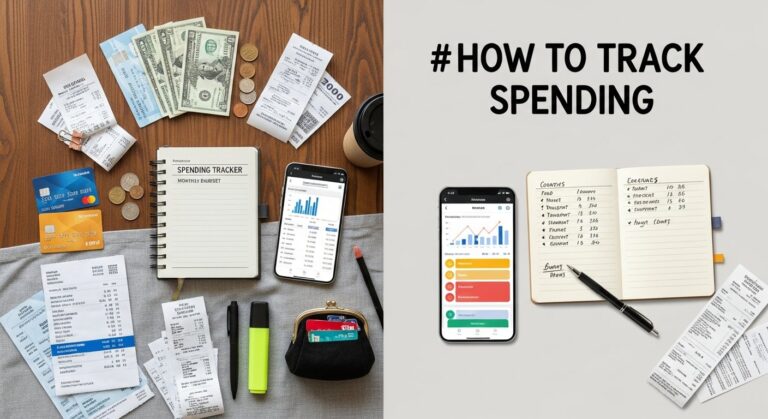
The pen and paper method is arguably the oldest and most straightforward way to track spending. It requires nothing more than a notebook, a ledger, or even loose sheets of paper, and a writing instrument. The premise is simple: every time you spend money, you record the date, the amount, the category of expense, and a brief description. This could be done immediately after a transaction or by reviewing receipts at the end of the day. For those who find digital interfaces overwhelming or prefer a physical record, this method offers unparalleled simplicity and a sense of direct engagement with your finances.
The benefits of this analog approach are numerous. Firstly, its accessibility is unmatched – virtually anyone can start tracking immediately without needing special equipment or software. Secondly, the act of physically writing down each transaction can create a stronger mental connection to your spending. This tactile engagement often leads to a deeper awareness of where your money is going, making it harder for expenses to slip under the radar. Thirdly, privacy is inherent; your financial data remains solely in your hands. This method is particularly well-suited for individuals who primarily use cash, as it forces a manual accounting that digital tools might miss without direct bank integration. While it demands discipline, the pen and paper method is a powerful and fundamental way to initiate your spending tracking journey, providing a clear, unfiltered view of your financial habits without any digital distractions or complexities.
To implement this effectively, consider dedicating a specific notebook or ledger solely for tracking. Create columns for date, item/vendor, category (e.g., groceries, entertainment, transport), amount spent, and perhaps a running balance. Consistency is key; make it a habit to record every transaction, no matter how small. At the end of each week or month, tally up the expenses by category to see your total spending and where the majority of your money went. This manual aggregation offers a granular, hands-on learning experience about your financial outflows. For tips on building consistent financial habits, read our guide on daily money management.
The Spreadsheet Approach: Manual Control and Customization
Moving a step beyond pen and paper, the spreadsheet method utilizes software like Microsoft Excel, Google Sheets, or Apple Numbers. This approach combines the manual control of traditional methods with the analytical power of digital tools. Users manually input their transactions into a spreadsheet, typically organized with columns for date, description, category, amount, and payment method. The real power of spreadsheets, however, lies in their ability to perform calculations, categorize data automatically using formulas, and visualize spending patterns through charts and graphs.
Spreadsheets offer an immense degree of customization. You can design your tracking system precisely to your needs, creating custom categories, adding specific financial goals, and building dashboards that display key metrics relevant to your situation. This level of control is often preferred by those with a good understanding of spreadsheet software or those who have unique financial circumstances that off-the-shelf apps might not cater to. While it requires an initial setup phase and ongoing manual data entry, the analytical capabilities can be incredibly insightful. You can easily track spending trends over time, compare month-to-month expenses, and even project future cash flow scenarios based on your current habits.
Many free templates are available online to help you get started, or you can build one from scratch. The discipline required for consistent data entry is similar to the pen and paper method, but the payoff in terms of detailed analysis and customized reporting is significantly higher. It bridges the gap between purely manual and fully automated systems, offering a robust solution for those who want both control and analytical depth in their spending tracking efforts. For instance, you could set up conditional formatting to highlight overspending in certain categories, or create pivot tables to quickly summarize spending by merchant or day of the week, providing unparalleled flexibility in your financial analysis.
Envelope System: A Visual Way to Allocate Cash
The envelope system is a classic cash-based method of budgeting and spending tracking that has seen a resurgence in popularity, especially for those who struggle with overspending on discretionary items. It operates on a simple principle: at the beginning of each spending period (typically a month), you allocate a specific amount of physical cash for various spending categories and place that cash into labeled envelopes. Common categories might include “Groceries,” “Dining Out,” “Entertainment,” and “Personal Care.”
Once the cash for a particular envelope is gone, you cannot spend any more in that category until the next period, or you must “borrow” from another envelope, making the trade-off immediately apparent. This system offers a highly visual and tangible way to track spending because your available funds are physically present and finite. It creates an immediate feedback loop: when an envelope is empty, you know you’ve reached your limit. This makes it incredibly effective at curbing impulse spending and sticking to a budget, particularly for variable expenses.
While primarily a cash-based system, modern interpretations can involve debit card “envelopes” where you mentally (or even virtually through some apps) allocate funds, although the physical constraint of cash is often its most powerful feature. The envelope system forces a conscious decision with every purchase, as you physically remove money from its designated category. It’s an excellent method for those looking to gain a tight grip on their discretionary spending and develop a greater awareness of their daily expenditures. It might not track every single transaction in detail like a spreadsheet, but it ensures you stay within your allocated limits for key variable spending categories, preventing overdrafts and fostering a strong sense of financial discipline. This method excels at highlighting spending limits and ensuring you live within your means by making financial constraints physically evident.
For individuals who struggle with credit card debt or impulsive purchases, the envelope system can be a game-changer. It simplifies spending by removing the abstract nature of digital transactions and replacing it with a concrete, limited resource. Many proponents find that this system not only helps them save money but also reduces financial stress by eliminating the guesswork of whether they can afford a particular purchase. It puts you firmly in control of your cash flow, one envelope at a time.
Digital Tools and Apps for How to Track Spending
In the 21st century, technology has dramatically simplified the process of how to track spending. A vast array of digital tools and apps now exist, offering convenience, automation, and powerful insights that were once only available to financial professionals. These tools can automatically import transactions, categorize expenses, and visualize your financial health with minimal manual effort, making them ideal for busy individuals or those seeking a more streamlined approach.
Dedicated Budgeting Apps: Automation and Insights
Dedicated budgeting apps have revolutionized personal finance management. Platforms like Mint, YNAB (You Need A Budget), Personal Capital, and PocketGuard connect directly to your bank accounts, credit cards, investment accounts, and even loan accounts. Once linked, they automatically import and categorize your transactions, often learning your spending patterns over time to improve accuracy. This automation significantly reduces the manual effort associated with tracking, making the process much more sustainable for many users.
Beyond simple tracking, these apps offer a suite of powerful features. They typically provide customizable budgeting tools, allowing you to set spending limits for various categories and receive alerts when you’re approaching or exceeding those limits. Many offer robust reporting features, including visual dashboards, charts, and graphs that illustrate your spending trends, net worth, and progress towards financial goals. Some advanced apps even offer investment tracking, retirement planning tools, and bill reminders, creating a holistic view of your financial life.
The insights provided by these apps can be incredibly valuable. By aggregating all your financial data in one place, they offer a comprehensive overview that manual methods often struggle to achieve. You can quickly identify areas of overspending, see your cash flow at a glance, and understand how your daily choices impact your long-term goals. While most popular apps offer free versions with basic features, premium subscriptions often unlock more advanced analytics, dedicated support, and ad-free experiences. The initial setup might take some time to link all accounts and fine-tune categories, but the long-term benefits of automated tracking, insightful analytics, and streamlined financial management make dedicated budgeting apps a cornerstone for modern spending control. They transform raw transaction data into actionable financial intelligence, empowering users to make smarter money decisions effortlessly.
| Method | Key Features | Best For | Pros | Cons |
|---|---|---|---|---|
| Pen & Paper | Manual entry, physical record, simple ledger | Cash users, privacy seekers, tactile learners | Highly accessible, no tech needed, strong mental connection to spending, ultimate privacy | Manual calculations, no automation, less analytical power, easy to forget entries |
| Spreadsheets (Excel/Sheets) | Manual entry, customizable categories, formulas, charts | Tech-savvy users, those needing high customization, analytical minds | Full control and customization, powerful analytical capabilities, free with basic software | Requires spreadsheet knowledge, manual data entry, no bank integration |
| Dedicated Budgeting Apps (e.g., Mint, YNAB) | Automatic transaction import, categorization, budgeting, goal tracking, visual reports | Busy individuals, those seeking automation, comprehensive financial overview | High automation, robust analytics, mobile access, holistic financial view, alerts | Security concerns with linked accounts, potential for subscription fees, learning curve |
| Bank/Credit Card Apps | Basic transaction history, categorization (limited), spending summaries | Casual trackers, those seeking minimal effort, single-institution focus | Convenient, no extra setup for existing accounts, secure environment | Limited cross-account view, basic features, less customization, data silos |
| Envelope System (Modern Digital) | Digital allocation of funds to categories, real-time balance updates, virtual “envelopes” | Digital natives, those who prefer cash-flow budgeting, over-spenders | Visual spending limits, strong behavioral impact, mobile accessibility, real-time tracking | May require manual categorization or adjustment, some apps have subscription fees |
Bank and Credit Card Apps: Built-in Tracking Features
In response to the growing demand for personal finance tools, many banks and credit card companies have integrated basic spending tracking features directly into their mobile apps and online portals. These built-in tools offer a convenient, low-barrier entry point for individuals interested in how to track spending without introducing a new third-party application.
Typically, these features allow you to view your transaction history, often categorized automatically (though sometimes generically) by the institution. You can usually search, filter, and sometimes even export your transactions. Many apps now include spending summaries, showing you how much you’ve spent in categories like “groceries,” “utilities,” or “travel” over a given period. Some even offer visualizations, like pie charts, to break down your spending visually.
The primary advantage of using your bank or credit card’s native app for tracking is convenience. There’s no additional setup required; your data is already there. It’s also often seen as a more secure option, as you’re interacting directly with your financial institution. However, these tools often come with limitations. They typically only show transactions for that specific account, meaning you don’t get a holistic view of your finances if you use multiple banks or credit cards. The categorization can also be less precise or customizable compared to dedicated budgeting apps, and advanced features like budgeting, goal setting, or net worth tracking are usually absent. Nonetheless, for individuals who want a quick, easy, and secure way to monitor their spending from a single source, these built-in features are a valuable starting point and can provide sufficient insight for basic financial awareness. They offer a good stepping stone for those who are just beginning their journey into understanding their spending habits.
[INLINE IMAGE 2: place after fourth H2 | alt=”how to track spending comparison illustration”]
Hybrid Approaches: Combining Manual and Digital
Sometimes, the most effective method for how to track spending isn’t purely manual or purely digital, but a thoughtful combination of both. A hybrid approach allows you to leverage the strengths of different tools while mitigating their weaknesses, creating a personalized system that perfectly fits your financial habits and preferences.
For example, you might use a dedicated budgeting app (like Mint or YNAB) to automatically import and categorize the bulk of your credit card and debit card transactions, taking advantage of its automation and comprehensive reporting. Simultaneously, for cash transactions – which often slip through digital nets – you could maintain a small notebook or use a simple mobile note-taking app to manually record those expenses. At the end of the week, you would then manually input these cash transactions into your primary digital app or spreadsheet, ensuring a complete record.
Another hybrid strategy involves using a bank’s basic tracking features for day-to-day oversight of your primary checking account, while using a more robust spreadsheet for detailed budgeting and financial projections. Or, if you primarily use the envelope system for variable cash spending, you might still use a digital app to track your fixed expenses and larger bills that are paid electronically, ensuring you don’t miss anything. This kind of integration provides the best of both worlds: the convenience and analytical power of digital tools for routine transactions, combined with the hands-on awareness and control offered by manual methods for specific types of spending or for deeper personal engagement.
The key to a successful hybrid approach is intentionality. Clearly define which type of spending or financial data each tool will manage. Regularly reconcile your manual entries with your digital records to ensure accuracy and completeness. By customizing your tracking system in this way, you can create a highly efficient, accurate, and personally satisfying method that captures all your spending, provides actionable insights, and ultimately helps you achieve your financial goals more effectively. It’s about building a system that works *for* you, not one that you constantly have to work at. Explore our articles on customizing your financial tools for more ideas.
Advanced Strategies and Best Practices for Tracking Spending
Once you’ve established a basic method for how to track spending, you can elevate your financial management with advanced strategies and best practices. These techniques move beyond mere data collection to encompass deeper analysis, proactive adjustments, and household integration, ensuring your tracking efforts yield maximum value and sustainable financial success.
Categorization Mastery: Granular Insights
Effective spending tracking hinges on robust categorization. While basic categories like “Groceries” and “Entertainment” are a good start, mastering categorization means developing a system that provides truly granular and actionable insights. This involves moving beyond default categories and customizing them to reflect your unique spending patterns and areas of interest. For example, instead of a broad “Shopping” category, you might break it down into “Clothing,” “Home Goods,” and “Online Impulse Buys.” For transportation, you might separate “Fuel,” “Public Transport,” and “Ride-Sharing.”
The goal is to create categories that reveal specific behaviors you want to monitor or change. If you’re trying to reduce dining out, separate “Restaurant Meals” from “Coffee Shops” and “Takeout.” If you’re investing in self-improvement, you might have “Education” vs. “Hobbies.” The more detailed your categories, the clearer the picture you’ll gain about where your money is truly going. This level of granularity helps you pinpoint exact areas where you can cut back or reallocate funds, rather than just knowing you’re “spending too much.”
Regularly review and refine your categories. As your financial goals or spending habits evolve, so too should your categorization system. Aim for a balance: too few categories can obscure important details, while too many can lead to analysis paralysis and make tracking feel overly complex. The sweet spot is a system that is detailed enough to be insightful but manageable enough to be sustainable. Masterful categorization transforms raw data into a powerful tool for self-reflection and strategic financial decision-making, allowing you to easily identify trends and make targeted adjustments. It’s about turning your spending data into a personalized financial blueprint.
Regular Review and Adjustment: Making Tracking Dynamic
Tracking spending isn’t a one-and-done activity; it’s an ongoing process that requires regular review and adjustment to be truly effective. Many people diligently track for a few weeks, only to let the data sit unused. The real power of tracking comes from actively engaging with the information you collect. Set aside dedicated time – weekly, bi-weekly, or monthly – to review your spending reports. During this review, ask yourself critical questions:
- Did my actual spending align with my expectations or budget in each category?
- Were there any unexpected expenses? How did I handle them?
- Where did I overspend, and why? Was it justifiable or an area for improvement?
- Where did I underspend? Can I reallocate those funds to savings or another goal?
- Are my current spending habits moving me closer to my financial goals, or further away?
Based on these insights, be prepared to adjust your budget, your categories, or your spending habits. If you consistently overspend in one category, it might indicate an unrealistic budget allocation, or an area where you need to implement stricter self-control. If you consistently underspend, you might have an opportunity to accelerate debt repayment or increase savings. This dynamic process makes your tracking system a living, breathing tool rather than a static record. It’s about continuous improvement and responsiveness to your actual financial life. Regular review fosters accountability, deepens your understanding of your own financial psychology, and ensures that your financial plan remains relevant and effective in helping you achieve your aspirations. Without this crucial review step, tracking remains a collection of data, rather than a catalyst for change.
Automating the Process: Set It and Forget It (Mostly)
For many, the biggest hurdle in spending tracking is the sheer time and effort involved in manual data entry. Automation can be a game-changer, turning a tedious chore into a seamless background operation. The goal is to “set it and forget it” as much as possible, allowing you to focus on analysis and decision-making rather than data collection.
Leverage dedicated budgeting apps that automatically connect to your bank and credit card accounts. These apps import transactions in real-time or daily, often categorizing them for you. Most also offer rules-based categorization, allowing you to specify that all transactions from “Starbucks” should be categorized as “Coffee” or “Discretionary.” This significantly reduces manual effort. Beyond apps, consider integrating financial management features offered by your bank or credit card company, which can often provide basic spending summaries automatically.
While automation is powerful, it’s rarely 100% hands-free. You’ll still need to occasionally review automatically categorized transactions to ensure accuracy, especially for new merchants or ambiguous purchases. For cash transactions, you’ll still need a manual input method, even if it’s just a quick note in your phone that you later transfer to your main system. The “mostly” in “set it and forget it (mostly)” is critical: automation handles the heavy lifting, freeing you up for the more strategic, value-added tasks of reviewing, analyzing, and adjusting your financial plan. By embracing automation for the bulk of your transactions, you make spending tracking less of a burden and more of an ingrained, effortless part of your financial routine, thereby greatly increasing the likelihood of long-term consistency and success. Discover more about smart automation tools for personal finance in our recent article.
Involving Your Household: Family Financial Synergy
For individuals living in a household with shared finances – whether with a partner, spouse, or even adult children – effective spending tracking becomes a collaborative effort. Trying to track spending in isolation when others are also contributing to expenses or making purchases can lead to incomplete data and frustration. Involving your household fosters transparency, alignment, and collective financial synergy.
Start by having open and honest conversations about your financial goals and the importance of tracking spending. Ensure everyone understands the “why” behind the effort. Then, choose a tracking method that works for everyone. A shared digital budgeting app is often ideal, as it allows multiple users to view transactions, make entries (if applicable), and see the overall financial picture. Establish clear roles and responsibilities: who is responsible for logging cash expenses, who reviews the reports, and who initiates discussions about adjustments?
Regular family financial meetings – even brief ones – can be incredibly beneficial. Use this time to review spending, celebrate successes, and address challenges collaboratively. This approach not only ensures more accurate data but also builds shared financial literacy and responsibility within the household. It helps prevent misunderstandings, reduces financial stress arising from differing spending habits, and creates a unified front in achieving common financial goals, such as saving for a family vacation or a child’s education. When everyone is on the same page and actively participating, tracking spending transforms from an individual chore into a powerful tool for collective financial empowerment and harmony. Shared financial goals become more tangible when all parties contribute to tracking and managing the household’s resources effectively.
Choosing the Right Tracking Method: A Personalized Approach
With so many options for how to track spending, selecting the “best” method isn’t about finding a universally superior tool, but rather about identifying the approach that aligns perfectly with your individual needs, preferences, and financial situation. A personalized approach ensures that your chosen method is sustainable, insightful, and ultimately effective in helping you achieve your financial goals.
Assessing Your Financial Comfort Level and Tech Savvy
Your comfort level with technology plays a significant role in determining the most suitable spending tracking method. If you’re highly tech-savvy and comfortable with digital interfaces, linking bank accounts, and navigating apps, a dedicated budgeting app like Mint or YNAB will likely be a natural fit. These tools offer advanced features, automation, and powerful analytics that can greatly streamline the process.
Conversely, if you prefer a hands-on, tangible approach and are less comfortable with digital tools or wary of sharing financial data online, traditional methods like the pen and paper ledger or the physical envelope system might be far more appealing. These methods offer simplicity and a sense of direct control that some find reassuring. The spreadsheet method sits somewhere in the middle, offering digital capabilities while maintaining manual control over data entry.
Consider also your comfort with financial concepts. If you’re new to budgeting and want to start with basic awareness, a simpler method might be less overwhelming. If you’re an experienced financial manager looking for deep insights and complex scenario planning, a robust digital app or a sophisticated spreadsheet setup would be more appropriate. The key is to choose a method that doesn’t feel like a chore but rather an empowering extension of your financial habits. Forcing yourself into a tech-heavy solution when you prefer manual processes will likely lead to abandonment, just as trying to manage complex finances with only a notebook might prove frustrating. Start where you’re comfortable, and you can always evolve your method as your skills and confidence grow.
Considering Your Income and Spending Patterns
The nature of your income and your typical spending patterns should also influence your choice of tracking method. For individuals with highly stable, predictable incomes and mostly electronic transactions, an automated digital budgeting app will be exceptionally efficient. The app can easily pull in and categorize regular direct deposits and recurring bill payments, leaving minimal manual intervention.
However, if your income is irregular (e.g., freelance, commission-based, seasonal work) or if you frequently use cash for purchases, a purely automated digital system might fall short. In such cases, a hybrid approach or a more manual system like the envelope method (for cash) or a highly customizable spreadsheet (for irregular income/expenses) could be more effective. For example, if you’re a freelancer, a spreadsheet might allow you to easily track income from various sources alongside your expenses, giving you a clearer picture of your fluctuating cash flow. Similarly, if a significant portion of your discretionary spending is done in cash, the tactile nature of the envelope system can be incredibly powerful in keeping those categories in check.
Your spending complexity also matters. If you have numerous accounts, investments, and complex financial instruments, a comprehensive digital platform that aggregates all this data will be invaluable. If your finances are relatively simple with only a few accounts, a simpler app or even a spreadsheet might suffice. Take an honest look at how you earn and spend money, and then select a method that complements, rather than complicates, those existing patterns. The goal is to make tracking a seamless part of your financial life, not an added burden, by choosing a system that inherently understands your financial rhythm. This ensures long-term adherence and a truly accurate representation of your financial flows.
Experimentation and Adaptation
It’s important to remember that choosing a method for how to track spending isn’t a permanent decision. Your financial life evolves, your comfort with technology changes, and new tools emerge. What works perfectly for you today might not be the ideal solution a year from now. Therefore, a key best practice is to embrace experimentation and be willing to adapt.
Don’t be afraid to try out different methods for a few weeks or months. Start with a pen and paper, then move to a simple spreadsheet, and perhaps later graduate to a full-featured budgeting app. Many digital apps offer free trials, allowing you to test their functionality without commitment. Pay attention to what feels intuitive, what keeps you engaged, and what provides the most valuable insights. If a method feels overly complicated, tedious, or doesn’t provide the information you need, don’t hesitate to switch. The best tracking method is the one you will consistently use.
As you gain more experience tracking your spending, you’ll also likely discover what level of detail you truly need and what kinds of insights are most valuable to you. Your initial motivation might be to cut discretionary spending, but later you might shift to optimizing investments or planning for large purchases. Your tracking system should be flexible enough to adapt to these evolving goals. This iterative process of trying, learning, and refining ensures that your spending tracking always remains a powerful and relevant tool in your financial arsenal. Think of it as a journey of continuous improvement, where your chosen tools evolve alongside your financial wisdom and objectives. The flexibility to adapt your method ensures that it remains an empowering rather than frustrating part of your financial routine. Learn about adapting your budget for life changes in our expert articles.
Common Challenges and How to Overcome Them When Tracking Spending
While the benefits of how to track spending are clear, the journey is not without its hurdles. Many individuals encounter common challenges that can derail their efforts
How to Track Spending Effectively: Your Ultimate Guide to Financial Control
By diaalnews Editorial Team — Senior editors with 10+ years of subject-matter experience.
Published 2026-05-26 · Last Updated 2026-05-26
Affiliate disclosure: This article may contain affiliate links. Recommendations are independent and editorially driven.
In an increasingly complex financial world, understanding where your money goes is not just a good idea—it’s a foundational pillar of financial well-being. Whether you’re aiming to save for a major purchase, eliminate debt, or simply gain peace of mind, mastering how to track spending is the first critical step. This comprehensive guide from diaalnews will demystify the process, explore various methods, and equip you with the knowledge to take full control of your financial destiny in 2026 and beyond.
Many people find the idea of tracking spending daunting, associating it with restrictive budgets and tedious record-keeping. However, modern approaches and a clear understanding of its benefits can transform this perception. Tracking your spending is less about deprivation and more about awareness, empowerment, and strategic decision-making. It’s about creating a clear picture of your financial flow, enabling you to make informed choices that align with your personal and long-term financial objectives. Without this crucial insight, money can feel like it slips through your fingers, leaving you wondering why your bank balance isn’t reflecting your income.
From the simplicity of a pen and paper to the sophistication of AI-powered financial apps, the tools and techniques available to track spending have never been more diverse or accessible. This article will navigate these options, helping you identify the best fit for your lifestyle, financial goals, and comfort level with technology. We’ll delve into the ‘why’ behind spending tracking, the ‘how-to’ of various methods, and crucially, what to do with the insights you gain to truly optimize your financial health. Prepare to embark on a journey that will not only show you where your money is going but will also empower you to direct it towards where you want it to go.
Understanding the “Why”: The Crucial Role of Spending Tracking
Before diving into the mechanics of how to track spending, it’s essential to grasp the profound impact this practice can have on your financial life. Tracking isn’t merely an administrative task; it’s a powerful diagnostic tool that reveals the true state of your financial health. It provides the clarity needed to transition from reactive money management to proactive financial stewardship.
The Foundation of Budgeting and Financial Planning
You cannot effectively budget without first understanding your spending habits. A budget, at its core, is a plan for your money – how you intend to earn, save, and spend it. Without accurate data on past expenditures, any budget you create will be based on guesswork, rendering it ineffective and difficult to stick to. Spending tracking provides the raw data necessary to build a realistic and sustainable budget. It helps you identify your fixed expenses (rent, loan payments, insurance) and variable expenses (groceries, entertainment, dining out). Once you have this clear picture, you can allocate funds with precision, ensuring that your income covers your necessities, allows for savings, and funds your discretionary spending without leading to debt. This foundational understanding is also critical for long-term financial planning, whether you’re saving for retirement, a down payment on a home, or your children’s education. Every major financial goal begins with a clear understanding of current cash flow.
Moreover, robust spending data allows you to review and adjust your budget over time. Life circumstances change – you might get a raise, incur a new recurring expense, or decide to pursue a different savings goal. With consistent tracking, you can easily adapt your financial plan to these changes, maintaining relevance and effectiveness. It transforms budgeting from a static, restrictive document into a dynamic, empowering tool that evolves with your life. This iterative process of tracking, budgeting, and adjusting is what truly drives financial progress and resilience.
Identifying Spending Habits and Financial Leaks
One of the most eye-opening aspects of tracking spending is the revelation of unconscious spending habits and “financial leaks.” These are often small, seemingly insignificant expenses that, when aggregated over weeks or months, amount to substantial sums. Think daily coffee runs, numerous subscription services you rarely use, or impulse purchases that add up. Without tracking, these expenditures often go unnoticed, contributing to the feeling that your money simply vanishes.
By meticulously recording every transaction, you gain an objective perspective on where your money is actually going versus where you *think* it’s going. You might discover that a significant portion of your income is allocated to dining out, entertainment, or online shopping, categories you might have underestimated. Identifying these patterns is the first step toward making conscious changes. It’s not about guilt-tripping yourself, but about empowering yourself with information. Once you see the cumulative impact of these small expenses, you can decide whether they align with your values and financial goals. This insight allows you to plug financial leaks, reallocating those funds to savings, debt repayment, or investments, thereby accelerating your financial progress. It brings an unparalleled level of transparency to your financial behavior, transforming abstract notions of money management into tangible, actionable data.
[INLINE IMAGE 1: place after second H2 | alt=”how to track spending concept illustration”]
Achieving Financial Goals Sooner
Whether your goal is to save for a new car, a vacation, a down payment on a house, or early retirement, tracking your spending acts as a powerful accelerator. By clearly seeing your cash flow, you can identify opportunities to increase your savings rate. When you’re aware of every dollar, you’re better positioned to make choices that prioritize your goals. For instance, if you discover you’re spending $200 a month on streaming services and subscriptions, and your goal is to save $5,000 for a trip, cutting back on just half of those services could shave several months off your savings timeline.
Moreover, tracking helps you stay motivated. When you see tangible progress, such as reduced discretionary spending or increased savings contributions, it reinforces positive financial behaviors. It creates a feedback loop: you track, you adjust, you save more, you get closer to your goal, which motivates you to track and adjust further. This continuous cycle of improvement is incredibly effective. It transforms vague aspirations into concrete plans with measurable outcomes, making your financial goals feel more attainable and less like distant dreams. By quantifying your efforts, you make the abstract concept of “saving money” into a clear path towards achieving your most desired outcomes.
Reducing Stress and Increasing Financial Confidence
For many, financial uncertainty is a significant source of stress. Not knowing how much money you have, where it’s going, or if you’ll have enough to cover unexpected expenses can lead to anxiety and sleepless nights. Tracking spending eliminates much of this uncertainty. By having a clear, real-time understanding of your financial situation, you gain a sense of control and predictability.
This increased clarity translates directly into reduced financial stress. You’ll know if you can afford that unexpected car repair, or if you need to adjust spending in other areas. You’ll have a better handle on your emergency fund and your ability to weather financial storms. This knowledge fosters a profound sense of financial confidence. You become empowered to make informed decisions, knowing they are based on solid data rather than hopeful guesses. This confidence extends beyond mere budgeting; it permeates other areas of your life, enabling you to pursue opportunities or take calculated risks with a more secure financial footing. Ultimately, mastering how to track spending is not just about numbers; it’s about gaining peace of mind and building a secure foundation for your future.
Traditional Methods for How to Track Spending
While digital tools have revolutionized personal finance, many effective traditional methods for how to track spending remain popular and highly effective. These approaches often appeal to individuals who prefer a hands-on, tangible connection to their money or those who are wary of sharing financial data with third-party applications. Understanding these methods provides a solid foundation, regardless of whether you ultimately choose a manual or digital path.
The Pen and Paper Method: Simplicity and Tangibility
The pen and paper method is arguably the oldest and most straightforward way to track spending. It requires nothing more than a notebook, a ledger, or even loose sheets of paper, and a writing instrument. The premise is simple: every time you spend money, you record the date, the amount, the category of expense, and a brief description. This could be done immediately after a transaction or by reviewing receipts at the end of the day. For those who find digital interfaces overwhelming or prefer a physical record, this method offers unparalleled simplicity and a sense of direct engagement with your finances.
The benefits of this analog approach are numerous. Firstly, its accessibility is unmatched – virtually anyone can start tracking immediately without needing special equipment or software. Secondly, the act of physically writing down each transaction can create a stronger mental connection to your spending. This tactile engagement often leads to a deeper awareness of where your money is going, making it harder for expenses to slip under the radar. Thirdly, privacy is inherent; your financial data remains solely in your hands. This method is particularly well-suited for individuals who primarily use cash, as it forces a manual accounting that digital tools might miss without direct bank integration. While it demands discipline, the pen and paper method is a powerful and fundamental way to initiate your spending tracking journey, providing a clear, unfiltered view of your financial habits without any digital distractions or complexities.
To implement this effectively, consider dedicating a specific notebook or ledger solely for tracking. Create columns for date, item/vendor, category (e.g., groceries, entertainment, transport), amount spent, and perhaps a running balance. Consistency is key; make it a habit to record every transaction, no matter how small. At the end of each week or month, tally up the expenses by category to see your total spending and where the majority of your money went. This manual aggregation offers a granular, hands-on learning experience about your financial outflows. For tips on building consistent financial habits, read our guide on daily money management.
The Spreadsheet Approach: Manual Control and Customization
Moving a step beyond pen and paper, the spreadsheet method utilizes software like Microsoft Excel, Google Sheets, or Apple Numbers. This approach combines the manual control of traditional methods with the analytical power of digital tools. Users manually input their transactions into a spreadsheet, typically organized with columns for date, description, category, amount, and payment method. The real power of spreadsheets, however, lies in their ability to perform calculations, categorize data automatically using formulas, and visualize spending patterns through charts and graphs.
Spreadsheets offer an immense degree of customization. You can design your tracking system precisely to your needs, creating custom categories, adding specific financial goals, and building dashboards that display key metrics relevant to your situation. This level of control is often preferred by those with a good understanding of spreadsheet software or those who have unique financial circumstances that off-the-shelf apps might not cater to. While it requires an initial setup phase and ongoing manual data entry, the analytical capabilities can be incredibly insightful. You can easily track spending trends over time, compare month-to-month expenses, and even project future cash flow scenarios based on your current habits.
Many free templates are available online to help you get started, or you can build one from scratch. The discipline required for consistent data entry is similar to the pen and paper method, but the payoff in terms of detailed analysis and customized reporting is significantly higher. It bridges the gap between purely manual and fully automated systems, offering a robust solution for those who want both control and analytical depth in their spending tracking efforts. For instance, you could set up conditional formatting to highlight overspending in certain categories, or create pivot tables to quickly summarize spending by merchant or day of the week, providing unparalleled flexibility in your financial analysis.
Envelope System: A Visual Way to Allocate Cash
The envelope system is a classic cash-based method of budgeting and spending tracking that has seen a resurgence in popularity, especially for those who struggle with overspending on discretionary items. It operates on a simple principle: at the beginning of each spending period (typically a month), you allocate a specific amount of physical cash for various spending categories and place that cash into labeled envelopes. Common categories might include “Groceries,” “Dining Out,” “Entertainment,” and “Personal Care.”
Once the cash for a particular envelope is gone, you cannot spend any more in that category until the next period, or you must “borrow” from another envelope, making the trade-off immediately apparent. This system offers a highly visual and tangible way to track spending because your available funds are physically present and finite. It creates an immediate feedback loop: when an envelope is empty, you know you’ve reached your limit. This makes it incredibly effective at curbing impulse spending and sticking to a budget, particularly for variable expenses.
While primarily a cash-based system, modern interpretations can involve debit card “envelopes” where you mentally (or even virtually through some apps) allocate funds, although the physical constraint of cash is often its most powerful feature. The envelope system forces a conscious decision with every purchase, as you physically remove money from its designated category. It’s an excellent method for those looking to gain a tight grip on their discretionary spending and develop a greater awareness of their daily expenditures. It might not track every single transaction in detail like a spreadsheet, but it ensures you stay within your allocated limits for key variable spending categories, preventing overdrafts and fostering a strong sense of financial discipline. This method excels at highlighting spending limits and ensuring you live within your means by making financial constraints physically evident.
For individuals who struggle with credit card debt or impulsive purchases, the envelope system can be a game-changer. It simplifies spending by removing the abstract nature of digital transactions and replacing it with a concrete, limited resource. Many proponents find that this system not only helps them save money but also reduces financial stress by eliminating the guesswork of whether they can afford a particular purchase. It puts you firmly in control of your cash flow, one envelope at a time.
Digital Tools and Apps for How to Track Spending
In the 21st century, technology has dramatically simplified the process of how to track spending. A vast array of digital tools and apps now exist, offering convenience, automation, and powerful insights that were once only available to financial professionals. These tools can automatically import transactions, categorize expenses, and visualize your financial health with minimal manual effort, making them ideal for busy individuals or those seeking a more streamlined approach.
Dedicated Budgeting Apps: Automation and Insights
Dedicated budgeting apps have revolutionized personal finance management. Platforms like Mint, YNAB (You Need A Budget), Personal Capital, and PocketGuard connect directly to your bank accounts, credit cards, investment accounts, and even loan accounts. Once linked, they automatically import and categorize your transactions, often learning your spending patterns over time to improve accuracy. This automation significantly reduces the manual effort associated with tracking, making the process much more sustainable for many users.
Beyond simple tracking, these apps offer a suite of powerful features. They typically provide customizable budgeting tools, allowing you to set spending limits for various categories and receive alerts when you’re approaching or exceeding those limits. Many offer robust reporting features, including visual dashboards, charts, and graphs that illustrate your spending trends, net worth, and progress towards financial goals. Some advanced apps even offer investment tracking, retirement planning tools, and bill reminders, creating a holistic view of your financial life.
The insights provided by these apps can be incredibly valuable. By aggregating all your financial data in one place, they offer a comprehensive overview that manual methods often struggle to achieve. You can quickly identify areas of overspending, see your cash flow at a glance, and understand how your daily choices impact your long-term goals. While most popular apps offer free versions with basic features, premium subscriptions often unlock more advanced analytics, dedicated support, and ad-free experiences. The initial setup might take some time to link all accounts and fine-tune categories, but the long-term benefits of automated tracking, insightful analytics, and streamlined financial management make dedicated budgeting apps a cornerstone for modern spending control. They transform raw transaction data into actionable financial intelligence, empowering users to make smarter money decisions effortlessly.
| Method | Key Features | Best For | Pros | Cons |
|---|---|---|---|---|
| Pen & Paper | Manual entry, physical record, simple ledger | Cash users, privacy seekers, tactile learners | Highly accessible, no tech needed, strong mental connection to spending, ultimate privacy | Manual calculations, no automation, less analytical power, easy to forget entries |
| Spreadsheets (Excel/Sheets) | Manual entry, customizable categories, formulas, charts | Tech-savvy users, those needing high customization, analytical minds | Full control and customization, powerful analytical capabilities, free with basic software | Requires spreadsheet knowledge, manual data entry, no bank integration |
| Dedicated Budgeting Apps (e.g., Mint, YNAB) | Automatic transaction import, categorization, budgeting, goal tracking, visual reports | Busy individuals, those seeking automation, comprehensive financial overview | High automation, robust analytics, mobile access, holistic financial view, alerts | Security concerns with linked accounts, potential for subscription fees, learning curve |
| Bank/Credit Card Apps | Basic transaction history, categorization (limited), spending summaries | Casual trackers, those seeking minimal effort, single-institution focus | Convenient, no extra setup for existing accounts, secure environment | Limited cross-account view, basic features, less customization, data silos |
| Envelope System (Modern Digital) | Digital allocation of funds to categories, real-time balance updates, virtual “envelopes” | Digital natives, those who prefer cash-flow budgeting, over-spenders | Visual spending limits, strong behavioral impact, mobile accessibility, real-time tracking | May require manual categorization or adjustment, some apps have subscription fees |
Bank and Credit Card Apps: Built-in Tracking Features
In response to the growing demand for personal finance tools, many banks and credit card companies have integrated basic spending tracking features directly into their mobile apps and online portals. These built-in tools offer a convenient, low-barrier entry point for individuals interested in how to track spending without introducing a new third-party application.
Typically, these features allow you to view your transaction history, often categorized automatically (though sometimes generically) by the institution. You can usually search, filter, and sometimes even export your transactions. Many apps now include spending summaries, showing you how much you’ve spent in categories like “groceries,” “utilities,” or “travel” over a given period. Some even offer visualizations, like pie charts, to break down your spending visually.
The primary advantage of using your bank or credit card’s native app for tracking is convenience. There’s no additional setup required; your data is already there. It’s also often seen as a more secure option, as you’re interacting directly with your financial institution. However, these tools often come with limitations. They typically only show transactions for that specific account, meaning you don’t get a holistic view of your finances if you use multiple banks or credit cards. The categorization can also be less precise or customizable compared to dedicated budgeting apps, and advanced features like budgeting, goal setting, or net worth tracking are usually absent. Nonetheless, for individuals who want a quick, easy, and secure way to monitor their spending from a single source, these built-in features are a valuable starting point and can provide sufficient insight for basic financial awareness. They offer a good stepping stone for those who are just beginning their journey into understanding their spending habits.
[INLINE IMAGE 2: place after fourth H2 | alt=”how to track spending comparison illustration”]
Hybrid Approaches: Combining Manual and Digital
Sometimes, the most effective method for how to track spending isn’t purely manual or purely digital, but a thoughtful combination of both. A hybrid approach allows you to leverage the strengths of different tools while mitigating their weaknesses, creating a personalized system that perfectly fits your financial habits and preferences.
For example, you might use a dedicated budgeting app (like Mint or YNAB) to automatically import and categorize the bulk of your credit card and debit card transactions, taking advantage of its automation and comprehensive reporting. Simultaneously, for cash transactions – which often slip through digital nets – you could maintain a small notebook or use a simple mobile note-taking app to manually record those expenses. At the end of the week, you would then manually input these cash transactions into your primary digital app or spreadsheet, ensuring a complete record.
Another hybrid strategy involves using a bank’s basic tracking features for day-to-day oversight of your primary checking account, while using a more robust spreadsheet for detailed budgeting and financial projections. Or, if you primarily use the envelope system for variable cash spending, you might still use a digital app to track your fixed expenses and larger bills that are paid electronically, ensuring you don’t miss anything. This kind of integration provides the best of both worlds: the convenience and analytical power of digital tools for routine transactions, combined with the hands-on awareness and control offered by manual methods for specific types of spending or for deeper personal engagement.
The key to a successful hybrid approach is intentionality. Clearly define which type of spending or financial data each tool will manage. Regularly reconcile your manual entries with your digital records to ensure accuracy and completeness. By customizing your tracking system in this way, you can create a highly efficient, accurate, and personally satisfying method that captures all your spending, provides actionable insights, and ultimately helps you achieve your financial goals more effectively. It’s about building a system that works *for* you, not one that you constantly have to work at. Explore our articles on customizing your financial tools for more ideas.
Advanced Strategies and Best Practices for Tracking Spending
Once you’ve established a basic method for how to track spending, you can elevate your financial management with advanced strategies and best practices. These techniques move beyond mere data collection to encompass deeper analysis, proactive adjustments, and household integration, ensuring your tracking efforts yield maximum value and sustainable financial success.
Categorization Mastery: Granular Insights
Effective spending tracking hinges on robust categorization. While basic categories like “Groceries” and “Entertainment” are a good start, mastering categorization means developing a system that provides truly granular and actionable insights. This involves moving beyond default categories and customizing them to reflect your unique spending patterns and areas of interest. For example, instead of a broad “Shopping” category, you might break it down into “Clothing,” “Home Goods,” and “Online Impulse Buys.” For transportation, you might separate “Fuel,” “Public Transport,” and “Ride-Sharing.”
The goal is to create categories that reveal specific behaviors you want to monitor or change. If you’re trying to reduce dining out, separate “Restaurant Meals” from “Coffee Shops” and “Takeout.” If you’re investing in self-improvement, you might have “Education” vs. “Hobbies.” The more detailed your categories, the clearer the picture you’ll gain about where your money is truly going. This level of granularity helps you pinpoint exact areas where you can cut back or reallocate funds, rather than just knowing you’re “spending too much.”
Regularly review and refine your categories. As your financial goals or spending habits evolve, so too should your categorization system. Aim for a balance: too few categories can obscure important details, while too many can lead to analysis paralysis and make tracking feel overly complex. The sweet spot is a system that is detailed enough to be insightful but manageable enough to be sustainable. Masterful categorization transforms raw data into a powerful tool for self-reflection and strategic financial decision-making, allowing you to easily identify trends and make targeted adjustments. It’s about turning your spending data into a personalized financial blueprint.
Regular Review and Adjustment: Making Tracking Dynamic
Tracking spending isn’t a one-and-done activity; it’s an ongoing process that requires regular review and adjustment to be truly effective. Many people diligently track for a few weeks, only to let the data sit unused. The real power of tracking comes from actively engaging with the information you collect. Set aside dedicated time – weekly, bi-weekly, or monthly – to review your spending reports. During this review, ask yourself critical questions:
- Did my actual spending align with my expectations or budget in each category?
- Were there any unexpected expenses? How did I handle them?
- Where did I overspend, and why? Was it justifiable or an area for improvement?
- Where did I underspend? Can I reallocate those funds to savings or another goal?
- Are my current spending habits moving me closer to my financial goals, or further away?
Based on these insights, be prepared to adjust your budget, your categories, or your spending habits. If you consistently overspend in one category, it might indicate an unrealistic budget allocation, or an area where you need to implement stricter self-control. If you consistently underspend, you might have an opportunity to accelerate debt repayment or increase savings. This dynamic process makes your tracking system a living, breathing tool rather than a static record. It’s about continuous improvement and responsiveness to your actual financial life. Regular review fosters accountability, deepens your understanding of your own financial psychology, and ensures that your financial plan remains relevant and effective in helping you achieve your aspirations. Without this crucial review step, tracking remains a collection of data, rather than a catalyst for change.
Automating the Process: Set It and Forget It (Mostly)
For many, the biggest hurdle in spending tracking is the sheer time and effort involved in manual data entry. Automation can be a game-changer, turning a tedious chore into a seamless background operation. The goal is to “set it and forget it” as much as possible, allowing you to focus on analysis and decision-making rather than data collection.
Leverage dedicated budgeting apps that automatically connect to your bank and credit card accounts. These apps import transactions in real-time or daily, often categorizing them for you. Most also offer rules-based categorization, allowing you to specify that all transactions from “Starbucks” should be categorized as “Coffee” or “Discretionary.” This significantly reduces manual effort. Beyond apps, consider integrating financial management features offered by your bank or credit card company, which can often provide basic spending summaries automatically.
While automation is powerful, it’s rarely 100% hands-free. You’ll still need to occasionally review automatically categorized transactions to ensure accuracy, especially for new merchants or ambiguous purchases. For cash transactions, you’ll still need a manual input method, even if it’s just a quick note in your phone that you later transfer to your main system. The “mostly” in “set it and forget it (mostly)” is critical: automation handles the heavy lifting, freeing you up for the more strategic, value-added tasks of reviewing, analyzing, and adjusting your financial plan. By embracing automation for the bulk of your transactions, you make spending tracking less of a burden and more of an ingrained, effortless part of your financial routine, thereby greatly increasing the likelihood of long-term consistency and success. Discover more about smart automation tools for personal finance in our recent article.
Involving Your Household: Family Financial Synergy
For individuals living in a household with shared finances – whether with a partner, spouse, or even adult children – effective spending tracking becomes a collaborative effort. Trying to track spending in isolation when others are also contributing to expenses or making purchases can lead to incomplete data and frustration. Involving your household fosters transparency, alignment, and collective financial synergy.
Start by having open and honest conversations about your financial goals and the importance of tracking spending. Ensure everyone understands the “why” behind the effort. Then, choose a tracking method that works for everyone. A shared digital budgeting app is often ideal, as it allows multiple users to view transactions, make entries (if applicable), and see the overall financial picture. Establish clear roles and responsibilities: who is responsible for logging cash expenses, who reviews the reports, and who initiates discussions about adjustments?
Regular family financial meetings – even brief ones – can be incredibly beneficial. Use this time to review spending, celebrate successes, and address challenges collaboratively. This approach not only ensures more accurate data but also builds shared financial literacy and responsibility within the household. It helps prevent misunderstandings, reduces financial stress arising from differing spending habits, and creates a unified front in achieving common financial goals, such as saving for a family vacation or a child’s education. When everyone is on the same page and actively participating, tracking spending transforms from an individual chore into a powerful tool for collective financial empowerment and harmony. Shared financial goals become more tangible when all parties contribute to tracking and managing the household’s resources effectively.
Choosing the Right Tracking Method: A Personalized Approach
With so many options for how to track spending, selecting the “best” method isn’t about finding a universally superior tool, but rather about identifying the approach that aligns perfectly with your individual needs, preferences, and financial situation. A personalized approach ensures that your chosen method is sustainable, insightful, and ultimately effective in helping you achieve your financial goals.
Assessing Your Financial Comfort Level and Tech Savvy
Your comfort level with technology plays a significant role in determining the most suitable spending tracking method. If you’re highly tech-savvy and comfortable with digital interfaces, linking bank accounts, and navigating apps, a dedicated budgeting app like Mint or YNAB will likely be a natural fit. These tools offer advanced features, automation, and powerful analytics that can greatly streamline the process.
Conversely, if you prefer a hands-on, tangible approach and are less comfortable with digital tools or wary of sharing financial data online, traditional methods like the pen and paper ledger or the physical envelope system might be far more appealing. These methods offer simplicity and a sense of direct control that some find reassuring. The spreadsheet method sits somewhere in the middle, offering digital capabilities while maintaining manual control over data entry.
Consider also your comfort with financial concepts. If you’re new to budgeting and want to start with basic awareness, a simpler method might be less overwhelming. If you’re an experienced financial manager looking for deep insights and complex scenario planning, a robust digital app or a sophisticated spreadsheet setup would be more appropriate. The key is to choose a method that doesn’t feel like a chore but rather an empowering extension of your financial habits. Forcing yourself into a tech-heavy solution when you prefer manual processes will likely lead to abandonment, just as trying to manage complex finances with only a notebook might prove frustrating. Start where you’re comfortable, and you can always evolve your method as your skills and confidence grow.
Considering Your Income and Spending Patterns
The nature of your income and your typical spending patterns should also influence your choice of tracking method. For individuals with highly stable, predictable incomes and mostly electronic transactions, an automated digital budgeting app will be exceptionally efficient. The app can easily pull in and categorize regular direct deposits and recurring bill payments, leaving minimal manual intervention.
However, if your income is irregular (e.g., freelance, commission-based, seasonal work) or if you frequently use cash for purchases, a purely automated digital system might fall short. In such cases, a hybrid approach or a more manual system like the envelope method (for cash) or a highly customizable spreadsheet (for irregular income/expenses) could be more effective. For example, if you’re a freelancer, a spreadsheet might allow you to easily track income from various sources alongside your expenses, giving you a clearer picture of your fluctuating cash flow. Similarly, if a significant portion of your discretionary spending is done in cash, the tactile nature of the envelope system can be incredibly powerful in keeping those categories in check.
Your spending complexity also matters. If you have numerous accounts, investments, and complex financial instruments, a comprehensive digital platform that aggregates all this data will be invaluable. If your finances are relatively simple with only a few accounts, a simpler app or even a spreadsheet might suffice. Take an honest look at how you earn and spend money, and then select a method that complements, rather than complicates, those existing patterns. The goal is to make tracking a seamless part of your financial life, not an added burden, by choosing a system that inherently understands your financial rhythm. This ensures long-term adherence and a truly accurate representation of your financial flows.
Experimentation and Adaptation
It’s important to remember that choosing a method for how to track spending isn’t a permanent decision. Your financial life evolves, your comfort with technology changes, and new tools emerge. What works perfectly for you today might not be the ideal solution a year from now. Therefore, a key best practice is to embrace experimentation and be willing to adapt.
Don’t be afraid to try out different methods for a few weeks or months. Start with a pen and paper, then move to a simple spreadsheet, and perhaps later graduate to a full-featured budgeting app. Many digital apps offer free trials, allowing you to test their functionality without commitment. Pay attention to what feels intuitive, what keeps you engaged, and what provides the most valuable insights. If a method feels overly complicated, tedious, or doesn’t provide the information you need, don’t hesitate to switch. The best tracking method is the one you will consistently use.
As you gain more experience tracking your spending, you’ll also likely discover what level of detail you truly need and what kinds of insights are most valuable to you. Your initial motivation might be to cut discretionary spending, but later you might shift to optimizing investments or planning for large purchases. Your tracking system should be flexible enough to adapt to these evolving goals. This iterative process of trying, learning, and refining ensures that your spending tracking always remains a powerful and relevant tool in your financial arsenal. Think of it as a journey of continuous improvement, where your chosen tools evolve alongside your financial wisdom and objectives. The flexibility to adapt your method ensures that it remains an empowering rather than frustrating part of your financial routine. Learn about adapting your budget for life changes in our expert articles.
Common Challenges and How to Overcome Them When Tracking Spending
While the benefits of how to track spending are clear, the journey is not without its hurdles. Many individuals encounter common challenges that can derail their efforts