Assets vs. Liabilities: Key Differences and Financial Impact
Affiliate disclosure: This article may contain affiliate links. Recommendations are independent and editorially driven.
In the world of personal finance and business, understanding the fundamental concepts of assets and liabilities is not just an academic exercise – it’s the bedrock upon which sound financial decisions are built. Whether you’re tracking your personal net worth, analyzing a company’s financial health, or planning for a secure future, distinguishing between these two core elements is crucial. Far too often, individuals and even seasoned professionals conflate the two, leading to misguided strategies and unexpected financial pitfalls.
This comprehensive guide from diaalnews will empower you with a robust understanding of assets and liabilities, exploring their definitions, characteristics, and profound impact on both personal and corporate financial landscapes. We’ll delve into generally accepted accounting principles (GAAP) definitions, real-world examples, and practical applications, ensuring you can confidently navigate the complexities of your financial journey.
Assets vs. Liabilities: A Fundamental Comparison
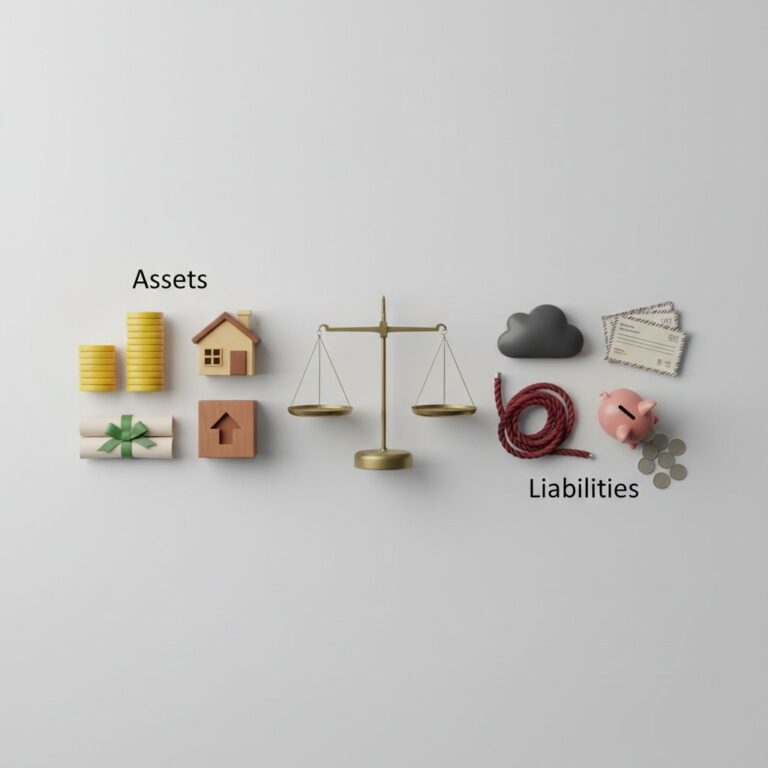
At its core, the distinction between an asset and a liability is simple: assets put money in your pocket, while liabilities take money out. While this simplified view, popularized by personal finance gurus like Robert Kiyosaki, offers an accessible entry point, a deeper dive into standard accounting practices reveals a more nuanced and universally applicable definition.
The Core Distinction: Economic Benefit vs. Obligation
An asset is anything of economic value that is owned by an individual or entity with the expectation that it will provide a future benefit. This benefit could be in the form of cash flow, appreciation, or the ability to generate income or reduce expenses.
A liability, conversely, is an obligation owed by one party to another, typically a sum of money. It represents a future sacrifice of economic benefits that the entity is bound to make due to past transactions or events.
Understanding Assets: Your Financial Building Blocks

Assets are the positive components of your financial picture, representing what you own that has value. They are critical for measuring net worth, business valuation, and overall financial strength. From a GAAP perspective, an asset is a resource controlled by the entity as a result of past events and from which future economic benefits are expected to flow to the entity.
| Feature | Assets | Liabilities |
|---|---|---|
| Definition | Economic resources owned by an individual/entity, expected to provide future economic benefits. | Financial obligations or debts owed to others, requiring future outflow of economic benefits. |
| Economic Flow | Generates income, appreciates in value, or provides utility/reduces expenses. | Requires payments, incurs interest, or costs money to maintain. |
| Balance Sheet Position | Left side (or top section) alongside Owner’s Equity. | Right side (or middle section) below assets. |
| Maturity/Liquidity | Can be classified as Current (liquid in < 1 year) or Non-Current (long-term). | Can be classified as Current (due in < 1 year) or Non-Current (long-term). |
| Impact on Net Worth | Increases net worth. | Decreases net worth. |
| Examples (Personal) | Savings, investments, real estate (rental), valuable collectibles. | Credit card debt, mortgage, car loan, student loans. |
| Examples (Business) | Cash, accounts receivable, inventory, property, plant, equipment (PP&E). | Accounts payable, salaries payable, loans payable, deferred revenue. |
[INLINE IMAGE 1: place after second H2 | alt=”Comparison diagram of personal assets vs liabilities on a balance sheet showing net worth calculation”]
Characteristics of Financial Assets
- Ownership: An asset must be owned or controlled by the individual or entity. This control allows the owner to benefit from its use or disposition.
- Economic Value: Assets must possess measurable economic value. This value might be readily convertible to cash or represent a future capacity to generate revenue or reduce costs.
- Future Benefit: The defining characteristic is the expectation of future economic benefits, whether direct cash inflow, potential for appreciation, or utility.
- Liquidity: This refers to how easily an asset can be converted into cash without significant loss of value. Highly liquid assets include cash and marketable securities.
- Depreciation/Appreciation: Assets can either lose (depreciate) or gain (appreciate) value over time. Understanding this dynamic is crucial for long-term financial planning.
Types of Assets: A Comprehensive Breakdown
Current Assets
These assets are expected to be converted into cash, sold, or consumed within one year or one operating cycle, whichever is longer. They represent the short-term financial health and operational liquidity of an entity.
- Cash and Cash Equivalents: The most liquid assets. This includes physical cash, checking accounts, savings accounts, and short-term investments that are readily convertible to known amounts of cash.
- Accounts Receivable: Money owed to an individual or business by its customers for goods or services delivered but not yet paid for.
- Inventory: Goods available for sale, raw materials, and work-in-progress. For a business, this is a significant asset that will eventually be converted into cash through sales.
- Marketable Securities: Investments that can be quickly bought or sold on a public exchange, such as stocks, bonds, and mutual funds, intended for short-term gains.
- Prepaid Expenses: Payments made in advance for goods or services that will be consumed in the near future, such as prepaid rent or insurance. While not cash, they represent a future benefit already paid for.
Non-Current (Long-Term) Assets
These assets are not expected to be converted into cash or used up within one year. They are typically held for longer periods to support operations or generate long-term wealth.
- Property, Plant, and Equipment (PP&E): Often referred to as fixed assets, these include land, buildings, machinery, vehicles, and furniture. They are tangible assets used in the production of goods or services. Except for land, these assets typically depreciate over their useful life.
- Long-Term Investments: Investments in stocks, bonds, real estate, or other ventures that are intended to be held for more than a year, often for capital appreciation or income generation. Examples include rental properties, diversified stock portfolios, or ownership stakes in other companies.
- Intangible Assets: These assets lack physical substance but have significant economic value. They include:
- Patents: Exclusive rights granted for an invention.
- Copyrights: Legal rights granted to creators of original works (e.g., books, music).
- Trademarks: Symbols, designs, or phrases legally registered and used by a company to represent its products or services.
- Goodwill: The value of a company’s reputation, brand name, and customer base, often recognized during the acquisition of another company.
- Natural Resources: Assets like oil reserves, timberland, and mineral deposits that are physically consumed during operation.
Understanding Liabilities: Your Financial Obligations
Liabilities represent what you owe to others – your debts and financial obligations. Just as assets can be a source of future benefit, liabilities represent a future outflow of economic resources. For a business, liabilities often arise from purchasing goods or services on credit, borrowing money, or collecting revenue in advance of performing services.
Characteristics of Financial Liabilities
- Obligation: A liability must represent a present obligation to transfer economic benefits to another entity. This obligation can arise from contracts, laws, or even implied (constructive) obligations.
- Past Event: The obligation must have occurred as a result of a past transaction or event. You don’t have a liability for something you might do in the future, only for something you’ve already committed to.
- Settlement: Liabilities are eventually settled by the transfer of assets (usually cash), provision of services, or replacement of the obligation with another liability.
Types of Liabilities: What You Owe
Current Liabilities
These are obligations that are due to be settled within one year or one operating cycle, whichever is longer. Like current assets, they speak to an entity’s short-term financial demands.
- Accounts Payable: Money owed by an individual or business to its suppliers for goods or services purchased on credit.
- Notes Payable (Short-Term): Short-term loans or promissory notes that are due within one year.
- Salaries and Wages Payable: Money owed to employees for services rendered but not yet paid.
- Taxes Payable: Obligations to governmental authorities for income tax, sales tax, property tax, etc.
- Unearned Revenue (Deferred Revenue): Money received by a company for goods or services that have not yet been delivered or performed. Once services are rendered, this liability transforms into revenue.
- Current Portion of Long-Term Debt: The portion of a long-term loan that is due for payment within the next year.
Non-Current (Long-Term) Liabilities
These are obligations that are not due for settlement within one year. They represent long-term financial commitments.
- Long-Term Debt/Loans Payable: Loans, such as mortgages, bonds payable, or substantial bank loans, with repayment terms extending beyond one year.
- Bonds Payable: Formal financial instruments issued by corporations or governments to borrow large sums of money from investors, repayable over many years.
- Pension Obligations: A company’s future commitment to pay retirement benefits to its employees.
- Deferred Tax Liabilities: Taxes that are owed but not expected to be paid until a future period, often arising from differences in accounting and tax treatment of certain items.
- Lease Liabilities: Obligations arising from long-term lease agreements, often for property or equipment.
The Accounting Equation: Assets, Liabilities, and Owner’s Equity
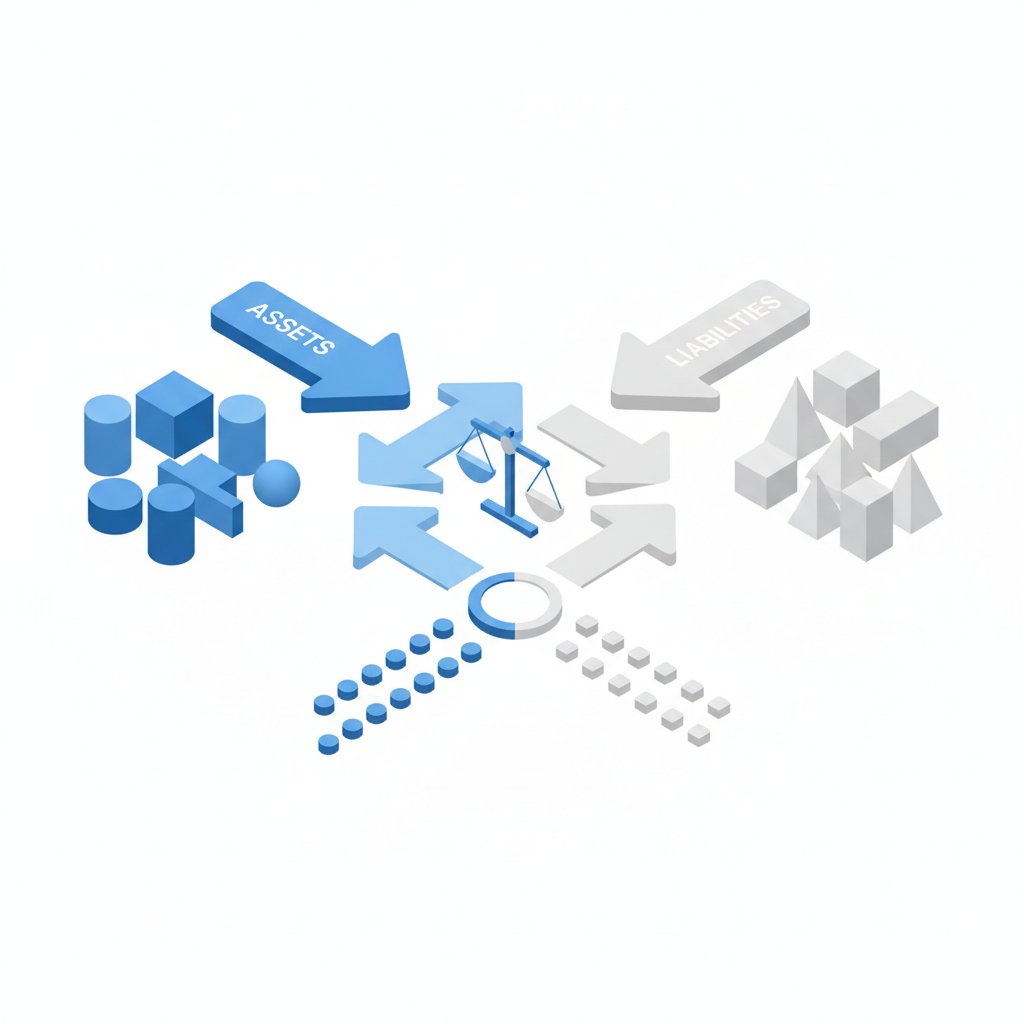
For businesses, the relationship between assets and liabilities is formally expressed through the fundamental accounting equation, also known as the balance sheet equation:
Assets = Liabilities + Owner's Equity
This equation must always remain in balance. It provides a snapshot of a company’s financial position at a specific point in time.
- Assets: As discussed, what the company owns.
- Liabilities: What the company owes to external parties (creditors).
- Owner’s Equity (or Shareholder’s Equity): The residual claim of the owners on the assets of the company after deducting liabilities. It represents the owners’ investment in the business plus any accumulated profits (retained earnings). In simpler terms, it’s what would be left for the owners if all assets were sold and all debts were paid.
Impact on Financial Statements
Assets and liabilities are prominently featured on a company’s Balance Sheet. This financial statement provides a snapshot of an entity’s financial health by listing its assets, liabilities, and owner’s equity as of a specific date. A carefully constructed balance sheet is key for investors, creditors, and management to assess solvency, liquidity, and overall financial stability.
Personal Finance: Assets, Liabilities, and Net Worth
While the terms “assets” and “liabilities” are critical in corporate accounting, they are equally relevant – and perhaps even more immediate – in personal finance. Understanding your personal balance sheet is the first step toward achieving financial well-being. Your net worth is the ultimate measure of your personal financial health.
Net Worth = Total Assets - Total Liabilities
Personal Financial Assets
For individuals, personal assets can be broadly categorized:
- Liquid Assets: Cash in checking and savings accounts, money market funds, and certificates of deposit (CDs).
- Investment Assets: Stocks, bonds, mutual funds, exchange-traded funds (ETFs), retirement accounts (401k, IRA), brokerage accounts, and other investment vehicles.
- Real Estate: Investment properties, undeveloped land.
- Personal Property: Vehicles, jewelry, collectibles, valuable artwork, and other possessions. The challenge here is often accurately assessing their market value.
- Business Ownership: Equity in a privately held business or freelance operation.
The “House” Debate: Asset or Liability?
This is one of the most frequently asked questions in personal finance, and the answer isn’t always straightforward. From a strict accounting perspective, your primary residence is generally considered a fixed asset on your personal balance sheet because it’s something you own that holds economic value and can be sold for cash.
However, from a “cash flow” perspective, as popularized by the Robert Kiyosaki model, a primary residence often acts more like a liability. Why? Because it typically generates ongoing expenses (mortgage payments, property taxes, insurance, utilities, maintenance, repairs) without directly generating income. Unless you rent out a portion of it or explicitly purchase it as an investment property, it’s an expense generator. Many financial experts argue that while it can build equity and appreciate in value over time, it drains cash from your pocket monthly. Therefore, it’s often debated as a “true” asset in the sense of putting money into your pocket.
For most people, a primary residence is both: an asset due to its market value and potential equity appreciation, and a liability due to the associated costs and financing. The goal for smart financial management is to minimize the liability aspects while maximizing the asset potential (e.g., paying down the mortgage, maintaining the property).
[INLINE IMAGE 2: place after fourth H2 | alt=”Detailed diagram illustrating personal net worth calculation: assets minus liabilities”]
Personal Financial Liabilities
These are the debts you owe that reduce your net worth:
- Mortgage Debt: The loan taken to purchase your home. For many, this is their largest liability.
- Student Loans: Debt incurred for educational expenses.
- Auto Loans: Debt for vehicle purchases.
- Credit Card Debt: High-interest debt accumulated through credit card usage. This is often targeted for aggressive repayment due to its compounding interest.
- Personal Loans: Unsecured loans for various purposes.
- Other Debts: Medical bills, payday loans, home equity lines of credit (HELOCs).
The Interplay: How Assets and Liabilities Dictate Financial Strategy
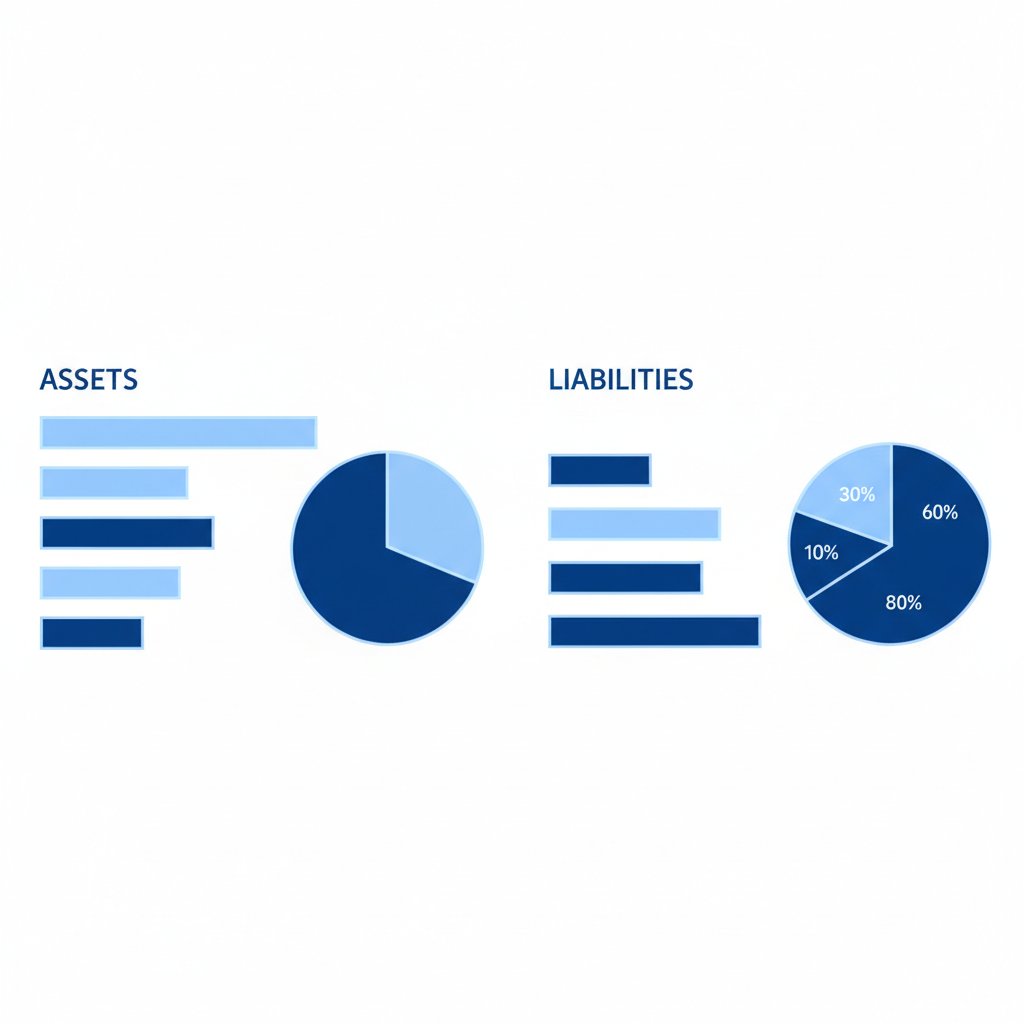
Understanding assets and liabilities isn’t just about categorization; it’s about strategic management. The balance (or imbalance) between what you own and what you owe shapes your financial decisions, from budgeting and saving to investing and debt repayment.
Building Net Worth: A Long-Term Goal
For individuals, the primary goal is often to increase net worth. This can be achieved in two main ways:
- Increasing Assets: Saving more, investing smartly, purchasing appreciating assets (e.g., rental properties, growth stocks), or building a profitable business.
- Decreasing Liabilities: Paying down debts, especially high-interest ones, and avoiding unnecessary new debt.
A healthy financial strategy typically involves a combination of both, focusing on acquiring assets that generate income or appreciate in value while simultaneously reducing or managing liabilities effectively. For example, diligently applying debt consolidation strategies can be a powerful way to streamline and reduce the burden of multiple high-interest liabilities.
Risk and Return Management
Different assets carry different levels of risk and potential return. Stocks generally offer higher potential returns but come with greater volatility, while bonds are typically less volatile but offer lower returns. Liabilities also have varying risk profiles; a fixed-rate mortgage is less risky than a variable-rate credit card with exorbitant interest. A savvy investor or business owner understands this intricate relationship to build a diversified portfolio that aligns with their risk tolerance and financial goals.
Liquidity and Solvency
For businesses, managing assets and liabilities is crucial for both liquidity and solvency:
- Liquidity: The ability to meet short-term obligations. A company with plenty of current assets relative to its current liabilities is highly liquid. Financial ratios like the current ratio (
Current Assets / Current Liabilities) are used to measure this. - Solvency: The ability to pay long-term debts. A company with healthy owner’s equity and manageable long-term liabilities is considered solvent. The debt-to-asset ratio (
Total Liabilities / Total Assets) is a key indicator here; a lower ratio typically indicates lower risk.
For individuals, liquidity means having enough accessible cash or liquid assets to cover unexpected expenses or short-term needs without having to sell long-term investments at an inopportune time. Solvency means your overall financial structure is sound enough to meet all your future financial obligations.
Advanced Concepts and Semantic Enrichment
To truly master the assets vs. liabilities framework, it’s helpful to consider some more advanced concepts that shed light on their dynamic nature and impact.
Depreciation and Amortization
Most tangible assets (except land) lose value over time due to wear and tear, obsolescence, or usage. This loss of value is recorded as depreciation (for tangible assets like buildings, machinery) or amortization (for intangible assets like patents, copyrights). While it reduces the book value of an asset on the balance sheet, it’s also a non-cash expense that impacts a company’s profitability and taxes.
Contingent Liabilities
These are potential liabilities that may or may not become actual obligations depending on the outcome of a future event. For example, a company facing a lawsuit has a contingent liability. If the lawsuit is significant and probable, a provision might be made on the balance sheet. This highlights the forward-looking nature of financial reporting and risk assessment.
Operating vs. Non-Operating Assets/Liabilities
- Operating Assets/Liabilities: Those directly tied to the primary business operations (e.g., inventory, accounts receivable/payable, equipment). They are essential for generating core revenue.
- Non-Operating Assets/Liabilities: Those not directly involved in day-to-day operations but still contribute to financial health (e.g., long-term investments, marketable securities, dividend income, long-term debt used for expansion).
Distinguishing between these helps in analyzing a company’s operational efficiency versus its overall financial strategy.
The Role of Retained Earnings
Retained earnings are a crucial component of owner’s equity. They represent the cumulative net income of a company that has been retained by the business rather than distributed to shareholders as dividends. A high level of retained earnings signals that a company has successfully generated profits and reinvested them, either to increase assets or reduce liabilities, thereby strengthening its financial position.
Interrelationship with Cash Flow
While assets and liabilities are balance sheet items (a snapshot), they have a profound impact on a company’s (or individual’s) cash flow (a flow over time). For instance, an increase in accounts receivable (an asset) reduces current cash flow, while a decrease in accounts payable (a liability) requires a cash outflow. Understanding both the balance sheet and the cash flow statement is essential for complete financial analysis. Many personal finance gurus advocate for increasing “income-generating assets” — assets that directly contribute to positive cash flow.
Strategic Management: Transforming Liabilities into Assets (or Mitigating Them)
Effective financial management often involves a strategic approach to both assets and liabilities. It’s not always about eliminating all liabilities, as some debt can be “good” (e.g., a mortgage on an appreciating asset, or a business loan used for profitable expansion). The key is intelligent management.
Leveraging Debt for Growth
In business, taking on liabilities (like loans) can be a strategic move to acquire assets (like new machinery or property) that generate more revenue than the cost of the debt. This is known as financial leverage. The same applies to individuals saving for a down payment or investing in education (a human capital asset) via student loans, with the expectation of higher future income.
Debt Refinancing and Consolidation
One common strategy to manage personal liabilities is to refinance high-interest debts (like credit cards) into lower-interest options (like personal loans or a home equity line of credit). This reduces the cost of the liability, freeing up cash flow. Similarly, debt consolidation combines multiple debts into a single, often lower, payment, simplifying management and potentially reducing overall interest paid. Our guide on debt consolidation strategies offers detailed methods for managing these obligations more effectively.
Asset Allocation and Diversification
For investors, strategic asset allocation involves distributing investments among various asset classes (stocks, bonds, real estate, commodities) to balance risk and return. Diversification within each asset class helps mitigate the impact of poor performance from any single asset. The goal is to build an asset base that is resilient and aligned with long-term financial objectives.
Monitoring Financial Ratios
Beyond the simple net worth calculation, certain financial ratios provide deeper insight into financial health. For instance, a high debt-to-income ratio for an individual or a high debt-to-equity ratio for a company would signal potential financial strain and a greater reliance on borrowed money. Regularly monitoring these ratios allows for proactive adjustments to financial strategy.
Conclusion: Your Path to Financial Clarity
Whether you’re a seasoned investor, a small business owner, or an individual striving for personal financial freedom, a clear understanding of assets and liabilities is non-negotiable. These two foundational concepts determine your net worth, influence your financial decisions, and paint a comprehensive picture of your economic standing.
By diligently identifying what you own that provides future benefit (your assets) and what you owe that requires future outflow (your liabilities), you empower yourself to make informed choices. This clarity enables you to build wealth, manage debt responsibly, and ultimately navigate your financial journey with confidence and foresight. Utilize the definitions, examples, and strategic insights provided here as your ongoing reference, and regularly assess your personal or business balance sheet to stay on track toward your financial goals.
Frequently Asked Questions
Q1: What is the primary difference between an asset and a liability?
A1: An asset is anything you own that has economic value and is expected to provide a future benefit, such as cash, investments, or property. A liability is an obligation or debt you owe to another party, requiring a future outflow of economic benefits, like a loan or credit card debt. In simple terms, assets put money in your pocket, while liabilities take money out.
Q2: Is a house considered an asset or a liability in personal finance?
A2: In traditional accounting, a primary residence is listed as an asset due to its market value and potential for appreciation. However, in personal finance, especially from a cash-flow perspective, it’s often viewed with characteristics of a liability because it typically incurs ongoing costs (mortgage, taxes, insurance, maintenance) without directly generating income. It can be both: an asset for its equity value, and a liability for its ongoing expenses.
Q3: How do assets and liabilities relate to net worth?
A3: Your net worth is calculated by subtracting your total liabilities from your total assets (Assets – Liabilities = Net Worth). A positive net worth indicates you own more than you owe, while a negative net worth means your debts exceed the value of your assets. Increasing assets and/or decreasing liabilities are the two main ways to improve your net worth.
Q4: What is the Accounting Equation and why is it important for businesses?
A4: The Accounting Equation is Assets = Liabilities + Owner's Equity. It’s fundamental to business accounting because it must always balance, providing a snapshot of a company’s financial position at any given time. It shows that a company’s assets are financed by either debt (liabilities) or owner contributions and retained earnings (owner’s equity).
Q5: Can liabilities be “good” or “bad”?
A5: Yes, liabilities can be categorized as “good” or “bad.” “Good” liabilities are typically those that enable you to acquire an income-generating or appreciating asset, or increase your wealth in the long run. Examples include a mortgage on a home that appreciates, a business loan used for expansion, or student loans for education that leads to higher earnings. “Bad” liabilities are usually high-interest debts for depreciating assets or consumption, like credit card debt or car loans for vehicles that rapidly lose value.
Assets vs. Liabilities: Key Differences and Financial Impact
Affiliate disclosure: This article may contain affiliate links. Recommendations are independent and editorially driven.
In the world of personal finance and business, understanding the fundamental concepts of assets and liabilities is not just an academic exercise – it’s the bedrock upon which sound financial decisions are built. Whether you’re tracking your personal net worth, analyzing a company’s financial health, or planning for a secure future, distinguishing between these two core elements is crucial. Far too often, individuals and even seasoned professionals conflate the two, leading to misguided strategies and unexpected financial pitfalls.
This comprehensive guide from diaalnews will empower you with a robust understanding of assets and liabilities, exploring their definitions, characteristics, and profound impact on both personal and corporate financial landscapes. We’ll delve into generally accepted accounting principles (GAAP) definitions, real-world examples, and practical applications, ensuring you can confidently navigate the complexities of your financial journey.
Assets vs. Liabilities: A Fundamental Comparison
At its core, the distinction between an asset and a liability is simple: assets put money in your pocket, while liabilities take money out. While this simplified view, popularized by personal finance gurus like Robert Kiyosaki, offers an accessible entry point, a deeper dive into standard accounting practices reveals a more nuanced and universally applicable definition.
The Core Distinction: Economic Benefit vs. Obligation
An asset is anything of economic value that is owned by an individual or entity with the expectation that it will provide a future benefit. This benefit could be in the form of cash flow, appreciation, or the ability to generate income or reduce expenses.
A liability, conversely, is an obligation owed by one party to another, typically a sum of money. It represents a future sacrifice of economic benefits that the entity is bound to make due to past transactions or events.
Understanding Assets: Your Financial Building Blocks
Assets are the positive components of your financial picture, representing what you own that has value. They are critical for measuring net worth, business valuation, and overall financial strength. From a GAAP perspective, an asset is a resource controlled by the entity as a result of past events and from which future economic benefits are expected to flow to the entity.
| Feature | Assets | Liabilities |
|---|---|---|
| Definition | Economic resources owned by an individual/entity, expected to provide future economic benefits. | Financial obligations or debts owed to others, requiring future outflow of economic benefits. |
| Economic Flow | Generates income, appreciates in value, or provides utility/reduces expenses. | Requires payments, incurs interest, or costs money to maintain. |
| Balance Sheet Position | Left side (or top section) alongside Owner’s Equity. | Right side (or middle section) below assets. |
| Maturity/Liquidity | Can be classified as Current (liquid in < 1 year) or Non-Current (long-term). | Can be classified as Current (due in < 1 year) or Non-Current (long-term). |
| Impact on Net Worth | Increases net worth. | Decreases net worth. |
| Examples (Personal) | Savings, investments, real estate (rental), valuable collectibles. | Credit card debt, mortgage, car loan, student loans. |
| Examples (Business) | Cash, accounts receivable, inventory, property, plant, equipment (PP&E). | Accounts payable, salaries payable, loans payable, deferred revenue. |
[INLINE IMAGE 1: place after second H2 | alt=”Comparison diagram of personal assets vs liabilities on a balance sheet showing net worth calculation”]
Characteristics of Financial Assets
- Ownership: An asset must be owned or controlled by the individual or entity. This control allows the owner to benefit from its use or disposition.
- Economic Value: Assets must possess measurable economic value. This value might be readily convertible to cash or represent a future capacity to generate revenue or reduce costs.
- Future Benefit: The defining characteristic is the expectation of future economic benefits, whether direct cash inflow, potential for appreciation, or utility.
- Liquidity: This refers to how easily an asset can be converted into cash without significant loss of value. Highly liquid assets include cash and marketable securities.
- Depreciation/Appreciation: Assets can either lose (depreciate) or gain (appreciate) value over time. Understanding this dynamic is crucial for long-term financial planning.
Types of Assets: A Comprehensive Breakdown
Current Assets
These assets are expected to be converted into cash, sold, or consumed within one year or one operating cycle, whichever is longer. They represent the short-term financial health and operational liquidity of an entity.
- Cash and Cash Equivalents: The most liquid assets. This includes physical cash, checking accounts, savings accounts, and short-term investments that are readily convertible to known amounts of cash.
- Accounts Receivable: Money owed to an individual or business by its customers for goods or services delivered but not yet paid for.
- Inventory: Goods available for sale, raw materials, and work-in-progress. For a business, this is a significant asset that will eventually be converted into cash through sales.
- Marketable Securities: Investments that can be quickly bought or sold on a public exchange, such as stocks, bonds, and mutual funds, intended for short-term gains.
- Prepaid Expenses: Payments made in advance for goods or services that will be consumed in the near future, such as prepaid rent or insurance. While not cash, they represent a future benefit already paid for.
Non-Current (Long-Term) Assets
These assets are not expected to be converted into cash or used up within one year. They are typically held for longer periods to support operations or generate long-term wealth.
- Property, Plant, and Equipment (PP&E): Often referred to as fixed assets, these include land, buildings, machinery, vehicles, and furniture. They are tangible assets used in the production of goods or services. Except for land, these assets typically depreciate over their useful life.
- Long-Term Investments: Investments in stocks, bonds, real estate, or other ventures that are intended to be held for more than a year, often for capital appreciation or income generation. Examples include rental properties, diversified stock portfolios, or ownership stakes in other companies.
- Intangible Assets: These assets lack physical substance but have significant economic value. They include:
- Patents: Exclusive rights granted for an invention.
- Copyrights: Legal rights granted to creators of original works (e.g., books, music).
- Trademarks: Symbols, designs, or phrases legally registered and used by a company to represent its products or services.
- Goodwill: The value of a company’s reputation, brand name, and customer base, often recognized during the acquisition of another company.
- Natural Resources: Assets like oil reserves, timberland, and mineral deposits that are physically consumed during operation.
Understanding Liabilities: Your Financial Obligations
Liabilities represent what you owe to others – your debts and financial obligations. Just as assets can be a source of future benefit, liabilities represent a future outflow of economic resources. For a business, liabilities often arise from purchasing goods or services on credit, borrowing money, or collecting revenue in advance of performing services.
Characteristics of Financial Liabilities
- Obligation: A liability must represent a present obligation to transfer economic benefits to another entity. This obligation can arise from contracts, laws, or even implied (constructive) obligations.
- Past Event: The obligation must have occurred as a result of a past transaction or event. You don’t have a liability for something you might do in the future, only for something you’ve already committed to.
- Settlement: Liabilities are eventually settled by the transfer of assets (usually cash), provision of services, or replacement of the obligation with another liability.
Types of Liabilities: What You Owe
Current Liabilities
These are obligations that are due to be settled within one year or one operating cycle, whichever is longer. Like current assets, they speak to an entity’s short-term financial demands.
- Accounts Payable: Money owed by an individual or business to its suppliers for goods or services purchased on credit.
- Notes Payable (Short-Term): Short-term loans or promissory notes that are due within one year.
- Salaries and Wages Payable: Money owed to employees for services rendered but not yet paid.
- Taxes Payable: Obligations to governmental authorities for income tax, sales tax, property tax, etc.
- Unearned Revenue (Deferred Revenue): Money received by a company for goods or services that have not yet been delivered or performed. Once services are rendered, this liability transforms into revenue.
- Current Portion of Long-Term Debt: The portion of a long-term loan that is due for payment within the next year.
Non-Current (Long-Term) Liabilities
These are obligations that are not due for settlement within one year. They represent long-term financial commitments.
- Long-Term Debt/Loans Payable: Loans, such as mortgages, bonds payable, or substantial bank loans, with repayment terms extending beyond one year.
- Bonds Payable: Formal financial instruments issued by corporations or governments to borrow large sums of money from investors, repayable over many years.
- Pension Obligations: A company’s future commitment to pay retirement benefits to its employees.
- Deferred Tax Liabilities: Taxes that are owed but not expected to be paid until a future period, often arising from differences in accounting and tax treatment of certain items.
- Lease Liabilities: Obligations arising from long-term lease agreements, often for property or equipment.
The Accounting Equation: Assets, Liabilities, and Owner’s Equity
For businesses, the relationship between assets and liabilities is formally expressed through the fundamental accounting equation, also known as the balance sheet equation:
Assets = Liabilities + Owner's Equity
This equation must always remain in balance. It provides a snapshot of a company’s financial position at a specific point in time.
- Assets: As discussed, what the company owns.
- Liabilities: What the company owes to external parties (creditors).
- Owner’s Equity (or Shareholder’s Equity): The residual claim of the owners on the assets of the company after deducting liabilities. It represents the owners’ investment in the business plus any accumulated profits (retained earnings). In simpler terms, it’s what would be left for the owners if all assets were sold and all debts were paid.
Impact on Financial Statements
Assets and liabilities are prominently featured on a company’s Balance Sheet. This financial statement provides a snapshot of an entity’s financial health by listing its assets, liabilities, and owner’s equity as of a specific date. A carefully constructed balance sheet is key for investors, creditors, and management to assess solvency, liquidity, and overall financial stability.
Personal Finance: Assets, Liabilities, and Net Worth
While the terms “assets” and “liabilities” are critical in corporate accounting, they are equally relevant – and perhaps even more immediate – in personal finance. Understanding your personal balance sheet is the first step toward achieving financial well-being. Your net worth is the ultimate measure of your personal financial health.
Net Worth = Total Assets - Total Liabilities
Personal Financial Assets
For individuals, personal assets can be broadly categorized:
- Liquid Assets: Cash in checking and savings accounts, money market funds, and certificates of deposit (CDs).
- Investment Assets: Stocks, bonds, mutual funds, exchange-traded funds (ETFs), retirement accounts (401k, IRA), brokerage accounts, and other investment vehicles.
- Real Estate: Investment properties, undeveloped land.
- Personal Property: Vehicles, jewelry, collectibles, valuable artwork, and other possessions. The challenge here is often accurately assessing their market value.
- Business Ownership: Equity in a privately held business or freelance operation.
The “House” Debate: Asset or Liability?
This is one of the most frequently asked questions in personal finance, and the answer isn’t always straightforward. From a strict accounting perspective, your primary residence is generally considered a fixed asset on your personal balance sheet because it’s something you own that holds economic value and can be sold for cash.
However, from a “cash flow” perspective, as popularized by the Robert Kiyosaki model, a primary residence often acts more like a liability. Why? Because it typically generates ongoing expenses (mortgage payments, property taxes, insurance, utilities, maintenance, repairs) without directly generating income. Unless you rent out a portion of it or explicitly purchase it as an investment property, it’s an expense generator. Many financial experts argue that while it can build equity and appreciate in value over time, it drains cash from your pocket monthly. Therefore, it’s often debated as a “true” asset in the sense of putting money into your pocket.
For most people, a primary residence is both: an asset due to its market value and potential equity appreciation, and a liability due to the associated costs and financing. The goal for smart financial management is to minimize the liability aspects while maximizing the asset potential (e.g., paying down the mortgage, maintaining the property).
[INLINE IMAGE 2: place after fourth H2 | alt=”Detailed diagram illustrating personal net worth calculation: assets minus liabilities”]
Personal Financial Liabilities
These are the debts you owe that reduce your net worth:
- Mortgage Debt: The loan taken to purchase your home. For many, this is their largest liability.
- Student Loans: Debt incurred for educational expenses.
- Auto Loans: Debt for vehicle purchases.
- Credit Card Debt: High-interest debt accumulated through credit card usage. This is often targeted for aggressive repayment due to its compounding interest.
- Personal Loans: Unsecured loans for various purposes.
- Other Debts: Medical bills, payday loans, home equity lines of credit (HELOCs).
The Interplay: How Assets and Liabilities Dictate Financial Strategy
Understanding assets and liabilities isn’t just about categorization; it’s about strategic management. The balance (or imbalance) between what you own and what you owe shapes your financial decisions, from budgeting and saving to investing and debt repayment.
Building Net Worth: A Long-Term Goal
For individuals, the primary goal is often to increase net worth. This can be achieved in two main ways:
- Increasing Assets: Saving more, investing smartly, purchasing appreciating assets (e.g., rental properties, growth stocks), or building a profitable business.
- Decreasing Liabilities: Paying down debts, especially high-interest ones, and avoiding unnecessary new debt.
A healthy financial strategy typically involves a combination of both, focusing on acquiring assets that generate income or appreciate in value while simultaneously reducing or managing liabilities effectively. For example, diligently applying debt consolidation strategies can be a powerful way to streamline and reduce the burden of multiple high-interest liabilities.
Risk and Return Management
Different assets carry different levels of risk and potential return. Stocks generally offer higher potential returns but come with greater volatility, while bonds are typically less volatile but offer lower returns. Liabilities also have varying risk profiles; a fixed-rate mortgage is less risky than a variable-rate credit card with exorbitant interest. A savvy investor or business owner understands this intricate relationship to build a diversified portfolio that aligns with their risk tolerance and financial goals.
Liquidity and Solvency
For businesses, managing assets and liabilities is crucial for both liquidity and solvency:
- Liquidity: The ability to meet short-term obligations. A company with plenty of current assets relative to its current liabilities is highly liquid. Financial ratios like the current ratio (
Current Assets / Current Liabilities) are used to measure this. - Solvency: The ability to pay long-term debts. A company with healthy owner’s equity and manageable long-term liabilities is considered solvent. The debt-to-asset ratio (
Total Liabilities / Total Assets) is a key indicator here; a lower ratio typically indicates lower risk.
For individuals, liquidity means having enough accessible cash or liquid assets to cover unexpected expenses or short-term needs without having to sell long-term investments at an inopportune time. Solvency means your overall financial structure is sound enough to meet all your future financial obligations.
Advanced Concepts and Semantic Enrichment
To truly master the assets vs. liabilities framework, it’s helpful to consider some more advanced concepts that shed light on their dynamic nature and impact.
Depreciation and Amortization
Most tangible assets (except land) lose value over time due to wear and tear, obsolescence, or usage. This loss of value is recorded as depreciation (for tangible assets like buildings, machinery) or amortization (for intangible assets like patents, copyrights). While it reduces the book value of an asset on the balance sheet, it’s also a non-cash expense that impacts a company’s profitability and taxes.
Contingent Liabilities
These are potential liabilities that may or may not become actual obligations depending on the outcome of a future event. For example, a company facing a lawsuit has a contingent liability. If the lawsuit is significant and probable, a provision might be made on the balance sheet. This highlights the forward-looking nature of financial reporting and risk assessment.
Operating vs. Non-Operating Assets/Liabilities
- Operating Assets/Liabilities: Those directly tied to the primary business operations (e.g., inventory, accounts receivable/payable, equipment). They are essential for generating core revenue.
- Non-Operating Assets/Liabilities: Those not directly involved in day-to-day operations but still contribute to financial health (e.g., long-term investments, marketable securities, dividend income, long-term debt used for expansion).
Distinguishing between these helps in analyzing a company’s operational efficiency versus its overall financial strategy.
The Role of Retained Earnings
Retained earnings are a crucial component of owner’s equity. They represent the cumulative net income of a company that has been retained by the business rather than distributed to shareholders as dividends. A high level of retained earnings signals that a company has successfully generated profits and reinvested them, either to increase assets or reduce liabilities, thereby strengthening its financial position.
Interrelationship with Cash Flow
While assets and liabilities are balance sheet items (a snapshot), they have a profound impact on a company’s (or individual’s) cash flow (a flow over time). For instance, an increase in accounts receivable (an asset) reduces current cash flow, while a decrease in accounts payable (a liability) requires a cash outflow. Understanding both the balance sheet and the cash flow statement is essential for complete financial analysis. Many personal finance gurus advocate for increasing “income-generating assets” — assets that directly contribute to positive cash flow.
Strategic Management: Transforming Liabilities into Assets (or Mitigating Them)
Effective financial management often involves a strategic approach to both assets and liabilities. It’s not always about eliminating all liabilities, as some debt can be “good” (e.g., a mortgage on an appreciating asset, or a business loan used for profitable expansion). The key is intelligent management.
Leveraging Debt for Growth
In business, taking on liabilities (like loans) can be a strategic move to acquire assets (like new machinery or property) that generate more revenue than the cost of the debt. This is known as financial leverage. The same applies to individuals saving for a down payment or investing in education (a human capital asset) via student loans, with the expectation of higher future income.
Debt Refinancing and Consolidation
One common strategy to manage personal liabilities is to refinance high-interest debts (like credit cards) into lower-interest options (like personal loans or a home equity line of credit). This reduces the cost of the liability, freeing up cash flow. Similarly, debt consolidation combines multiple debts into a single, often lower, payment, simplifying management and potentially reducing overall interest paid. Our guide on debt consolidation strategies offers detailed methods for managing these obligations more effectively.
Asset Allocation and Diversification
For investors, strategic asset allocation involves distributing investments among various asset classes (stocks, bonds, real estate, commodities) to balance risk and return. Diversification within each asset class helps mitigate the impact of poor performance from any single asset. The goal is to build an asset base that is resilient and aligned with long-term financial objectives.
Monitoring Financial Ratios
Beyond the simple net worth calculation, certain financial ratios provide deeper insight into financial health. For instance, a high debt-to-income ratio for an individual or a high debt-to-equity ratio for a company would signal potential financial strain and a greater reliance on borrowed money. Regularly monitoring these ratios allows for proactive adjustments to financial strategy.
Conclusion: Your Path to Financial Clarity
Whether you’re a seasoned investor, a small business owner, or an individual striving for personal financial freedom, a clear understanding of assets and liabilities is non-negotiable. These two foundational concepts determine your net worth, influence your financial decisions, and paint a comprehensive picture of your economic standing.
By diligently identifying what you own that provides future benefit (your assets) and what you owe that requires future outflow (your liabilities), you empower yourself to make informed choices. This clarity enables you to build wealth, manage debt responsibly, and ultimately navigate your financial journey with confidence and foresight. Utilize the definitions, examples, and strategic insights provided here as your ongoing reference, and regularly assess your personal or business balance sheet to stay on track toward your financial goals.
Frequently Asked Questions
Q1: What is the primary difference between an asset and a liability?
A1: An asset is anything you own that has economic value and is expected to provide a future benefit, such as cash, investments, or property. A liability is an obligation or debt you owe to another party, requiring a future outflow of economic benefits, like a loan or credit card debt. In simple terms, assets put money in your pocket, while liabilities take money out.
Q2: Is a house considered an asset or a liability in personal finance?
A2: In traditional accounting, a primary residence is listed as an asset due to its market value and potential for appreciation. However, in personal finance, especially from a cash-flow perspective, it’s often viewed with characteristics of a liability because it typically incurs ongoing costs (mortgage, taxes, insurance, maintenance) without directly generating income. It can be both: an asset for its equity value, and a liability for its ongoing expenses.
Q3: How do assets and liabilities relate to net worth?
A3: Your net worth is calculated by subtracting your total liabilities from your total assets (Assets – Liabilities = Net Worth). A positive net worth indicates you own more than you owe, while a negative net worth means your debts exceed the value of your assets. Increasing assets and/or decreasing liabilities are the two main ways to improve your net worth.
Q4: What is the Accounting Equation and why is it important for businesses?
A4: The Accounting Equation is Assets = Liabilities + Owner's Equity. It’s fundamental to business accounting because it must always balance, providing a snapshot of a company’s financial position at any given time. It shows that a company’s assets are financed by either debt (liabilities) or owner contributions and retained earnings (owner’s equity).
Q5: Can liabilities be “good” or “bad”?
A5: Yes, liabilities can be categorized as “good” or “bad.” “Good” liabilities are typically those that enable you to acquire an income-generating or appreciating asset, or increase your wealth in the long run. Examples include a mortgage on a home that appreciates, a business loan used for expansion, or student loans for education that leads to higher earnings. “Bad” liabilities are usually high-interest debts for depreciating assets or consumption, like credit card debt or car loans for vehicles that rapidly lose value.