Your Financial Firewall: An Emergency Fund Guide How Much To Save, Where, and Why It Matters
At Diaal News, we believe in equipping you with practical, actionable financial advice for everyday life. In this comprehensive guide, we’ll break down everything you need to know about building a robust emergency fund. We’ll explore why it’s a non-negotiable component of any sound financial plan, demystify the “how much” question with personalized strategies, walk you through the steps to build your fund, and explain where to keep it so it’s both safe and accessible. Prepare to gain the knowledge and tools to create a resilient financial future, starting today.
The Indispensable Shield: Why an Emergency Fund is Non-Negotiable
Imagine this scenario: your car suddenly needs a $1,500 repair, your pet requires urgent veterinary care costing $800, or worse, your company announces layoffs. Without immediate cash reserves, these situations can quickly escalate from minor inconveniences to major financial crises. This is where an emergency fund steps in – it’s your personal financial bodyguard, a liquid savings account reserved exclusively for unexpected, urgent expenses.
What Constitutes a True Emergency?
- Job Loss: This is arguably the most critical use. An emergency fund buys you time to find new employment without defaulting on bills.
- Medical Emergencies: Unforeseen deductibles, co-pays, or procedures not fully covered by insurance.
- Major Home Repairs: A burst pipe, a failing furnace, or a leaky roof that requires immediate attention to prevent further damage.
- Car Repairs: Essential for many who rely on their vehicle for work or daily life.
- Unexpected Travel: For family emergencies, funerals, or other critical situations.
What an emergency fund is not for: vacations, holiday shopping, a new gadget, or a down payment on a car (unless it’s an emergency replacement). These are discretionary expenses that should be budgeted for separately.
The Real-World Impact of Not Having One
“According to a recent Federal Reserve report, 37% of adults in 2023 would not be able to cover an unexpected expense of $400 using cash or its equivalent. For those without sufficient savings, such an emergency often leads to borrowing from friends or family, credit card debt, or even high-interest payday loans – trapping them in a cycle of debt and financial stress.”
The absence of an emergency fund doesn’t just create monetary problems; it generates immense psychological stress. It can damage credit scores, delay retirement savings, and even impact health and relationships. Building this fund is not just a financial strategy; it’s an investment in your mental well-being and long-term stability.
Demystifying the Goal: How Much to Save in Your Emergency Fund?
The Golden Rule: 3 to 6 Months of Essential Expenses
Financial experts consistently recommend building a cash reserve equivalent to three to six months of your non-negotiable monthly expenses. This benchmark provides a significant buffer against most financial setbacks, offering enough time to recover from job loss or manage a prolonged medical issue.
- Essential Expenses Defined: These are the costs you absolutely cannot avoid.
- Housing (rent/mortgage)
- Utilities (electricity, water, gas, internet)
- Groceries (basic food needs)
- Transportation (car payment, insurance, gas, public transit)
- Minimum debt payments (credit cards, student loans – only the minimum to avoid default)
- Insurance premiums (health, auto, home)
- Childcare costs
- Medications/healthcare necessities
- Discretionary Expenses Excluded: Don’t include things like dining out, entertainment subscriptions, gym memberships (unless a health necessity), shopping for non-essentials, or lavish vacations. These are the first things you’d cut in a real emergency.
Calculating Your Monthly Essentials: A Real-World Example
Let’s consider “Maria,” a single professional living in a mid-sized city:
- Rent: $1,200
- Utilities (electricity, internet, water): $150
- Groceries: $350
- Car Payment + Insurance + Gas: $400
- Student Loan Minimum: $200
- Health Insurance Premium: $100
- Total Essential Monthly Expenses: $2,400
Based on the 3-6 month rule, Maria’s emergency fund goal would be:
- 3 Months: $2,400 x 3 = $7,200
- 6 Months: $2,400 x 6 = $14,400
This range gives Maria a clear target, acknowledging that her personal circumstances might push her towards the lower or higher end of the spectrum.
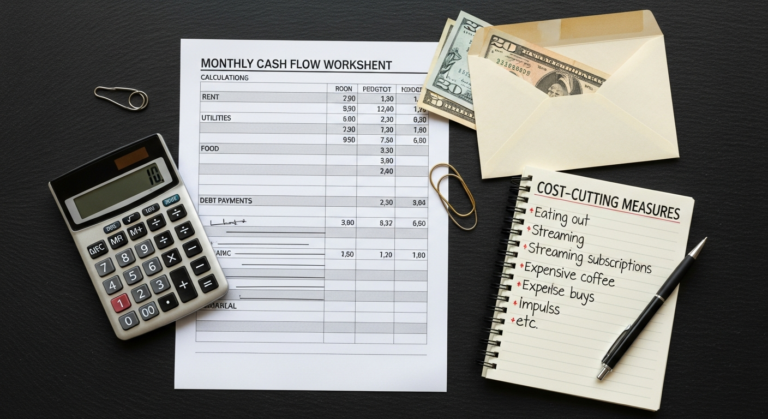
Your Actionable Step: Grab a pen and paper or open a spreadsheet. Go through your bank statements and bills for the last few months. Categorize every expense as “essential” or “discretionary.” Calculate your total essential monthly expenses. This foundational number is crucial for determining your personal emergency fund target.
Beyond the Blanket Rule: Personalizing Your Emergency Fund Target
While the 3-6 month guideline is a solid starting point, the optimal size of your emergency fund isn’t a one-size-fits-all number. Your personal situation, risk tolerance, and life stage significantly influence whether you should aim for the lower or higher end of the spectrum – or even exceed it.
Factors That Influence Your Ideal Emergency Fund Size
- Job Security & Income Stability:
- High Security (e.g., tenured government job, in-demand profession): You might be comfortable with 3-4 months.
- Lower Security (e.g., volatile industry, commission-based, self-employed, gig worker): Aim for 6-12 months or more. Your income can fluctuate wildly, and job searches might take longer.
- Number of Dependents:
- Single Individual: A 3-month fund might suffice if you have minimal obligations.
- Families with Children or Other Dependents: You have more people relying on your income and often higher essential expenses. A 6-9 month fund provides a safer cushion.
- Health & Insurance Coverage:
- Excellent Health, Comprehensive Insurance: You might need less to cover unexpected medical bills.
- Pre-existing Conditions, High-Deductible Health Plan: A larger fund (6+ months) is prudent to cover out-of-pocket maximums.
- Homeowner vs. Renter:
- Renter: Landlord is typically responsible for major repairs. You might aim for 3-6 months.
- Homeowner: You are responsible for all maintenance and repairs (roof, HVAC, appliances, plumbing). A larger fund (6-9 months) is often recommended to cover these potentially large, unexpected costs.
- Multiple Income Streams:
- Two-Income Household: If one income is lost, the other can provide some support, potentially allowing for a slightly smaller fund (e.g., 4-6 months).
- Single Income Household: Greater vulnerability to income loss means a larger fund (6-9+ months) is highly advisable.
- Proximity to Retirement:
- Early Career: More time to recover from setbacks.
- Nearing Retirement: Less time to make up for lost savings or income. A larger, more conservative fund (9-12 months) provides greater security.
When to Consider 6-12+ Months:
If you fall into categories with higher risk factors – for instance, you’re self-employed, have a family relying solely on your income, own an older home, or work in a very unstable industry – pushing your emergency fund goal to 6, 9, or even 12 months of expenses is a wise, proactive move. This extra buffer provides significant peace of mind in genuinely challenging times.
Your Actionable Step: Review the factors above. Based on your current situation, adjust your target. Do you feel 3 months is sufficient, or do your circumstances warrant aiming for 6, 9, or even 12 months of essential expenses? Don’t just pick a number; justify it to yourself based on your risk profile.
Building Your Financial Fortress: A Step-by-Step Guide to Saving
Once you’ve calculated your personalized emergency fund target, the next crucial step is to actually build it. This isn’t about magical solutions; it’s about consistent, disciplined action. Here’s a practical roadmap to get you there.
Step 1: Set a Realistic, Attainable Goal
If your ultimate goal is $15,000, don’t get overwhelmed. Break it down. Start with a “mini-fund” of $1,000. This initial goal is highly motivating, provides a quick win, and protects against smaller, common emergencies while you work towards the larger amount. It also acts as a crucial first line of defense before tackling high-interest debt.
Step 2: Create and Stick to a Budget
A budget isn’t about restriction; it’s about clarity and control. It helps you identify exactly where your money is going and, more importantly, where you can find extra cash for savings.
- Track Everything: For a month, diligently track every dollar you spend. Use an app, a spreadsheet, or a notebook.
- Identify Savings Opportunities: Look for “leaks” – those unnecessary recurring expenses (unused subscriptions), excessive spending categories (dining out, impulse buys), or areas where you can cut back temporarily (e.g., making coffee at home instead of buying it).
- Allocate Funds: Once you see where you can save, intentionally reallocate those funds to your emergency fund.
Step 3: Automate Your Savings
This is arguably the most powerful strategy. Treat your emergency fund contribution like any other bill – one that you pay yourself first.
- Direct Deposit: If your employer allows, have a portion of your paycheck automatically deposited into your emergency fund account.
- Recurring Transfers: Set up an automatic weekly or bi-weekly transfer from your checking account to your dedicated emergency fund savings account on payday. Even small, consistent amounts add up significantly over time (e.g., $50/week = $200/month = $2,400/year).
Step 4: Cut Expenses and Temporarily Live Lean
To accelerate your savings, consider a period of temporary financial austerity. This isn’t forever, but it helps you build momentum quickly.
- Meal Prep: Drastically reduce dining out and takeout.
- Review Subscriptions: Cancel any unused streaming services, apps, or memberships.
- Shop Smarter: Look for sales, use coupons, buy generic brands.
- Commute Alternatives: Walk, bike, or use public transport if feasible.
- “No-Spend” Challenges: Try a “no-spend” weekend or week, where you only buy absolute necessities.
Step 5: Boost Your Income
If cutting expenses isn’t enough or you want to save faster, consider ways to earn extra money:
- Sell Unused Items: Declutter your home and sell clothes, electronics, furniture, or collectibles on platforms like eBay, Facebook Marketplace, or local consignment shops.
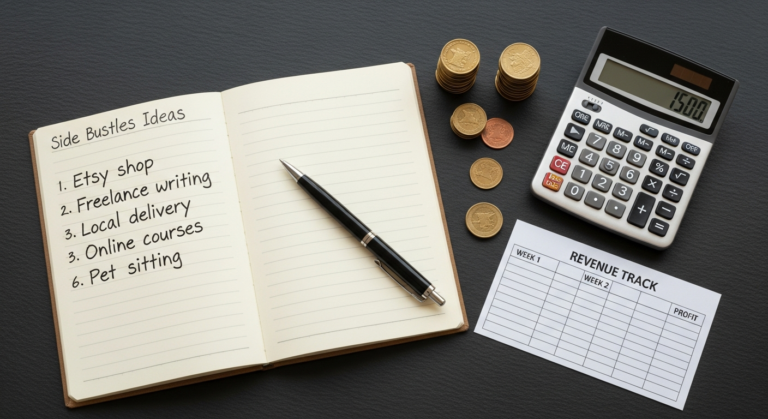
- Side Hustle: Drive for a ride-share service, freelance your skills (writing, graphic design, web development), babysit, pet-sit, or deliver food. Even a few hundred extra dollars a month can make a significant difference.
- Ask for a Raise/Negotiate: If applicable, review your current salary and responsibilities and consider negotiating for a raise at your current job.
Step 6: Celebrate Milestones
Building an emergency fund can feel like a long journey. Acknowledge your progress to stay motivated. Hit your $1,000 mini-fund? Treat yourself to a small, inexpensive reward (a nice coffee, a new book) – not a splurge that drains your fund, but something to mark your achievement.
Your Practical Takeaway: Start small, stay consistent, and automate. Even if you can only save $25 a week, that’s $1,300 in a year – a substantial beginning to your financial safety net.
Where to Park Your Peace of Mind: Best Accounts for Your Emergency Fund
Once you’re committed to building your emergency fund, the next question is where to keep it. The ideal location prioritizes safety, accessibility, and, if possible, some interest growth. You want your money to be there when you need it, without risk or unnecessary hurdles.
Key Characteristics of an Emergency Fund Account:
- Liquidity: You must be able to access the money quickly and easily, ideally within a day or two.
- Safety: Your funds should be insured by the FDIC (for banks) or NCUA (for credit unions) up to $250,000 per depositor.
- Separation: Keep it separate from your everyday checking account to avoid accidental spending.
- Modest Growth (Optional but Recommended): Earn some interest to help combat inflation, but don’t prioritize high returns over safety and liquidity.
Recommended Account Types:
- High-Yield Savings Accounts (HYSAs):
- Pros: Offer significantly higher interest rates than traditional savings accounts (often 4-5% APY or more, depending on market conditions). They are FDIC-insured, liquid, and typically have no monthly fees or minimum balance requirements (or easily met ones). Many are online-only, which helps keep the money out of sight and out of mind.
- Cons: Funds might take 1-3 business days to transfer to your checking account, which is still fast enough for most emergencies but not instant.
- Diaal News Says: This is generally the gold standard for emergency funds. Research online banks for the best rates and customer service.
- Money Market Accounts (MMAs):
- Pros: Similar to HYSAs, MMAs offer competitive interest rates and FDIC/NCUA insurance. Some MMAs offer limited check-writing privileges or a debit card, providing slightly faster access than an HYSA in some cases.
- Cons: Often come with higher minimum balance requirements and sometimes more fees than HYSAs.
- Diaal News Says: A good alternative if you find an MMA with a competitive rate and minimal fees, especially if you value the limited check-writing option.
Accounts to Avoid for Your Emergency Fund:
- Checking Accounts: While highly liquid, they typically offer very low (or no) interest and the money is too easily accessible, making it tempting to spend on non-emergencies.
- Stocks, Bonds, or Mutual Funds: These investments carry market risk. Your emergency fund should never lose value, and you might need the money at a time when the market is down. They are illiquid and volatile.
- Certificates of Deposit (CDs): CDs lock up your money for a fixed period (e.g., 6 months, 1 year, 5 years) in exchange for a higher interest rate. Early withdrawal penalties defeat the purpose of an emergency fund. (An exception might be a “no-penalty CD” for a small portion of a very large fund, but even then, HYSAs are usually better.)
- Retirement Accounts (401k, IRA): Withdrawing from these accounts before retirement age incurs penalties and taxes, severely undermining your retirement goals.
Your Actionable Step: Research high-yield savings accounts from reputable online banks. Compare interest rates, fees, minimum balance requirements, and transfer times. Open an account today that is separate from your everyday banking.
Maintaining Your Shield: Replenishing and Reviewing Your Emergency Fund
Building your emergency fund is a significant achievement, but it’s not a “set it and forget it” task. An emergency fund is a dynamic tool that needs ongoing attention to remain effective. Life changes, and so should your financial safety net.
When to Use Your Emergency Fund (And When Not To)
The cardinal rule: your emergency fund is for true emergencies only. Resist the urge to dip into it for tempting sales, unexpected but non-critical travel, or a down payment on a new gadget. Every time you consider using it, ask yourself:
“Is this an essential, unexpected expense that I cannot cover with my regular income or other designated savings without going into debt?”
If the answer is a resounding “yes,” then use it without guilt. That’s what it’s there for.
The Art of Replenishment: Paying Yourself Back
Using your emergency fund means it’s been depleted, even if partially. Your immediate priority, once the emergency has passed, should be to replenish it to its target level. Treat this replenishment like paying off a high-priority debt.
- Prioritize: Re-direct any extra income, bonuses, or discretionary spending towards rebuilding your fund.
- Automate Again: If you paused your automated transfers, restart them immediately. Increase the transfer amount if possible, even temporarily.
- Temporary Austerity: Go back to the “living lean” strategies you used to build it initially. Cut back on non-essentials until your fund is whole again.
Real-World Example: Sarah had a fully funded $10,000 emergency fund. Her furnace unexpectedly broke, costing $4,000. She used her emergency fund. For the next two months, she drastically cut her dining out budget, paused her gym membership, and worked an extra shift at her side hustle. She replenished $2,000 each month, bringing her fund back to $10,000 in just two months.
Regular Review: Life Changes, So Should Your Fund
Your ideal emergency fund size isn’t static. It needs to evolve with your life. Commit to reviewing your fund and your target goal at least once a year, or whenever significant life events occur:
- Job Change: A new, more secure job might mean you can adjust your target down slightly; a less secure role might mean you need to increase it.
- Marriage or Parenthood: Additional dependents almost always warrant a larger fund.
- Homeownership: Taking on the responsibility of home repairs means needing a larger cash cushion.
- Income Fluctuations: If your income increases, you might increase your fund to cover a higher standard of essential living. If it decreases, you might need to adjust your fund’s target down and then slowly rebuild to a more realistic amount.
- Debt Payoff: As you pay down debt, your minimum monthly payments decrease, potentially freeing up more cash for savings or allowing you to re-evaluate your essential expenses.
Your Practical Takeaway: Think of your emergency fund like a fire extinguisher – you hope you never need to use it, but if you do, it’s there. And once it’s used, the first thing you do is refill it so you’re ready for the next unforeseen event.
Emergency Fund vs. Other Financial Goals: Prioritization in Your Financial Plan
When you’re trying to save for retirement, pay off debt, and maybe even save for a down payment, it can feel overwhelming to know where to direct your money. The emergency fund, however, almost always takes precedence.
Why the Emergency Fund Comes First
Think of your financial life as a house. Your emergency fund is the foundation. Without a solid foundation, trying to build the walls (investments) or add a roof (retirement) is precarious. An unexpected financial shock can collapse the entire structure, forcing you to drain retirement accounts, take on high-interest debt, or delay other critical goals.
- Before Investing: While investing is vital for long-term wealth, investing before establishing an emergency fund is risky. If you need cash urgently and your investments are down, you’re forced to sell at a loss.
- Before Large Purchases: Saving for a down payment on a car or home is important, but not at the expense of your emergency fund. What if your new home needs an immediate repair, and your fund is empty because you put all your cash into the down payment?
The “Starter Fund” or “Mini-Fund” Exception for High-Interest Debt
There’s a common dilemma: what if I have high-interest credit card debt (e.g., 18-24% interest) and no emergency fund? Financial experts often recommend a slight modification:
- Save a “Mini-Fund” ($1,000-$2,000): This small buffer protects you from going further into debt for minor emergencies while you tackle your credit cards.
- Aggressively Pay Down High-Interest Debt: Once the mini-fund is established, direct all extra cash towards paying off the highest-interest debt. The guaranteed return from avoiding 20%+ interest rates often outweighs the benefit of keeping more cash in a low-interest savings account.
- Rebuild Full Emergency Fund: After paying off high-interest debt, immediately pivot back to fully funding your emergency fund to your 3-12 month target.
This strategy offers a balance between immediate protection and the undeniable financial drag of high-interest debt.
Your Practical Takeaway: Prioritize your emergency fund. It’s not about making you rich, but about keeping you solvent during tough times, allowing your other financial goals to remain on track.
Conclusion: Build Your Financial Peace of Mind Today
Navigating the uncertainties of life requires more than just hope; it demands preparation. An emergency fund isn’t a luxury; it’s a foundational pillar of sound financial health, offering a critical buffer against the unexpected and the peace of mind to weather any storm.
Throughout this emergency fund guide how much to save, we’ve explored its indispensable role, debunked the one-size-fits-all myth, provided actionable steps for building your fund, and outlined the best places to keep your hard-earned savings. From calculating your personalized target based on your unique circumstances to automating your contributions, every step you take brings you closer to financial resilience.
Don’t wait for a crisis to realize its importance. Start today. Take the first step by calculating your essential monthly expenses, setting an initial mini-fund goal, and opening a dedicated high-yield savings account. Your future self will thank you for laying this crucial groundwork. Your journey to financial security begins now.