Stocks, Bonds, and Mutual Funds Explained: Your Comprehensive 2026 Guide to Core Investments
Affiliate disclosure: This article may contain affiliate links. Recommendations are independent and editorially driven.
Navigating the world of personal finance can often feel like deciphering a complex code, especially when confronted with terms like stocks, bonds, and mutual funds. These three investment vehicles form the bedrock of most investment portfolios, yet their nuances, risks, and potential rewards remain a mystery to many aspiring investors. Understanding them is not just about accumulating wealth; it’s about gaining financial literacy, making informed decisions, and ultimately, taking control of your financial future.
In this comprehensive guide for 2026, diaalnews demystifies these fundamental investment options. We will break down what each vehicle is, how it works, its unique characteristics, and how they can be strategically combined to achieve your personal financial goals, whether that’s saving for retirement, a down payment, or simply growing your wealth. Our aim is to provide clarity, enabling you to build a robust and resilient investment strategy tailored to your aspirations and risk tolerance.
Forget the jargon and the intimidating market headlines. This article is your plain-English roadmap to understanding the core components of the investment universe. By the end, you’ll be equipped with the knowledge to confidently approach your investment journey, making choices that align with your long-term vision.
What Are Stocks? Understanding Equity Ownership and Growth Potential
Stocks, also known as equities, represent ownership shares in a company. When you buy a stock, you become a part-owner, or shareholder, of that company. Your share of ownership is proportional to the number of shares you hold relative to the total number of outstanding shares. Companies issue stocks to raise capital, which they use to fund operations, expand, develop new products, or pay off debt.
How Stocks Work: The Basics of Equity Investing
The journey of a stock begins when a private company decides to go public, often through an Initial Public Offering (IPO). This is when its shares are first offered to the public market. After the IPO, shares are traded on stock exchanges (like the NYSE or NASDAQ), where their prices fluctuate based on supply and demand, company performance, economic conditions, and investor sentiment.
- Capital Appreciation: The primary way investors make money from stocks is through capital appreciation. This occurs when the price of the stock increases from your purchase price, and you sell it for a profit. For example, if you buy a share for $50 and sell it for $75, you’ve gained $25 in capital appreciation (minus any trading fees).
- Dividends: Some companies distribute a portion of their profits to shareholders in the form of dividends. Dividends are typically paid quarterly, though some companies pay monthly or annually. While not all companies pay dividends (growth companies often reinvest profits), they can provide a steady stream of income for investors.
Types of Stocks: Common vs. Preferred Shares
While the term “stock” often refers to common stock, there are primarily two types:
- Common Stock: This is the most prevalent type of stock. Common shareholders have voting rights, allowing them to influence corporate policy and elect the board of directors. They also have the potential for significant capital gains if the company performs well. However, in the event of liquidation, common shareholders are among the last to receive payment after creditors and preferred shareholders.
- Preferred Stock: Preferred stock typically does not carry voting rights. However, preferred shareholders usually receive fixed dividend payments before common shareholders do. In the event of a company’s liquidation, preferred shareholders have a higher claim on assets than common shareholders, but still after creditors. Preferred stocks are often seen as a hybrid between stocks and bonds due to their fixed income nature.
Growth vs. Value vs. Income Stocks
Stocks can also be categorized by their investment style:
- Growth Stocks: These are shares of companies expected to grow at an above-average rate compared to the overall market. They often reinvest most of their earnings back into the company to fuel expansion, so they typically pay little to no dividends. Investors buy growth stocks hoping for significant capital appreciation.
- Value Stocks: These are shares of companies that are perceived to be undervalued by the market. They might have strong fundamentals but are trading at a lower price relative to their earnings, assets, or dividends. Value investors seek to profit when the market eventually recognizes the true worth of these companies.
- Income Stocks: These are typically mature, stable companies that pay regular, often substantial, dividends. Investors buy income stocks for the steady cash flow they provide, which can be particularly attractive for retirees or those seeking consistent income.
Pros and Cons of Investing in Stocks
Pros:
- High Growth Potential: Historically, stocks have offered the highest returns among major asset classes over the long term.
- Inflation Hedge: Company earnings and stock prices tend to rise with inflation, offering some protection against the erosion of purchasing power.
- Liquidity: Most publicly traded stocks can be bought and sold quickly on exchanges.
- Ownership: Common stocks provide voting rights, giving investors a say in the company’s direction.
Cons:
- High Volatility: Stock prices can fluctuate dramatically in the short term due to market sentiment, economic news, or company-specific events.
- Market Risk: The value of your investment can decline significantly, potentially leading to losses. There’s no guarantee of returns.
- Time and Research: Identifying good individual stocks requires diligent research and an understanding of financial statements and market trends.
Investing in stocks is an exhilarating journey that, while carrying inherent risks, offers the potential for substantial rewards. It’s crucial for investors to understand the companies they’re investing in, their financial health, and the broader economic landscape. For those starting their investment journey, focusing on diversified approaches can often mitigate some of the risks associated with individual stock picking.
[INLINE IMAGE 1: place after second H2 | alt=”stocks bonds mutual funds explained concept illustration”]
What Are Bonds? Understanding Debt Instruments and Income Generation

If stocks represent ownership, bonds represent debt. When you buy a bond, you are essentially lending money to a government, municipality, or corporation. In return for your loan, the issuer promises to pay you regular interest payments (called coupon payments) over a specified period, and then return your original principal (face value) at maturity.
How Bonds Work: The Mechanism of Debt Investing
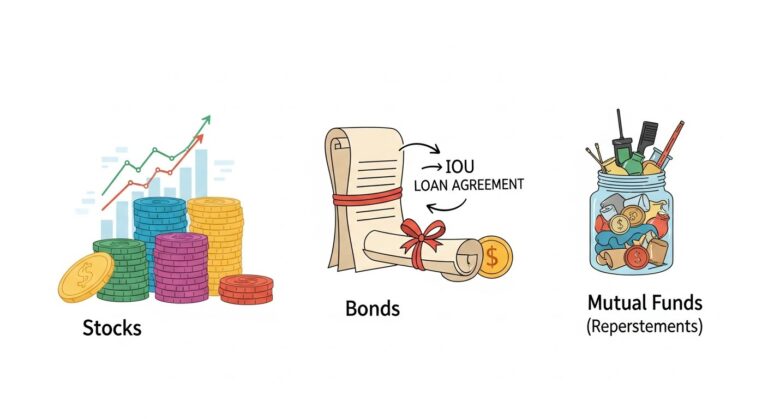
Bonds are essentially IOUs. Here’s how the key components work:
- Issuer: The entity borrowing the money (e.g., U.S. Treasury, Apple Inc., City of New York).
- Face Value (Par Value): The amount of money the bond issuer promises to pay back at maturity. This is typically $1,000 per bond, though it can vary.
- Coupon Rate (Interest Rate): The annual interest rate the issuer pays on the face value of the bond. For example, a $1,000 bond with a 5% coupon rate will pay $50 in interest per year.
- Maturity Date: The date on which the issuer repays the face value of the bond to the bondholder. Maturities can range from a few months (short-term) to 30 years or more (long-term).
- Yield: While the coupon rate is fixed, the bond’s yield (the actual return an investor receives) can change. If you buy a bond at a discount (below face value), your yield will be higher than the coupon rate. If you buy it at a premium (above face value), your yield will be lower. The most common yield quoted is the “yield to maturity” (YTM), which calculates the total return if the bond is held until it matures.
Bonds are traded on an over-the-counter market, and their prices can fluctuate based on prevailing interest rates. When interest rates rise, existing bonds with lower coupon rates become less attractive, and their market price tends to fall. Conversely, when interest rates fall, existing bonds with higher coupon rates become more appealing, and their market price tends to rise. This is known as interest rate risk.
Types of Bonds: Exploring Various Issuers and Features
Bonds come in various forms, each with distinct characteristics and risk profiles:
- Government Bonds:
- Treasury Bills (T-Bills): Short-term bonds (maturity of one year or less) issued by the U.S. Treasury. They are sold at a discount and mature at face value.
- Treasury Notes (T-Notes): Intermediate-term bonds (maturity of 2-10 years) issued by the U.S. Treasury. They pay interest every six months.
- Treasury Bonds (T-Bonds): Long-term bonds (maturity of 10-30 years) issued by the U.S. Treasury. They also pay interest every six months.
- Agency Bonds: Issued by government-sponsored enterprises (GSEs) like Fannie Mae or Freddie Mac. While not directly backed by the U.S. government, they are generally considered very safe.
Government bonds, especially U.S. Treasuries, are considered among the safest investments globally, often referred to as “risk-free” assets (though they still carry interest rate risk and inflation risk).
- Municipal Bonds (“Munis”): Issued by state and local governments to finance public projects like schools, roads, or hospitals. A key feature of municipal bonds is that their interest income is often exempt from federal income tax, and sometimes state and local taxes for residents of the issuing state. This tax advantage makes them particularly attractive to high-income investors.
- Corporate Bonds: Issued by companies to raise capital for their operations, expansion, or debt refinancing. Corporate bonds carry a higher credit risk than government bonds, as companies can default on their debt. To compensate for this higher risk, corporate bonds typically offer higher coupon rates than government bonds of similar maturity. Their credit quality is assessed by rating agencies (e.g., S&P, Moody’s, Fitch).
- Other Types: There are many other types, including:
- Zero-Coupon Bonds: These bonds do not pay regular interest. Instead, they are sold at a deep discount to their face value and mature at par, with the investor’s return coming from the difference between the purchase price and the face value.
- Inflation-Protected Securities (TIPS): U.S. Treasury bonds whose principal value adjusts with inflation, protecting investors’ purchasing power.
Pros and Cons of Investing in Bonds
Pros:
- Lower Risk: Generally less volatile than stocks, especially government bonds.
- Income Generation: Provide predictable interest payments, making them attractive for income-focused investors.
- Portfolio Diversification: Can help stabilize a portfolio during stock market downturns, as their performance is often inversely correlated with stocks.
- Capital Preservation: If held to maturity, you are guaranteed to receive your principal back (assuming the issuer doesn’t default).
Cons:
- Lower Returns: Historically, bonds have offered lower returns than stocks over the long term.
- Interest Rate Risk: Rising interest rates can cause the market value of existing bonds to fall.
- Inflation Risk: The fixed income payments from bonds may lose purchasing power over time if inflation outpaces the coupon rate.
- Credit Risk (Default Risk): The risk that the bond issuer may not be able to make its interest payments or repay the principal (more prevalent with corporate bonds).
Bonds serve as a critical component of a balanced investment portfolio, offering stability and income. They are particularly favored by investors approaching or in retirement, or those with a lower risk tolerance. Understanding the different types and their associated risks is key to incorporating them effectively into your financial plan.
What Are Mutual Funds? The Power of Pooled Investments
Mutual funds are investment vehicles that pool money from multiple investors to invest in a diversified portfolio of securities, such as stocks, bonds, money market instruments, and other assets. Professional money managers operate these funds, making investment decisions on behalf of the fund’s shareholders.
How Mutual Funds Work: Diversification and Professional Management
When you invest in a mutual fund, you purchase shares in the fund itself. The price of a mutual fund share is determined by its Net Asset Value (NAV), which is calculated daily by taking the total value of the fund’s assets (minus liabilities) and dividing it by the number of outstanding shares. As the value of the fund’s underlying investments increases or decreases, so does the NAV per share.
- Pooling Resources: Many investors combine their money, allowing the fund to buy a wider range of securities than an individual investor could typically afford.
- Professional Management: A dedicated fund manager or team researches, selects, and manages the fund’s investments according to a stated investment objective (e.g., growth, income, international exposure). This expertise is particularly valuable for investors who lack the time or knowledge to manage their own portfolios.
- Diversification: By investing in a basket of securities, mutual funds automatically provide diversification, reducing the impact of a poor performance by any single security.
- Liquidity: Mutual fund shares can typically be bought or sold at the end of each trading day at their NAV.
Types of Mutual Funds: Matching Your Goals and Risk Tolerance
Mutual funds are broadly categorized by their primary investment objective and the types of securities they hold:
- Equity Funds (Stock Funds): Invest primarily in stocks. These can be further broken down by:
- Growth Funds: Focus on companies with high growth potential.
- Value Funds: Seek out undervalued companies.
- Income Funds: Invest in dividend-paying stocks.
- Sector Funds: Concentrate on specific industries (e.g., technology, healthcare).
- Index Funds: Designed to track the performance of a specific market index (e.g., S&P 500, Nasdaq 100) by holding the same securities in the same proportions. These are typically passively managed and have lower fees.
- International/Global Funds: Invest in non-U.S. companies.
- Bond Funds (Fixed-Income Funds): Invest primarily in bonds, offering income and generally lower volatility than stock funds. They can be categorized by the type of bonds they hold (e.g., government bond funds, corporate bond funds, municipal bond funds) or their maturity (short-term, intermediate-term, long-term). Bond funds are still subject to interest rate risk.
- Balanced Funds: Invest in a mix of both stocks and bonds, aiming for a balance of growth and income. The allocation between stocks and bonds can vary significantly, often adjusted by the fund manager based on market conditions or a predetermined ratio (e.g., 60% stocks, 40% bonds).
- Money Market Funds: Invest in highly liquid, short-term debt instruments like Treasury bills, commercial paper, and certificates of deposit. They are considered very low-risk and aim to preserve capital while providing modest income. They are often used for short-term savings or as a parking spot for cash.
- Specialty Funds: These include funds that invest in commodities, real estate (REITs), or employ specific strategies like socially responsible investing (SRI) or environmental, social, and governance (ESG) investing.
Understanding Mutual Fund Fees and Expenses
While mutual funds offer significant benefits, it’s crucial to understand their costs:
- Expense Ratio: This is an annual fee, expressed as a percentage of your investment, that covers the fund’s operating expenses, including management fees, administrative costs, and marketing. It’s deducted directly from the fund’s assets, so you don’t receive a separate bill. Lower expense ratios generally lead to higher net returns over time.
- Sales Loads (Commissions): Some funds charge a sales load, which is a commission paid to the broker who sold you the fund.
- Front-End Load: Charged when you buy shares.
- Back-End Load (Deferred Sales Charge): Charged when you sell shares, often declining over time.
- No-Load Funds: Do not charge a sales load. These are generally favored by cost-conscious investors.
- 12b-1 Fees: Annual fees used to cover marketing and distribution costs.
Pros and Cons of Investing in Mutual Funds
Pros:
- Diversification: Instant diversification across numerous securities, reducing specific company risk.
- Professional Management: Expertise of fund managers who actively monitor and adjust the portfolio.
- Convenience: Easy to invest in and manage, suitable for hands-off investors.
- Accessibility: Low minimum investment requirements for many funds, making them accessible to a broad range of investors.
Cons:
- Fees and Expenses: Expense ratios, loads, and other fees can erode returns, especially over long periods.
- Lack of Control: You have no say in the specific investments chosen by the fund manager.
- Tax Inefficiency: Actively managed funds may generate capital gains distributions (from selling securities within the fund) that are taxable, even if you haven’t sold your fund shares.
- Potential for Underperformance: Many actively managed funds struggle to consistently beat their benchmark index after fees.
For many investors, mutual funds, particularly low-cost index funds, serve as an excellent entry point into investing. They provide an accessible way to build a diversified portfolio with professional oversight, making them a cornerstone of long-term financial planning.
[INLINE IMAGE 2: place after fourth H2 | alt=”stocks bonds mutual funds explained comparison illustration”]
Stocks vs. Bonds vs. Mutual Funds: A Fundamental Comparison
Understanding the individual characteristics of stocks, bonds, and mutual funds is only the first step. The true power lies in grasping how they compare and complement each other within a broader investment strategy. Each asset class plays a distinct role, catering to different financial goals, risk appetites, and time horizons.
Risk and Return Profile: The Inherent Trade-Off
- Stocks (Equity): Generally considered the highest risk, but also offer the highest potential for long-term returns. Their value can fluctuate wildly in the short term, but historically, they have outperformed other asset classes over decades. They are best suited for investors with a long time horizon who can ride out market volatility.
- Bonds (Fixed Income): Typically lower risk than stocks, offering more predictable, albeit generally lower, returns. They are less volatile and provide a stable income stream. Bonds are good for capital preservation and as a defensive component in a portfolio, especially for investors closer to retirement or with a shorter time horizon. They still carry interest rate and credit risk.
- Mutual Funds: Their risk and return profile depend entirely on their underlying holdings.
- An equity mutual fund (stock fund) will have a similar risk/return profile to investing directly in a diversified basket of stocks.
- A bond mutual fund will behave similarly to a portfolio of individual bonds.
- A balanced mutual fund, with a mix of stocks and bonds, will offer an intermediate risk/return profile.
- Money market funds are at the lowest end of the risk spectrum, offering minimal returns but maximum capital preservation.
The key advantage of mutual funds is that they enable investors to achieve a desired risk/return profile through diversification, often at a lower cost and with less effort than building a diversified portfolio of individual stocks and bonds.
Income Generation vs. Capital Appreciation
- Stocks: Primarily sought for capital appreciation (growth in value), although many provide income through dividends. Growth stocks prioritize capital appreciation, while income stocks focus on dividends.
- Bonds: Primarily an income-generating investment, providing regular interest payments. Capital appreciation can occur if interest rates fall, but it’s not the primary driver for most bond investors.
- Mutual Funds: Can be structured for either capital appreciation (equity growth funds) or income generation (bond funds, dividend stock funds), or a combination (balanced funds), depending on their objective.
Diversification and Portfolio Role
- Stocks: While individual stocks carry high company-specific risk, a diversified portfolio of stocks (e.g., across various industries, market caps, and geographies) can reduce this risk significantly while still aiming for growth. They are the engine of long-term portfolio growth.
- Bonds: Excellent for diversification, especially when combined with stocks. Because bond prices often move inversely or uncorrelated to stock prices, they can cushion a portfolio during stock market downturns. They provide stability and ballast.
- Mutual Funds: Offer instant diversification by their very nature. They simplify the process of achieving a diversified portfolio across different asset classes, market segments, or geographic regions. They are a powerful tool for investors who want broad market exposure without picking individual securities.
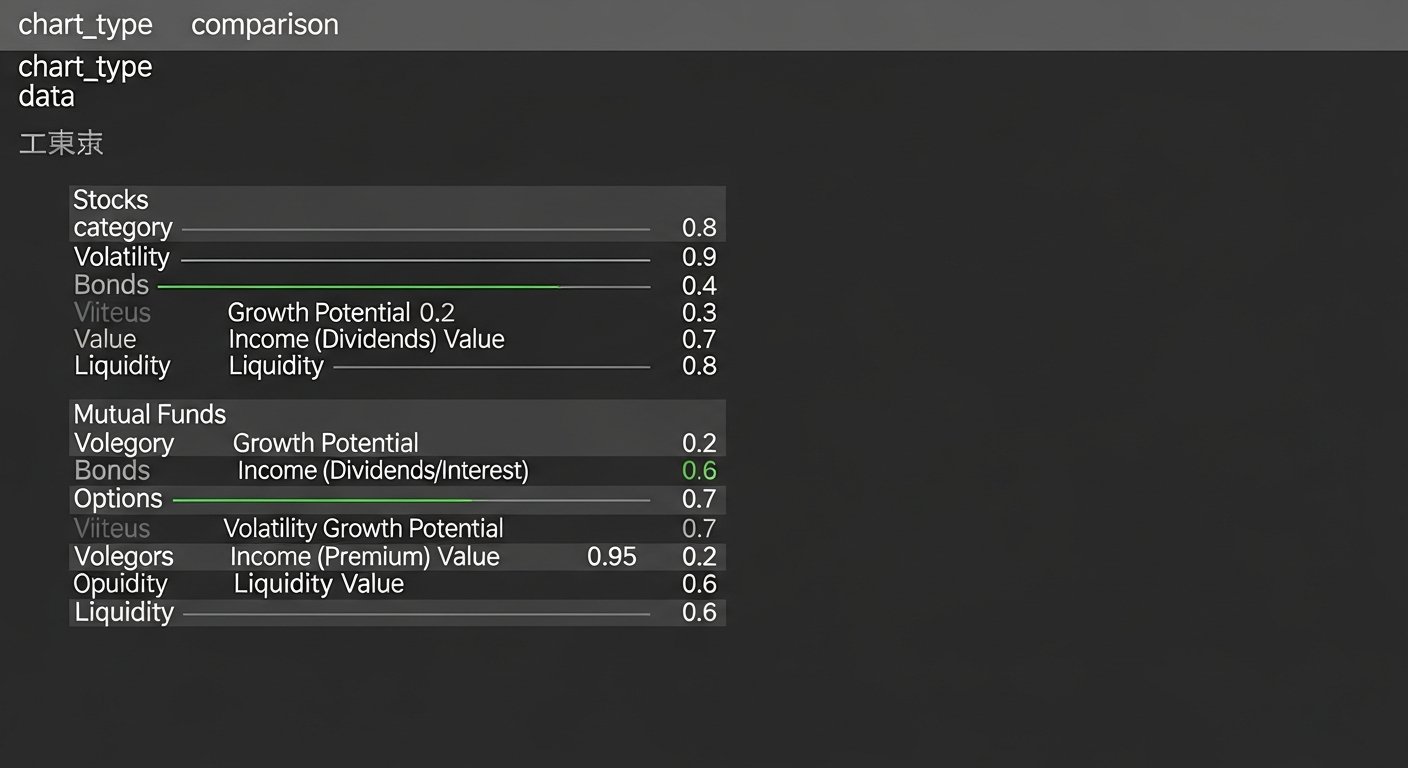
Here’s a simplified comparison table to highlight the key differences:
| Feature | Stocks (Equities) | Bonds (Fixed Income) | Mutual Funds |
|---|---|---|---|
| What it is | Ownership stake in a company | A loan to a government or corporation | A professionally managed collection of securities (stocks, bonds, etc.) |
| Primary Goal | Capital appreciation (growth) | Income generation, capital preservation | Depends on fund’s objective (growth, income, balanced) |
| Risk Level | High (Volatility, company-specific risk) | Lower (Interest rate risk, credit risk) | Varies greatly (low for money market, high for aggressive equity fund) |
| Typical Return | Highest potential long-term returns | Moderate, predictable income | Varies (can be high for equity funds, low for bond/money market funds) |
| Income Source | Dividends (optional) | Fixed interest payments (coupon) | Dividends, interest, capital gains from underlying assets |
| Diversification | Poor (for single stock), Excellent (for diversified portfolio) | Good (for portfolio stability) | Excellent (inherent in fund structure) |
| Management | Self-managed (direct ownership) | Self-managed (direct ownership) | Professional fund managers |
| Liquidity | High (traded on exchanges) | Moderate to High (traded OTC) | Daily (NAV based) |
| Fees | Brokerage commissions (per trade) | Brokerage commissions (per trade) | Expense ratio, sometimes sales loads (front-end, back-end), 12b-1 fees |
Building a Diversified Portfolio: The Art of Asset Allocation
The magic of investing isn’t just in understanding stocks, bonds, and mutual funds individually, but in knowing how to combine them effectively into a diversified portfolio. This strategic combination is known as asset allocation, and it’s perhaps the most critical determinant of long-term investment success. A well-constructed portfolio aims to balance risk and return, align with your personal financial goals, and stand resilient against market fluctuations.
Learn more about effective portfolio rebalancing strategies.
The Core Principles of Asset Allocation
- Diversification Across Asset Classes: The fundamental idea is “don’t put all your eggs in one basket.” By investing in a mix of stocks (growth potential), bonds (stability and income), and potentially other assets, you reduce the overall risk of your portfolio. When one asset class performs poorly, another might perform well, cushioning the impact on your total portfolio value.
- Risk Tolerance: This is your emotional and financial ability to withstand market downturns.
- Aggressive investors (typically younger, long time horizon) may allocate a higher percentage to stocks to maximize growth potential, accepting higher volatility.
- Conservative investors (closer to retirement, shorter time horizon, low comfort with risk) may favor a higher allocation to bonds and cash equivalents to preserve capital and generate income.
Understanding your true risk tolerance is vital. A portfolio that makes you lose sleep is not the right portfolio, no matter how theoretically optimal it seems.
- Time Horizon: The length of time you plan to invest your money before you need to access it.
- Longer time horizons (10+ years): Generally allow for higher stock allocations. You have more time to recover from market dips.
- Shorter time horizons (under 5 years): Suggest a more conservative approach with higher bond or cash allocations, as there’s less time to recover from potential losses.
- Financial Goals: Your specific objectives will influence your asset allocation. Are you saving for retirement (long-term growth), a child’s education (mid-term), or a house down payment (shorter-term)? Each goal might warrant a slightly different allocation strategy.
Common Asset Allocation Strategies
While there’s no one-size-fits-all, here are some widely accepted allocation models:
- The “110 minus your age” Rule: A simple guideline suggesting that you subtract your age from 110 (or sometimes 120) to determine the percentage of your portfolio that should be allocated to stocks. The remaining percentage goes into bonds. For example, a 30-year-old might aim for 80% stocks and 20% bonds, while a 60-year-old might aim for 50% stocks and 50% bonds. This rule is a starting point and should be adjusted for individual circumstances.
- Fixed-Percentage Allocation: Maintaining a consistent ratio, such as 60% stocks and 40% bonds, regardless of market movements. This strategy requires periodic rebalancing to bring the portfolio back to its target percentages.
- Target-Date Funds: These are mutual funds (or ETFs) that automatically adjust their asset allocation over time. They start with a more aggressive (higher stock) allocation when you’re young and gradually become more conservative (higher bond) as you approach the target retirement date. They offer a hands-off approach to asset allocation.
The Role of Each Asset Class in a Portfolio
- Stocks: The Growth Engine. Stocks provide the primary potential for capital appreciation, allowing your wealth to outpace inflation and grow significantly over time. They are crucial for long-term wealth accumulation.
- Bonds: The Stabilizer and Income Provider. Bonds offer stability, reducing overall portfolio volatility. They provide a reliable stream of income and can act as a hedge during stock market downturns. They are essential for capital preservation and generating consistent cash flow.
- Mutual Funds: The Simplifier and Diversifier. Mutual funds can serve as building blocks for your asset allocation strategy. You can use an equity mutual fund for your stock allocation, a bond mutual fund for your fixed-income allocation, or even a balanced mutual fund if you prefer an all-in-one solution that manages the stock-bond mix for you. Index funds, in particular, offer broad market exposure at low costs.
Rebalancing Your Portfolio
Over time, market movements will cause your portfolio’s asset allocation to drift from your target percentages. For example, if stocks have a strong year, your stock allocation might grow to 70% instead of your target 60%. Rebalancing is the process of adjusting your portfolio back to your desired asset allocation. This typically involves selling some of the assets that have performed well and buying more of those that have underperformed, or simply directing new investments toward the underperforming assets. Rebalancing helps maintain your desired risk level and ensures you don’t become overexposed to a single asset class.
Successful investing is less about picking winning stocks and more about establishing a sound asset allocation strategy and sticking to it. By thoughtfully combining stocks, bonds, and mutual funds based on your risk tolerance, time horizon, and financial goals, you lay the foundation for a resilient portfolio designed to achieve your long-term aspirations.
Beyond the Basics: ETFs and Other Popular Investment Vehicles
While stocks, bonds, and mutual funds are foundational, the investment landscape offers a broader array of choices. Exchange-Traded Funds (ETFs) have emerged as incredibly popular alternatives, blending characteristics of both mutual funds and individual stocks. Understanding ETFs, alongside a brief mention of other vehicles, can further refine your investment strategy.
Exchange-Traded Funds (ETFs): The Hybrid Choice
ETFs are investment funds that hold assets like stocks, bonds, or commodities, but they trade on stock exchanges like individual stocks. This means their price fluctuates throughout the trading day, unlike mutual funds which are priced once daily at the end of the market close (NAV). ETFs offer the diversification benefits of mutual funds with the trading flexibility of stocks.
How ETFs Work
- Diversification: Like mutual funds, ETFs pool money from investors to buy a diversified portfolio of securities. Most ETFs are designed to track a specific index (e.g., S&P 500, NASDAQ 100), sector (e.g., technology, healthcare), commodity (e.g., gold, oil), or even bond market segment.
- Trading Flexibility: ETFs can be bought and sold at any time during market hours, just like individual stocks. This allows for intraday trading strategies, which is not possible with traditional mutual funds.
- Lower Costs: Many ETFs, especially index-tracking ETFs, tend to have lower expense ratios than actively managed mutual funds because they are passively managed. They also typically don’t have sales loads.
- Tax Efficiency: ETFs are generally more tax-efficient than actively managed mutual funds. Their structure often results in fewer capital gains distributions passed on to investors.
Explore the differences between ETFs and mutual funds in detail.
Types of ETFs
The variety of ETFs available is vast, covering virtually every asset class and strategy:
- Equity ETFs: Track stock market indexes (e.g., large-cap, small-cap, international), specific sectors, or investment styles (e.g., growth, value).
- Bond ETFs: Invest in various types of bonds (e.g., government, corporate, municipal) and maturities.
- Commodity ETFs: Invest in physical commodities (like gold) or futures contracts for commodities (like oil).
- Sector ETFs: Focus on specific industries (e.g., technology, healthcare, energy).
- International ETFs: Provide exposure to markets outside your home country.
- Specialty ETFs: Include inverse ETFs (betting against a market), leveraged ETFs (magnifying returns), and ESG ETFs.
For most long-term investors, broad-market index ETFs are excellent tools for building a diversified portfolio efficiently and cost-effectively.
Brief Overview of Other Investment Vehicles
While stocks, bonds, mutual funds, and ETFs form the core, other options exist for diversifying further or pursuing specific strategies:
- Real Estate: Can be invested in directly (e.g., rental properties) or indirectly through Real Estate Investment Trusts (REITs). REITs are companies that own, operate, or finance income-producing real estate across a range of property sectors. They trade like stocks on exchanges and offer liquidity and diversification to real estate exposure.
- Commodities: Raw materials like gold, silver, oil, natural gas, and agricultural products. Can be invested in via futures contracts, commodity ETFs, or stocks of companies involved in commodity production. They can act as an inflation hedge but are highly volatile.
- Alternative Investments: A broad category including private equity, hedge funds, structured products, and even cryptocurrencies. These typically have higher minimum investments, lower liquidity, and more complex risk profiles, making them generally suitable for sophisticated or institutional investors.
For the average investor focused on long-term wealth building, mastering stocks, bonds, and various types of mutual funds/ETFs is more than sufficient. These foundational instruments provide ample opportunity for diversification and growth while remaining relatively accessible and transparent.
Key Considerations Before Investing: Navigating the Market with Confidence
Embarking on your investment journey requires more than just understanding the instruments; it demands a thoughtful approach to risk, costs, taxes, and market realities. Before you commit your hard-earned money, it’s crucial to consider several practical factors that will shape your experience and long-term success.
1. Define Your Financial Goals
What are you investing for? Retirement? A child’s education? A down payment on a home? Each goal has a different time horizon and might require a different level of risk. Clearly defined goals will dictate your asset allocation and investment strategy. Without a destination, it’s hard to plot a course.
2. Understand Your Risk Tolerance
We’ve touched on this, but it bears repeating: truly understanding your capacity and willingness to take on investment risk is paramount. Are you the type of person who can sleep soundly during a 20% market correction, or would such a downturn cause you immense stress and prompt rash decisions? Your psychological comfort with risk is as important as your financial capacity for it. Be honest with yourself. This will prevent emotional investing, which is often detrimental to long-term returns.
3. Time Horizon is Everything
The longer your money can stay invested, the more aggressive you can generally afford to be (i.e., higher stock allocation). Short-term money (needed within 1-3 years) should almost always be kept in very low-risk instruments, like high-yield savings accounts or short-term certificates of deposit, rather than volatile stocks or even bond funds. Longer time horizons allow for the power of compounding to truly work its magic and provide time to recover from inevitable market downturns.
4. Research is Non-Negotiable
Whether you’re picking individual stocks, selecting mutual funds, or choosing a robo-advisor, diligent research is essential. Don’t invest in anything you don’t understand. For individual stocks, look at company financials, management, industry outlook, and competitive advantages. For mutual funds and ETFs, examine their investment objective, historical performance, holdings, and most importantly, their fees (expense ratios, loads). Even if you use a financial advisor, understanding the fundamentals allows you to ask intelligent questions and make informed final decisions.
5. The Impact of Fees and Expenses
Fees might seem small, but they compound over time and can significantly eat into your returns. An extra 1% in annual expense ratios on a mutual fund could cost you tens or even hundreds of thousands of dollars over a few decades. Always seek out low-cost investment options, especially for funds designed to track broad market indexes. Be aware of trading commissions, account maintenance fees, and advisory fees. These costs directly reduce your net returns.
6. Tax Implications of Investing
Stocks, Bonds, and Mutual Funds Explained: Your Comprehensive 2026 Guide to Core Investments
Affiliate disclosure: This article may contain affiliate links. Recommendations are independent and editorially driven.
Navigating the world of personal finance can often feel like deciphering a complex code, especially when confronted with terms like stocks, bonds, and mutual funds. These three investment vehicles form the bedrock of most investment portfolios, yet their nuances, risks, and potential rewards remain a mystery to many aspiring investors. Understanding them is not just about accumulating wealth; it’s about gaining financial literacy, making informed decisions, and ultimately, taking control of your financial future.
In this comprehensive guide for 2026, diaalnews demystifies these fundamental investment options. We will break down what each vehicle is, how it works, its unique characteristics, and how they can be strategically combined to achieve your personal financial goals, whether that’s saving for retirement, a down payment, or simply growing your wealth. Our aim is to provide clarity, enabling you to build a robust and resilient investment strategy tailored to your aspirations and risk tolerance.
Forget the jargon and the intimidating market headlines. This article is your plain-English roadmap to understanding the core components of the investment universe. By the end, you’ll be equipped with the knowledge to confidently approach your investment journey, making choices that align with your long-term vision.
What Are Stocks? Understanding Equity Ownership and Growth Potential
Stocks, also known as equities, represent ownership shares in a company. When you buy a stock, you become a part-owner, or shareholder, of that company. Your share of ownership is proportional to the number of shares you hold relative to the total number of outstanding shares. Companies issue stocks to raise capital, which they use to fund operations, expand, develop new products, or pay off debt.
How Stocks Work: The Basics of Equity Investing
The journey of a stock begins when a private company decides to go public, often through an Initial Public Offering (IPO). This is when its shares are first offered to the public market. After the IPO, shares are traded on stock exchanges (like the NYSE or NASDAQ), where their prices fluctuate based on supply and demand, company performance, economic conditions, and investor sentiment.
- Capital Appreciation: The primary way investors make money from stocks is through capital appreciation. This occurs when the price of the stock increases from your purchase price, and you sell it for a profit. For example, if you buy a share for $50 and sell it for $75, you’ve gained $25 in capital appreciation (minus any trading fees).
- Dividends: Some companies distribute a portion of their profits to shareholders in the form of dividends. Dividends are typically paid quarterly, though some companies pay monthly or annually. While not all companies pay dividends (growth companies often reinvest profits), they can provide a steady stream of income for investors.
Types of Stocks: Common vs. Preferred Shares
While the term “stock” often refers to common stock, there are primarily two types:
- Common Stock: This is the most prevalent type of stock. Common shareholders have voting rights, allowing them to influence corporate policy and elect the board of directors. They also have the potential for significant capital gains if the company performs well. However, in the event of liquidation, common shareholders are among the last to receive payment after creditors and preferred shareholders.
- Preferred Stock: Preferred stock typically does not carry voting rights. However, preferred shareholders usually receive fixed dividend payments before common shareholders do. In the event of a company’s liquidation, preferred shareholders have a higher claim on assets than common shareholders, but still after creditors. Preferred stocks are often seen as a hybrid between stocks and bonds due to their fixed income nature.
Growth vs. Value vs. Income Stocks
Stocks can also be categorized by their investment style:
- Growth Stocks: These are shares of companies expected to grow at an above-average rate compared to the overall market. They often reinvest most of their earnings back into the company to fuel expansion, so they typically pay little to no dividends. Investors buy growth stocks hoping for significant capital appreciation.
- Value Stocks: These are shares of companies that are perceived to be undervalued by the market. They might have strong fundamentals but are trading at a lower price relative to their earnings, assets, or dividends. Value investors seek to profit when the market eventually recognizes the true worth of these companies.
- Income Stocks: These are typically mature, stable companies that pay regular, often substantial, dividends. Investors buy income stocks for the steady cash flow they provide, which can be particularly attractive for retirees or those seeking consistent income.
Pros and Cons of Investing in Stocks
Pros:
- High Growth Potential: Historically, stocks have offered the highest returns among major asset classes over the long term.
- Inflation Hedge: Company earnings and stock prices tend to rise with inflation, offering some protection against the erosion of purchasing power.
- Liquidity: Most publicly traded stocks can be bought and sold quickly on exchanges.
- Ownership: Common stocks provide voting rights, giving investors a say in the company’s direction.
Cons:
- High Volatility: Stock prices can fluctuate dramatically in the short term due to market sentiment, economic news, or company-specific events.
- Market Risk: The value of your investment can decline significantly, potentially leading to losses. There’s no guarantee of returns.
- Time and Research: Identifying good individual stocks requires diligent research and an understanding of financial statements and market trends.
Investing in stocks is an exhilarating journey that, while carrying inherent risks, offers the potential for substantial rewards. It’s crucial for investors to understand the companies they’re investing in, their financial health, and the broader economic landscape. For those starting their investment journey, focusing on diversified approaches can often mitigate some of the risks associated with individual stock picking.
[INLINE IMAGE 1: place after second H2 | alt=”stocks bonds mutual funds explained concept illustration”]
What Are Bonds? Understanding Debt Instruments and Income Generation
If stocks represent ownership, bonds represent debt. When you buy a bond, you are essentially lending money to a government, municipality, or corporation. In return for your loan, the issuer promises to pay you regular interest payments (called coupon payments) over a specified period, and then return your original principal (face value) at maturity.
How Bonds Work: The Mechanism of Debt Investing
Bonds are essentially IOUs. Here’s how the key components work:
- Issuer: The entity borrowing the money (e.g., U.S. Treasury, Apple Inc., City of New York).
- Face Value (Par Value): The amount of money the bond issuer promises to pay back at maturity. This is typically $1,000 per bond, though it can vary.
- Coupon Rate (Interest Rate): The annual interest rate the issuer pays on the face value of the bond. For example, a $1,000 bond with a 5% coupon rate will pay $50 in interest per year.
- Maturity Date: The date on which the issuer repays the face value of the bond to the bondholder. Maturities can range from a few months (short-term) to 30 years or more (long-term).
- Yield: While the coupon rate is fixed, the bond’s yield (the actual return an investor receives) can change. If you buy a bond at a discount (below face value), your yield will be higher than the coupon rate. If you buy it at a premium (above face value), your yield will be lower. The most common yield quoted is the “yield to maturity” (YTM), which calculates the total return if the bond is held until it matures.
Bonds are traded on an over-the-counter market, and their prices can fluctuate based on prevailing interest rates. When interest rates rise, existing bonds with lower coupon rates become less attractive, and their market price tends to fall. Conversely, when interest rates fall, existing bonds with higher coupon rates become more appealing, and their market price tends to rise. This is known as interest rate risk.
Types of Bonds: Exploring Various Issuers and Features
Bonds come in various forms, each with distinct characteristics and risk profiles:
- Government Bonds:
- Treasury Bills (T-Bills): Short-term bonds (maturity of one year or less) issued by the U.S. Treasury. They are sold at a discount and mature at face value.
- Treasury Notes (T-Notes): Intermediate-term bonds (maturity of 2-10 years) issued by the U.S. Treasury. They pay interest every six months.
- Treasury Bonds (T-Bonds): Long-term bonds (maturity of 10-30 years) issued by the U.S. Treasury. They also pay interest every six months.
- Agency Bonds: Issued by government-sponsored enterprises (GSEs) like Fannie Mae or Freddie Mac. While not directly backed by the U.S. government, they are generally considered very safe.
Government bonds, especially U.S. Treasuries, are considered among the safest investments globally, often referred to as “risk-free” assets (though they still carry interest rate risk and inflation risk).
- Municipal Bonds (“Munis”): Issued by state and local governments to finance public projects like schools, roads, or hospitals. A key feature of municipal bonds is that their interest income is often exempt from federal income tax, and sometimes state and local taxes for residents of the issuing state. This tax advantage makes them particularly attractive to high-income investors.
- Corporate Bonds: Issued by companies to raise capital for their operations, expansion, or debt refinancing. Corporate bonds carry a higher credit risk than government bonds, as companies can default on their debt. To compensate for this higher risk, corporate bonds typically offer higher coupon rates than government bonds of similar maturity. Their credit quality is assessed by rating agencies (e.g., S&P, Moody’s, Fitch).
- Other Types: There are many other types, including:
- Zero-Coupon Bonds: These bonds do not pay regular interest. Instead, they are sold at a deep discount to their face value and mature at par, with the investor’s return coming from the difference between the purchase price and the face value.
- Inflation-Protected Securities (TIPS): U.S. Treasury bonds whose principal value adjusts with inflation, protecting investors’ purchasing power.
Pros and Cons of Investing in Bonds
Pros:
- Lower Risk: Generally less volatile than stocks, especially government bonds.
- Income Generation: Provide predictable interest payments, making them attractive for income-focused investors.
- Portfolio Diversification: Can help stabilize a portfolio during stock market downturns, as their performance is often inversely correlated with stocks.
- Capital Preservation: If held to maturity, you are guaranteed to receive your principal back (assuming the issuer doesn’t default).
Cons:
- Lower Returns: Historically, bonds have offered lower returns than stocks over the long term.
- Interest Rate Risk: Rising interest rates can cause the market value of existing bonds to fall.
- Inflation Risk: The fixed income payments from bonds may lose purchasing power over time if inflation outpaces the coupon rate.
- Credit Risk (Default Risk): The risk that the bond issuer may not be able to make its interest payments or repay the principal (more prevalent with corporate bonds).
Bonds serve as a critical component of a balanced investment portfolio, offering stability and income. They are particularly favored by investors approaching or in retirement, or those with a lower risk tolerance. Understanding the different types and their associated risks is key to incorporating them effectively into your financial plan.
What Are Mutual Funds? The Power of Pooled Investments
Mutual funds are investment vehicles that pool money from multiple investors to invest in a diversified portfolio of securities, such as stocks, bonds, money market instruments, and other assets. Professional money managers operate these funds, making investment decisions on behalf of the fund’s shareholders.
How Mutual Funds Work: Diversification and Professional Management
When you invest in a mutual fund, you purchase shares in the fund itself. The price of a mutual fund share is determined by its Net Asset Value (NAV), which is calculated daily by taking the total value of the fund’s assets (minus liabilities) and dividing it by the number of outstanding shares. As the value of the fund’s underlying investments increases or decreases, so does the NAV per share.
- Pooling Resources: Many investors combine their money, allowing the fund to buy a wider range of securities than an individual investor could typically afford.
- Professional Management: A dedicated fund manager or team researches, selects, and manages the fund’s investments according to a stated investment objective (e.g., growth, income, international exposure). This expertise is particularly valuable for investors who lack the time or knowledge to manage their own portfolios.
- Diversification: By investing in a basket of securities, mutual funds automatically provide diversification, reducing the impact of a poor performance by any single security.
- Liquidity: Mutual fund shares can typically be bought or sold at the end of each trading day at their NAV.
Types of Mutual Funds: Matching Your Goals and Risk Tolerance
Mutual funds are broadly categorized by their primary investment objective and the types of securities they hold:
- Equity Funds (Stock Funds): Invest primarily in stocks. These can be further broken down by:
- Growth Funds: Focus on companies with high growth potential.
- Value Funds: Seek out undervalued companies.
- Income Funds: Invest in dividend-paying stocks.
- Sector Funds: Concentrate on specific industries (e.g., technology, healthcare).
- Index Funds: Designed to track the performance of a specific market index (e.g., S&P 500, Nasdaq 100) by holding the same securities in the same proportions. These are typically passively managed and have lower fees.
- International/Global Funds: Invest in non-U.S. companies.
- Bond Funds (Fixed-Income Funds): Invest primarily in bonds, offering income and generally lower volatility than stock funds. They can be categorized by the type of bonds they hold (e.g., government bond funds, corporate bond funds, municipal bond funds) or their maturity (short-term, intermediate-term, long-term). Bond funds are still subject to interest rate risk.
- Balanced Funds: Invest in a mix of both stocks and bonds, aiming for a balance of growth and income. The allocation between stocks and bonds can vary significantly, often adjusted by the fund manager based on market conditions or a predetermined ratio (e.g., 60% stocks, 40% bonds).
- Money Market Funds: Invest in highly liquid, short-term debt instruments like Treasury bills, commercial paper, and certificates of deposit. They are considered very low-risk and aim to preserve capital while providing modest income. They are often used for short-term savings or as a parking spot for cash.
- Specialty Funds: These include funds that invest in commodities, real estate (REITs), or employ specific strategies like socially responsible investing (SRI) or environmental, social, and governance (ESG) investing.
Understanding Mutual Fund Fees and Expenses
While mutual funds offer significant benefits, it’s crucial to understand their costs:
- Expense Ratio: This is an annual fee, expressed as a percentage of your investment, that covers the fund’s operating expenses, including management fees, administrative costs, and marketing. It’s deducted directly from the fund’s assets, so you don’t receive a separate bill. Lower expense ratios generally lead to higher net returns over time.
- Sales Loads (Commissions): Some funds charge a sales load, which is a commission paid to the broker who sold you the fund.
- Front-End Load: Charged when you buy shares.
- Back-End Load (Deferred Sales Charge): Charged when you sell shares, often declining over time.
- No-Load Funds: Do not charge a sales load. These are generally favored by cost-conscious investors.
- 12b-1 Fees: Annual fees used to cover marketing and distribution costs.
Pros and Cons of Investing in Mutual Funds
Pros:
- Diversification: Instant diversification across numerous securities, reducing specific company risk.
- Professional Management: Expertise of fund managers who actively monitor and adjust the portfolio.
- Convenience: Easy to invest in and manage, suitable for hands-off investors.
- Accessibility: Low minimum investment requirements for many funds, making them accessible to a broad range of investors.
Cons:
- Fees and Expenses: Expense ratios, loads, and other fees can erode returns, especially over long periods.
- Lack of Control: You have no say in the specific investments chosen by the fund manager.
- Tax Inefficiency: Actively managed funds may generate capital gains distributions (from selling securities within the fund) that are taxable, even if you haven’t sold your fund shares.
- Potential for Underperformance: Many actively managed funds struggle to consistently beat their benchmark index after fees.
For many investors, mutual funds, particularly low-cost index funds, serve as an excellent entry point into investing. They provide an accessible way to build a diversified portfolio with professional oversight, making them a cornerstone of long-term financial planning.
[INLINE IMAGE 2: place after fourth H2 | alt=”stocks bonds mutual funds explained comparison illustration”]
Stocks vs. Bonds vs. Mutual Funds: A Fundamental Comparison
Understanding the individual characteristics of stocks, bonds, and mutual funds is only the first step. The true power lies in grasping how they compare and complement each other within a broader investment strategy. Each asset class plays a distinct role, catering to different financial goals, risk appetites, and time horizons.
Risk and Return Profile: The Inherent Trade-Off
- Stocks (Equity): Generally considered the highest risk, but also offer the highest potential for long-term returns. Their value can fluctuate wildly in the short term, but historically, they have outperformed other asset classes over decades. They are best suited for investors with a long time horizon who can ride out market volatility.
- Bonds (Fixed Income): Typically lower risk than stocks, offering more predictable, albeit generally lower, returns. They are less volatile and provide a stable income stream. Bonds are good for capital preservation and as a defensive component in a portfolio, especially for investors closer to retirement or with a shorter time horizon. They still carry interest rate and credit risk.
- Mutual Funds: Their risk and return profile depend entirely on their underlying holdings.
- An equity mutual fund (stock fund) will have a similar risk/return profile to investing directly in a diversified basket of stocks.
- A bond mutual fund will behave similarly to a portfolio of individual bonds.
- A balanced mutual fund, with a mix of stocks and bonds, will offer an intermediate risk/return profile.
- Money market funds are at the lowest end of the risk spectrum, offering minimal returns but maximum capital preservation.
The key advantage of mutual funds is that they enable investors to achieve a desired risk/return profile through diversification, often at a lower cost and with less effort than building a diversified portfolio of individual stocks and bonds.
Income Generation vs. Capital Appreciation
- Stocks: Primarily sought for capital appreciation (growth in value), although many provide income through dividends. Growth stocks prioritize capital appreciation, while income stocks focus on dividends.
- Bonds: Primarily an income-generating investment, providing regular interest payments. Capital appreciation can occur if interest rates fall, but it’s not the primary driver for most bond investors.
- Mutual Funds: Can be structured for either capital appreciation (equity growth funds) or income generation (bond funds, dividend stock funds), or a combination (balanced funds), depending on their objective.
Diversification and Portfolio Role
- Stocks: While individual stocks carry high company-specific risk, a diversified portfolio of stocks (e.g., across various industries, market caps, and geographies) can reduce this risk significantly while still aiming for growth. They are the engine of long-term portfolio growth.
- Bonds: Excellent for diversification, especially when combined with stocks. Because bond prices often move inversely or uncorrelated to stock prices, they can cushion a portfolio during stock market downturns. They provide stability and ballast.
- Mutual Funds: Offer instant diversification by their very nature. They simplify the process of achieving a diversified portfolio across different asset classes, market segments, or geographic regions. They are a powerful tool for investors who want broad market exposure without picking individual securities.
Here’s a simplified comparison table to highlight the key differences:
| Feature | Stocks (Equities) | Bonds (Fixed Income) | Mutual Funds |
|---|---|---|---|
| What it is | Ownership stake in a company | A loan to a government or corporation | A professionally managed collection of securities (stocks, bonds, etc.) |
| Primary Goal | Capital appreciation (growth) | Income generation, capital preservation | Depends on fund’s objective (growth, income, balanced) |
| Risk Level | High (Volatility, company-specific risk) | Lower (Interest rate risk, credit risk) | Varies greatly (low for money market, high for aggressive equity fund) |
| Typical Return | Highest potential long-term returns | Moderate, predictable income | Varies (can be high for equity funds, low for bond/money market funds) |
| Income Source | Dividends (optional) | Fixed interest payments (coupon) | Dividends, interest, capital gains from underlying assets |
| Diversification | Poor (for single stock), Excellent (for diversified portfolio) | Good (for portfolio stability) | Excellent (inherent in fund structure) |
| Management | Self-managed (direct ownership) | Self-managed (direct ownership) | Professional fund managers |
| Liquidity | High (traded on exchanges) | Moderate to High (traded OTC) | Daily (NAV based) |
| Fees | Brokerage commissions (per trade) | Brokerage commissions (per trade) | Expense ratio, sometimes sales loads (front-end, back-end), 12b-1 fees |
Building a Diversified Portfolio: The Art of Asset Allocation
The magic of investing isn’t just in understanding stocks, bonds, and mutual funds individually, but in knowing how to combine them effectively into a diversified portfolio. This strategic combination is known as asset allocation, and it’s perhaps the most critical determinant of long-term investment success. A well-constructed portfolio aims to balance risk and return, align with your personal financial goals, and stand resilient against market fluctuations.
Learn more about effective portfolio rebalancing strategies.
The Core Principles of Asset Allocation
- Diversification Across Asset Classes: The fundamental idea is “don’t put all your eggs in one basket.” By investing in a mix of stocks (growth potential), bonds (stability and income), and potentially other assets, you reduce the overall risk of your portfolio. When one asset class performs poorly, another might perform well, cushioning the impact on your total portfolio value.
- Risk Tolerance: This is your emotional and financial ability to withstand market downturns.
- Aggressive investors (typically younger, long time horizon) may allocate a higher percentage to stocks to maximize growth potential, accepting higher volatility.
- Conservative investors (closer to retirement, shorter time horizon, low comfort with risk) may favor a higher allocation to bonds and cash equivalents to preserve capital and generate income.
Understanding your true risk tolerance is vital. A portfolio that makes you lose sleep is not the right portfolio, no matter how theoretically optimal it seems.
- Time Horizon: The length of time you plan to invest your money before you need to access it.
- Longer time horizons (10+ years): Generally allow for higher stock allocations. You have more time to recover from market dips.
- Shorter time horizons (under 5 years): Suggest a more conservative approach with higher bond or cash allocations, as there’s less time to recover from potential losses.
- Financial Goals: Your specific objectives will influence your asset allocation. Are you saving for retirement (long-term growth), a child’s education (mid-term), or a house down payment (shorter-term)? Each goal might warrant a slightly different allocation strategy.
Common Asset Allocation Strategies
While there’s no one-size-fits-all, here are some widely accepted allocation models:
- The “110 minus your age” Rule: A simple guideline suggesting that you subtract your age from 110 (or sometimes 120) to determine the percentage of your portfolio that should be allocated to stocks. The remaining percentage goes into bonds. For example, a 30-year-old might aim for 80% stocks and 20% bonds, while a 60-year-old might aim for 50% stocks and 50% bonds. This rule is a starting point and should be adjusted for individual circumstances.
- Fixed-Percentage Allocation: Maintaining a consistent ratio, such as 60% stocks and 40% bonds, regardless of market movements. This strategy requires periodic rebalancing to bring the portfolio back to its target percentages.
- Target-Date Funds: These are mutual funds (or ETFs) that automatically adjust their asset allocation over time. They start with a more aggressive (higher stock) allocation when you’re young and gradually become more conservative (higher bond) as you approach the target retirement date. They offer a hands-off approach to asset allocation.
The Role of Each Asset Class in a Portfolio
- Stocks: The Growth Engine. Stocks provide the primary potential for capital appreciation, allowing your wealth to outpace inflation and grow significantly over time. They are crucial for long-term wealth accumulation.
- Bonds: The Stabilizer and Income Provider. Bonds offer stability, reducing overall portfolio volatility. They provide a reliable stream of income and can act as a hedge during stock market downturns. They are essential for capital preservation and generating consistent cash flow.
- Mutual Funds: The Simplifier and Diversifier. Mutual funds can serve as building blocks for your asset allocation strategy. You can use an equity mutual fund for your stock allocation, a bond mutual fund for your fixed-income allocation, or even a balanced mutual fund if you prefer an all-in-one solution that manages the stock-bond mix for you. Index funds, in particular, offer broad market exposure at low costs.
Rebalancing Your Portfolio
Over time, market movements will cause your portfolio’s asset allocation to drift from your target percentages. For example, if stocks have a strong year, your stock allocation might grow to 70% instead of your target 60%. Rebalancing is the process of adjusting your portfolio back to your desired asset allocation. This typically involves selling some of the assets that have performed well and buying more of those that have underperformed, or simply directing new investments toward the underperforming assets. Rebalancing helps maintain your desired risk level and ensures you don’t become overexposed to a single asset class.
Successful investing is less about picking winning stocks and more about establishing a sound asset allocation strategy and sticking to it. By thoughtfully combining stocks, bonds, and mutual funds based on your risk tolerance, time horizon, and financial goals, you lay the foundation for a resilient portfolio designed to achieve your long-term aspirations.
Beyond the Basics: ETFs and Other Popular Investment Vehicles
While stocks, bonds, and mutual funds are foundational, the investment landscape offers a broader array of choices. Exchange-Traded Funds (ETFs) have emerged as incredibly popular alternatives, blending characteristics of both mutual funds and individual stocks. Understanding ETFs, alongside a brief mention of other vehicles, can further refine your investment strategy.
Exchange-Traded Funds (ETFs): The Hybrid Choice
ETFs are investment funds that hold assets like stocks, bonds, or commodities, but they trade on stock exchanges like individual stocks. This means their price fluctuates throughout the trading day, unlike mutual funds which are priced once daily at the end of the market close (NAV). ETFs offer the diversification benefits of mutual funds with the trading flexibility of stocks.
How ETFs Work
- Diversification: Like mutual funds, ETFs pool money from investors to buy a diversified portfolio of securities. Most ETFs are designed to track a specific index (e.g., S&P 500, NASDAQ 100), sector (e.g., technology, healthcare), commodity (e.g., gold, oil), or even bond market segment.
- Trading Flexibility: ETFs can be bought and sold at any time during market hours, just like individual stocks. This allows for intraday trading strategies, which is not possible with traditional mutual funds.
- Lower Costs: Many ETFs, especially index-tracking ETFs, tend to have lower expense ratios than actively managed mutual funds because they are passively managed. They also typically don’t have sales loads.
- Tax Efficiency: ETFs are generally more tax-efficient than actively managed mutual funds. Their structure often results in fewer capital gains distributions passed on to investors.
Explore the differences between ETFs and mutual funds in detail.
Types of ETFs
The variety of ETFs available is vast, covering virtually every asset class and strategy:
- Equity ETFs: Track stock market indexes (e.g., large-cap, small-cap, international), specific sectors, or investment styles (e.g., growth, value).
- Bond ETFs: Invest in various types of bonds (e.g., government, corporate, municipal) and maturities.
- Commodity ETFs: Invest in physical commodities (like gold) or futures contracts for commodities (like oil).
- Sector ETFs: Focus on specific industries (e.g., technology, healthcare, energy).
- International ETFs: Provide exposure to markets outside your home country.
- Specialty ETFs: Include inverse ETFs (betting against a market), leveraged ETFs (magnifying returns), and ESG ETFs.
For most long-term investors, broad-market index ETFs are excellent tools for building a diversified portfolio efficiently and cost-effectively.
Brief Overview of Other Investment Vehicles
While stocks, bonds, mutual funds, and ETFs form the core, other options exist for diversifying further or pursuing specific strategies:
- Real Estate: Can be invested in directly (e.g., rental properties) or indirectly through Real Estate Investment Trusts (REITs). REITs are companies that own, operate, or finance income-producing real estate across a range of property sectors. They trade like stocks on exchanges and offer liquidity and diversification to real estate exposure.
- Commodities: Raw materials like gold, silver, oil, natural gas, and agricultural products. Can be invested in via futures contracts, commodity ETFs, or stocks of companies involved in commodity production. They can act as an inflation hedge but are highly volatile.
- Alternative Investments: A broad category including private equity, hedge funds, structured products, and even cryptocurrencies. These typically have higher minimum investments, lower liquidity, and more complex risk profiles, making them generally suitable for sophisticated or institutional investors.
For the average investor focused on long-term wealth building, mastering stocks, bonds, and various types of mutual funds/ETFs is more than sufficient. These foundational instruments provide ample opportunity for diversification and growth while remaining relatively accessible and transparent.
Key Considerations Before Investing: Navigating the Market with Confidence
Embarking on your investment journey requires more than just understanding the instruments; it demands a thoughtful approach to risk, costs, taxes, and market realities. Before you commit your hard-earned money, it’s crucial to consider several practical factors that will shape your experience and long-term success.
1. Define Your Financial Goals
What are you investing for? Retirement? A child’s education? A down payment on a home? Each goal has a different time horizon and might require a different level of risk. Clearly defined goals will dictate your asset allocation and investment strategy. Without a destination, it’s hard to plot a course.
2. Understand Your Risk Tolerance
We’ve touched on this, but it bears repeating: truly understanding your capacity and willingness to take on investment risk is paramount. Are you the type of person who can sleep soundly during a 20% market correction, or would such a downturn cause you immense stress and prompt rash decisions? Your psychological comfort with risk is as important as your financial capacity for it. Be honest with yourself. This will prevent emotional investing, which is often detrimental to long-term returns.
3. Time Horizon is Everything
The longer your money can stay invested, the more aggressive you can generally afford to be (i.e., higher stock allocation). Short-term money (needed within 1-3 years) should almost always be kept in very low-risk instruments, like high-yield savings accounts or short-term certificates of deposit, rather than volatile stocks or even bond funds. Longer time horizons allow for the power of compounding to truly work its magic and provide time to recover from inevitable market downturns.
4. Research is Non-Negotiable
Whether you’re picking individual stocks, selecting mutual funds, or choosing a robo-advisor, diligent research is essential. Don’t invest in anything you don’t understand. For individual stocks, look at company financials, management, industry outlook, and competitive advantages. For mutual funds and ETFs, examine their investment objective, historical performance, holdings, and most importantly, their fees (expense ratios, loads). Even if you use a financial advisor, understanding the fundamentals allows you to ask intelligent questions and make informed final decisions.
5. The Impact of Fees and Expenses
Fees might seem small, but they compound over time and can significantly eat into your returns. An extra 1% in annual expense ratios on a mutual fund could cost you tens or even hundreds of thousands of dollars over a few decades. Always seek out low-cost investment options, especially for funds designed to track broad market indexes. Be aware of trading commissions, account maintenance fees, and advisory fees. These costs directly reduce your net returns.